Categories
Books Everyday life Israel Reviews

The “Fictional” World of Loyalty and the Learner

How fictional is the world inhabited by Nathalie, Asaf and friends (and foes)?

On Day 2 of the blog tour for Loyalty and the Learner, I’m pondering this question. Here’s why:

Before I go any further, you can find links to all the tour posts so far in this post.

Yesterday, GB Williams posted this when writing about my book:

…I also know little of life in Israel, other than what we see on the news, which I have tried to forget as the real world is a different one to the world this story inhabits. That’s what fiction is for, taking us away from the real world.

I actually wrote this novel more than a year ago, its publication having been delayed for several reasons. But even before the seventh of October 2023, and going back long before independence in 1948, Israel has been plagued by conflict and wars, by enemies who will agree to nothing less than its complete destruction. It has always known terrorist attacks of various sorts.

By the way, despite all that, I believe Israeli cities are among the safest in the world, especially for women.

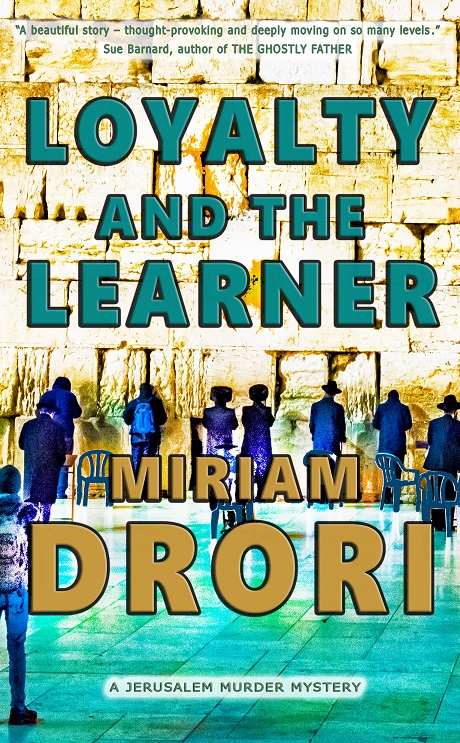
Not one of my novels set in Israel – Neither Here Nor There (not currently available), Style and the Solitary and Loyalty and the Learner – mention wars or attacks, other than Asaf saying of Israel’s problems in Loyalty and the Learner, “One of those is the security situation.”

Why?

There are plenty of novels set in Israel that highlight the security situation and explain it much better than I ever could. I wanted to portray ordinary life here, to show the beautiful and the not so beautiful but without the wars. Does that make the world of my novels fictional?

I don’t think so. The reality is that Israelis live in two parallel worlds simultaneously. We work in offices or building sites or fields. We go shopping in markets and supermarkets and smaller shops. We exercise in the gym or by walking, runnning, cycling, dancing. We love to spend time with our families.

The other world is more frightening. We hear about it on the news and hope it won’t come any closer to us, but of course it does, even if it’s only when we run for shelter. No, it’s never only that, because we all know people who’ve been affected much more, who’ve lost family members and had their worlds changed forever in a single moment.

In normal times, but not during the past year, it’s possible to spend whole days, maybe even a week or two, without thinking about wars or attacks. Unless, of course, you’re in the army, or have a child in the army, or find yourself under attack…

Really, it’s often possible to forget you’re in the Middle East for a while. And so, I suggest the world of my novels is not as fictional as you might think.


Loyalty and the Learner is published through Ocelot Press and can be purchased via Amazon and other online stores.

Categories
Books Holidays memories

Loyalty

I’m back at last and ready to fill in some of the spaces since my last post, six weeks ago, if not earlier.

The first event hasn’t happened yet, but it will happen in just five days. Loyalty and the Learner will be published on 9th September.

Hints on the contents of Loyalty and the Learner.

Loyalty and the Learner is the second in the series of Jerusalem murder mysteries. The first was Style and the Solitary.

In Style and the Solitary, the murder took place in an office. This time, it takes place in an apartment. Next time, … that’s a secret for now. Nathalie, Asaf and a few other characters are back, and there are several new ones, some friendly and others not so much.

You don’t have to have read Style and the Solitary to understand Loyalty and the Learner. Just click on the link for the ebook, which can be pre-ordered now. The paperback will be available from various online bookshops.


Here’s another project I’ve been involved in and haven’t had a chance to announce:

WE ARE THE BULLIES is a collection of stories written from the point of view of a bully. I have one story in it, called Owning Your Space, and I also edited the collection. For me, it was interesting to put myself in a position I’ve never been in.

The book is available from various sites. I suggest searching for ‘we are the bullies miriam drori’.


What I did on holiday

In the middle of July, I attended a fun-filled and exhausting five-day festival of Israeli folk dancing in the Czech Republic.

Then I spent three weeks in the UK, visiting friends and family and attending an action-filled writers’ summer school known as Swanwick.

We were once with the same publisher.

I recently joined a fascinating tour of the new National Library in Jerusalem, but I could never write a post about it as good as this one.


Monday marked a year since I lost my husband. This is what I wrote on Facebook:

“Today is the second of September, exactly a year since the sudden, although expected, death of my husband, David, after 45 wonderful years of marriage. I feel as if I had exactly five weeks to grieve before that event was superseded by one that changed the lives of everyone in Israel and has repercussions for the whole world. I’m coping with my loss, smiling at the memories, and am aware that people all around me are suffering much more.”

We’re planning to hold an exhibition of David’s art shortly.

Lhasa, Tibet, 2019

Categories
Books That's Not Me

Meeting Yourself in Fiction

I’ve given this post a different title, but in a way it’s part of That’s Not Me! Yes, I think it can include the banner.

In a recent guest post, Ritu Bhathal wrote about the problem of not identifying with the protagonists of the stories she read. That was what led her to write her own stories about British Asian characters.

I found myself identifying with what she had to say. The stories I’ve read have not often included Jewish characters, and almost never British Jews.

“Does that matter?” you might ask. I’m sure it does, especially for a child, growing up and trying to make sense of her world.

The characters in the novels I read as a child never struggled to fit in due to being Jewish. They never worried if they were saying the “correct” thing, whether to non-Jews or to other Jews. They never had to forgo an activity because it didn’t chime with their religion. They seemed to live such uncomplicated lives.

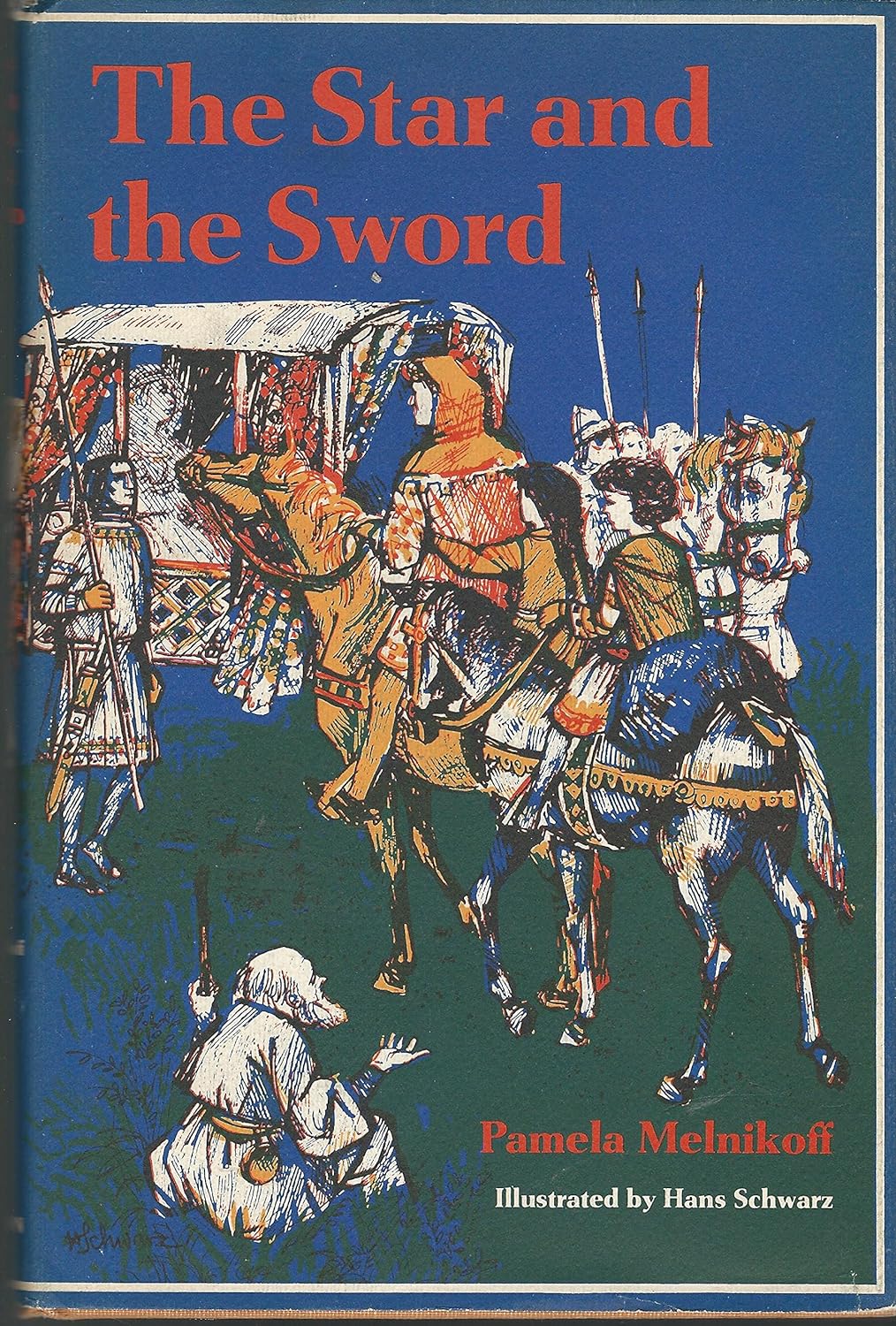
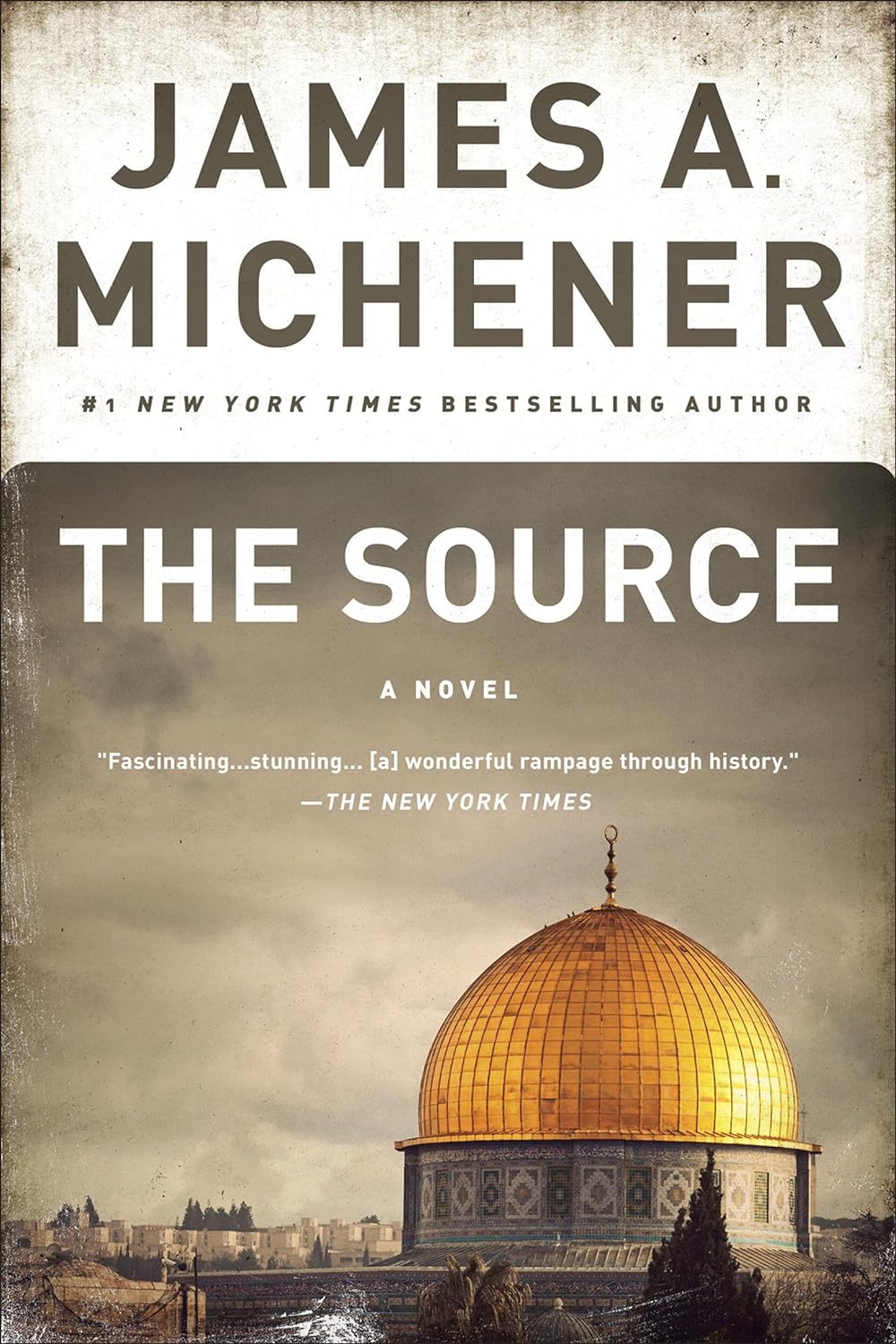
When I did read a book about Jews, I devoured it, even when it was set in the twelfth century (The Star and the Sword by Pamela Melnikoff). Even when it was a thousand pages long, like The Source by James A. Michener. Even when the Jews mostly weren’t British, as in Exodus by Leon Uris, as well as The Source.

In my case, the lack of Jewish characters in fiction didn’t cause me to start writing them. It took me several decades to even attempt to write my own stories. No. In my case, the rare books with Jewish characters, especially Exodus, influenced my decision to live in Israel. Because before and after the twelfth century and up to five years before I was born, Jews had nowhere to go where they felt protected. And now, we had our own country and I wanted to be part of it.

I have to say that, considering what’s going on in the world now and the way Jews are being treated, I’m gladder than ever that I made the decision to move. Israel is the only place where I’m never afraid to say who I am. It’s also the only place where I feel the authorities have my back. I know mistakes were made recently that enabled an enormous massacre to take place, but I don’t think that will happen again.


In contrast, the absence of a different group of characters from novels did influence my decision to write. I saw no characters with social anxiety, no characters who struggled to join in a conversation or to put themselves into the limelight, and there are still very few such fictional characters. I wondered if that was because they’re hard to write. If a character doesn’t say much, they could be considered uninteresting and therefore a bad template for a protagonist. But I decided to have a go, anyway, and I believe I succeeded. Even if a character doesn’t talk a lot, they can have an interesting variety of thoughts, and the people around them can have plenty to say. My uplit novel, Cultivating a Fuji, has two characters who have developed social anxiety. My Jerusalem Murder Mystery series (book 2 to come soon) has one.

It turns out it’s possible to write a character with social anxiety, and I expect the reason why authors don’t do it, despite the very large number of people who live with the condition, is that the topic doesn’t interest them. I would argue that it should interest them, because even if they don’t have first-hand experience of it, they probably know someone who does.


How about you? Did/do you see yourself in books? Do you think it’s important to see yourself in books? Have you written stories with characters like you?

Categories
Books

oSALEot

At the end of this post, there are bargains for you.

Most of what I know about Christmas comes from singing Christmas carols at school. The one I liked best (for the tune and the change of tune for the third verse) is called Three Kings from Persian Lands afar.

This carol was also useful when I studied music, because its first interval is a major sixth.

That was when I heard (and sang) about three kings who brought gifts to the “newborn king of the Jews”.

Now I hear that this took place on Twelfth Night, and that’s why Ocelot Press is holding a Twelfth Night Sale of ebooks.

Style and the Solitary is just one of those books, all of which can be found on Amazon – individually or by searching for Ocelot Press. Here are the others:

Happy reading!

Categories
Books Everyday life Interviews Israel

What was I Doing in Tel-Aviv on Publication Day?

Yesterday was publication day for Style and the Solitary, edition 2 with Ocelot Press.

My job was to announce the occasion on social media and respond to well-wishers, as well as sharing various guest posts that bloggers had kindly posted for me.

I did just that – in the morning. And then, after lunch, I went to Tel-Aviv. Why on earth…?

The publication date had been fixed for 27th October when our musician daughter asked if we’d like to go to a birthday performance by singer Ronit Shachar, held in a garden in Tel-Aviv. We couldn’t turn that down – we knew it would be good. Besides, I reckoned that after spending the day with my novel, it would be all right to go out in the evening.

Daughter got the tickets for the four of us. Then there was a suggestion that as we were all going to be in Tel-Aviv, we could meet earlier and do other things. We ended up meeting in Yarkon Park, where we went for a longish walk, then walking by the sea around sunset and eating some delicious vegan food in a restaurant called J17.

The concert, which also included other performers like Corinne Allal, was excellent and even worth the cramped seating on damp fake grass. And the proceeds went to an animal sanctuary.

After the performance, we had to collect a rather large electric piano which was hard to fit in our van. It was after 2 a.m. when we returned home.

Fortunately, I didn’t have to do the driving, and I spent the journeys trying to catch up with all the kind posts and comments about my book launch.

On the subject of blog posts, here’s what I’ve written about various aspects of Style and the Solitary:

BloggerTopicDate
Vanessa CouchmanSteeped in France25/10/22
Kateri StanleyInterview27/10/22
Nancy JardineInspiration27/10/22
Sue BarnardWhy I turned to crime28/10/22
Jen WilsonSettingsTBA
Cathie DunnSecretsTBA

Normal life will return shortly. Maybe.

Categories
Books

It’s Out

Style and the Solitary has come out of its temporary hiding place and is sitting proudly on Amazon, where you can pre-order it ahead of its 27th October release.

This is edition 2, with small improvements but still the same story. The next novel in the series will follow.

There will also be a paperback of Style and the Solitary. I’ll let you know when it’s ready.

What is Style and the Solitary?

  • Cosy crime
  • Murder mystery
  • An Ocelot Press book
  • Set in Jerusalem
  • Based on Beauty and the Beast
  • Contains humour, romance, friendships, songs and much more.

If you haven’t read it yet, here’s your opportunity.

Categories
Books

What’s it all about, Asaf?

In another month or so, my murdery mystery, Style and the Solitary, will be republished under the Ocelot Press banner.

I thought this would be a good time to tell you what the novel is about, tweaking a post I first wrote for friend and author, Jo Fenton.

Belief in Another Person

The story of Beauty and the Beast was first written in 1740 by a woman called Gabrielle-Suzanne Barbot de Villeneuve. It wasn’t intended as a children’s fairy tale, but rather as a tale with a moral. It is Beauty’s belief and love for the Beast that turns him back into a prince. Similarly, Nathalie’s belief in Asaf will help him in his attempt to become the person he was meant to be.

The similarity of my novel to Beauty and the Beast is, of course, the reason for its similar title.

Loners

People who shun society are considered strange by the rest of society. Sometimes, they might even be thought dangerous, due to a tiny minority of loners who have turned to violence. This gives vulnerable people, who probably only chose to live their lives alone because of bad experiences, less of a chance of ever returning to society.

Friendships

We all need the help of friends. Nathalie gets her two flatmates on board to help her solve the mystery. Other friendships crop up in the story. Even Asaf, the “loner”, acquires some friends, eventually.

Immigration

The process of fitting into a new place can be long and difficult, especially when it involves a new language and culture. Nathalie has some advantages. She’s young, sociable and good at languages. Still, she struggles sometimes, and also misses her family and her home town of Strasbourg. Jerusalem’s Mahane Yehuda Market brings a bit of France to her.

The Law and its Failures

I was moved by a documentary I heard once, in which a woman wanted to testify against her rapist, but found herself struck dumb when standing in the witness box. Asaf is similarly worried about being tried in a court of law. He thinks he’ll find himself incapable of answering questions in such a setting. He’s probably right.

I do think laws fail to protect those who can’t speak or who freeze in certain situations.

Jerusalem

Why is the setting a theme? When I wrote my first novel set in Jerusalem (Neither Here Nor There, currently unavailable), I was worried people wouldn’t be interested in it because they’d expect a story set in Israel to include war and conflict. I was glad to be proved wrong; the book sold well and was appreciated. Yet, with this current novel, perhaps due to the timing, I’ve had questions like, “I wondered if you were deliberately setting out to show Jerusalem as a modern ‘Western’ city compared to the views we normally see on TV, or just reflecting life as you live it.” My response is that it absolutely reflects life as I live it and as most of the residents live it. People go about doing normal activities and talking about normal things. On the TV, they like to show everything in a different light. They seek out extremists and do all they can to exacerbate conflict. But even those extremists do and say normal, mundane things most of the time. And the rest of us go about our normal lives as much as we’re allowed to, which is most of the time.

I’m not suggesting murder is normal. But this murder is not the sort of abnormal you might expect from Jerusalem.

Secrets

Many stories thrive on secrets and Style and the Solitary is no exception. But I won’t reveal any secrets here. You’ll discover them when you read the novel.

What would Asaf think of the book?

Asaf would consider himself unworthy of having a story written about him, just as he feels unworthy of having Nathalie in his life. He blames no one but himself for his woes. Being suspected of murder is admittedly unfortunate, but anyone else would have succeeded in clearing all suspicion long ago.

The new Style and the Solitary will be out soon. Watch this space.

The Strasbourg image is by Monika Neumann from Pixabay. Nathalie’s photo is by Andrea Piacquadio and Asaf’s is by fauxels.

Categories
Books Holidays Israel

Hangovers

This post is about a hangover. No, it’s not what you think. I haven’t taken to the bottle. Well, not in excess, anyway.

Living it up on safari in South Africa.

No, it’s about a hangover from childhood. And the town of Akko, called Acre in English.

I first discovered this ancient and modern town from a book I read as a teenager. I think the book was The Source by James A. Michener, a fascinating story of a fictional archeological dig and the ancient stories it uncovers. For some reason, at that young and impressionable age, I couldn’t accept that a town would have a name that I knew to be a unit of measurement. (It’s about 4047 square metres, which I didn’t know then and won’t remember now). Every time I came across that name in that book, I thought how weird it was.

After moving to Israel, I learned the Hebrew name for the town, and I’ve always used it, even when speaking in English. I wouldn’t say Yerushalayim in English, or Natzrat. I’d use the English names: Jerusalem and Nazareth. Yet Akko remains Akko because, in my mind, Acre is a strange name for a town.

Jerusalem – centre of the world.
(Last time I was Nazareth, there were no digital cameras.)

Recently, because this town appears in the novel I’m currently writing, the sequel to Style and the Solitary, I asked a group of authors which name they thought I should use. None of them had a problem with that name: Acre. It’s just me, then.

That led me to wonder about hangovers from childhood. I’m sure I must have a lot more. Do you? I’d love to hear about them.

Categories
Books Rhymes Social anxiety

Loneliness

In the UK, it’s Mental Health Awareness Week, and this year’s topic is loneliness.

In the US, it’s Mental Health Awareness Month with the message of “Together for Mental Health.”

I always feel social anxiety gets forgotten in any discussion of mental health, and this year it’s more relevant than ever to the topic.

When I had time to be active in a social anxiety online forum, I came across an enormous number of lonely people. Most of those were also alone, while others were alone with their thoughts and emotions.

Why were they lonely? Because social anxiety is that voice in the head that says:

  • They don’t want you.
  • You’re not good enough.
  • They’ll laugh at you.

and similar negative remarks.

Social anxiety leads to avoidance, which leads to loneliness. It’s that simple.

You can turn away from this or decide to help.

***

About My Books

I don’t write only about social anxiety, but, as it happens, it crops up in all of these books:

Categories
Books The Power of Belief

Style and the Solitary is One Today

Yes, 𝓢𝓽𝔂𝓵𝓮 𝓪𝓷𝓭 𝓽𝓱𝓮 𝓢𝓸𝓵𝓲𝓽𝓪𝓻𝔂, my first venture into crime, is 𝓸𝓷𝓮 year old.

To celebrate, I’m delighted to have the assistance of Rachel of Rachel’s Random Resources, who produced this beautiful banner:

Birthday Blitz for Style and the Solitary, 26 April 2022

and arranged for some special posts during the day.

I plan to update this post to include the links. Watch this space…

Here’s the Amazon link: Style and the Solitary.