Here are four responses to my last post on writing about fathers:
Just write down your thoughts and feelings. I’m taking this one on board. I’ve been overthinking the writing part. I should write it all down and then decide what to include in the memoir.
Talk into a tape about the memories and use the recordings as a basis. This could help many people. I’m not so into talking. I prefer writing.
What about abusive fathers? It’s a valid point, or would be if I were planning a project on fathers in general and how to write about them. But actually, I’m planning to write about my father as part of my memoir, and my father wasn’t abusive.
The comment from Jean Davison is most helpful. It describes a situation that’s probably very common. As young children, we look up to our parents for love and protection and see only the good in them. But as we grow older, we realise the complexity of their characters and often disapprove in part. I think this can be particularly true of fathers. In the past, they were the breadwinners and also had more of an opportunity to escape responsibilities. The biggest challenge when writing a memoir is to decide what to include and what to leave out.
I’m back at last and ready to fill in some of the spaces since my last post, six weeks ago, if not earlier.
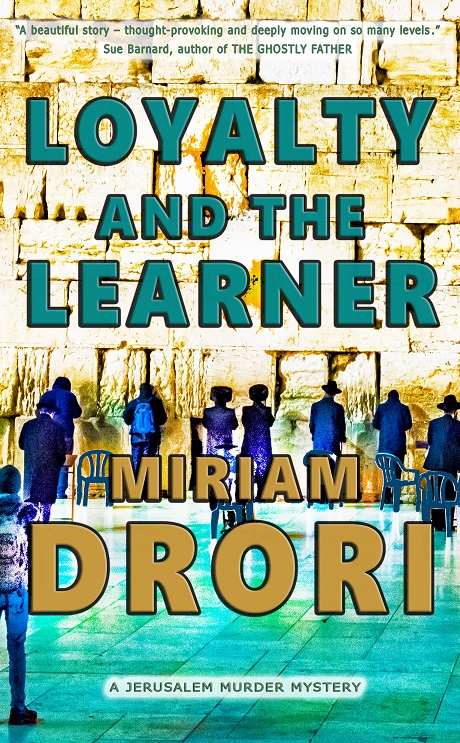
The first event hasn’t happened yet, but it will happen in just five days. Loyalty and the Learner will be published on 9th September.
Hints on the contents of Loyalty and the Learner.
Loyalty and the Learner is the second in the series of Jerusalem murder mysteries. The first was Style and the Solitary.
In Style and the Solitary, the murder took place in an office. This time, it takes place in an apartment. Next time, … that’s a secret for now. Nathalie, Asaf and a few other characters are back, and there are several new ones, some friendly and others not so much.
You don’t have to have read Style and the Solitary to understand Loyalty and the Learner. Just click on the link for the ebook, which can be pre-ordered now. The paperback will be available from various online bookshops.
Here’s another project I’ve been involved in and haven’t had a chance to announce:
WE ARE THE BULLIES is a collection of stories written from the point of view of a bully. I have one story in it, called Owning Your Space, and I also edited the collection. For me, it was interesting to put myself in a position I’ve never been in.
The book is available from various sites. I suggest searching for ‘we are the bullies miriam drori’.
What I did on holiday
In the middle of July, I attended a fun-filled and exhausting five-day festival of Israeli folk dancing in the Czech Republic.
Then I spent three weeks in the UK, visiting friends and family and attending an action-filled writers’ summer school known as Swanwick.
We were once with the same publisher.
I recently joined a fascinating tour of the new National Library in Jerusalem, but I could never write a post about it as good as this one.
Monday marked a year since I lost my husband. This is what I wrote on Facebook:
“Today is the second of September, exactly a year since the sudden, although expected, death of my husband, David, after 45 wonderful years of marriage. I feel as if I had exactly five weeks to grieve before that event was superseded by one that changed the lives of everyone in Israel and has repercussions for the whole world. I’m coping with my loss, smiling at the memories, and am aware that people all around me are suffering much more.”
We’re planning to hold an exhibition of David’s art shortly.
Last week, on the 11th April, I attended a wonderful workshop facilitated by Judy Lev. At the beginning of the workshop, we had to write a first draft about anything we wanted. Then we learned how to work on our drafts. Then we tried to put the tips into practice. I ended up with this:
Today, I commemorate the eleventh of April, the day of my marriage to David nearly five decades ago. This is the first year I celebrate that date alone.
Yes, celebrate. Because no one can take away the memories of forty-five sunny years, and reflecting on them makes me happy. Now, I live in a new place, I see my family often, the sun still shines and I can be happy in other ways.
When I post memories with David on social media, people say, “I see it’s hard for you.” But I don’t feel that way; the memories make me smile. When I explain that, they shake their heads in disbelief. But it’s true, honestly.
No doubt, the piece could be improved further, but it’ll do for now.
Following on from my previous post, I have created a new Facebook account, which is only for friend friends. When I’ve created an author page, I’ll post the link here.
This is my second post about David Drori (1953-2023). Here’s the first. There might be more – no promises.
We met in the summer of 1973, at a guitar lesson. I was drawn to his shyness, making him refreshingly different from all the boys I’d met up to then. When we parted ways at Euston Underground Station, he gave me his phone number and said, “Give me a call sometime.”
So I did. I invited him to a ramble organised by the Zionist youth movement I belonged to. Little did I know how fitting that was. He was planning to live in Israel, and he loved walking. I liked walking, too, although my walks had been quite limited up to then. I hadn’t seriously considered emigrating to Israel; it was more of a dream at that point.
Over the years, we did lots of walking. We walked in various parts of the UK, in Norway, in Vietnam, in South Africa, in Israel and more. The country in which we enjoyed walking the most was Switzerland. There, we discovered, public transport is so good that hiring a car becomes a hindrance. Using public transport, we could ride to one place, walk all day, and return from another. If the weather forecast in the area where we were staying was unfavourable, we could easily travel to an area of sunshine. If it was too hot down in the valley, we could ride up to the cool air of the mountains.
Switzerland, 2014
Switzerland, 2018
Switzerland, 2021
David was always ahead of me, especially on climbs, and our final trip, to the UK in July, was no exception. He’d sprint up apparently effortlessly, and then wait for me to arrive, breathing heavily. When the children were small, he’d carry one – occasionally two, and still arrive before me.
Walking was the only exercise he did consistently. Neither of us ever wanted to belong to a gym or to do any exercise just for the sake of it. Walking is enjoyable. By walking, you see views you wouldn’t see from a car. You meet people you wouldn’t meet when stuck in a box. And, by chance, walking keeps you fit, too.
David imbued in me a love of walking, and I will continue to walk without him.
David (1953-2023) and I met 50 years ago. We got married 45 years ago. He was 70 when he died, just a week after my 70th birthday.
At David’s 70th birthday party.
There’s something special about those numbers. I wish the 70 could have been changed to 90 or even 100. I’d always imagined we would grow old together. But those 45 years were filled with happiness and I’ll always treasure the memories.
Talking of numbers brings me to accuracy, a trait often mentioned by those who came to console us during the shiva. David’s job as an electronics engineer was to design printed circuit boards. It’s a complicated process that involves taking numerous factors into account. Other engineers create the design, try it out, work on the bugs, try again, and so on until it eventually works. David considered all the problems in advance. His boards worked first time.
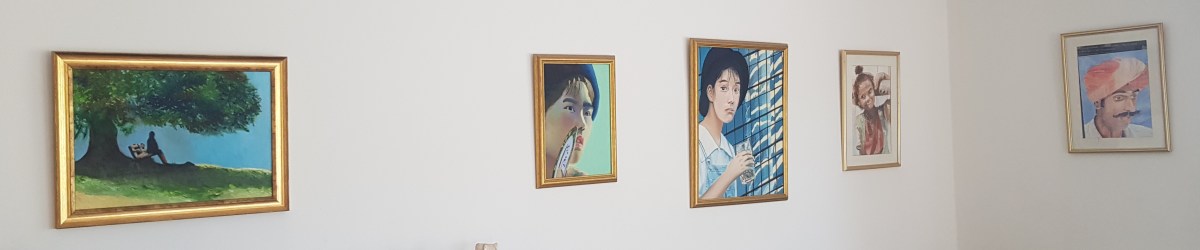
What about David’s hobby, art? He produced delightful paintings and sketches, as well as some sculptures. But art can surely be whatever you want to make it. I wasn’t even sure that accuracy was a term that could correctly be applied to art.
“Of course it can,” said the artist Anat Eshed, who taught David several years ago. She looked up to the wall with his paintings. “And David was very accurate. He had an eye for detail and drew exactly what he saw. He was a pleasure to teach.”
A wall of paintings by David Drori.
I might write more about David in subsequent posts. In the meantime, here’s a poem:
Shy Guy (a poem)
Drawn to a shy guy I met at a guitar lesson.
Afterwards, he invited me to give him a call.
Very soon after,
I
Did.

Diving in was not our thing.
Rather, we waited five years to marry.
Over the decades, our love grew. Now, I can only
Remember.
Initial letters of each line, you may have noticed, spell his name.
Today is Holocaust Remembrance Day in Israel. Since 1951, this day in the Hebrew calendar (one week after the end of Passover and one week before Memorial Day and Independence Day) has been set aside to remember the Holocaust.
At ten o’clock today, I stood on the roof and turned towards Yad Vashem, the Holocaust museum, as the siren sounded and the country stopped for two minutes.
I didn’t want this day to pass without posting something, so I’m going to list three excellent stories that I’ve read, all books containing horrific events but also optimism. After all, Holocaust memories come from those who survived.
Apparently, this was my Facebook profile pic on this day in 2014.
To me, now, it looks as if I forgot to comb my fringe (bangs?). There are some better pics taken later that month.
Well, I’m not planning to change my profession to model of a certain age. But 1st January 2014 is significant because it’s the day I had my hair cut short, hoping for further changes that year. And they came, starting with a publishing deal with Crooked Cat for my romance novel (currently unavailable), Neither Here Nor There.
As I wrote to a friend on Facebook, that was the day when I shortened my hair and lengthened my expectations.
Do you have a significant first of January? Maybe yours is happening as I write. Do tell. And…
HAPPY NEW YEAR!
Watch out for my next post, which will be about an uplifting story.
Yes, this week, I’m going to tell a story of my own, partly to show that this series doesn’t have to be about writing and you don’t have to be “a writer” to join in. The story doesn’t even have to be true; it can be one you made up, or one you read or watched on a screen.
For A-level, I took Pure Maths, Applied Maths and Music. I spent two years studying those subjects, but the teachers didn’t instil in me any belief in my abilities. There was one girl who was brilliant at Maths and always going to get straight As, and others who were clever. I was mediocre and mostly ignored. In Music lessons, I was the only pupil. I struggled with that and never shined in the lessons. My homework, in all subjects, suffered from my lack of self-confidence.
My father, who was a Maths teacher, wanted to help me. He was disappointed when I refused his help, but it didn’t seem right that he should do my homework for me. However, when lessons and homework finished and we were given time to revise before the final exams, I let him go through the whole syllabus with me, and that made all the difference. Suddenly, it all became clear and I knew that I could do this stuff.
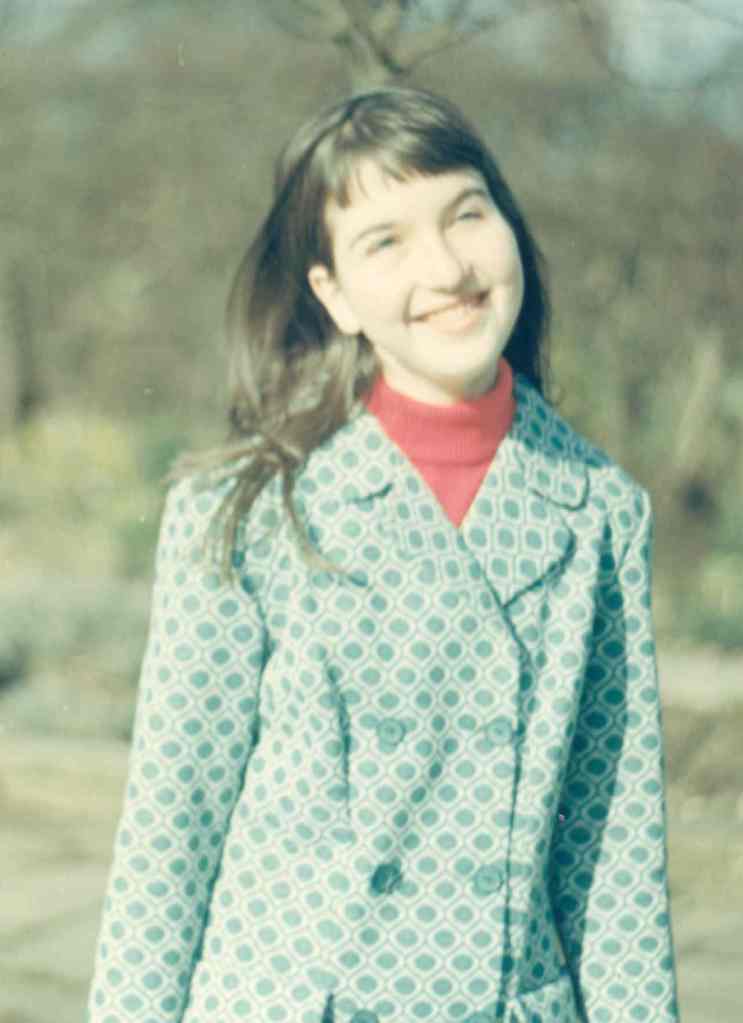
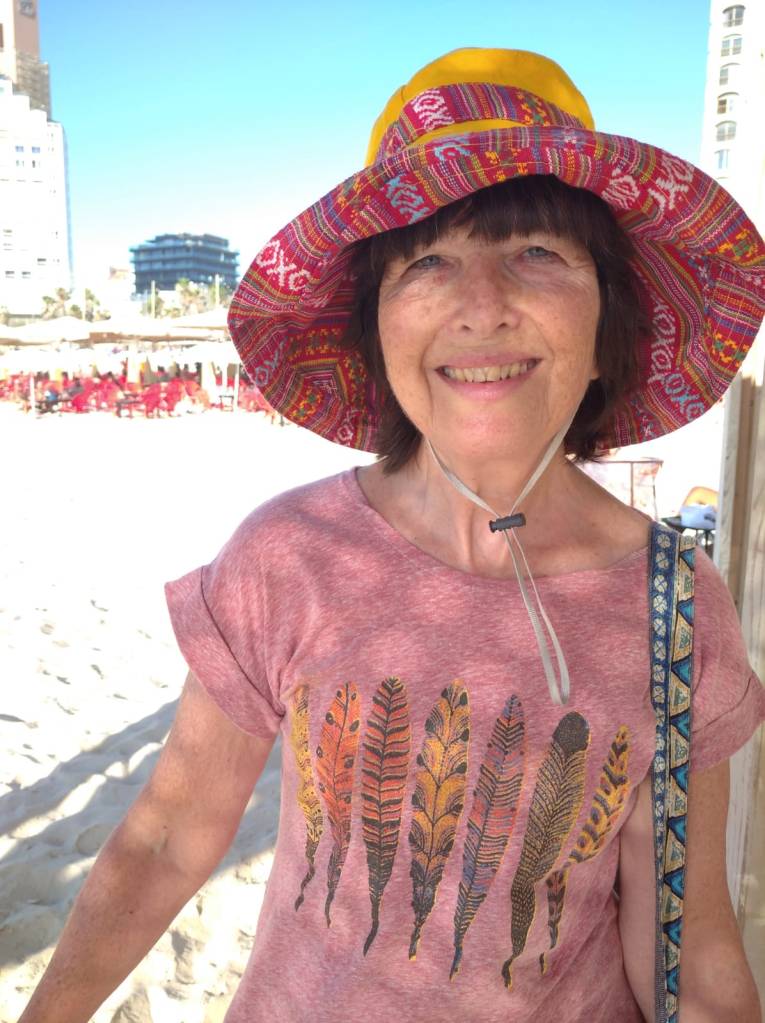
Then and now.
I ended up doing extremely well in the exams, surprising myself and everyone else except for my father – or so he said. He hadn’t helped with Music, but I think that extra confidence spilled over into that subject. Also, I was conscious that the teacher wouldn’t see what I’d written in this external exam. This made me feel free to express my thoughts, uninhibited by her potential comments.
Belief produced results that took me to university, where I didn’t excel, but I did have a good time, meeting some lovely people with whom I’m still in contact.
About Miriam
Miriam Drori survived growing up in the UK and now enjoys her life in Israel (although she misses the UK and is looking forward to being able to visit again). Following careers in computer programming and technical writing, she now writes mostly fiction. Her next novel, Style and the Solitary, launches on 26th April.
Miriam is passionate about raising awareness of social anxiety. Not all her writing includes it, but she never fails to mention it in her bio and elsewhere.
Next week’s post in this series will be from… you, whoever comes first. Remember, belief doesn’t have to be connected to writing, and these posts don’t even have to be about true stories.
If you want to take part, do let me know via Contact above or social media.
Gill Downs. 1st February 1953 – 18th November 2020
The six days that have passed since I heard the sad news of Gill’s passing haven’t made this any easier to grasp. The suddenness has made it difficult for everyone, especially for her family. No one expected this.
I first met Gillian at school. She was in my year, but never in my class, and I remember her mostly from the coach that took us to kosher dinners and back. Probably most of the girls who went didn’t eat kosher at home, but their parents saw it as a way for them to meet other Jews.
Gill was much more sophisticated than me, more knowledgeable about things outside school. I was younger than most of them and young for my age and, like all the girls I hung around with, she bullied me. I never called it bullying then. Bullying, I thought then but don’t think now, had to be physical. I called it teasing. It wasn’t pleasant. And yet, despite the way they treated me, I continued to hang around with them, every day, there and back and while we ate our kosher meals. Why? Because the alternative would have been to be on my own, and I knew that would be worse.
No one in that group of girls was the highest in the bullying ranking. There were a couple of others – one in particular – who won that title. And Gill, I remember, even agreed to sit next to me when I found myself in the same Maths class as her.
Eventually, school fizzled out. I left with pleasure and a vow never to be in contact with any of the girls from school again. Fortunately, university was much better. But my experiences of school, and childhood in general, continued to have an effect on me as a person. I often kept quiet and when I did talk, I found self-expression difficult and sounded hesitant.
I moved countries, got married, had three children. I worked as a computer programmer and then as a technical writer. My life was good but the problems didn’t go away.
In 2002, I added myself to the list for my school on Friends Reunited (a forerunner to Facebook). Never did I expect anyone would contact me, but they did – first Jane and then Gill. For a long time, Gill and I emailed each other practically every day. It was the perfect medium for me. It gave me time to consider my words, yet provided an immediacy that letters never could. I poured out my problems and thoughts, and she listened and reacted, showing that she understood. She gave advice and eventually told me about social anxiety. It was hard for me to believe that anyone else in the world could have similar problems, so it was most surprising to discover the name, support groups and therapy.
Gill and Miriam, May 2009
One thing that bothered me was that Gill continued to feel guilty for what she did to me as a child. (She had a different word for it: victimisation.) I tried to make her see that she was too young and immature to know what she was doing to me then. I said any blame should be laid on the adults in our lives – mostly the teachers, and perhaps even that isn’t fair because they didn’t know, either.
Without Gill, I’d have remained the same person, quiet and closed to the world. Probably, many people I meet still see me that way. But, through Gill, I’ve learned to write down my thoughts. Without her, I would never have become an author.
It’s hard to believe that I can no longer reach Gill by any means, technological or otherwise. For her, I’m glad, at least, that decades of enduring pain and disability ended so suddenly. For her family, the suddenness has added to their grief and for that I’m very sorry.
I’ll never forget Gill and all she did for me these past eighteen years. Yehi zichra baruch – may her memory be a blessing.
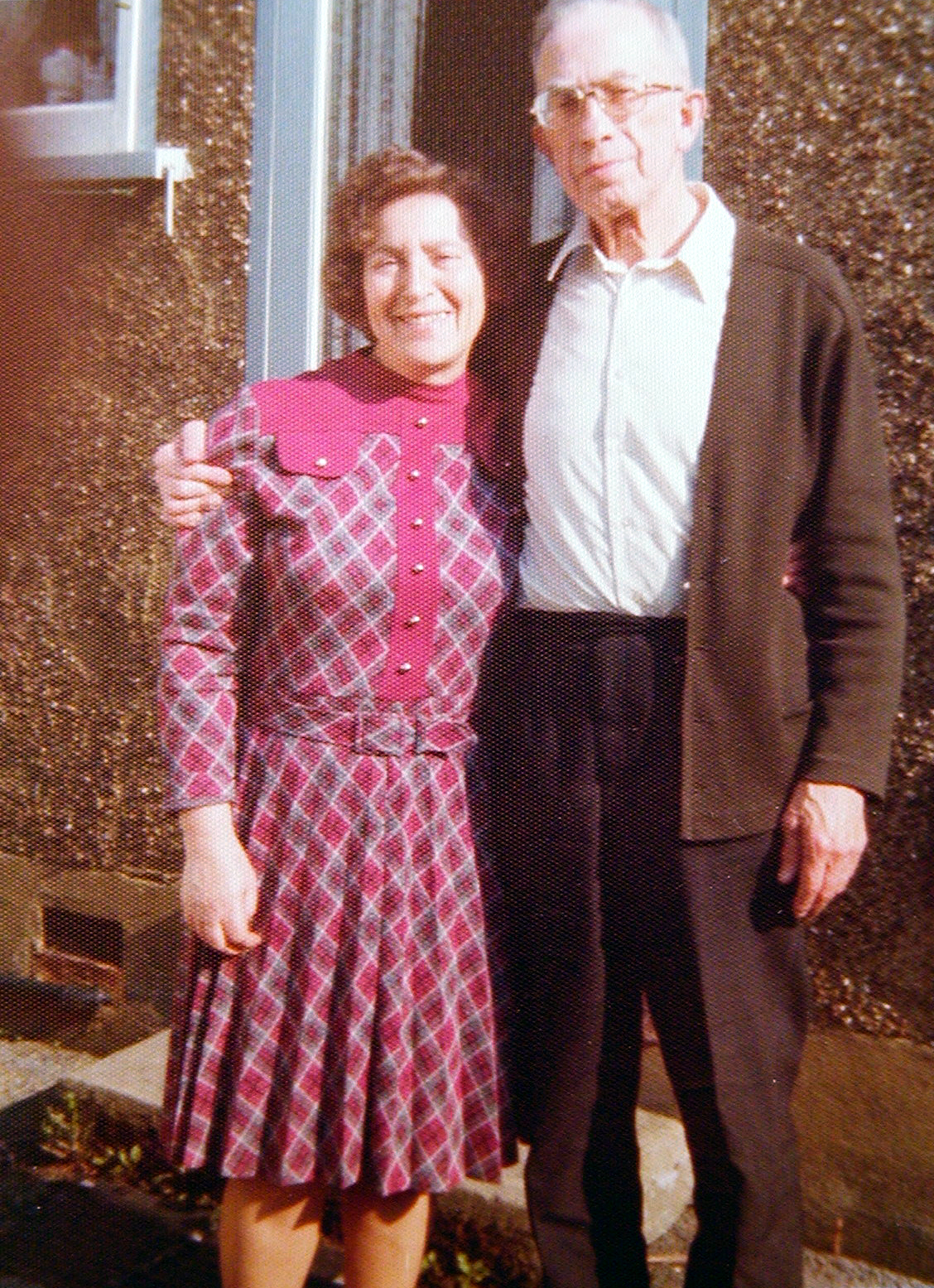
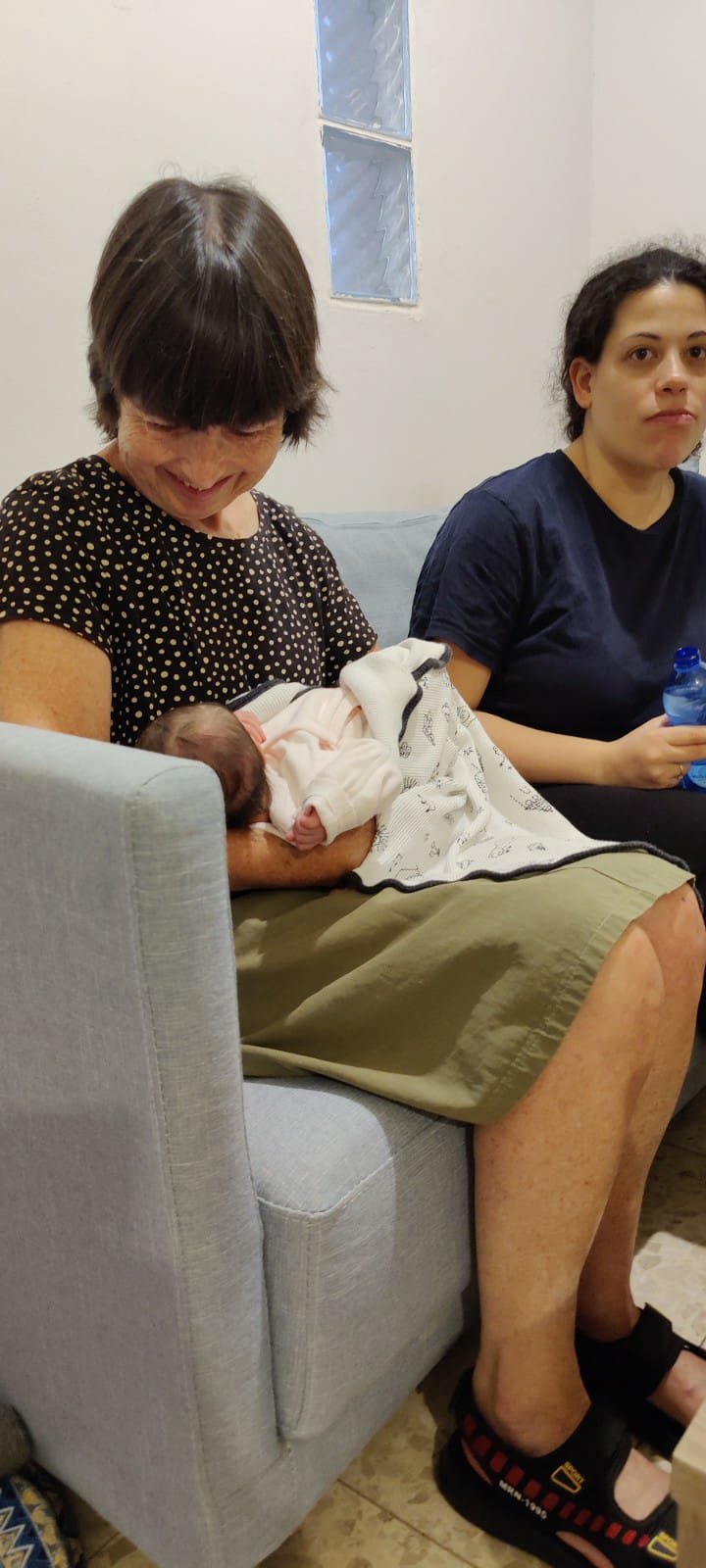
First of all, I want to wish you happy birthday, Mum. 108 today. Secondly, I want to tell you that you have become greatgrandparents. That little boy, who was 7 and 24 when you left this world, is now a father, and I am trying to get used to being a grandmother.
You might know this, or you might not. Who knows? If you do, you’ll also know that we’re now in the second wave of a pandemic. I’ve had to stop dancing, and I’ve spent a lot of time at home. But I know I’ve been lucky in many ways.
You must both remember the previous pandemic, a century ago, although neither of you ever mentioned it. Did it somehow pass you by and leave you unaffected? I wish I’d heard more about your lives before I was born. I know I could have asked, but I didn’t think of doing that. And I had no idea about the pandemic. I did learn something of your lives during the Second World War, but nothing of living through the First.
You must have endured a lot, but here you are, standing happily together in the sunshine in front of the back door of the house I grew up in. You must be around the age that I am now. I’m glad you were able to enjoy this and many other happy moments.