Categories
Books Letters from Elsewhere

Letters from Elsewhere: Rosa Fancourt

Letters from Elsewhere

Please welcome today’s visitor, who is Rosa Fancourt. She has brought her letter to Mrs Ellicott, written ten years before the beginning of A Suggestion of Scandal, a new novel by Catherine Kullmann. Seventeen-year-old Rosa has just arrived at Loring Place to take up her first position as governess. She writes to her former Headmistress at her Bath Academy.

Loring Place,
Suffolk
1st April, 1804 

Mrs Ellicott
Mrs Ellicott’s Academy for Young Ladies
New King Street,
Bath

My dear Madam,

I take up my pen to apprise you as requested of my safe arrival at Loring Place. I cannot sufficiently express my gratitude to you for arranging for me to travel as far as London in Mrs Fortescue’s company and also to Mrs Fortescue for her kind care of me. Indeed, I think I would have been utterly lost had I been compelled to make the journey alone, for I had no notion how to manage at the posting inns—where to find refreshments or, indeed, how to make myself comfortable before continuing on my journey. I saw for myself how girls travelling on their own were likely to be accosted not only by those claiming to be gentlemen but also by seemingly benevolent women who, Mrs Fortescue explained after she had intervened in one case, prey on innocent country girls seeking honest employment in the Capital, luring them to houses of ill-repute.

We broke our journey at Maidenhead, staying at the Fleece where Mrs Fortescue took a room but I fear I did not sleep well, for the mattress was lumpy, the bed seemed to rock and sway like a coach and the sounds of horses and carriages intermingled with the cries of the ostlers and postilions all through the night. At four in the morning we were jolted awake by the blare of the horn announcing the departure of the London mail and by five were on our way again, reaching London shortly after eight o’clock. We broke our fast quickly before taking a hackney to The Bull Inn in Bishopsgate where Mrs Fortescue waited until she could confide me to the care of a respectable mother and daughter, a Mrs and Miss Starling, who were also travelling to Bury. They were most impressed when they heard I was Miss Loring’s new governess and, on our arrival at The Angel in Bury, insisted on remaining with me until we had found the servant from Loring Place who had come to meet the coach.

I am sure I don’t know what sort of an impression I made on him, or indeed on my new employer, for it was after nine o’clock at night by the time we reached the Place and, as you know, I had been travelling since eight o’clock the previous morning.

I was shown into the drawing-room where Lady Loring sat alone and after I had made my curtsey, she ordered supper to be brought up for me, but I said that all I wanted was a cup of tea if that were possible—for the tea equipage still stood on a table near her and my mouth was parched. Fortunately there was still water in the urn and I received my tea, after which I was more than grateful to be permitted to retire.

Loring Place is a handsome residence built by Sir Edward Loring’s ancestor in the reign of Queen Anne. The night nursery and school room are on the second floor, to reach which one climbs two double flights of stairs—at least fifty steps. The school-room is bright and airy, and I am allowed to use it as a sitting-room when my charge is asleep or elsewhere with her mother. The night–nursery opens off it on one side and my small bedroom on the other. I am to leave both doors to the schoolroom open during the night in case Chloe should call out. Until now, her nurse also slept in the night-nursery but she is to be married tomorrow and so will no longer be at the Place.

Chloe is almost six. She is a sweet-tempered, merry child who has just begun to learn her letters. She has some difficulties pronouncing the letter J, preferring D which might not be so noticeable if her elder brother, Sir Edward’s son and heir from his first marriage, were not called Sir Julian. He does not live here, dividing his time between Swanmere Castle, the home of his maternal grandfather, in Huntingdonshire and Swanmere House in London, but visits regularly enough for his sister to speak frequently of him. I have resolved to teach her Peter Piper and, once she is used to the idea of such alliterative phrases, shall compose some using the letter J.

Chloe’s mother, Lady Loring, cannot be much more than thirty. I would not describe her as doting, but she tells me she will come to the schoolroom each midday and expects to see her daughter in the drawing room for half an hour before dinner. When the weather permits, Chloe and I are to take two walks every day and on wet days she is to be permitted exercise in the ballroom. Otherwise her ladyship had no instructions for me, except that she completely forbade any form of corporal chastisement, saying that she did not approve of it for girls. I am very glad of it, for the idea of taking a rod to that innocent child makes my blood run cold.

Sir Edward Loring is considerable older than his wife. I was not presented to him until yesterday, for he is frequently away from home. He is quite gruff but smiled and said ‘How d’ye do, Miss Fancourt?’ in a perfectly amiable fashion, continuing with, ‘And so you are to look after my little pet? Make sure she minds you, now’. As he followed this remark by presenting his daughter with a little box of sugar plums, I do not think it was meant too seriously. I managed to convince Miss Chloe that it would be better to wait to sample these sweets until we had removed her drawing-room finery.

Sir Edward’s mother, the dowager Lady Loring also lives at the Place but she is at present visiting one of her daughters. I dine with the family—the nursery-maid sits in the schoolroom doing some sewing until I return upstairs—and it was quite strange dining à deux with Lady Loring for the first couple of days, the two of us waited on by a butler and footman.

I must close now as it is time to go to church. Dear Mrs Ellicott, pray permit me to thank you again for your care of me, especially after the demise of my poor mother left me orphaned and without a home. I shall be eternally grateful to you for retaining me as a pupil-teacher and later securing me this position where I hope I may remain for many years to come. I shall endeavour to do you and the Academy credit, ma’am. Pray believe you will always be remembered in the prayers of

Your affectionate pupil and servant,

Rosa Fancourt.

Postscriptum. This afternoon, as Chloe and I returned from our walk, we were overtaken by a gentleman driving a fine equipage drawn by the most beautiful pair of matched bays. Chloe at once began to call, ‘Dulian, Dulian!’ Sir Julian Loring, for it was he, drew up and insisted on taking us up to the house in his curricle. He is most truly the gentleman, according me a polite bow and offering his hand to assist me to ascend into the carriage.

“Pray go first, Miss Fancourt,” he said, “and I shall hand this imp up to you. If we put her between us, she cannot get up to mischief.”

At the house, he handed me down as if I were a duke’s daughter. But enough about Sir Julian. I have not forgotten your wise advice and have no intention of filling my head with foolish notions. I must finish as Chloe is dancing with impatience to go down to the drawing-room. RF.

About A Suggestion of Scandal
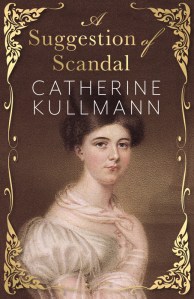
A Suggestion of Scandal[The novel opens ten years after this letter.]

If only he could find a lady who was tall enough to meet his eyes, intelligent enough not to bore him and who had that certain something that meant he could imagine spending the rest of his life with her.

 As Sir Julian Loring returns to his father’s home, he never dreams that that lady could be Rosa Fancourt, his half-sister Chloe’s governess. Rosa is no longer the gawky girl fresh from a Bath academy whom he first met ten years ago. Today, she intrigues him. But just as they begin to draw closer, she disappears—in very dubious circumstances. Julian cannot bring himself to believe the worst of Rosa, but if she is blameless the truth could be even more shocking, with far-reaching repercussions for his own family, especially Chloe.

Later, driven by her concern for Chloe, Rosa accepts an invitation to spend some weeks at Castle Swanmere, home of Julian’s maternal grandfather. The widowed Meg Overton has also been invited and she is determined not to let the extremely eligible Julian slip through her fingers again.

When a ghost from Rosa’s past returns to haunt her, and Meg discredits Rosa publicly, Julian must decide where his loyalties lie.

A Suggestion of Scandal is available worldwide from Amazon as eBook and Paperback.

About Catherin Kullmann

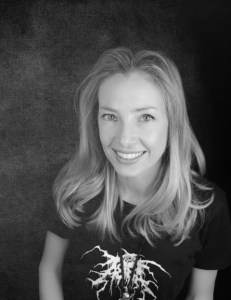
Catherine KullmannCatherine Kullmann was born and educated in Dublin. Following a three-year courtship conducted mostly by letter, she moved to Germany where she lived for twenty-six years before returning to Ireland. She and her husband of over forty years have three adult sons and two grandchildren. Catherine has worked in the Irish and New Zealand public services and in the private sector.

After taking early retirement Catherine was finally able to fulfil her life-long ambition to write fiction. Her debut novel, The Murmur of Masks, published in 2016, is a warm and engaging story of a young woman’s struggle to survive and find love in an era of violence and uncertainty. It takes us from the ballrooms of the Regency to the battlefield of Waterloo. It received a Chill with a Book Readers Award and, in 2017, was short-listed for Best Novel in the CAP (Carousel Aware Prize) Awards.

In Perception & Illusion, published in March 2017, Lallie Grey, cast out by her father for refusing the suitor of his choice, accepts Hugo Tamrisk’s proposal, confident that he loves her as she loves him. But Hugo’s past throws long shadows as does his recent liaison with Sabina Albright. All too soon, Lallie must question Hugo’s reasons for marriage and wonder what he really wants of his bride. Perception & Illusion received a Chill with a Book Readers Award and a Discovered Diamonds Award.

You can find out more about Catherine and her books at her website and her Facebook author page or follow her on Twitter.

Categories
Books Holidays

“You’re Brave!”

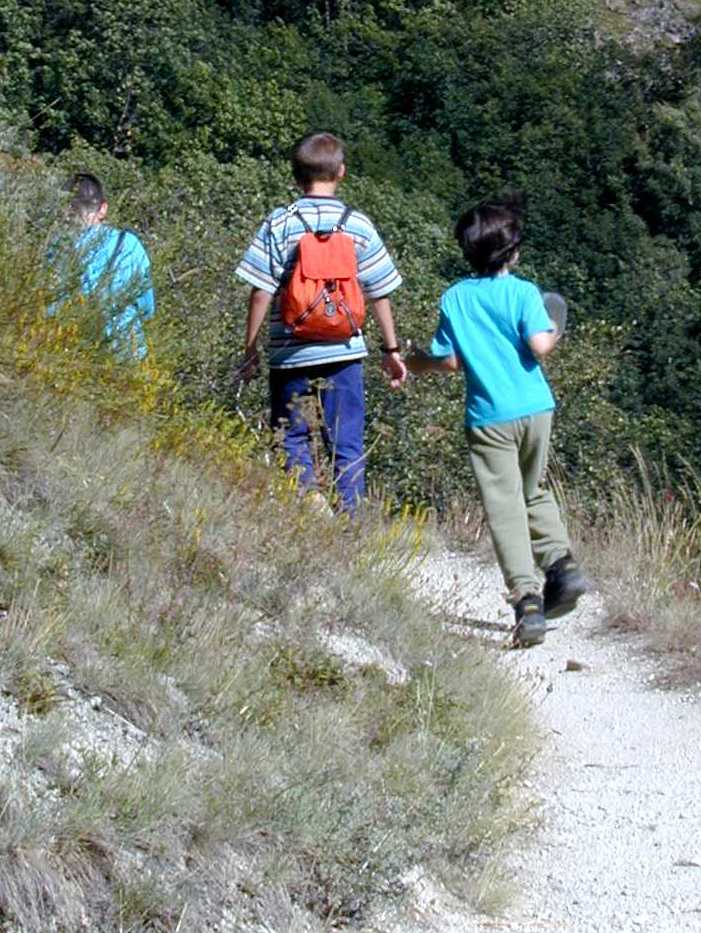
Several years ago, we set out on a hike in Switzerland with our three children. It began to pour with rain, but we’re hardy people; rain doesn’t deter us. We knew we’d have to traverse a narrow ledge ahead, but hey, we could do it. Then we passed a couple going the other way. “You’re brave,” they said. That’s when we turned back.

Hiking in Switzerland

When you hear those two words, “You’re brave,” you suddenly think, “Am I brave? Do I want to be brave? Have I made a big mistake?”

When we heard those words on that hike, we realised we didn’t want to be so brave and didn’t go to that ledge. There was no problem doing that. This memoir author, who also worried about those words, would have had more difficulty pulling out if she’d wanted to. Fortunately, she decided she didn’t.

My MemoirI’m still planning to write a memoir one day. I’ve even thought of a format and written the first chapter. The revelations in it won’t be as hard as the ones Susan Burrowes owned up to. And many of the people in it are no longer alive and able to be hurt by it. Someone wants me to leave something out. It’s a very small part of the whole and can easily be omitted. It shows something important, but there are other examples.

That's me


I’ll have to be ready for people to tell me I’m brave. I think I will be.

Have you been told you’re brave? How did you react?

Categories
Books Social anxiety

A Year of Social Anxiety Revealed

Social Anxiety Revealed: the Launch PartyAugust 22 marked a year since my non-fiction book, Social Anxiety Revealed was published by Crooked Cat Books.

This was the book I wrote first, before I even thought of writing fiction, before I had any notion that I could be creative. I did what I knew, after years working as a technical writer. I collected quotes from people I met (mostly online) who agreed to having them published as long as they remained anonymous, and organised the material into chapters and sub-chapters, adding text of my own. I also added humorous asides and, since I was quite an expert in using Word, I created different styles for each type of text (quotes, humour, etc.) to make the each one stand out. I had no idea what a nightmare this would cause for a publisher.

Then I tried to get my book published, and started to realise how difficult that is.

Fast forward about twelve years. (I hope my husband doesn’t read this. He’d be shocked at my use of that expression.) After Crooked Cat had published two of my fiction books, they agreed to publish Social Anxiety Revealed. I revised it, adding further information. I then worked with my wonderful editor, Sue Barnard, who made the book shine.

Then Crooked Cat went through the nightmare of turning it into a publishable format and somehow came out the other side.

Cover: Social Anxiety RevealedWhat has happened in the year since publication?
A lot of people have expressed interest, at the launch party and since. There have been some fabulous reviews, from people on two sides of the divide: “sufferers” and therapists. (Actually, it’s not so much of a divide. It’s often the ones who have gone through something like this who decide to become therapists.) I’m thrilled every time I hear that the book has helped someone. I have presented a talk on the topic and led a workshop, which also gathered a lot of interest. I hope to do more of that in the future.

I do hope my book and social anxiety in general will become better known. I believe many people would be much better off if that happened.

We Need to Talk about Social Anxiety

Categories
Books Israel Reviews

The Boring News

Hello and welcome to a bit of calm in a turbulent part of the world. Compared to what’s happening to a million people a bit further south, what I have to tell you seems insignificant.

But I wanted to tell you about a book I enyoyed very much.

The Brotherhood

.

.

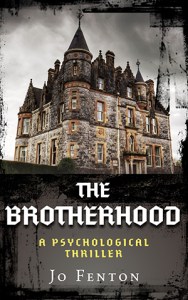
.The Brotherhood by Jo Fenton is a psychological thriller that had me hooked from the beginning and never let me go.

My review doesn’t do justice to it, but I tried. Basically, I think you should read it.

.

.

.

.

.

This blog will be back with another in the series Letters from Elsewhere on 31st August. See you then!

Miriam Drori


Categories
Books Social anxiety

The Word

Have You Heard the Word?

Say the word and you’ll be free
Say the word and be like me
Say the word I’m thinking of
Have you heard the word is…

INCREDIBLY

Yes. If you live in the UK, listen to yourselves, listen to others, listen especially to Radio 4. This is the word you’ll hear more than all others. Nothing is very or really or amazingly any longer. Oh no! INCREDIBLY is the all-encompassing word.

It’s so fine, it’s sunshine
It’s the word…

Back in 1965 the word was love, but now the word is INCREDIBLY.

—0—

I had slots in three book launch parties recently and popped into others. Congratulations to:

I’ve read Heathcliff, which is excellent (or should I say: incredibly good?). I’m reading The Brotherhood, which promises to be excellent, too. I have yet to read the others, but I’m sure I’ll enjoy them. After all, they’re all published by Crooked Cat, which has published some incredibly good books. And mine.

—0—

This week, I read a blog post by Social Anx that resonated with me. In fact, I thought it incredibly powerful, even though not everything in it applies to me. It inspired a post of my own on the other blog.

—0—

See you next Friday. I hope the week works out incredibly well for you!

Categories
Books Letters from Elsewhere

Letters from Elsewhere: John Burgess

Letters from Elsewhere

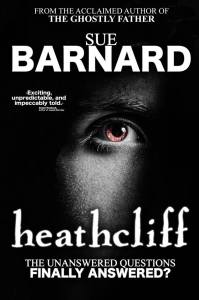
I’m delighted to be joined today by John Burgess, who comes straight from the pages of Heathcliff by my good friend and fellow Crooked Cat author, Sue Barnard. Yes, that Heathcliff – the one and only. John has brought the letter he wrote to his wife.

My dearest Anne,

I trust that this letter will find you in good health.  We have only been at sea for less than eight and forty hours, but already I am missing you beyond measure.

How is our dear little Emily?  Mr McDougal promised me that he would ensure that the two of you would be well cared for whilst I am away.   I know he is a man of his word, and as you well know he has already been my saviour on more than one occasion. 

I was very nervous about going to sea again, my love – not just because of the prospect of having to leave you (especially in view of your condition), but also because it is so long since I was last on a ship. But it has proved to be not so bad as I had feared.  I was seasick at first, but thankfully that has now passed.  Our voyage is going well so far.  Captain Trelawney is, as one would expect, kept extremely busy with the day-to-day running of the ship, but young Heathcliff has been keeping me company.  He is a very competent sailor, despite having had no previous experience before he came to Liverpool.

All the same, I am rather worried about him.  For his age (I believe he is around seventeen or so), he is surprisingly uneducated.  When I told him that you were four months gone with child, he looked bewildered and asked me what I meant.  I never imagined that I should be the one who would have to educate anyone about the facts of life.

Heathcliff seemed surprised – even a little shocked – by what I explained, but afterwards he thanked me, then told me why he had first come to Liverpool.  It transpires that he was running away from a girl who broke his heart by saying it would degrade her to marry him.  I have often thought that he seems to be a troubled soul, and now I am beginning to understand why. 

I will post this letter when we next arrive in port, and will write to you again later during the trip.  In the meantime, please take good care of yourself and of little Emily.  I am counting the hours until I see you both again.

HeathcliffYour loving husband,

John

About Heathcliff

What happened to Heathcliff during the three years when he disappeared from Wuthering Heights?  And who were his parents?  Possible answers to these questions are offered in Sue Barnard’s latest work, Heathcliff, due for publication on 30th July, 2018.

About Sue Barnard

Sue BarnardSue Barnard is a British novelist, editor and award-winning poet. She was born in North Wales but has spent most of her life in and around Manchester. After graduating from Durham University, where she studied French and Italian, Sue got married then had a variety of office jobs before becoming a full-time parent. If she had her way, the phrase “non-working mother” would be banned from the English language.

Sue has a mind which is sufficiently warped as to be capable of compiling questions for BBC Radio 4’s fiendishly difficult “Round Britain Quiz”. This once caused one of her sons to describe her as “professionally weird.” The label has stuck.

In addition to working as an editor for Crooked Cat Books, Sue is the author of four novels apart from Heathcliff: The Ghostly Father, Nice Girls Don’t, The Unkindest Cut of All and Never on Saturday.

She is also very interested in Family History. Her own background is far stranger than any work of fiction; she’d write a book about it if she thought anybody would believe her.

Sue lives in Cheshire, UK, with her extremely patient husband and a large collection of unfinished scribblings.

I was lucky enough to read an earlier version of Heathcliff and have begun reading the final version. It’s an excellent read, whether or not you’ve read Wuthering Heights.

***

If you hurry over to Amazon, you might still catch the tail end of Crooked Cat’s Summer Sale. Sue’s books (apart from Heathcliff), my books and many others are in the sale.

Categories
Books Letters from Elsewhere

Crooked Cat Summer Sale

Summer_Festival_Flyer_Template

Yes, Crooked Cat’s summer sale starts today, and to celebrate, here are all the books currently on sale that have appeared in my popular series, Letters from Elsewhere:

Letters from Elsewhere

My books are also in the sale:

NEITHER HERE NOR THERE is a contemporary romance set mostly in Jerusalem. It tells the story of Esty, who has just left the closed, haredi community in which she grew up, and Mark, a new immigrant from Britain.
Neither Here Nor There appeared on Letters from Elsewhere on 2 October, 2015 and 29 January, 2016.
THE WOMEN FRIENDS: SELINA was written together with the lovely Emma Rose Millar. It’s based on Gustav Klimt’s masterpiece, The Women Friends and covers the whole inter-war period. Selina arrives in Vienna, young, vulnerable and fresh from the country, and ends up staying for many years.
SOCIAL ANXIETY REVEALED is non-fiction and reveals all about social anxiety. Suitable for sufferers and non-sufferers alike, it shows our similarities and differences through quotes from many others who are much more familiar with social anxiety than they would like to be.

My Books

Lots more Crooked Cat books are in the sale. Don’t miss out.

Categories
Books Reviews

A Review and a Rant

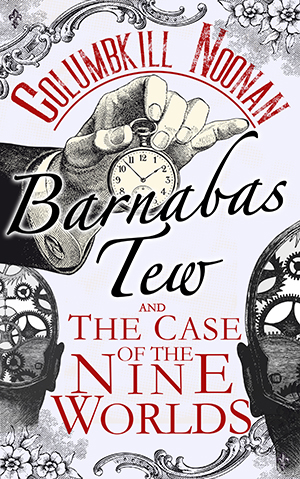
I read a book that hasn’t been released yet. Barnabas Tew and the Case of the Nine Worlds.

Barnabas Tew and the Case of the Nine WorldsIt’s not rare for that to happen. Authors or publishers often give away a few review copies. But more about that later.

I enjoyed the book and wrote a review, which I put first on Goodreads. This is it:

“I received a copy of this book in return for an honest review. This makes no difference to my rating/review of it.

What if…? That’s a question all fiction authors ask many times in the course of writing a story. It can lead to: What if character A met character B? Or: What if X happened to Character A? The premise of this novel is much more unusual: What if two bumbling Victorian detectives found themselves having to solve a mystery in the world (or worlds) of Norse mythology?

Of course, if I’d read the first book in this series, Barnabas Tew and the Case of the Missing Scarab, I wouldn’t have been so surprised by the notion. But I’m sure I’d have found the story just as fascinating and the humour just as appealing. The writing is excellent; descriptions, dialogue and plot are, too. And I was happy to learn something of a world I’ve never examined.

Occasionally, the language seemed unfitting for a Victorian English gentleman, and that would tend to make me award the novel 4.5 stars. For example, Barnabas calls women Ms rather than Miss or Mrs; temperatures are in Centigrade rather than Farenheit; and he uses that annoying (to me) US expression, “off of.” But mostly, I was happy with the choice of words; I don’t expect the dialogue in a modern book to sound exactly as it would in times gone by, and there are enough hints in the novel of the period the detectives came from.

What next? I do hope Barnabas and his assistant, Wilfred, get to India at some stage of their journey.”

And then, as I have often done in the past, I copied my review to Amazon US and Amazon UK… or at least I tried to.

Amazon US informed me that I can’t leave a review for a book that hasn’t been released yet.

Amazon UK informed me that I haven’t bought enough on the site to be able to leave a review. On further investigation, I discovered that I’m supposed to have spent at least £40 in the last twelve months.

Both of these rulings are new and they don’t make sense to me.

If Amazon continue to have a pre-order feature, then they should allow pre-release reviews. Otherwise, how can potential readers determine whether they want to pre-order?

And I wanted to make my review visible to UK customers, who would pay to buy the book, if they could see read reviews. In other words, I don’t think Amazon should only allow reviews from those who buy on the site, because those reviews could influence others to buy.

But the mighty Amazon has decreed and we dwarves must bow to them. END OF RANT.

Barnabas Tew and the Case of the Nine Worlds is released by Crooked Cat Publishing on 4 September, 2018.

There will be two more blog posts this week – on Tuesday and Friday. What a busy week this is! Happily so. I wish you a happily busy week, too!

Running up stairs


Categories
Books Social anxiety

Not Today

LettersFromElsewhereDark

Letters from Elsewhere will not appear today, but it will be back next Friday, and before that, on Tuesday, there will be a special post. So, keep tuning in and have a great weekend!

And remember:

WeNeedToTalkAboutSocialAnxiety

Categories
Books Letters from Elsewhere

Letters from Elsewhere: Dr Eloise Kluft

Letters from Elsewhere

Well, this is a first for Letters from Elsewhere. There have been letters to the dead before, but never one that crosses millennia – seventy-four of them! Here’s the letter from today’s visitor, Dr Eloise Kluft, who has joined me from the pages of Bone Lines by Stephanie Bretherton.

Dear Sarah

I believe it’s high time to give poor old Charles Darwin a break and address one of my heartfelt epistles to you instead. But how does one begin to compose a prehistoric ‘thank you’ note? Perhaps in your time this would have taken the form of a gesture, or maybe a chant or a song? But as one of our own contemporary songs goes, I’m afraid that all I have are words. While it’s difficult to know how to thank you, I am nevertheless compelled to do so, and this feels not only appropriate but natural… instinctive. I cannot know what form of communication, verbal or otherwise, you may have used, but I feel that even 74,000 years ago the concept of thankfulness, and the ability to express it, would have been an inherent quality – a vital aspect of what made us human. Gratitude is a universal language, after all?

I will never forget the day I heard the rumours, the whispers that something very special, something that might add another crucial piece to the human puzzle, had been found in the ice on Mt Kenya. I still count my blessings every day that you came my way. Into my laboratory, into my care, under my gaze. Oh but you made us work so hard to unravel your secrets, my girl! And as much as you were celebrated and cherished, you were feared by those who could never accept such a challenge to their own cherished beliefs.

But for everything you carried with you on this last stage of your journey, all the revelations, all challenges and, yes, even the dangers, I thank you, Sarah. (I hope you do not mind the name we’ve given you in our time?) Who knows how, or why, you fell into that glacier, but I thank you for falling into my life, in your rare, fractured, mysterious and ancient form. By allowing me to flesh out your life using both science and imagination, you have brought me back so thrillingly into mine. To all its wonders and to a new appreciation of everything I have to be grateful for.

Whatever your struggles, whatever your joys, I sense that you met them with courage and curiosity. You may have gone hungry too often in your lifetime, but I wonder, did you also stay hungry for life itself? Did you love, did you lose, did your heart break? And, if so, how did you pick yourself up again? What did you learn in your walk upon this planet – and perhaps more importantly, what did you teach, what did you pass on?

You have taught me so much. Much that I hope to share with the wider world – and with any of your surviving ‘children’ –  if they walk among us yet today. But above all, I have read your message from the past as a reminder that I should live my own life as fully as I can, right here and in the consciousness of the present moment. With a mind open to every possibility but also with a heart that’s brave enough to open up once more … to whatever may come.

Thank you, thank you, my dearest Sarah.

Yours

Dr Eloise Kluft

About Bone Lines

StephanieBrethertonBoneLines

A young woman walks alone through a barren landscape in a time before history, a time of cataclysmic natural change. She is cold, hungry and with child but not without hope or resources. A skilful hunter, she draws on her intuitive understanding of how to stay alive… and knows that she must survive.

In present-day London, geneticist Dr Eloise Kluft wrestles with an ancient conundrum as she unravels the secrets of a momentous archaeological find. She is working at the forefront of contemporary science but is caught in the lonely time-lock of her own emotional past.

Bone Lines is the story of two women, separated by millennia yet bound by the web of life.  A tale of love and survival – of courage and the quest for wisdom – it explores the nature of our species and asks what lies at the heart of being human.

Bone Lines is the debut novel from Stephanie Bretherton, out from Unbound in September. A genre-fluid dual narrative, it spans the space between literary, speculative-fiction, ‘present day’ sci-fi, historical fantasy and ‘women’s interest’ with its pair of fascinating female heroines.

Although partly set during a crucial era of human history 74,000 years ago, Bones Lines is very much a book for our times. Dealing with themes from genetics, climate change and migration to the yearning for meaning and the clash between faith and reason, it also paints an intimate portrait of who we are as a species. The book tackles some of the big questions but requires no special knowledge of any of the subjects to enjoy.

You can find more information or pre-order special editions here.

About Stephanie Bretherton

Stephanie BrethertonWho do you think you are? A daunting question for the debut author… but also one to inspire a genre-fluid novel based on the writer’s fascination for what makes humanity tick. Born in Hong Kong to expats from Liverpool (and something of a nomad ever since) Stephanie is now based in London, but manages her sanity by escaping to any kind of coast.

Before returning to her first love of creative writing, Stephanie spent much of her youth pursuing alternative forms of storytelling, from stage to screen and media to marketing. For the past fifteen years Stephanie has run her own communications and copywriting company specialised in design, architecture and building. In the meantime an enduring love affair with words and the world of fiction has led her down many a wormhole on the written page, even if the day job confined such adventures to the weekends.

Drawn to what connects rather than separates, Stephanie is intrigued by the spaces between absolutes and opposites, between science and spirituality, nature and culture. This lifelong curiosity has been channelled most recently into her debut novel, Bone Lines. When not bothering Siri with note-taking for her next books and short stories, Stephanie can be found pottering about with poetry, or working out what worries/amuses her most in an opinion piece or an unwise social media post. Although, if she had more sense or opportunity she would be beachcombing, sailing, meditating or making a well-disguised cameo in the screen version of one of her stories. (Wishful thinking sometimes has its rewards?)

You can find Stephanie on Facebook, Twitter and Instagram.