Categories
The writing process

Word Tip 2: Make Your Novel a Trampoline

Microsoft Word Tips for Authors

Welcome to the next in a series of tips on using Microsoft Word, geared towards authors.
Most Word advice is rather complicated and full of things you’ll never need to know.
I shall do my best to keep it simple, because you’re not stupid… just busy.
Please note: 
– Not all versions of Word are the same, but most are near enough.
– There are different ways of doing the same thing. I shall demonstrate just one (or two).

Your novel becomes a trampoline when you’re editing. You need to be able to see its structure at a glance and quickly jump between chapters and sometimes sections of chapters.

This tip only works if you have defined heading paragraphs as shown in Tip 1.

Press Ctrl/F, which you probably use for searching in the novel.

The window that appears has three tabs: Headings, Pages and Results. Click on Headings. You’ll see all headings in the novel. If you’ve defined sub-headings, these will appear, too, and you can expand and collapse headings using the arrows, as you would for file names in Explorer.

I like to give my chapters names, even if these won’t remain in the final version, because the names show up in that pane on the left. And sometimes I separate a chapter into sections and give them names, too. Just so that I can see the novel’s structure at a glance.

Working with Word

How do you jump to a specific chapter or section in the novel?

Just click on it.

Questions and suggestions for future topics are welcome in the comments below.

Categories
The writing process

Word Tip 1: A Matter of Style

Microsoft Word Tips for Authors

Welcome to the first in a series of tips on using Microsoft Word, geared towards authors.
Most Word advice is rather complicated and full of things you’ll never need to know.
I shall do my best to keep it simple, because you’re not stupid… just busy.
Please note: 
– Not all versions of Word are the same, but most are near enough.
– There are different ways of doing the same thing. I shall demonstrate just one (or two).

You might think this one is a bit complex for a first tip. But I will be mentioning styles in most of the other tips, often along with alternatives, so I had to start by explaining what they are.

If you’ve never used styles, the chances are that everything you write uses the Normal style. The chances are that you just started writing using the font, font size, indentation and spacing that were defined for the Normal style. What did you do when asked to send your file in a different format? You selected the whole document (hopefully you know that Ctrl/A does that) and changed the font and size.

But what if you have headings (chapter headings or short story title)? Changing everything at once changes the headings, too. You might have to go through the novel, changing all the headings back to the way they were.

Instead, you can define the Heading 1 style for your chapter headings and keep the Normal style for the text. Here’s how:

  1. Click the arrow in the bottom right corner of Styles, which is in the Home tab. The Styles box appears.

    Styles Box in Word
    Styles Box
  2. Hover next to Heading 1 and click the arrow that appears.
  3. Choose Modify. The Modify Style window appears.
  4. Click Format (at the bottom) and choose Font.
  5. In the Font window, you can change Font style, Size and other details.
  6. Remember to click OK at the end.

Similarly, you can change the Normal style.

How do you define a chapter heading as Header 1? Here are two possible ways:

  • Click in the header and click Header 1 in Styles.
  • Click in the header and press Shift/Alt/

You can also use the Heading 2 style for sub-headings. Next week, I’ll show you why that might be useful when editing a novel.

Questions and suggestions for future topics are welcome in the comments below.

Categories
The writing process

Word Tips for Authors

Microsoft Word Tips for Authors

If you’re an author, you will probably use Word at some stage. Even if you don’t use it to create your novel or story or non-fiction book, you will probably use it when interacting with an editor.

There are plenty of Word tips out there, but these contain so much information that they look too complicated to authors who have limited time for technology and a limited number of things they want to do with Word.

And yet, there are features that would make their Word experience much more pleasant, if only they knew about them.

I’m going to try to make those features clearer by posting a tip once a week on Fridays, starting next week, 5th April. I’ll be using the hashtag #MSWordTipsForAuthors. See you back here.

If you have any questions or suggestions for topics, that’s what comments are for.

↓↓↓

Categories
Blogging Social anxiety

TEN Years Old

10 Years of Blogging

Yes, this blog has been going for TEN years. The very first post went like this:

Speech is Silver; Silence is…

…not golden. Just a fake gold that soon dulls.  Like the necklace I bought in Cyprus. They told me it was gold. I knew they were lying, but I bought it anyway. I felt I had to buy something because they gave me tea….

I’ve been keeping silent for most of my life. It’s time to talk.

So tune in again, keep in touch and don’t suffer in silence.

A lot has happened to me in those ten years.

I began the blog anonymously, and eventually ‘came out.’ I was afraid of negative comments, but so far there haven’t been any.

I’ve had short stories and three… almost four… books published.

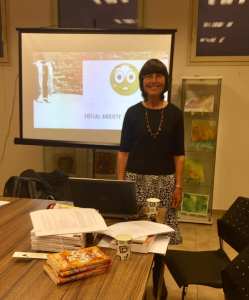
And I talk – not so much in conversations, but through my books and even in presentations. Slowly but surely, I’m telling the world about social anxiety.

Miriam Drori - Presentation on Social Anxiety

P.S. Not all my stories involve social anxiety.

EDIT: I was happy to receive this from WordPress:

Happy Anniversary from WordPress

Categories
Books

Cover Reveal


Curtains

With everything that’s been going on… promoting the free day for Social Anxiety Revealed and lots more – bookwise and lifewise… I somehow omitted, on this blog, to announce the fabulous cover for my new novel, Cultivating a Fuji, to be released on 15th May.

Crooked Cat have created a masterpiece with this cover.

So, without further ado…

except for a crescendoing drum roll…

and a blast from the trumpet…

I present the amazing cover of Cultivating a Fuji.

Cultivating a Fuji - Front Cover

Categories
Books Social anxiety The writing process

What Not How

The other day, I tweeted the following:

You don’t have to remember how. You only have to remember what.

It was in reply to this, from @jamesgarside_:

People: How do I [do thing] on computer?
Me: *googles how to [do thing] and shows them*
People: Well, I could have just googled that!
Me: But you didn’t. You asked me.
People: YOU should know how to do it without searching for it first.
Me: You didn’t know how to do it at all!!!

The tweet contained an appropriate head-banging GIF.

I could definitely relate that to Microsoft Word. I think most authors use it, even though there is sophisticated software dedicated to writing novels. And most authors have no idea what Word can do – features that would help them immensely if only they knew about them. What, not how. Once you know that a thing is possible, you can find out how to make it happen. But if you don’t know it’s possible, you won’t think of searching, to discover how to make it happen.

Shocked SmileyImage by OpenClipart-Vectors from Pixabay

I was shocked to hear one author’s method of working with Word. She creates an Excel sheet with the starting and ending page numbers of each chapter, so that she can go directly to the chapter she wants to review. During (or after) every revision, she updates the Excel files with the new page numbers.

That would never work for me. I have so many revisions that I would never manage to keep the spreadsheet up to date. Fortunately, Word itself has a much simpler solution – one that doesn’t have mistakes because it’s built in.

Working with Word
Cropped screen shot of Cultivating a Fuji in Word

This is how Word looks as I’m working on a novel. Down the left-hand side is my list of chapters. I give the chapters names, even if the names won’t remain in the final version. That way, I know roughly what’s in each chapter. When I want to review a specific chapter, I click on the chapter in the list and Word jumps right there. So much simpler than going to a separate file, rembering a page number and then going to that page in the Word file.

Sometimes I divide the chapter into scenes by creating sub-headings, which also appear in the list. The sub-headings won’t be included in the final version of the novel, but they’re useful while it’s still being written/edited.

I might not remember exactly how to set this up without trying it out, first. I might even need to google it. But the main thing is that I know it’s possible. What, not how.

You don’t have to remember how. You only have to remember what.

Could that apply to other walks of life? What do you think?

~~~~~

News

To celebrate the forthcoming publication of my novel, Cultivating a Fuji, the ebook version of my non-fiction book, Social Anxiety Revealed, is completely free for one day only. Today. Do hurry to download it before time runs out…

Categories
Books SIM Talks with Miriam

SIM Talk 9: Joan Livingston

#SIMTalksWithMiriam

Misunderstandings are often fun… when you look at them from the outside or with hindsight. When they’re actually happening and you’re involved, they can be far from fun. Here’s Joan Livingston, whose third mystery in the Isabel Long series is due out next week (22nd March).

A Dangerous Misunderstanding

Sometimes words get in the way of what people are trying to say. That happens with several of my characters. And because I write mysteries it can get them into trouble.

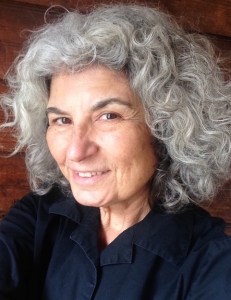
Joan LivingstonLet me tell you about Isabel Long, the protagonist in my mystery series who is a former journalist turned amateur P.I. solving cold cases. In Redneck’s Revenge, the second in this series, Isabel gets herself into a sticky situation while interviewing Gary and Larry Beaumont in their dump of a home. The brothers are notorious drug dealers and suspects in the death of a junkyard dealer. And Isabel is brave enough to dig deeper in her line of questioning.

Ah, but she hits a nerve because she’s dealing with a couple of hotheads who don’t listen very well. They have a tendency to jump to conclusions. And being new to the P.I. game, Isabel is still learning how to deal with people like the Beaumonts.

Here’s part of that scene from Redneck’s Revenge. She is meeting them at their house.

“If I’m hearing correctly, you two don’t have alibis for that night,” I say. “Right?”

I believe I just stepped into it big time because Gary and Larry’s foreheads clamp so hard their brows hang heavy over their bloodshot eyes. Their lips curl.

Larry slaps his brother’s arm.

“What’s she mean?” he asks.

“It means she’s callin’ us liars,” Gary answers.

I speak up.

“I didn’t call you liars.” I try to make my voice as warm as I can muster given how nervous I am. “What I said is that you can’t account for your whereabouts the night Chet Waters was killed.”

Gary’s fist hits the table.

“You bitch, what makes you think we’d have anythin’ to do with that?”

Yes, Isabel manages to get out of there unharmed, but she is rather shaken because she really felt in danger.

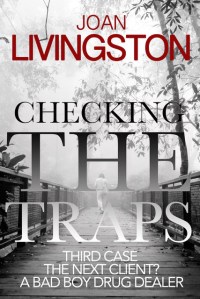
Checking the TrapsI’m not going to spoil what happens later in this book, but fast forward to the third, Checking the Traps. Yes, the Beaumont brothers return. Gary, the alpha brother, wants Isabel to find out what happened to their half-brother, Cary. Did he jump from a bridge known for suicides, or was he pushed, like Gary thinks?

Isabel takes the case, largely because she is interested in the victim, who was a highway worker by day and a poet at night. But she decides to be upfront with the Beaumonts, particularly, Gary, who is the alpha brother. She wants to avoid any misunderstandings this time.

“He was just a regular guy.”

“Uh, Gary, you gotta do better than that. I’m gonna need as much information as possible. By the way, if we proceed, I might ask some tough questions that’ll make you uncomfortable, and I don’t want you getting all pissed off at me like you did once before. Remember?”

Gary puckers his mouth. He’s thinking about that time at his home when he and his brother scared the bejesus out of me because they thought I called them liars. It was a misunderstanding on their part.

“Okay, okay,” he says finally.

Yes, Isabel is learning.

About Checking the Traps

Isabel Long is a bit banged up from her last case with a broken collarbone and her arm in a sling. But that doesn’t stop her from pouring beer at the Rooster Bar or taking her third case with Gary Beaumont, a local drug dealer who once terrorized her. Gary is convinced his brother didn’t jump off a bridge known for suicides. Somebody pushed him.

Gary’s brother was a boozer who drove for a highway crew. But what interests Isabel and her ‘Watson’ — her 93-year-old mother who lives with her — is that the man wrote poetry.

The chief suspects are one of Gary’s business associates and a famous poet who plagiarized his brother’s poetry for an award-winning book. Yes, he was that good.

As a journalist, Isabel did regular meetups with her sources for stories. She called it checking the traps. She does the same as a private investigator, and this time, she’ll make sure she doesn’t get caught in one.

About Joan Livingston

Joan Livingston is the author of novels for adult and young readers. Checking the Traps, published by Crooked Cat Books, is the third in the mystery series featuring Isabel Long, a longtime journalist who becomes an amateur P.I. The first two are Chasing the Case and Redneck’s Revenge.

An award-winning journalist, she started as a reporter covering the hilltowns of Western Massachusetts. She was an editor, columnist, and the managing editor of The Taos News, which won numerous state and national awards during her tenure. Recently, she was named editor of the Greenfield Recorder.

After living eleven years in New Mexico, she has returned to rural Western Massachusetts, which is the setting of much of her adult fiction, including the Isabel Long Mystery Series.

Links to Joan and her Books

Website, Facebook, Twitter, Instagram, Goodreads

~~~

Is this the last of the series?

There have been some wonderful articles in this series. Some guest posters have opened up on difficult topics. But now, if no one else wants to volunteer, I might close it, either temporarily or permanently. You’re still welcome, however, to suggest a topic for a guest post.

Do you want to write (or talk) about one or more of the SIM topics – Social anxiety, Israel, Misunderstandings? The details are here.

Categories
Israel SIM Talks with Miriam

SIM Talk 8: Tourists Beware!

#SIMTalksWithMiriam

What visitors to Israel should be aware of before flying out, and landing in

What’s the first thing that comes to mind when you think of Israel?

Is it war, conflict and terrorism? As a tourist, you’re very unlikely to encounter any of that. We (not me, personally, but the authorities) work very hard and put all sorts of measures into place to keep you safe while you’re here. So, don’t worry about that.

What else comes to mind? Probably hot weather and a land of deserts. You might think you can leave coats and umbrellas at home. You might think: tropical.

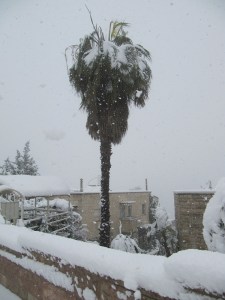
Well, think again. It hardly ever rains… in the summer. But in winter, we have plenty of rain. Sometimes the heavens open and you can get drenched in minutes… seconds. You might be lucky – most winter days are dry and some are even warm and sunny. But come prepared for rain. Jerusalem, Safed and other parts of Israel can even get snow.

SnowPalmTree
Palm tree in snow

Why am I thinking of this now? Because a friend just came for a brief trip. During her three-day visit, rain poured down almost all the time. And she wasn’t prepared.

Another visitor once came for a ceremony, for which he had to stand outside in pouring rain, and the following day he was stuck indoors when snow fell.

When we lived in the beautiful area of Jerusalem called Yemin Moshe, we occasionally seemed to be standing in a river when we walked up and down its stairs.

Those deserts… they’re only in the south of the country.


You have been warned!

~~~

Do you want to write (or talk) about one or more of the SIM topics – Social anxiety, Israel, Misunderstandings? The details are here.

Categories
SIM Talks with Miriam Social anxiety

SIM Talk 7: Bravo!

#SIMTalksWithMiriamThis post is from me, because I think this is important.

Are we brave?

Social Anx (@social_anx) ran a pole on Twitter, asking social anxiety sufferers whether they think they’re brave.

Brave Social Anxiety Sufferers

Only 14% consider themselves brave.

That means 86% of those who took part are wrong, in my view, unless any of those are constantly locked up in a room and never see a soul. I think anyone who defies social anxiety enough to venture out, to do things outside their comfort zone, to face potential derision, disdain, misunderstanding, rejection – is a brave person.

The fact that 86% of responders do not see themselves as brave is due to low self-esteem, a symptom of social anxiety. They are brave and need to recognise that. If they don’t recognise their bravery, no one else will.

And that’s unfortunate.

I am Brave
Yes, this was especially brave, but I say we’re brave all the time.

Stop press! This quote from @SocialAnxiety88 says it all:

You are not weak. People like us, we’re brave. We’re the ones who get up and face our worst fears every day. We keep fighting.

Categories
Books SIM Talks with Miriam Social anxiety

SIM Talk 6: Katharine Johnson

#SIMTalksWithMiriam

A very happy birthday to author Katharine Johnson, who tells us about a particular consequence of social anxiety in her own life and in that of a character in her novel, The Silence, which I loved.

Why I wrote about Selective Mutism

Hello Miriam,

Katharine JohnsonThanks so much for inviting me onto your blog to talk about an issue that’s very important to me and one that (fittingly enough!) I’ve kept quiet about for a long time.

I chose the title for my novel The Silence (a psychological thriller set in England and Tuscany) for two reasons: it represents both the child Abby’s mostly non-verbal state and the adult Abby’s battle to keep her past secret. It’s the first of these situations I want to talk about today.

Selective mutism is usually combined with social anxiety and having experienced both myself, I wanted to show readers what it felt like and tackle some of the misconceptions that surround this disorder. Although my experience was back in the 1970s, my sister Rosie’s a speech therapist who’s an expert in social and behavioural disorders so I was able to make sure I had the most up-to-date information on the condition and treatments today and in 1991-1992 when this part of the novel is set.

Whereas Abby has very good reason for being non-verbal – the guilt over something she said being partly to blame for her mother’s suicide – my situation is much more common in that there wasn’t an obvious trigger. The uninteresting truth is that it stemmed from the shock of hearing my voice on a tape recorder for the first time when I was six. I can recall the moment with complete clarity, standing in a house in Germany while on holiday.  The voice I heard sounded so alien and I also realised in that instant why people were always asking me to repeat sentences like “saucy Susie sewing shorts for sailors” – I had a speech impediment that strangely had never registered in my own ears.

I’m sure these people never meant to be unkind (some were close relatives!). They found it funny and I suppose cute – but I was mortified. The result was that I stopped speaking in school and new situations. At home I was still noisy, out of the home I clammed up.

This apparent ability to be talkative on some occasions while refusing to talk on others makes it a hard condition for other people to understand or believe. Abby’s behaviour is frustrating and embarrassing for her father:

“You’ve got to start talking again some time. And don’t tell me you can’t because you’re talking to me now. There’s nothing wrong with your voice, it’s all in your head – it’s so bloody rude.”

The truth was, it frightened her too, sometimes, the grip the silence had on her. At first she had thought she had some control over it but gradually it rippled out to affect all sorts of people, even those who least deserved it. Once she felt it wrapping around her head, felt herself sinking into its depths, she knew there was no getting away.

“Are you even going to stop talking to me one day?” Her heart clenched at the tiny break in his voice.

“I do try,” she said at last although her voice was little more than a whisper. “Sometimes I can’t. It’s like a scarf wrapping round my neck.”

Although the scarf turns out to have a significance in the story, not talking isn’t a choice Abby makes – she feels physically unable to do so. People react to this in different ways – by getting angry like her father, finding it “spooky” like her stepmother, or by trying to jolly her out of it like her uncle when she first arrives at Villa Leonida:

“Will you shut up? You’re giving me a headache.”

“These approaches are very unlikely to work,” says Rosie. Neither is telling the child to “snap out of it.” They can’t.

Fear of other people’s expectations is a common trigger, which is one of the reasons for Abby’s father sending her to stay with his sister’s family in Italy. Being foreign is helpful to Abby in that the local people have no expectations of her but it’s still a problem within the English family she stays with.

When she first meets her uncle:

those first few moments with someone were crucial. Either she’d find her voice or she wouldn’t. If she didn’t speak to him immediately, she never would.

But it’s different with her cousin Philippa. Whereas other people assume that because Abby says nothing she has nothing to say, Philippa’s intrigued by it.

“Why do you pretend you can’t talk?”

“I don’t do it on purpose.”

Philippa grinned, clearly not convinced. “It’s driving Dad bonkers. Whenever I try  I always forget and get caught out by a question.”

It wasn’t a reaction Abby had encountered before. Most people got impatient or angry. They tried to trick her into talking by insulting her or bribing her with money they clearly didn’t have. Once at school someone had wrenched her arm behind her back further and further to make her scream . Her vision had whited out, she’d seen stars and thought she could feel her arm being ripped out of its socket but despite the pain she hadn’t been able to scream. But Philippa seemed to view it as some kind of talent.

This partly explains the close friendship that grows up between Abby and Philippa and sets them apart from other people, which is important for the story but is also quite a common experience.  

TheSilenceOver the next year, after transferring school and having speech therapy, Abby’s speaking improves although she still feels panicky and tongue-tied in certain situations. She describes her sessions to Philippa in letters – progressing from pointing to words or pictures to express a choice during the first term to the following term making a puppet nod or shake its head. At first her hand freezes even when asked to make the puppet squeak – selective mutism sometimes affects more than the voice, rendering the person immobile as well as non-verbal.

Gradually, she develops from whispering an answer into the ear of her trusted adult (her father) and then whispering from further away and eventually whispering to the speech therapist.

“I said a word in class today.”

Most children do grow out of it although the problem can continue into adulthood. As an adult Abby has it under control but when reintroduced to characters from that summer at Villa Leonida she panics that she won’t be able to speak.

And me? I mostly have it under control (to the extent people probably think I made the whole thing up) although to my shame in three years at university I never spoke up in group tutorials – what a waste!

So I was heartened the other day when I went to an Open Day at Bristol University with my daughter. The speaker for the Philosophy department said they absolutely recognised social anxiety. Students who didn’t feel able to do a presentation could either record themselves doing so or just write a script.

I know there’s still room for improvement but I think this shows what a long way people have come in understanding the issue.

Thank you, Katharine! That’s really interesting and goes a long way to explaining a confusing problem. I also didn’t speak in group tutorials. Presentations weren’t part of the curriculum in those days, although I’d probably have managed them.

The Silence is available in ebook £1.99 and paperback £6.99 (or equivalents) here.

The Silence

Doctor Abby Fenton has a rewarding career, a loving family, an enviable lifestyle – and a secret that could change everything. When human remains are found in the grounds of an idyllic Tuscan holiday home she’s forced to confront the memories she’s suppressed until now and relive the summer she spent at the villa in 1992 – a summer that ended in tragedy. The nearer she gets to the truth the closer she comes to losing her sanity. In order to hold onto the people she loves most, she must make sure they never discover what she did. But the reappearance of someone else from that summer threatens to blow her secret wide open.

The Author

Katharine Johnson is the author of three novels and a non-fiction book. A journalist by training, she writes about ordinary people who through a bad choice find themselves in nightmarish situations. She lives in Berkshire, England and has a ramshackle cottage in Tuscany which is nothing like Villa Leonida. Her fourth novel, The Suspects, will be out later this year. When not writing she’s likely to be found with a book in one hand, a cake in the other or walking her spaniel while plotting her next novel.

Connect with Katharine on TwitterFacebookInstagramWebsite/blog.

Katharine has appeared on this blog twice before, in The Allure of Secrets and when she brought Irena to Letters from Elsewhere.

~~~

Do you want to write (or talk) about one or more of the SIM topics – Social anxiety, Israel, Misunderstandings? The details are here.