Categories
Books Reviews

Truly Amazing Adventures

I just finished a book. It’s called The True Adventures of Gidon Lev by Julie Gray, and I want to sing its praises from the rooftops.

The True Adventures is an amazing book, unlike any other that I’ve read. It started out as an account of the full and unusual life of Gidon Lev, but very soon the author slotted into the story, as the two became, as Gray calls their relationship, “Loving Life Buddies.”

Gidon Lev proudly holds the brand new book

The subtitle for the book is: “Rascal. Holocaust Survivor. Optimist.” It tells you immediately that this read will be poignant and humorous. It might make you wonder: How can you have humour in a book about a Holocaust survivor? My answer, in the typical Jewish habit of answering a question with another question, is: How can you not have humour when the survivor is a person who always has a smile ready to burst out? In every photo I’ve seen of him, every video, that cheeky smile is what I notice first. This is a man who never wanted his Holocaust experiences to define him, and they don’t. He is so much more than that.

I love the way the book is arranged, with Gray’s voice interspersed with quotes from various people and in particular from Gidon himself. In the middle of Gidon’s and Julie’s 2019 tour of Prague, for example, Gidon tells of Prague in 1938. When Gidon disagrees with something Julie wrote, his version pops up, too.

The writing itself includes some gems, like this description of Gidon: “merry, a bit kooky, with great intentions, always headed toward adventure and sometimes tilting toward windmills.” Also: “Memory is a famously mysterious phenomenon; the more we tell our stories, the more details we add, edit, or exclude.” And: “Anybody could relate to stories about relationships or jobs with bad bosses or a fun vacation. But when you experience something very specific, such as war or the suicide of a loved one or cancer, you occupy a different space. A lonelier one.”

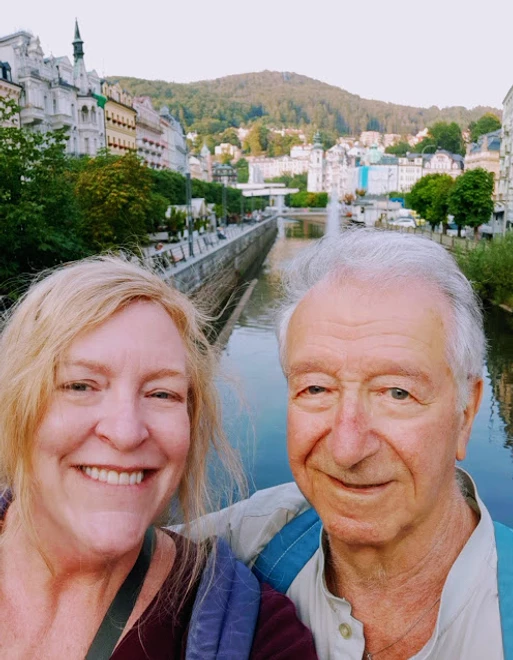
Julie and Gidon in Karlovy Vary, 2019

Gidon was adamant from the beginning: the book was to be about his whole life and not just the Holocaust. I agree with him and yet… The Holocaust parts are so important, so poignant, so inescapably, unavoidably present, that they were what made the book for me, and it was right that the topic of the Holocaust kept returning in the narrative. It had to. You can’t go through an experience like that and just move on. It has to influence everything that comes after.

The Israel parts felt closer, perhaps too close, because naturally there were sections I didn’t agree with. I found myself thinking: I’ve lived here for forty-four years; how dare this newcomer say such things! But I took myself to task, because of course she’s had time to create her own views, and living here gives her the right to express them. Still, when I read that the Snake Path leading to the top of Masada is dangerous, I shouted back, “It isn’t! I’ve climbed it and it isn’t!”

The personal parts of the book were interesting as other people’s lives often are. I couldn’t imagine being in some of the knots Gidon found himself in. I marvelled at his ability to disentangle himself, even if not always in the best way.

I learned plenty from the snippets of information dotted around. “The word holocaust,” Gray writes, “was first used to describe the Hamidian (or, in modern terms, Armenian) Massacres perpetrated by the Ottoman Turks from 1894 to 1896.”

I hardly need to add that I heartily recommend this book to everyone.

***

I received this book in exchange for an honest review. In no way did that affect my opinions, voiced above.

More information is available on the website. The photos are taken from there, with permission.


Categories
Books Interviews Reviews

Secrets Spoil Relationships

You can’t have a proper relationship with someone if you can’t be open with them. Rachel and her sister Imogen have discovered this…

I was lucky enough to receive an advanced copy of an exciting new novel: Façade by Helen Matthews.
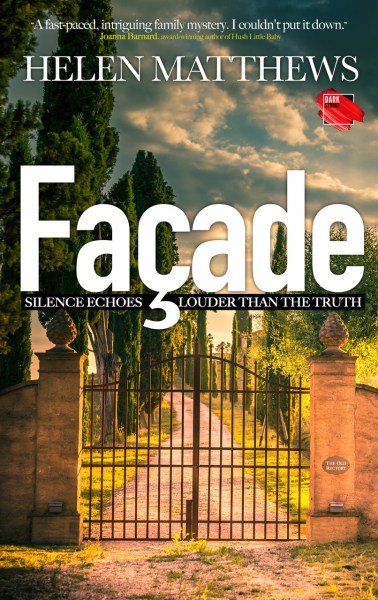
Façade by Helen Matthews

My review is followed by an interview with the author.

Review

Family secrets abound in this thrilling saga, and they’re revealed to us at different stages of the novel. Rachel is the one who has had to shoulder the most secrets, causing rifts between her and those closest to her. But even she has more to discover. Her older sister, Imogen, has been sheltered from a lot. Why is that? Being kept in the dark has fired her jealousy; she was always wild and selfish. The biggest secret of all, the truth about Rachel’s and Imogen’s brother, is mentioned throughout the book, but only revealed at the end. And it wasn’t what I was expecting.

This novel has taught me a lot about careful plotting. It has also made me rethink the secrets in my own family and the way they affected me. Nothing quite as dramatic, although Imogen did remind me of someone.

Façade is a gripping story, highly recommended.

Interview

Hello, Helen, and welcome to the blog. You are new to Crooked Cat / Darkstroke, but you’re not a new author. Can you tell us briefly about your other books?

Thanks for inviting me onto your blog, Miriam, and for reading and reviewing Façade. I’m thrilled to know you enjoyed it.

Façade is actually my third novel. My debut, published in 2017, was After Leaving the Village – a  suspense thriller about human trafficking and modern slavery. I’m often asked how I came to write about such a dark and gritty subject but once I hit on the idea it wouldn’t leave me. I should add that the story is realistic and I couldn’t entirely shy away from the violence but it is not gratuitous.

I’m interested in how someone’s life can change in an instant: one poor decision, trusting the wrong person, or being desperate to escape from poverty can spark a chain of events. My main character in After Leaving the Village, is seventeen-year-old Odeta, from a village in Albania. She’s left school and is working in her father’s shop. Her life isn’t especially grim, but it’s dull. She knows there’s a big world out there and, when an enigmatic stranger walks into the shop and offers to take her to London to start a new career, she jumps at the chance. Her life is about to change, but not in the way she expected.

I wanted readers to stand in Odeta’s shoes and really get to know her and recognise that she’s an ordinary woman – just like you or me or one of our daughters. I didn’t want her to be a one-dimensional character or a stereotypical victim.

While researching my novel, I discovered a charity called Unseen, that works to support survivors of modern slavery. They answered my research questions, fact-checked the novel for me and their Director wrote a Foreword for the book. I’m now an Ambassador for the charity.

My second novel Lies Behind the Ruin, published in April 2019, is also psychological suspense but it’s not about human trafficking. It’s domestic noir about a family who flee overwhelming problems in England and escape to France to renovate a derelict property. The main part of the story is set in and around Limoges with authentic detail of the city and nearby villages which, I hope, shows some of the magic of France and explains why people crave a simpler life. Emma and Paul Ashby and their children  are a ‘blended family’ and face heartbreak when they make the move because Emma’s son from her first marriage refuses to come. But their challenges aren’t the everyday ones that impact all would-be ex-pats because their marriage is beset by secrets and lies. Once these problems escalate, both their dream of a new life, and their daughter Mollie’s safety, are at risk because – how can you build a new life on toxic foundations?

What about Façade? How does it compare to your previous novels?

Façade is psychological suspense, like my previous novels, but it’s standalone. I’ve never wanted to write a sequel or a series because I always have new ideas, new characters, and new worlds to explore. If I tried to reopen a story with some of the same characters from a previous novel, I’m not sure I could make it fresh.

The story of Façade opens in 1999 when the main characters, Rachel and her sister, Imogen, are still in their teens and their baby brother drowns at the family home The Old Rectory. Grief shatters the family except for Imogen, who escapes to live abroad with her musician boyfriend, Simon, who she later marries. Fast forward twenty years and Simon dies in a mysterious accident in Ibiza. Imogen returns, bitter and resentful and determined to reclaim from her family what she believes should be hers. The carefully constructed veneer that has kept the lid on secrets and held the family back from disintegrating begins to shatter and Rachel and her teenaged daughter, Hannah face unexpected loss and danger.

I always try to make my novels multi-layered. On the surface, I hope readers will find them gripping page turners with multiple mysteries to be solved but, for book club discussion, and those who like to reflect on what they read, there are deeper underlying themes. In Façade these include memory, property and houses, and the meaning of home.

Your novels all sound fascinating. Why did you choose that genre?

It seems amusing to me now but, when I started writing novels (including ones I’ve abandoned), I just thought I was writing ‘a book’.  I didn’t understand about genre and how important it is for a publisher to be able to target readers, who might enjoy your book. I had to learn fast! A few years ago I won a novel competition and had a one-to-one with a big five publisher. They told me my book was ‘high end women’s fiction with book club potential’ so I was surprised when my publisher categorised After Leaving the Village as a ‘suspense thriller’, which is a sub-division of crime. Since then, I’ve gravitated more towards writing psychological suspense and have read widely in the genre so I can learn from the masters.  Early exponents of this were authors like Daphne du Maurier, Patricia Highsmith, and Barbara Vine but it’s had a huge boost in popularity in the last ten years since Gone Girl and The Girl on the Train  were published. I read widely in the suspense genre to understand the tropes and what works, what doesn’t. Some hugely successful novels are deceptively simple, like Behind Closed Doors by B A Paris, which was a massive million-selling best seller (and is very clever) but others are more literary, such as The Wych Elm by Tana French and Fates and Furies by Lauren Groff – both excellent books.

Psychological suspense suits me because I’m not so interested in violent and gory deaths or in the painstaking work the police undertake to solve a murder. I don’t mind a bit of terror but I’d rather this was in the character’s and reader’s heads. I prefer writing about flawed characters, people who make mistakes or bad choices and, if their life experiences have made them sociopathic, so much the better. I’m fascinated by that too. Personally, I don’t have a problem reading about unlikeable characters but that can be a challenge for a novelist because you have to keep your readers interested in a flawed character, even if they don’t sympathise with them.

Your bio says, “She fled corporate life.” Why was that?

After a degree in English, I went travelling, then joined the British Council as a graduate trainee. Working on the educational and cultural side of  international development was intellectually stimulating and satisfying but quite badly paid so I changed direction. Later on, that turned out to be a good thing because my husband was made redundant and I became my family’s breadwinner while he looked after the children and ran a small business he fitted in around them. I ended up in the Energy industry where my specialisms were HR, Employee Benefits and Pensions. I always wrote fiction in any spare time – late at night or when I was on holiday. In my day job, I did a lot of writing: reports, legal documents, strategy papers and financial analysis. I found it was sapping my creativity and turning my prose into business speak. So, for a few years,  I stopped writing short stories and novels and turned to writing articles instead. My freelance journalism was published in a few newspapers and lifestyle magazines. A highlight was recording some columns I wrote about family life for a BBC Radio programme called Home Truths, presented by the late and lovely John Peel.

As every author knows, if you don’t write it makes you unhappy so, once my children were older, I decided to quit my job and go back to university to study for an MA in Creative Writing. I don’t believe writers need to do a course like this – there are other paths – but, for me, it was because I needed to get my imaginative writing back on track after years of working for big companies. It wasn’t possible to give up paid work altogether, so I carried on with consultancy alongside my studies and, over the next few years, gradually switched to freelance copywriting, which fits in well with writing fiction.

Tell us about the charity, Unseen. How does it go about eliminating slavery from the world?

Unseen is a small UK charity with a big reach and is dedicated to working towards a world without slavery.

Unseen runs the UK’s national Anti-slavery Helpline where victims, survivors and concerned members of the public can get help and advice 24/7. They run safe houses for women survivors and for men. These aren’t just hostels but places where survivors get medical and psychological support and counselling to help their recovery. They run outreach schemes to help people who have been  resettled in the community. They are also working on a project to support child victims of trafficking, which is a particularly tricky area. A high proportion of children rescued from slavery and placed in local authority care abscond and return to their trafficker because they don’t get the specialist support they need.

Unseen also provides training for employers, police forces and medical professionals to help them recognise the signs of slavery and they give advice to government to help them formulate strategies and legislation.

I make a monthly payment to sponsor a room in a safe house. Since becoming an Ambassador for Unseen, I’ve raised over £2,000 from donating a small percentage of my book royalties and from my author talk fees.

Thanks for featuring me, Miriam. It’s been fun answering your questions.

Thanks for answering them, Helen.

***

The publication date for Façade is 17 September 2020.
Pre-order it on Amazon.

Find out more about and get in touch with Helen at:

website, Twitter, Instagram, Facebook
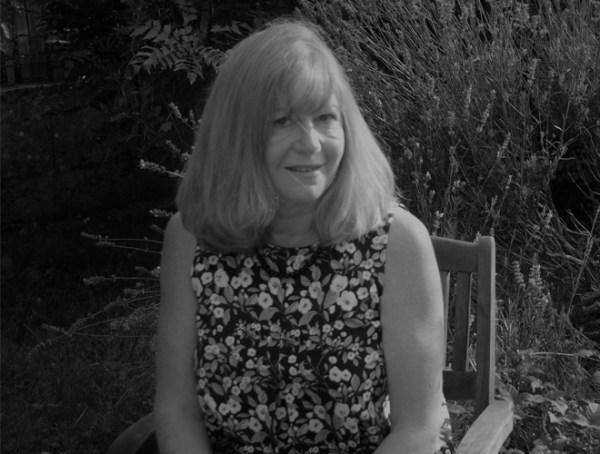
Helen Matthews

Categories
Books Reviews

Grab it While You Can

Cultivating a Fuji (Kindle version) is free this weekend.

Cultivating a Fuji also received another lovely review, which ends:

From a difficult and challenging subject matter, Drori has crafted an intelligent, compelling and thoroughly enjoyable book, one that everyone would benefit from reading.

And here’s the new trailer:

Categories
memories

Dear Mum & Dad

Dear Mum & Dad,

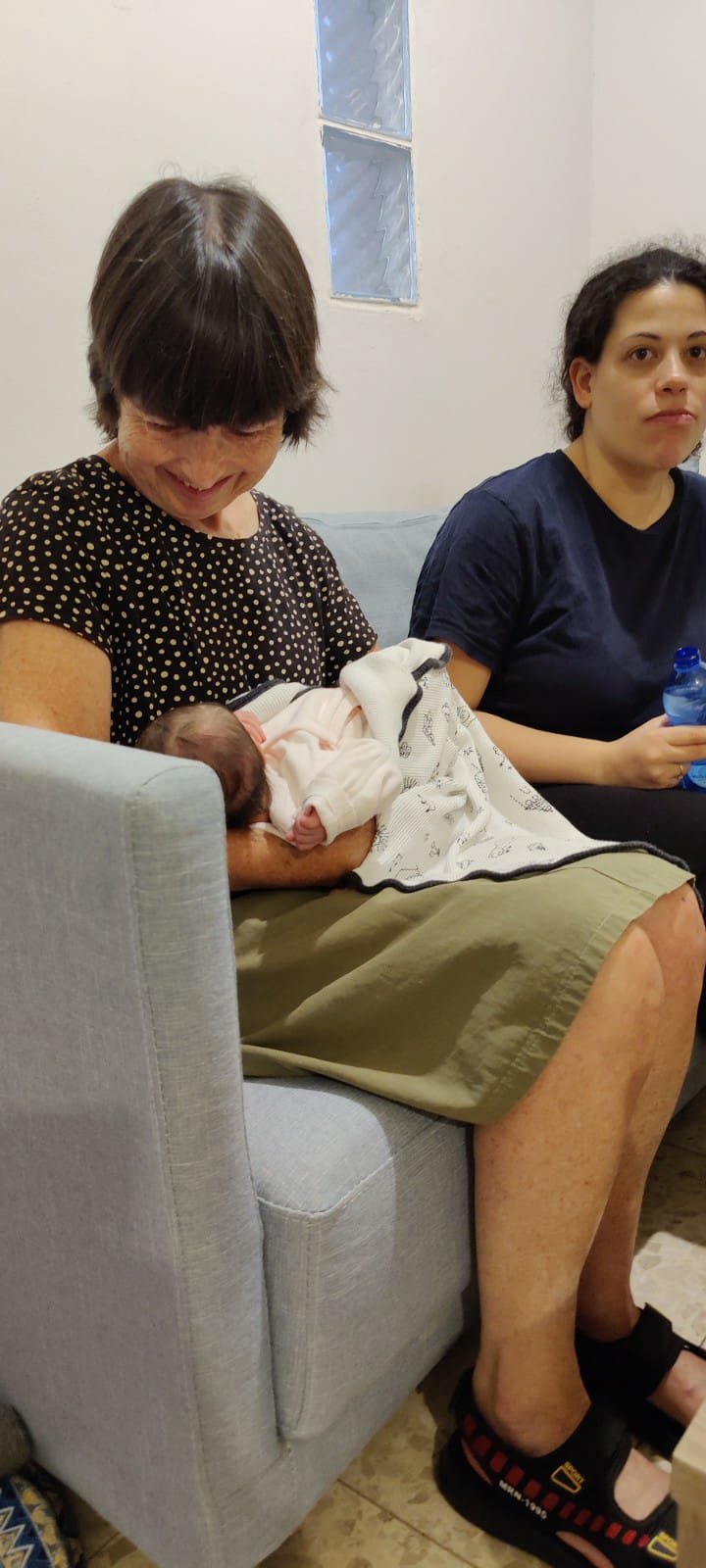
First of all, I want to wish you happy birthday, Mum. 108 today. Secondly, I want to tell you that you have become greatgrandparents. That little boy, who was 7 and 24 when you left this world, is now a father, and I am trying to get used to being a grandmother.

Baby1-12

You might know this, or you might not. Who knows? If you do, you’ll also know that we’re now in the second wave of a pandemic. I’ve had to stop dancing, and I’ve spent a lot of time at home. But I know I’ve been lucky in many ways.

You must both remember the previous pandemic, a century ago, although neither of you ever mentioned it. Did it somehow pass you by and leave you unaffected? I wish I’d heard more about your lives before I was born. I know I could have asked, but I didn’t think of doing that. And I had no idea about the pandemic. I did learn something of your lives during the Second World War, but nothing of living through the First.

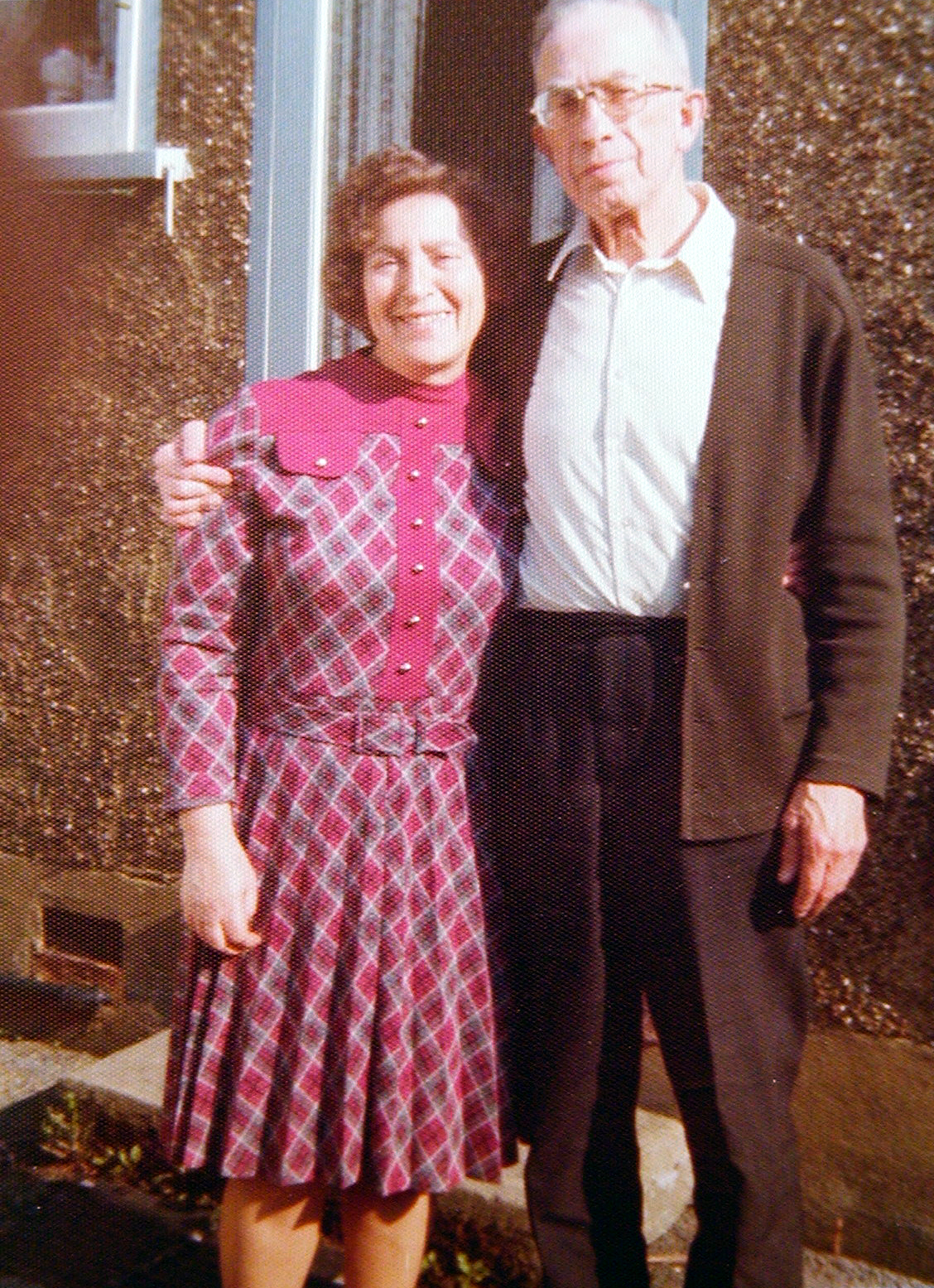
Moshe & Esther

You must have endured a lot, but here you are, standing happily together in the sunshine in front of the back door of the house I grew up in. You must be around the age that I am now. I’m glad you were able to enjoy this and many other happy moments.

Categories
Books

An Appreciated Editor

I don’t often write about my other job as an editor, but now is a good time to do exactly that.

I just finished working with Joan Livingston on her new novel, Killing the Story, out on August 26th (the day after my birthday) and available for pre-order now. This is the fourth novel of hers that I’ve edited, and I love them all.

I also enjoy being appreciated – don’t we all? – and this post shows that to be the case. However, the editor in me wants to change the tense of a verb in this sentence:

She’s originally from the UK, but has lived in Israel for many years and does a lot of traveling.

I did a lot of travelling. I hope to do a lot of travelling. But just now… nope. But that single l in ‘traveling’ – I know that’s fine in the US.

The first time I was asked to edit a novel in American English, I worried that I wouldn’t know all the correct idioms or get the dialogue right. “Don’t worry,” I was told. “The author comes from the UK but lives in the US and she knows all that.” That was almost entirely true, but I did query one word (I can’t remember which) that I thought might not be understood by Americans. The author was surprised to discover I was right. I think living in Israel has opened me up to more Americans than the average British person would come into contact with.

That doesn’t mean I know all the idioms, but I trust Joan, who has lived there all her life. And, yes, I keep her writer’s voice. I think that’s important.

Editing a book is a long process, but it’s also enjoyable, especially if the book is interesting and the author is easy to get along with. Fortunately, I haven’t worked with any stroppy authors, but I’ve heard stories! And I’ve enjoyed all the books I’ve worked on.

I’m currently editing a memoir by a non-native speaker of English. She writes English very well, but the mistakes she makes wouldn’t be made by a native speaker. Sometimes, they’re not even mistakes, and I find myself saying, “It’s not wrong, but it doesn’t sound quite right.” Yes, we actually talk, via Zoom. It’s quite fun.

There are different types of authors. Some accept all my suggestions, while with others there’s more discussion. With the first type, there’s less of the back and forth, and that saves time. But  discussion probably leads to a more polished result and that, after all, is the point of the exercise.

Variety, as they say, is the spice of life.

Spice of Life

Categories
Books short stories Social anxiety

News

There’s so much happening, I can’t keep up with it all.

Some of it is private. Some of it is yet to take place.

But this is what I can tell you.

~~~

Social Anxiety Revealed is taking part in the Smashwords July Summer/Winter Sale.

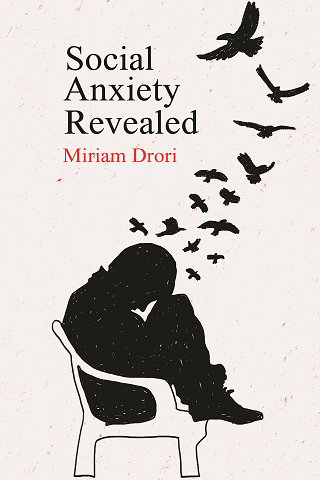
Social Anxiety Revealed by Miriam Drori.

.

.

.

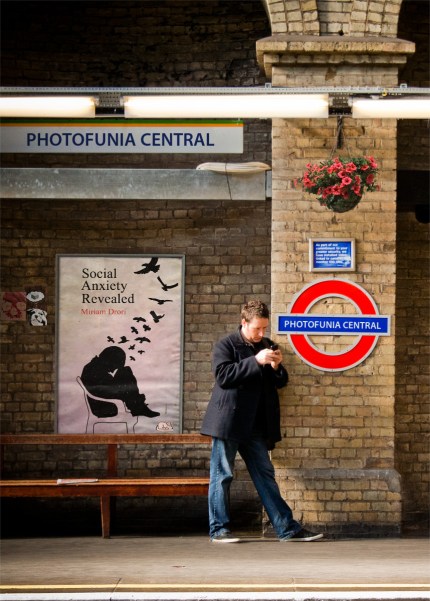
This book is suitable for teachers, parents, employers, employees, group members. In fact, it’s suitable for everyone, because it’s NOT a self-help book. It explains what social anxiety is, so that you can understand.

.

.

.

.

~~~

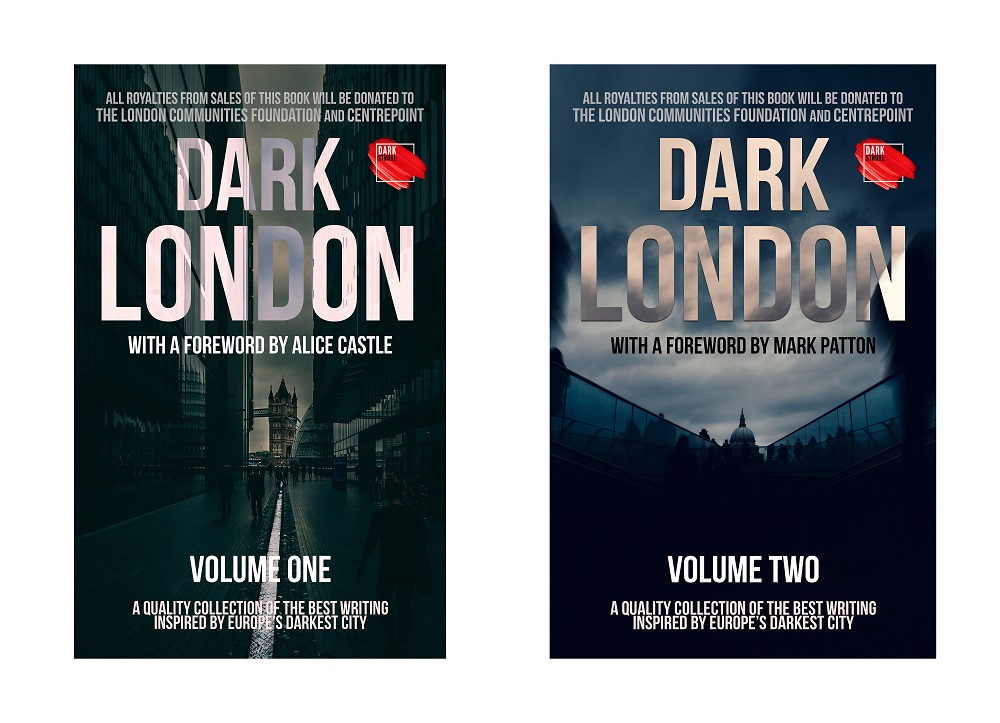
Both volumes of Dark London have now been published.

Find them at Volume One and Volume Two.

Dark London, Volumes One and Two

Eighteen fabulously dark stories centred in the famous city of London.

My story, Gruesome in Golders Green, begins with an unusual encounter in the suburb of Golders Green.

~~~

That’s all for now, but watch this space….

Book News is the Best News!

Categories
Books short stories

Gruesome in Golders Green

In a way, I feel sorry for Katy. I imagine she had a tough upbringing and was left to fend for herself long before maturity found her. Even now, aged twenty-six, she makes some pretty bad decisions and seems unable to protect herself or plan any sort of future. I expect her outlook on life will change soon, but whether that change will be for the better remains to be seen.

Katy is one of the two women in my short story, Gruesome in Golders Green. The other woman? I’ll let you meet her when you read the story.

I’ve always liked the alliteration in the name Golders Green, which is a London suburb that borders Hendon, where I grew up. I enjoyed adding another G-word to create my title. ‘Gruesome’ fits the story perfectly.

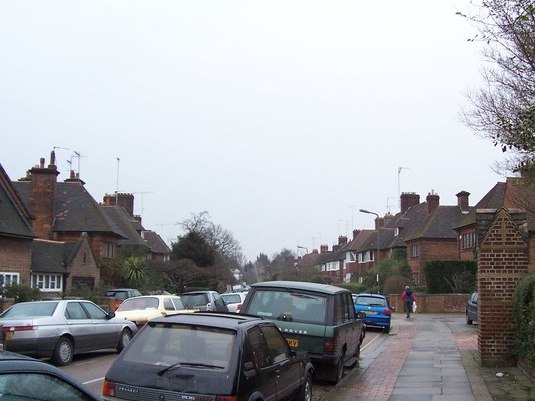
My familiarity with north-west London led me to choose it for my setting and helped me to write the story. Google Maps also played a part in adding to my knowledge. So did Wikimedia Commons:

Rotherwick_Road, Golders_Green
Rotherwick Road, Golders Green. © Todd Keator / Rotherwick Road, Golders Green / CC BY-SA 2.0

The only other research I did for the story revolved around Katy’s lifestyle and UK police procedures.

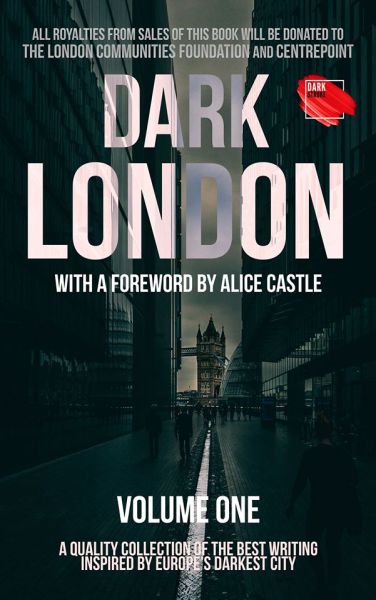
Gruesome in Golders Green is the first of eighteen fabulous stories that comprise the two-volume anthology, Dark London, published by darkstroke. All proceeds will go to two charities: Centrepoint and The London Communities Foundation.

The first volume will be released on 25th June and the second on 2nd July, but both can be pre-ordered now. Click on the pictures if you dare!

Dark London, Volume TwoDark London, Volume One

Categories
Social anxiety The writing process

Of Technical Issues and Imaginary Pets…

…and something else.

I want to tell you a story, starting at the end. The lovely, kind, patient, funny, talented author, David W. Robinson, interviewed me here. David has written lots of books, the latest being The Anagramist, which you can read about here.

The Anagramist

Where does the story begin? It could start with my relationship with interviews, although I think that’s really backstory. In my previous life, my experience of face-to-face interviews was with job interviews. Frankly, the fact that I did get accepted for some jobs was probably despite those interviews.

I think the story should begin last Sunday, when David sent me the interview questions, but then I need to add a bit more backstory. Of course, if I were writing the story properly, I would begin at the beginning of the story itself and seamlessly weave in the backstory. As I’m not telling it properly, I’ll fill you in now. David originally told us authors that those who wanted to take part would create a video with our answers and he would add his part of the chat afterwards. I thought, I can do that; it’s like creating any video. And I volunteered. It was a bad decision, it turned out.

I’m still in the backstory, because at some point David realised it would be much easier for him to just record an online chat, using Skype or Zoom. This is when I should definitely have backed down, but I didn’t. I thought, I’ll work out the answers in advance, so surely it can’t be that hard. That’s me. I’ve never had that pre-event anxiety that’s supposed to be part of social anxiety. That’s not necessarily a positive trait.

Right. Finally, I can begin the story. David sent me the questions, I sent him my answers and we arranged a time for the interview on Zoom. I decided to use my mobile phone, because the camera on my laptop is too low down, and makes me look cross-eyed. But the phone, it turned out, created more problems than it solved. We weren’t synchronised, we had problems understanding each other and that wasn’t just because of David’s hearing difficulties and my lack of familiarity with the Yorkshire accent.

So we went back to the previously suggested method. I made my video (videos, actually, but let’s not get into that) and sent it to David. But he discovered that he couldn’t add his part without taking over the whole screen, rather than having us side by side all the time. So we eventually scrapped the video idea and David put the interview out as a written one. End of story?

Creating Videos

Yes, but I’ve missed something out. Although David was super kind and blamed everything on the technical problems on both sides, it must have been clear to him, as it was to me when I watched the videos, that my performance left a lot to be desired. While his part was polished and flowed easily, mine was hesitant and unnatural, as it used to be in job interviews, as I often sound when simply chatting. I’ve decided before that I don’t want to do video interviews because of that. Why did I let myself volunteer to be interviewed yet again? Because this is part of being an author in the 21st century. Because I think I need to crack this and always imagine that next time it’ll work better.

And how do I manage to give presentations? By practising beforehand and learning whole texts off by heart. Or by reading passages from the page. A presentation isn’t a chat; sometimes you can get away with that.

The imaginary pets? All part of David’s wonderful humour in our numerous emails. He made up cats and dogs, which led me to think of the rain we probably won’t see in Israel for five months, which led him to talk of droughts. And then there was a budgie (or there wasn’t). Maybe I should give up on being an author and open a pet shop with imaginary pets.

Categories
memories

About Facebook Memories…

… and one in particular.

I know, some people prefer not to see them, but I generally like to see those posts from the past that pop up every day. Of course, some of them are no longer of interest, while others bring a smile to my face and words from my lips.

“Was that really six years ago?”

“Was that only last year? So much has happened to me since then.”

In the current climate, I also think of how the whole world has changed since last year.

One of today’s memories brought a different reaction from me: regret.

We met, she and I, in an online forum. Later, she started up another, smaller forum and I joined it. We interacted quite a lot. I even met her in person when we stayed together for two days.

Eventually, with the rise of Facebook, there didn’t seem any point in continuing with the forum. We became Facebook friends. She sent me a message in Hebrew; I was touched.

SadMemory

It couldn’t last. Although we had a lot in common – enough to chat about on the forum – there was too much that separated us. Topics that didn’t come up on the forum couldn’t help but come between us on Facebook. She broke off contact.

I think about her sometimes and hope she and her family are well and happy.

Facebook is supposed to bring people together, but sometimes it tears them apart.

Categories
Books Social anxiety

Standing on the Platform

Social Anxiety Revealed by Miriam Drori.

.

.

.

My non-fiction guide to social anxiety has begun the next stage of a long and exciting journey.

The first stage, which lasted for thirteen years, transformed it from a collection of random ideas to structured text.

.

.
Cover - Bestseller

.

The second stage saw it travelling together with the many wonderful books – mostly fiction but also non-fiction – of the publisher, Crooked Cat Books.

As Crooked Cat changes direction, Social Anxiety Revealed had to part company and continue alone.

Social Anxiety Revealed by Miriam Drori.

.

.

And so, my little book has now changed platforms and is standing proudly, thrilled to be beginning a new stage of the journey. Yes, you can now find it, with a few minor enhancements, on Smashwords.


.

.

.

.

About Social Anxiety Revealed

Fear of other people? Most of us feel this occasionally, when giving a presentation or being grilled in a job interview. This is not social anxiety disorder.

Fear of what other people think of you? We have all felt this, too. It is why we dress as we do and generally try to behave in a way that is expected of us. This is not social anxiety disorder either.

But when those fears become so prevalent that they take over your life? When they cause you to hide away, either literally or by not revealing your real self? When you keep quiet in an attempt to avoid those raised eyebrows and the possible thoughts behind them? That is social anxiety disorder.

And it is much more common than you might think. In the mental health table, it comes third – after alcoholism and depression – and yet most people don’t even know it exists.

If you have social anxiety disorder, this book is for you.

Even if you don’t have social anxiety disorder, you might have a friend, a relative or a work colleague who does. You might see it developing in your son, your daughter, or a child you teach. This book is for you, too.

Social Anxiety Revealed is created by people who yearn to ditch all these problems and live their lives to the full.

Can you help? When you have read and understood, you’ll be in a much better position to do that.