Categories
Bullying Social anxiety

Why can’t you forget and move on? (part 1)

I’ve been working on a personal essay with my writing group. At the beginning of the year, I submitted fictional stories for them to critique, but after reading personal essays by other members, I decided to try my hand at one, too.

My essay discusses how I became aware of social anxiety and the effect that awareness has had on me. Naturally, it also describes my childhood, explaining how I caught social anxiety in the first place. So far, I have submitted the essay twice. Each time, the members and the mentor said they wanted to know more. They wanted more examples, more explanations, more dialogue. So I’m still working on it and the essay is growing.

One man asked me a question after the last meeting. “I’ve heard stories about difficult childhoods before,” he said. “I always wonder why the people can’t just forget what happened and move on.”
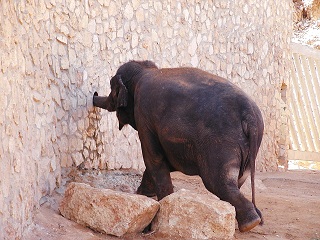
An elephant never forgets. Should we?

I stood there transfixed, not knowing what to say. I wasn’t hurt by the question; I knew he’d asked it because he wanted to understand. The truth is that there are many answers and someone was waiting to give me a lift home. But even if I’d had all the time in the world, I wouldn’t have been able to respond because… well… I have social anxiety. I don’t know how to think up responses on the spot.

“I suppose it’s easier said than done,” he said.

“Yes,” I replied, escaping with my lift-giver.

While editing my essay, I’ve been thinking about how I should have responded. How I could respond in writing. How I’m going to respond right here on my personal blog.

I tried to do exactly what my fellow writer suggested. When I left school, I tried to put all the nasty experiences behind me and start again as if they had never happened. But they did happen. They shaped the person I became. Ignoring them meant that I had less to talk about, because a big part of me was buried along with them. This was true even on the basic level: when anyone mentioned childhood experiences, I couldn’t join in with mine.

Today, I read an interesting blog post that tackles these issues.

You can’t shut out your own misfortunes because you need to piece together the reasons it happened, in order to communicate that to yourself and others.

says Joe Warnimont in the post.

There are other, less personal reasons why I want to write about these things. But I think I’ve written enough for one blog post. I’ll continue this another time, maybe tomorrow.
Categories
Books Bullying Israel Social anxiety

Living with Language

Life is strange. So is language. Stroppy Author and Catdownunder both blogged recently about the lack of words in English to describe a situation that we tend to feel is too hard to talk about. I thought of a word that’s missing in Hebrew: assassination. Perhaps it’s right that it’s missing. A leader who is murdered is a human being. All murders are equally bad. Then I thought of another missing word: bullying. That’s an oversight, in my opinion.

When you leave your country of birth to live in a country where a different language is spoken, things happen with your native tongue. Sometimes you forget words, because you’re more used to saying them in the new language. Sometimes new concepts appear and you hear them only in the new language. Sometimes people in the old country find new ways of saying things and you don’t know them.

For example, when I left Britain, “Oh right,” meant, “Do you know I’d forgotten all about that. Thank you for reminding me.” Or something like that. At some stage, on a visit back to my former home country, I realised its meaning had changed. Now it means, “Oh really? I never knew that.”

For years I felt cut off from the changing language. Now that I’m able to listen to BBC Radio 4, I’m more in touch. I know that young interviewees will start most sentences with the word, “So.” And I’ve finally learnt the expression, “to raise awareness,” which is what I want to do to social anxiety.

But when I asked recently how I should say I have social anxiety and people replied, “I live with social anxiety,” I thought that sounded strange. I thought I’d never heard that use before, but I think I had really. I just hadn’t taken much notice of it and certainly hadn’t taken it on board. It was part of my passive vocabulary – the parts I understand but don’t think of using.

And what’s the point of all this rambling? So (yes, I’m pretending to be young) the other day on Woman’s Hour, I heard this: “I don’t live with HIV; HIV lives with me.”

I let that sentence revolve several times in my brain. What did it mean? What does it mean? I wonder if it’s this: she doesn’t let HIV rule her life; HIV happens to be there, but she ignores it as much as possible and gets on with her life.

Taking control of SA

.

Can I apply that to social anxiety? I don’t think so. It comes up too often; it’s the cause of too many things that I wish were different. But that’s something I can aim for. It sounds much more possible than aiming to get rid of social anxiety.

Categories
Bullying

Cyberbullying

The world I grew up in was very different to today’s world. I would go to school expecting a day of bullying. But I also knew that it would end – that I would come home and be free of it. Lonely but not tormented.

Nowadays, bullying invades homes. On mobile phones, on social media, the four walls are no longer enough to protect children. What a world!

Fortunately, I don’t have any first-hand knowledge of cyberbullying. Not even second-hand. But someone asked me to share this graphic she helped to create, and she’s keen to receive comments and thoughts. I’m doing it because I can’t imagine how awful it would be to never be able to escape the bullies.

That graphic describes the situation in the US. This site gives advice for those in the UK.

Some of us try to make the world a better place, but new challenges keep appearing.

Categories
Bullying Social anxiety

My First Parallel Universe

I have several blog posts planned, inspired by reading other blogs. I hope I get round to writing them. This one wouldn’t wait.

Mapelba writes:

Have you heard the theory that there are countless parallel universes, that at particular moments in your life when one decision was made, another universe began with another you who lived the choice you didn’t make.

In my memory, I made the decision aged six, but really I think I always did this. At the age of six I was more able to rationalise it.

As I saw it, they picked on me. They all chose to tease me. In reality, it probably started as normal childhood behaviour. This is the way young children treat each other. But I didn’t know about that. My response was not to react – never to show that their taunts upset me, because if I did it would be worse.

In the parallel universe, I cried and they stopped teasing. They included me instead of spurning me.

In the parallel universe, this blog doesn’t exist, I don’t write and I’ve never heard of social anxiety.

But I’m married to someone else, have different children and probably still live in Britain.

My life is different in the parallel universe. I can’t say whether it’s better or worse. Where I am now, in this universe, it’s pretty good.

Mapelba says:

What moment in your childhood would change where you are now? Of course, perhaps it the small forgotten decision that made all the difference. You’re alive because you took an extra minute to tie your shoe and so you weren’t on your bike in the intersection when the truck ran the stop sign. But those moments you can never know.

Categories
Bullying

Accusing Former Tormentors

After my previous post, Erika recommended that I watch a recent TV programme. I won’t repeat the link here, as most of you won’t understand it, but I’m devoting this post to it.

In the programme, three people in their forties return to the schools where they were bullied to confront their former bullies. The former bullies – two of them, in each case – are not told whom they’re going to meet in advance and have no idea what’s going to happen. The hero (that’s how they’re described in the programme) enters the room and initiates a discussion about how they suffered as children.

In each case, the former bullies react in a different way. In one, a woman, who doesn’t remember the actions attributed to her, says, “If I hit you, there must have been a reason.” Later, she tells the hero, “You need to think what you did to make children hit you.”

In another case, a man, who remembered it happening, says, “You asked for it,” meaning that the hero behaved in such a way that bullying was inevitable.

In the third case, the bullies admitted that the bullying took place and apologised.

I found the programme fascinating, but I’m not sure I agree with the way it was organised or with all the conclusions viewers were encouraged to draw. When you’re accused of something, especially something you don’t remember doing, and especially when the accusation is sprung on you without warning, you generally do your best to defend yourself. Those people might have thought differently after reflection, but they weren’t given time for that.

Nearly forty years had passed since the events described. The people had all changed since then. I don’t think it was fair to blame those people for what happened when they were young children who didn’t know what they were causing.

The suggestion that the boy asked for the bullying, or brought it on himself, was dismissed as ridiculous, but I suspect it was true – it certainly was in my case. I came to expect to be bullied and so I behaved in a way that would make it almost inevitable – not intentionally, of course.

Another thing I didn’t like about the programme was its implication that all bullying includes physical violence.

BUT there were parts I liked and agreed with completely. The fact that bullying can influence future profession, life style, country of residence and more. The importance of talking about what happened.

So if a lot of people watched that programme, I think that was good, because it showed that the effects of bullying go much further than the playground. I wish there were a simple solution. Any solution has to be based on more education and more adult involvement. Beyond that, I don’t know what can be done to prevent bullying.

Categories
Bullying Reunions Social anxiety

A Decade Ago – A Celebration

On 3rd March, 2002, I received an email. It began: “Hi, it’s Gill Balbes (as was) here. Was talking to Jane the other night and she was telling me about how she’d been in contact with you and that you remember me (as I do you) so I thought I’d say hello. Schooldays seem a long way off but it would be nice to hear how you’re doing.”

Schooldays certainly were a long way off. It was over thirty years since I’d walked out of the school gates, vowing never to have any connection with any of the girls I’d known over the previous seven years – a few even longer. It was only recently that I’d added my name to the Friends Reunited site, opening up the possibility of contact, although I didn’t expect anyone to write to me.

But Jane did write and I made a decision: that if I was going to correspond with anyone from school, I would make the relationship meaningful by being open about what happened to me there. If they didn’t want to discuss it, there wasn’t much point in reuniting.

Fortunately, Jane did agree to discuss it. She also apologised for what she did to me, although I didn’t hold her or any of the former pupils to blame as adults for their actions as children. I always knew the bullying (which I called teasing then) had had a bad effect on the rest of my life, but never thought the children were mature enough to understand what they were causing.

Jane soon put me in contact with Gill, who had more time to write. Gill and I corresponded almost daily for a long time, and she became a very special friend to me. It was Gill who told me about social anxiety. I didn’t realise the significance of it at first, but gradually two things became clear. I was not alone in being this way and it’s possible to improve. (I don’t think it makes sense to say there’s a cure, and I don’t think there needs to be one.)

Gill has been the catalyst for many changes in my life – for starting to write, for starting a blog, and much more. We have now met several times. After ten years, I still count Gill as a very special friend.

—o—

Do you have a friend story you want to share?

Please note: I have scheduled this post to appear on the right day, but probably won’t be available to comment for a day or two.

Categories
Bullying

Revisit or Revise

Sorry – it’s been a while. I’ve been wondering what to write about. Then I saw this question on Facebook from A Soldier’s Mother:

What is the single moment you wish you could live over again? Not necessarily to change anything – just to experience it again?

There were several replies. Most found it hard to pick out a single moment. Me too. What would I choose? The moment after giving birth? How wonderful to relive that moment without having to suffer what goes before it! But isn’t the suffering part of what makes that moment so special?

At this point, I could go off on a different tangent: the value of suffering. But I won’t – not for now, anyway.

So, what other moments do I want to relive? Our wedding day is another significant one. But there are other, less notable moments I could relive. Walking on the mountains of Switzerland or elsewhere, dancing, giving a presentation to an audience. I really enjoy all of those.

A Soldier’s Mother later said she decided not to ask what moment people wanted to change in their lives because it could make them sad. But I thought about it anyway. One moment stuck out. There must be others, but this one blocks the others from my mind.

I was fourteen. I’d been bullied for nine years, although I never thought of it as “bullying”. I decided to stop talking. It was the only thing I could think of doing that might stop them tormenting me. It worked – partially. And I’ve been suffering from that decision ever since.

I don’t deny that my life has been good and still is, but it could have been better and easier and less complicated without it.

So, I invite you to think about either of those questions (without being sad – I’m not). And, of course, you’re welcome to comment below (although if you’re looking at this page of this site – not just this particular post – the comment button is at the top of the post).

Categories
Bullying

My Crime

Yes, I have decided to reveal all. I realise this could have serious consequences for me, notably that they’ll be coming to take me away. I just don’t know who “they” are.

So this is it. I promise I didn’t make this up. No, in fact I borrowed it from mapelba, who wrote it this comment: “I was a first class criminal in high school. I broke the laws of fitting in.”

A great comment. I could have said it myself. If I’d been clever enough.

***

My next post may well highlight the wide diversity in shapes and sizes of boo….

Until next time 🙂

Categories
Blogging Bullying Social anxiety

How should I react?

Sometimes ideas go around from blog to blog. One person blogs about something and others decide to blog about the same thing. I first saw this idea on Rosalind Adam’s  blog. She got the idea from someone else. Probably others got the idea from her. That’s how it works.

This idea has a name. It’s called the Fun and Games Blogfest. You blog about your three favourite games. That’s fun, I thought. I could do that.

Then I thought some more about the games I played as a child. And each game I thought about led to thoughts about bullying. It’s not that I didn’t play games in my childhood. It’s not that I didn’t enjoy playing games in my childhood. But my overwhelming memories now are not about the happy times. They’re about the sad times. They’re about the times I was left out of games, or worse – made to feel worthless when I tried to join in.

So I decided I didn’t really want to blog about games I played. But I was still left wondering how I should react. Should I ignore the whole thing and not mention it, or should I write about my feelings? By writing, doesn’t it spoil things for others? The original idea was just a bit of fun. I don’t need to ruin that with my hangups.

This doesn’t apply only in this particular case. It’s true nearly every time childhood is brought up in conversation. I think that anything I could add to the conversation wouldn’t be appropriate. It would turn a fun conversation into a sad and boring one. So I keep quiet.

But I’ve kept quiet all my life. I’m fed up with keeping quiet. I want to speak out. I want others to know who I am. But I don’t want to spoil their fun.

When I attended my last school reunion, I kept quiet and listened to all the fond memories. Inside, I was crying for the girl who didn’t take part in those fun things they remembered. Afterwards, I decided not to attend the next reunion.

But that’s what I don’t want to do. That’s what social anxiety is about – hiding away so that society doesn’t know who you really are. I don’t want to do that any more.

That’s why I don’t know how to react. Any ideas?

Categories
Bullying

A to Z Challenge: B is for Bullying

Just a question today.

In the dark, distant days of yore when I was at school, teachers didn’t really have the skills to deal with bullying. They hadn’t been taught this, and presumably what seems obvious to me wasn’t obvious to them. For them, as long as violence wasn’t involved, what happened between the children was none of their business.

Nowadays, things are different. Bullying is discussed as part of their syllabus. Schools have bullying policies.

So why is bullying still rampant in schools?


BULLYING

Just a question today.

In the dark, distant days of yore when I was at school, teachers didn’t really have the skills to deal with bullying. They hadn’t been taught this, and presumably what seems obvious to me wasn’t obvious to them. For them, as long as violence wasn’t involved, what happened between the children was none of their business.

Nowadays, things are different. Bullying is discussed as part of their syllabus. Schools have “bullying policies”.

So why is bullying still rampant in schools?