Categories
Books Holidays

The Importance of a Title

The title of a piece of writing is important. It’s the first thing a potential reader sees. What title will turn that potential reader into an actual reader?

The title could be a pun. It could be a rhyme. It could tell the reader exactly what the piece is about, or it could leave the reader guessing.

I’ve been playing with words, wondering what to call the trip I’m going to blog about. One strong contender is: From Totleigh to Motley. It sounds good and sort of describes the two main events of the trip, although the writing course at Totleigh also involved a motley of people.

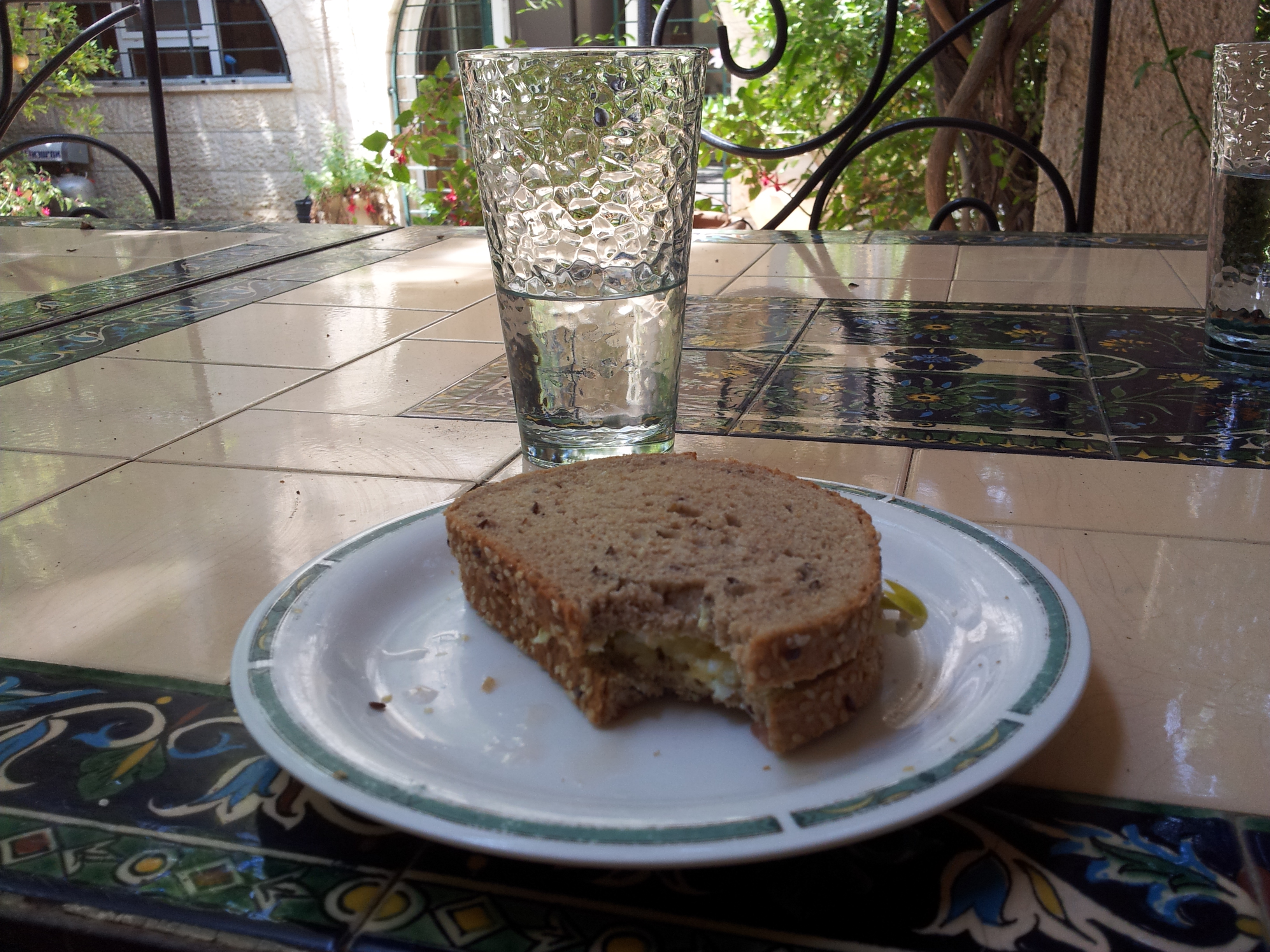
But I’ve decided on a different title: The Social Sandwich. The trip began with an intensive group activity and ended with one. In between there were many one-to-one conversations. Groups, too, but nothing as hard as those two.

Sandwich

Categories
Books

Flash Mob 2013: The Results

Some better writers won the contest. But I’m here.

And the winning stories are here.

I’m off to read them – to enjoy and to learn.

Categories
Books

Bombs and Butterflies: a Review

A memoir of a trip to Laos

I promised a different post next. I promised to reveal the identity of the mystery woman. I lied. Not intentionally, of course, but it seemed better to change the order of these posts and allow a little more time for anyone who still wants to join in and guess who she is.

Jo Carroll doesn’t lie. She tells factual accounts of her travels, and believe me they don’t need any embellishment. But they still need to be written so as to engage the reader, and Jo certainly succeeds in that. And sometimes she changes names and biographical details to protect the people she’s writing about. This is no secret. Jo writes about doing this in her new book, Bombs and Butterflies. After reading it, I understand that some of the people she meets need to be protected.

There are two main reasons why I prefer to read about Jo’s travels than to experience them for myself. One refers to things I’d rather not do; the other to things I find hard to do.

I’m not an intrepid explorer. True, I spent about three weeks in Nagaland, in north east India, an area that doesn’t see a vast influx of tourists. True, the conditions I encountered there were far from luxurious. But I went with a group. The only trips I’ve been on alone are those in which I’ve gone to visit people.

I couldn’t imagine going alone; I’d be afraid of being lonely for one thing. And there are things I would hate. Being woken up by a large rat, for instance, as Jo was. But Jo takes all these things in her stride and I can sit back in the comfort of my home and enjoy reading about them. I have read her previous book, Hidden Tiger, Raging Mountain, so I knew I wouldn’t be disappointed by this one.

What I would find hard to do is to connect to all the strangers Jo meets along the way, locals and other travellers, whose stories make Jo’s books so fascinating. While she tells of needing time alone, she’s clearly a very friendly person, too.

And she’s a wonderful writer. She knows what to include and what to leave out, and how to keep the reader interested with humour and fascinating details. And I love the short chapters, which make this book convenient for reading on a train, in bed or in a doctor’s waiting room.

In short, this is a book worth reading. Want to know how to get it? The information is here.

Categories
Books

FLASH MOB 2013

FLASH MOB 2013 is a hybrid blog carnival and competition celebrating International Flash Fiction Day, which is on 22nd June.

The organisers are looking for stories that take risks and experiment.

The competition is free and the details are at FLASH MOB 2013.

My attempt is definitely experimental for me:

The View from Heaven

They stood, she and he, embracing in the centre of a perfect garden. Flowers all around. Pinks, reds, yellows, purples, whites. Water cascading down the rocks into the pool. Maturing plums and kumquats nested by sun-frolicked green leaves. Sweet, juicy fruit waiting to be gathered and consumed.

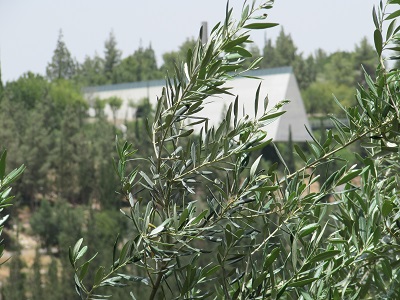
Over there, on the same level, stood a large bald prism. One triangular end thrust out through needle-sharp pine leaves. Acute angles pointed and menaced. Inside the prism, as clear as if its walls had been transparent and its position much closer, people wandered in a daze, struggling to grasp the horrifying enormity exhaled by tragic reminders.

“It looks quite near,” she said. “Could we walk there, down into the valley and up the other side?”

“Do you want to?” he replied in question.

“How long would it take?”

“Oh, about seventy years, going backwards.”

She glanced at him with a frowning half-smile. “We’d die before we got there.”

“Just as well,” he said, without smiling.

Categories
Books

A-Z Challenge: What I Learned

I’m so glad I decided to write these posts about memoir writing. I learned so much from them – first while writing them, looking up information and organising my thoughts, and then from the lovely comments, which enriched my knowledge and provided much encouragement.

As promised, I have summarised below what I learned from this challenge.

A is for Are you sitting comfortably

Out of the many lovely, encouraging comments, I chose this one:

“Memory is the grist to our mill as writers.” David Rory

B is for Beginnings

“Just as with writing a novel you can begin at a dramatic or crucially important point in your life and then go back later to show what led up to that point. Look at the way other memoir writers have done it, but then decide what you feel is right for you.” Jean Davison

C is for Craft

Angela Brown and Rosalind Adam added to my list of qualities needed to write a memoir, making:

  • Memory
  • Detachment
  • Insight into the past
  • Story-telling
  • Humour
  • Ability to draw the reader in
  • Order
  • Logic
  • Understanding
  • Perseverance
  • Honesty
  • Self-belief

Nick Wilford gave me some great advice on writing the memoir:

“How about placing a memoir in a historical context, of what was happening at the time; even if the author was not directly involved in those events it helps to build atmosphere.”

D is for Detachment

“I actually wrote a journal for a while in third person, which made me detach myself from everyday experiences, I learnt a lot from doing that.” chicaderock

“I found it easier to gain a healthy detachment when doing the editing rather than the first draft…. I think my early drafts were a necessary part of the process, and then when I was ready to put on my editing hat, I was better able to step back and decide how to shape the material.” Jean Davison

E is for Empathy

There seems to be a new sort of spam comment, which can appear to be a real comment because it pastes a sentence or two on the subject of the post. I think that’s what this is, because it seems to be part of a sentence and because the website in the link no longer exists (although searching for the string didn’t bring up any results):

“empathy is yes, in the details. Not the telling.”

Nevertheless it makes an important point. The details create empathy: the quiver in his voice, the stain on her dress, the empty glass.

F is for Feelings

“If… you don’t know what your feelings were then ‘sad’, ‘confused’ or even ‘emotionless’ are still appropriate adjectives.” Ann

“I think that the writing itself does generate feelings…. My experience is that when I write about something difficult in the past, there can be two results: either I become depressed and stuck (cause I haven’t really worked through this thing yet) – in which case I wouldn’t let anybody else read it – or I write myself to a better place.” Krina

“I think the fact that you felt you had to suppress and block out your feelings speaks volumes in itself, if you can get that feeling across to your readers.” Gill Downs

“Extracting feelings can be a tricky task. I’ve found that the best way to recall the feelings or emotions from a particular time, free writing worked well. No standards of what to expect when I wrote, simply me, a pen, a piece of paper, or three, and the release of the scene in all its horrible grammatical glory.” ~Angela Brown

H is for Humour

“Humor is so important! It’s not fair to just be intense and not allow the reader a chance to catch their breath.” AJ

I is for Insight

“When writing my memoir, sometimes I had to ask myself, could I be certain that my memories of how I felt about an incident then weren’t getting mixed up with how I feel about it now? Not always easy (though my old diaries helped a lot). I suppose this is where insight is linked to detachment, truth, memory and other aspects of memoir writing.” Jean Davison

J is for Journey

As everyone remarked, our whole life is a journey and so is the writing of it. What wasn’t said here, but was said in other posts in different ways, is that they’re not return (round trip) journeys. For better or for worse, there is no passage back to the place we were before.

L is for List of good memoirs

Nagzilla, catdownunder and David Rory added to my list to make:

  • Frank McCourt: Angela’s Ashes
  • Jeannette Walls: The Glass Castle
  • Elizabeth Gilbert: Eat, Pray, Love
  • Alice Kaplan: French Lessons: A Memoir
  • Stephen King: On Writing
  • Barack Obama: Dreams from My Father
  • Jean Davison: The Dark Threads
  • Reva Mann: The Rabbi’s Daughter
  • John Grogan: Marley & Me
  • Jo Carroll: Hidden Tiger Raging Mountain (a travel memoir)
  • Jenny Lawson: Let’s Pretend This Never Happened
  • A B Facey: A Fortunate Life
  • John Steinbeck: Journal of a Novel

M is for Memoir

The comments reflected the confusion about what a memoir is. It’s usually a part of a life as opposed to a whole-life autobiography. Some commenters also think a memoir gives the reader more freedom. As Pete Denton wrote:

“I think biographies are sometime very factual whereas a memoir is perhaps more open to creative license.

“When we were doing assignments in life writing we were encouraged to add details that were not necessarily true, but more artistic license. Paint the picture more like a story rather than be biographical.”

N is for Narrative voice

“I know that fiction is somewhat different but one does have to deal with the narrative voice in similar ways. I face these problems when I have to change from descriptive background or scene setting to present tense narrative of intimate moments or character building.
“The clunk danger is always there, too.
“I think one has to give the reader some credit for knowing what you are doing and allowing for these transitions. Most readers are able to sense how the writer is using their narrative and will be complicit in the style one chooses. They will do as theatre audiences do; they will suspend their disbelief if one carries them along in a well-paced narrative flow.
“I guess I’m saying, one can over think this process. The craft shouldn’t intrude; the art is in the hiding of the crafting. The narrator should be the reader’s friend and guide but should never bully or prod with too much crafting made visible.” David Rory

O is for Organisation

“I chose mainly chronological order starting with the point of entry into the mental health system and beginning of treatment, as this led into the main theme around which the book was focused. Later, I used some flashbacks to fill in background details about childhood and of what led up to going into hospital. I felt this worked best for what I was trying to do.” Jean Davison

P is for Proust

Royal Holloway Girl added to my list of Proust quotes:

“I think one of the most relevant things that he says (it isn’t clear how autobiographical his writing is) is how things in later life take you back to a certain point in earlier life.”

R is for Reunions for Reflective Research

Jean Davison, Royal Holloway Girl, Linda, Ann, Su-sieee! Mac, and Rachael ‘Honest’ Blair all commented on my reunion question, mostly advising not mentioning the memoir at first. Just finding things out from general chatter and leaving the memoir to emails later on. The general chatter part is harder for me than they probably realise, so I’m not sure about trying to follow this advice, but I’ll consider it.

S is for Secrets

“When I was working with kids we worked hard to help them understand that there’s a difference between ‘good secrets’ (what you’ve buying your mum for her birthday – I was rubbish at keeping those) and ‘bad secrets’ (anything that makes you uncomfortable, frightened, etc. – and most children keep these, regrettably.)

“As an adult, I’d also distinguish between things that are secret (because someone would be hurt if it were disclosed) and those that are private (anything I choose to keep to myself for my own reasons, but don’t hurt anyone.)” Jo Carroll

T is for Title, Topic, Theme and Takeaways

“Themes are also important because they help you in the marketing process. Check out the series of guest posts that I’ve got on the topic of Themes and Premise.” My Rite of Passage

W is for Why? And Wearing White

“Songs do and did often speak directly to me. When writing my memoir I put in song lyrics which spoke to me about what I was going through at the time. Sometimes a song wasn’t exactly meant to be about those things but for me it fit well with my thoughts, feelings and the events I was experiencing. But when my memoir was accepted for publication I had to take the lyrics out because it was either too hard, or too expensive, to get the copyright permissions.” Jean Davison

X is for X-ray

“This is something that needs careful thought. Are we ready for the exposure? Do we want it? Why? I think it’s important to examine our motives for writing, or more importantly for seeking publication of, a memoir before going ahead and trying for publication.” Jean Davison

–0–

During the challenge, I visited several blogs whose authors were also doing the challenge, and read about song lyrics, recipes, animals, life in a Spanish village and more. I wish I’d had time to visit more blogs.

A huge thank you to everyone who commented here. You encouraged me to continue and taught me so much. Hopefully, this will lead to something like this:

My Memoir

But hopefully with a more exciting title and cover!
Categories
Books

A-Z Challenge: Z is for…

Zzzz

Memoir Writing

This post is the last of 26 I am writing for the A-Z Challenge on the subject of writing a memoir. I’m not an expert in writing memoirs, but I’m exploring the topic with thoughts about writing one, and am happy to share the fruits of my exploration.

—-0—-

MemoirWriting-Sleeping

We’ve reached the end. But before you fall asleep, we have to go back to the beginning. Now that we’ve travelled through this journey of memoir writing, do we know what the beginning should be?

Well, no. We haven’t exactly written the memoir, just learned about the craft. But I think the beginning needs to reflect the theme of the memoir. It should also reflect a narrative voice, or possibly both (or all) narrative voices.

Thank you for reading my posts on the craft of memoir writing. If you’re about to embark on writing your memoir, I wish you luck.

Unfortunately, but excitingly, I probably won’t be able to respond to your comments before the beginning of May. But do please keep commenting. When the challenge is over, I will write a concluding post with a summary of all the advice you’ve been giving me. And don’t forget, the Comment link is at the top of this post.

Categories
Books

A-Z Challenge: Y is for…

Yesterday

Memoir Writing

This post is one of 26 I am writing for the A-Z Challenge on the subject of writing a memoir. I’m not an expert in writing memoirs, but I’m exploring the topic with thoughts about writing one, and am happy to share the fruits of my exploration.

—-0—-

I don’t need many excuses to include a video of the Beatles. After all, I grew up with them. But this song tells the opposite story to the one that usually makes a good memoir. “Yesterday all my troubles seemed so far away. Now I need a place to hide away.” We like to read about lives that have taken a turn for the better, people who started off badly but turned their lives around.

At least, I do. Don’t you?

Unfortunately, but excitingly, I probably won’t be able to respond to your comments before the beginning of May. But do please keep commenting. When the challenge is over, I will write a concluding post with a summary of all the advice you’ve been giving me. And don’t forget, the Comment link is at the top of this post.

Categories
Books

A-Z Challenge: X is for…

X-ray

This post is one of 26 I am writing for the A-Z Challenge on the subject of writing a memoir. I’m not an expert in writing memoirs, but I’m exploring the topic with thoughts about writing one, and am happy to share the fruits of my exploration.

—-0—-

MemoirWriting-Xray

An x-ray machine enables a radiologist to see inside you. Your memoir enables your readers to see inside you. Are you ready for the exposure that publishing a memoir will cause? Am I?

Unfortunately, but excitingly, I probably won’t be able to respond to your comments before the beginning of May. But do please keep commenting. When the challenge is over, I will write a concluding post with a summary of all the advice you’ve been giving me. And don’t forget, the Comment link is at the top of this post.

Categories
Books

A-Z Challenge: W is for…

Why? And Wearing White

Memoir Writing

This post is one of 26 I am writing for the A-Z Challenge on the subject of writing a memoir. I’m not an expert in writing memoirs, but I’m exploring the topic with thoughts about writing one, and am happy to share the fruits of my exploration.

—-0—-

MemoirWriting-Why

Who? What? When? Where? These are all questions we need to answer as we write the scenes that make up the memoir.

But most of all, we need to ask why. Because the why questions help us to make sense of what happened, and we need to make sense of events before letting readers get to them. Readers aren’t therapists. We don’t go to them with our problems. They want to see solutions.

There are many why questions that need to be answered while writing a memoir. Even if the answers don’t make it into the memoir, I think we should know the answers. Knowing them will provide the clarity we require to make the memoir shine.

  • Why write a memoir?
  • Why did that happen to me?
  • Why did I do that?
  • Why did they do that?

—-0—-

It’s time for another story from my past. This is one that probably won’t make it to the memoir.

I’ve been reading a lot of A-Z posts. One set of posts that has fascinated me has been Rosalind Adam’s discussion of song lyrics. In her K post, she asked, “Is there a song that speaks directly to you?” I could mention several such songs, but this time I immediately thought of one in Hebrew and the words, “This summer wear white and pray for the best.”

In the summer of 1986 I’d been through one miscarriage and was at the beginning of another pregnancy. I had a pair of white trousers that were slightly wider in the waist than my others and suitable for this stage. If there had been any bleeding, white wouldn’t have been the best colour to wear, but I hoped that wouldn’t happen again. I often wore those trousers that summer and often sang those words to myself. Fortunately, all was well. He weighed 3.875 kg at birth. That’s 8.54 pounds.

I don’t even know the real meaning of that song!

Unfortunately, but excitingly, I probably won’t be able to respond to your comments before the beginning of May. But do please keep commenting. When the challenge is over, I will write a concluding post with a summary of all the advice you’ve been giving me. And don’t forget, the Comment link is at the top of this post.

Categories
Books

A-Z Challenge: V is for…

Vignettes

Memoir Writing

This post is one of 26 I am writing for the A-Z Challenge on the subject of writing a memoir. I’m not an expert in writing memoirs, but I’m exploring the topic with thoughts about writing one, and am happy to share the fruits of my exploration.

—-0—-

MemoirWriting-Vignette

Meaning number 5 of vignette according to dictionary.com:

a small, graceful literary sketch

Our memories are full of often-small scenes arranged higgledy-piggledy. Our task in writing a memoir is to turn these scenes into vignettes and then find some way of ordering them into a book.

There is no need to write the vignettes in the order they will appear in the memoir. You can write them as you think of them. One tip I saw somewhere is this: if some of the vignettes are emotionally draining to write, intersperse them with easier, lighter memories to give yourself a break.

Unfortunately, but excitingly, I probably won’t be able to respond to your comments before the beginning of May. But do please keep commenting. When the challenge is over, I will write a concluding post with a summary of all the advice you’ve been giving me. And don’t forget, the Comment link is at the top of this post.