Categories
Books

Ocelots on Sale

Or rather, books by Ocelots are on sale, this weekend.

And when I say “Ocelots”, I mean the authors who are members of Ocelot Press, of which I am one.

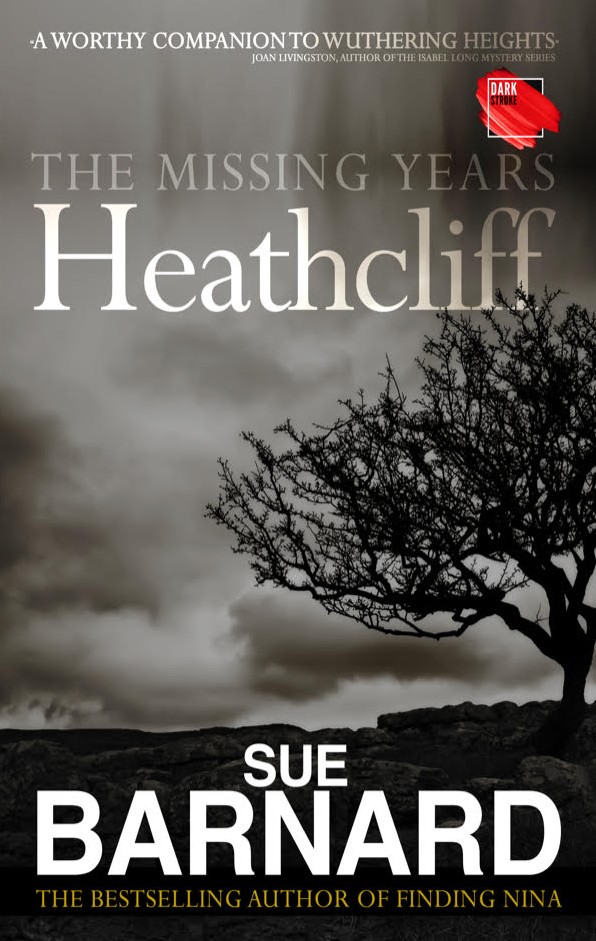
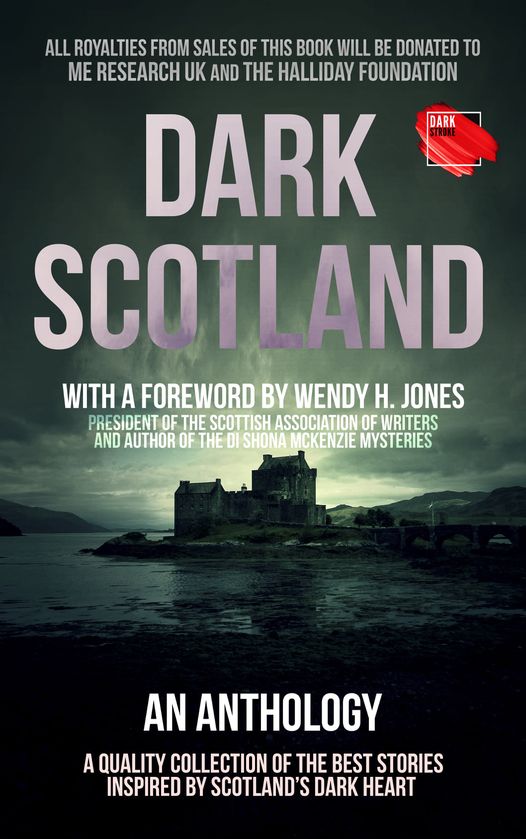
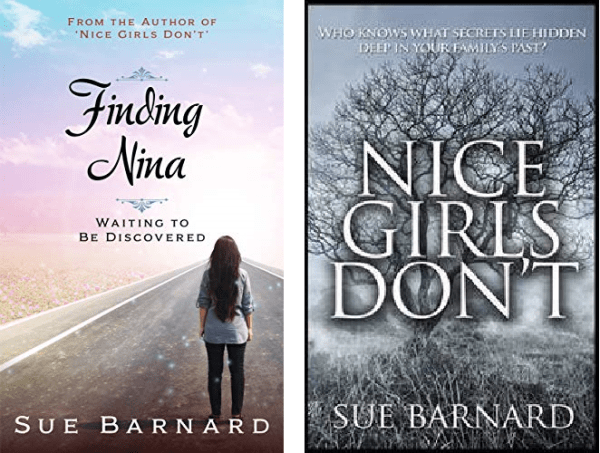
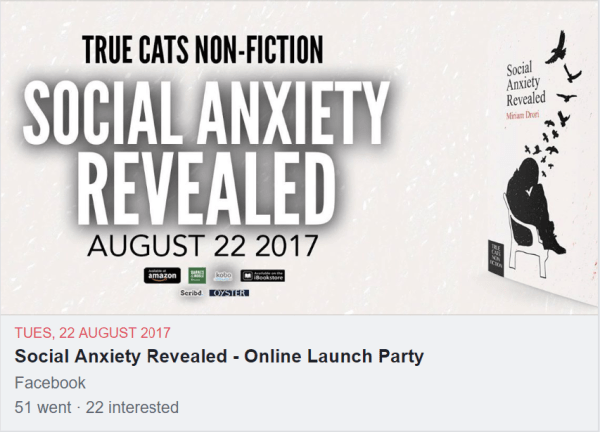
My two are here:

…along with two others. Here are the four links:

Below are the other books participating in the sale:

Happy reading!

Categories
Books That's Not Me

That’s Not Me: Sue Barnard

I’m delighted to host another author in the series That’s Not Me!

It’s Sue Barnard! Sue and I have been friends for a long time – ever since Sally Quilford brought us together in a romance workshop – romance writing, that is. But I digress. What about Sue’s fabulous stories? Are they based on real life?


THAT’S NOT ME

I’m often asked “Do you base your characters on real people?”  My answer is always the same: “I wouldn’t dare.  I’d have no friends left.”  But I can’t deny that some of my characters have quite a bit in common with me.

Having said that, my books have elicited polar opposite reactions, ranging from “As I was reading that, I could hear you saying it” to “Where on earth did that come from?”

The latter has usually been in response to either or both of my novels which are based on existing works of literature: The Ghostly Father (Romeo & Juliet) and Heathcliff: The Missing Years (Wuthering Heights).  In those cases I’ve had to get inside the minds of, respectively, a sixteenth-century Italian monk and an eighteenth-century anti-hero of unknown provenance.  Neither of those left very much room for my own voice – but I didn’t find this to be a problem.  For a large part of the time I felt as though the characters were in the room with me, looking over my shoulder and telling me what to write.  This was certainly the case with my short story Doomed Youth – a fictionalised account of the meeting in 1917 between the war poets Wilfred Owen and Siegfried Sassoon – which can be found in the Darkstroke charity anthology Dark Scotland.

But there’s plenty of me to be found in the heroines of my other novels.  Sarah in The Unkindest Cut of All is frequently the mouthpiece for some of my own views, whilst Emily in Nice Girls Don’t and Stella in its companion story Finding Nina both share quite a bit of my own experiences as an adoptee.

Some scenes in those books are based on real-life episodes from my own family history.  These include the Somerset air raid tragedy, and the discovery that one character’s grandparents had celebrated their Golden Wedding a year early (anyone who can count up to nine should be able to understand why).  And my memories of working in an independent bookshop gave rise to the following scene in Nice Girls Don’t:

“We had a man come in [to the library] and ask us to find a book which he’d seen somewhere a few months ago.  He couldn’t remember the title or the author, and he only had a vague idea what the book was about.  The only thing he could remember for certain about it was that the printing on the pages was blue.”

Some elements are definitely not based on fact – most notably Alice’s backstory.  For the benefit of anyone who remembers my late adoptive mother (who died when I was nineteen), I must stress that the fictional character’s secret shady past is completely invented. That part of the story was derived from extensive research into the unforgiving attitudes towards illegitimacy in the years during and after World War Two.  I am particularly grateful to the true-life tales portrayed in Sue Elliott’s moving and fascinating memoir Love Child (Vermilion Press, 2005), which I can highly recommend to anyone who wants to find out more about this grim and little-known side of British history. 

Perhaps the story which is closest of all to the truth is the tale of the photograph, which is definitely stranger than any work of fiction.  A factual account of this can be found here on my blog, whilst an adaptation forms part of the plot of Finding Nina.  There are some things which simply cannot be made up…

BIO

Sue Barnard is a British novelist, editor and award-winning poet whose family background is far stranger than any work of fiction.  She would write a book about it if she thought anybody would believe her.

Sue was born in North Wales some time during the last millennium.  She speaks French like a Belgian, German like a schoolgirl, and Italian and Portuguese like an Englishwoman abroad.  Her mind is so warped that she has appeared on BBC TV’s Only Connect quiz show, and she has also compiled questions for BBC Radio 4’s fiendishly difficult Round Britain Quiz. This once caused one of her sons to describe her as “professionally weird”. The label has stuck.

Sue now lives in Cheshire, UK, with her extremely patient husband and a large collection of unfinished scribblings. 

Her books are published byDarkstroke and Ocelot Press

Blog   Facebook   Twitter   Instagram   Amazon  Goodreads  RNA

NOVELSThe Ghostly Father   The Unkindest Cut of All    Heathcliff: The Missing Years   Never on Saturday (also available in French as Jamais le Samedi)  Nice Girls Don’t   Finding Nina  

ANTHOLOGIESDark London Dark Scotland  Dark Paris  Dark Venice  (All royalties from the sales of these anthologies are donated to local charities)

AUDIOBOOKSThe Ghostly Father


Why not join in?

If you want to take part in this series, as a writer or as a reader, you can find out more under That’s Not Me!.

Categories
Books Letters from Elsewhere

Letters from Elsewhere: Joan

Letters from Elsewhere

I’m delighted to welcome Joan to the blog today. Her letter speaks for itself. I expect the sentiments in the letter have been echoed by many over time, even if they weren’t written down. Joan comes straight from the pages of Finding Nina by my good friend, the fabulous author, Sue Barnard.

16th May 1944

My darling Stella,

I really don’t know how to begin this letter.  If I’m honest, I think I’m writing it as much to myself as to you.  I need to get things clear in my own mind.

I’ve never been in this position before, and I find I’m thrilled and terrified in equal measures.
I’ll never forget what Mother said to me when we brought you home: “Babies don’t come with an instruction book.”  I’ve heard that said before, when my friends and work colleagues had babies of their own.  Now I fully understand what it means.  But in my case there’s an added layer of complication.  You were given to us, which in some ways brings even more responsibility.

With effect from yesterday, when we went to court, I am now officially your mother.  But I still can’t get out of my mind the image of that poor young girl at the adoption offices.  I don’t even know her name, but she looked no more than seventeen at the most.  My heart went out to her as she handed you over to me.  The social worker told me afterwards that she’d insisted on doing this herself, even though it isn’t normally allowed. 

All she said to me – and I can still hear her voice now, six months later – was “I can’t keep her because I can’t marry her father.  Please look after her.”  Then she started crying, and the social worker led her away. 

That was the moment when I first realised that our happiness – having a child of our own after so many years of waiting – is the direct result of someone else’s heartache.  Yes, you will call us Mummy and Daddy, but there’s no escaping from the harsh fact that somewhere out there you have another mother who was forced to give you away.

A friend who adopted a baby a few years ago told me that I need to start telling you the truth as soon as possible – before you’re even old enough to understand it – and that way, there will never be a time when you haven’t known.  “Tell her that you chose her,” she said.  “It will make her feel extra-special.”

So that’s what I’m going to do.  Starting tonight.  It will be our own bedtime story.  You’re still only six months old, but the sooner it begins, the easier it will be.

One day you will have to know the truth.  I can only hope and pray that when that day arrives and you fully understand what this bedtime story really means, you will not stop loving us.

With all my love, from your new mother,

Joan

About Finding Nina

1943: A broken-hearted teenager gives birth in secret.  Her soldier sweetheart has disappeared, and she reluctantly gives up her daughter for adoption.

1960: A girl discovers a dark family secret, but it is swiftly brushed back under the carpet.  Conventions must be adhered to.

1982: A young woman learns of the existence of a secret cousin.  She yearns to find her long-lost relative, but is held back by legal constraints.  Life goes on.

2004: Everything changes…

Sue Barnard: Books

FINDING NINA is part-prequel, part-sequel to the bestselling NICE GIRLS DON’T, but can also be read as a stand-alone story.

You can find these two books on Amazon: Finding NinaNice Girls Don’t.

About Sue Barnard

Sue Barnard is a British novelist, editor and award-winning poet whose family background is far stranger than any work of fiction.  She would write a book about it if she thought anybody would believe her.

Sue BarnardSue was born in North Wales some time during the last millennium.  She speaks French like a Belgian, German like a schoolgirl, and Italian and Portuguese like an Englishwoman abroad.  Her mind is so warped that she has appeared on BBC TV’s Only Connect quiz show, and she has also compiled questions for BBC Radio 4’s fiendishly difficult Round Britain Quiz. This once caused one of her sons to describe her as “professionally weird”. The label has stuck.

Sue now lives in Cheshire, UK, with her extremely patient husband and a large collection of unfinished scribblings.

Sue is also in these places:
Blog   Facebook   G+   Twitter   Instagram   Amazon  Goodreads  RNA

Categories
Books Interviews

Distancing Ourselves from Our Fiction

(The reason for this title will become apparent at the end of this post.)

I’m delighted to welcome back to the blog my friend, colleague and brilliant author. It’s Sue Barnard! Sue’s next book, Finding Nina, will be published in just a week and I decided to ask her a few questions about the writing process.

Finding Nina is ‘part-prequel, part-sequel to the bestselling Nice Girls Don’t.’ Did you write Nice Girls Don’t knowing there would be a prequel/sequel or did the idea for Finding Nina come later?

Nice Girls Don’t was originally written as a stand-alone story, with no plans for a prequel or sequel.  Only after it was published did I realise that a loose end had been unintentionally left dangling.  Thankfully it didn’t affect the outcome of Nice Girls Don’t, but it did leave open the possibility of a spin-off. Finding Nina is in many ways a backstory for one of the characters who barely steps out of the shadows in Nice Girls Don’t.  I enjoyed exploring that particular character in more depth and letting her have her own say.

Was it hard to fit the new novel around the existing story? Did you wish you’d written anything differently in Nice Girls Don’t?

Finding Nina by Sue BarnardI had to make sure that the events of the two books coincided.  The action of Nice Girls Don’t takes place over just a few months (from April to July 1982), but Finding Nina covers a much longer timespan – from 1943 to 2004.  I had to write out a timeline of events covering the entire period, and work from that.

I also set myself the task of making sure that Finding Nina would still make sense to anyone who hadn’t read Nice Girls Don’t.  I hope I’ve succeeded.  The two stories do complement each other, but both can be read in isolation.

How much of the plot did you know before you began writing?

Very little, apart from my original one-sentence premise.  Building an entire story around that proved to be quite a challenge!

Did you write the novel from beginning to end, or did you write scenes and fit them together afterwards?

A bit of both. I tried to work from beginning to end, but some scenes were written out of sequence as they occurred to me, and were slotted in later.

How much of the first draft is in the final version?

In terms of the plot, most of it is still there – although the actual text went through several revisions along the way (including rearranging the order of some scenes following feedback from beta-readers). But one particular scene from an earlier draft didn’t make the final cut, because I realised that it didn’t add anything to the story.

Did you write any of it in longhand or was it all typed on the computer?

It was all typed on the laptop, apart from odd notes jotted down by hand (or on my phone) if ideas occurred to me when I was away from the computer.  It was interesting trying to make sense of them afterwards.

I suppose that could be a metaphor for my whole life…

Ooh, that made me pause for thought!

Thank you so much for answering my questions, Sue. Here’s some more information:

Finding Nina

1943: A broken-hearted teenager gives birth in secret. Her soldier sweetheart has disappeared, and she reluctantly gives up her daughter for adoption.

1960: A girl discovers a dark family secret, but it is swiftly brushed back under the carpet. Conventions must be adhered to.

1982: A young woman learns of the existence of a secret cousin. She yearns to find her long-lost relative, but is held back by legal constraints.  Life goes on.

2004: Everything changes…

More About Sue

Sue BarnardSue Barnard is a British novelist, editor and award-winning poet who was born in North Wales some time during the last millennium.  She speaks French like a Belgian, German like a schoolgirl, and Italian and Portuguese like an Englishwoman abroad.  She now lives in Cheshire, UK, with her extremely patient husband and a large collection of unfinished scribblings.

Her mind is so warped that she has appeared on BBC TV’s Only Connect quiz show, and she has also compiled questions for BBC Radio 4’s fiendishly difficult Round Britain Quiz. This once caused one of her sons to describe her as “professionally weird.” The label has stuck.

Sue’s own family background is far stranger than any work of fiction. She would write a book about it if she thought anybody would believe her.

Finding Nina, which is her sixth novel, is not that book.

Blog   Facebook   G+   Twitter   Instagram   Amazon  Goodreads  RNA

Also by Sue Barnard

The Ghostly Father  Nice Girls Don’t  The Unkindest Cut of All  Never on Saturday  Heathcliff

Sue Barnard - Romance with a Twist

Finding Nina … is not that book.” That’s the sentence that spawned the title of this post. Why do authors need to keep asserting that our fiction isn’t autobiographical? Why do interviewers always expect it to be? Why do I need to say, about my new novel, Cultivating a Fuji, that Martin isn’t me?

Food for a different post, perhaps.

Categories
Books Social anxiety

A Year of Social Anxiety Revealed

Social Anxiety Revealed: the Launch PartyAugust 22 marked a year since my non-fiction book, Social Anxiety Revealed was published by Crooked Cat Books.

This was the book I wrote first, before I even thought of writing fiction, before I had any notion that I could be creative. I did what I knew, after years working as a technical writer. I collected quotes from people I met (mostly online) who agreed to having them published as long as they remained anonymous, and organised the material into chapters and sub-chapters, adding text of my own. I also added humorous asides and, since I was quite an expert in using Word, I created different styles for each type of text (quotes, humour, etc.) to make the each one stand out. I had no idea what a nightmare this would cause for a publisher.

Then I tried to get my book published, and started to realise how difficult that is.

Fast forward about twelve years. (I hope my husband doesn’t read this. He’d be shocked at my use of that expression.) After Crooked Cat had published two of my fiction books, they agreed to publish Social Anxiety Revealed. I revised it, adding further information. I then worked with my wonderful editor, Sue Barnard, who made the book shine.

Then Crooked Cat went through the nightmare of turning it into a publishable format and somehow came out the other side.

Cover: Social Anxiety RevealedWhat has happened in the year since publication?

A lot of people have expressed interest, at the launch party and since. There have been some fabulous reviews, from people on two sides of the divide: “sufferers” and therapists. (Actually, it’s not so much of a divide. It’s often the ones who have gone through something like this who decide to become therapists.) I’m thrilled every time I hear that the book has helped someone. I have presented a talk on the topic and led a workshop, which also gathered a lot of interest. I hope to do more of that in the future.

I do hope my book and social anxiety in general will become better known. I believe many people would be much better off if that happened.

We Need to Talk about Social Anxiety

Categories
Books Social anxiety

The Word

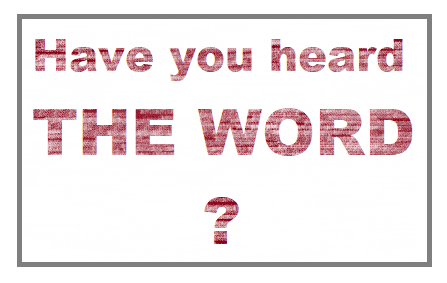
Have You Heard the Word?

Say the word and you’ll be free
Say the word and be like me
Say the word I’m thinking of
Have you heard the word is…

INCREDIBLY

Yes. If you live in the UK, listen to yourselves, listen to others, listen especially to Radio 4. This is the word you’ll hear more than all others. Nothing is very or really or amazingly any longer. Oh no! INCREDIBLY is the all-encompassing word.

It’s so fine, it’s sunshine
It’s the word…

Back in 1965 the word was love, but now the word is INCREDIBLY.

—0—

I had slots in three book launch parties recently and popped into others. Congratulations to:

I’ve read Heathcliff, which is excellent (or should I say: incredibly good?). I’m reading The Brotherhood, which promises to be excellent, too. I have yet to read the others, but I’m sure I’ll enjoy them. After all, they’re all published by Crooked Cat, which has published some incredibly good books. And mine.

—0—

This week, I read a blog post by Social Anx that resonated with me. In fact, I thought it incredibly powerful, even though not everything in it applies to me. It inspired a post of my own on the other blog.

—0—

See you next Friday. I hope the week works out incredibly well for you!

Categories
Books Letters from Elsewhere

Letters from Elsewhere: John Burgess

Letters from Elsewhere

I’m delighted to be joined today by John Burgess, who comes straight from the pages of Heathcliff by my good friend and fellow Crooked Cat author, Sue Barnard. Yes, that Heathcliff – the one and only. John has brought the letter he wrote to his wife.

My dearest Anne,

I trust that this letter will find you in good health.  We have only been at sea for less than eight and forty hours, but already I am missing you beyond measure.

How is our dear little Emily?  Mr McDougal promised me that he would ensure that the two of you would be well cared for whilst I am away.   I know he is a man of his word, and as you well know he has already been my saviour on more than one occasion. 

I was very nervous about going to sea again, my love – not just because of the prospect of having to leave you (especially in view of your condition), but also because it is so long since I was last on a ship. But it has proved to be not so bad as I had feared.  I was seasick at first, but thankfully that has now passed.  Our voyage is going well so far.  Captain Trelawney is, as one would expect, kept extremely busy with the day-to-day running of the ship, but young Heathcliff has been keeping me company.  He is a very competent sailor, despite having had no previous experience before he came to Liverpool.

All the same, I am rather worried about him.  For his age (I believe he is around seventeen or so), he is surprisingly uneducated.  When I told him that you were four months gone with child, he looked bewildered and asked me what I meant.  I never imagined that I should be the one who would have to educate anyone about the facts of life.

Heathcliff seemed surprised – even a little shocked – by what I explained, but afterwards he thanked me, then told me why he had first come to Liverpool.  It transpires that he was running away from a girl who broke his heart by saying it would degrade her to marry him.  I have often thought that he seems to be a troubled soul, and now I am beginning to understand why. 

I will post this letter when we next arrive in port, and will write to you again later during the trip.  In the meantime, please take good care of yourself and of little Emily.  I am counting the hours until I see you both again.

HeathcliffYour loving husband,

John

About Heathcliff

What happened to Heathcliff during the three years when he disappeared from Wuthering Heights?  And who were his parents?  Possible answers to these questions are offered in Sue Barnard’s latest work, Heathcliff, due for publication on 30th July, 2018.

About Sue Barnard

Sue BarnardSue Barnard is a British novelist, editor and award-winning poet. She was born in North Wales but has spent most of her life in and around Manchester. After graduating from Durham University, where she studied French and Italian, Sue got married then had a variety of office jobs before becoming a full-time parent. If she had her way, the phrase “non-working mother” would be banned from the English language.

Sue has a mind which is sufficiently warped as to be capable of compiling questions for BBC Radio 4’s fiendishly difficult “Round Britain Quiz”. This once caused one of her sons to describe her as “professionally weird.” The label has stuck.

In addition to working as an editor for Crooked Cat Books, Sue is the author of four novels apart from Heathcliff: The Ghostly Father, Nice Girls Don’t, The Unkindest Cut of All and Never on Saturday.

She is also very interested in Family History. Her own background is far stranger than any work of fiction; she’d write a book about it if she thought anybody would believe her.

Sue lives in Cheshire, UK, with her extremely patient husband and a large collection of unfinished scribblings.

I was lucky enough to read an earlier version of Heathcliff and have begun reading the final version. It’s an excellent read, whether or not you’ve read Wuthering Heights.

***

If you hurry over to Amazon, you might still catch the tail end of Crooked Cat’s Summer Sale. Sue’s books (apart from Heathcliff), my books and many others are in the sale.

Categories
Books Social anxiety

Blog Tour, Stage 2

The lovely Sue Barnard has posted the next installment of my blog tour. Sue has been such a support over the years. A wonderful editor, too.

Website

Date

Title

Val Penny

2 August, 2017

Book Review: The Mill River Recluse

Sue Barnard

10 August, 2017

How I Discovered What I Had


The post is mostly about another friend – Gill Downs. Without her, none of what followed would have been possible.

Social Anxiety Revealed is released on Tuesday August 22, 2017.

CoverWeNeedToTalkAboutSocialAnxiety

Categories
Books

Winner!

Last Thursday, my friend and fabulous author, Sue Barnard, launched her new book, Never on Saturday, published by Crooked Cat. She held a launch party and I was delighted to be given a slot in it.

nos2bfront2bcover

During the slot, I announced a competition to win a signed copy of Neither Here Nor There. Contestants had to write a short piece that had some connection with Jerusalem.

Now I can announce the winner, who is…

Ailsa Abraham

Here is her entry:

JERUSALEM

Oh please don’t sing Jerusalem
While puffing out your chest
You don’t care about that place
Cos England is the best.

You make me sick when singing of
Our “green and pleasant land”
Not caring for a second
Of a city in the sand.

While you are belting out the song
The folks out there are dying
But if you shed a little tear,
It’s for patriotism you’re crying

No it was not “builded” here
Your grammar causes guilt
It was in the Middle East
Jerusalem was built.

So think when singing, or abstain
Please, my friend, you choose
But think, if you are singing
Of Arabs and of Jews.

 Isn’t that lovely? Thank you, Ailsa!

Categories
Everyday life Uncategorized

Places in Israel

We don’t travel around a lot when we’re at home. We tend to spend much of our time in our garden and leave touring for holidays. Unlike my friend, Lisa Isaacs, who travels regularly and writes fascinating blog posts about the places she goes to.

But there are a few places I’ve visited recently:

The Helena Rubinstein Pavilion for Contemporary Art

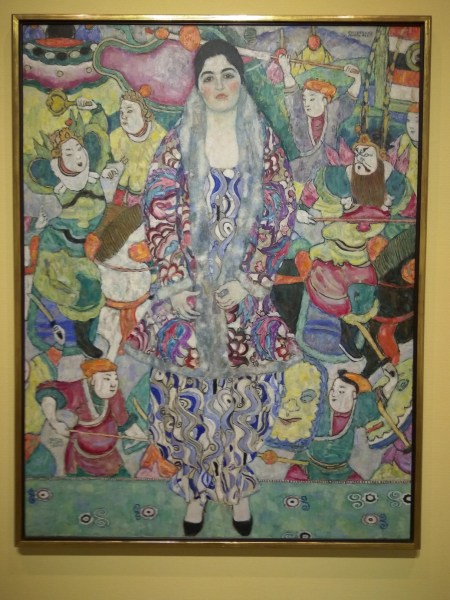
FriederikeMariaBeerByKlimtPart of the Tel Aviv Museum of Art, this pavilion provided us an interesting hour or two. Due to my forthcoming novel, written together with Emma Rose Millar, I was particularly pleased to see a painting by Gustav Klimt. This portrait was commissioned by the young Viennese socialite, Friederike Maria Beer. She arrived at the modelling session wearing a hand-painted silk dress and a fur jacket. Klimt was taken with the lining of the jacket and asked her to turn it inside out.

Sarona

As a place to eat, shop and wander around, Sarona, which is in Tel-Aviv, is still quite new. But its history goes back to 1871, when the German Templers established a colony there.

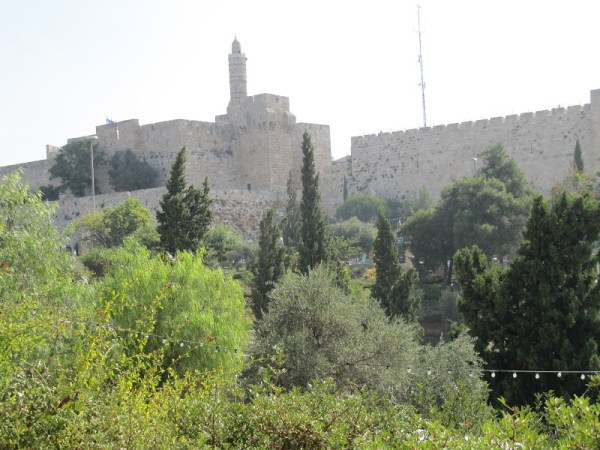
MigdalDavid19The Tower of David

.

Jerusalem’s Tower of David has a much longer history, which I won’t delve into here, but I plan to write about it very soon.

.

.

.

~~~~~~~~~~~~~~~~~~~~~~~~~~~~~~~~~~~~~~~

Author of the Day

Sue Barnard doesn’t parade her wide knowledge, but it accompanies her to quiz programmes and to wherever she write her novels. She’s had three published, two of those influenced by Shakespeare, and there’s another on the way. I met Sue, first online and then in person, four years ago and we’ve been friends ever since.

~~~~~~~~~~~~~~~~~~~~~~~~~~~~~~~~~~~~~~~

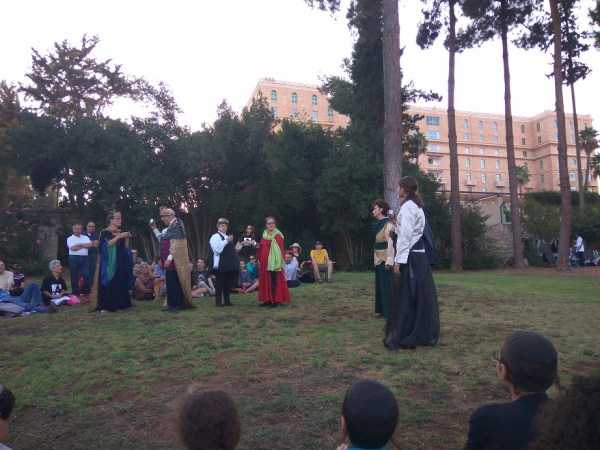
Update: It was while tweeting about this post that I realised I should have mentioned an event that links two of its themes: an excellent outdoor performance of Macbeth by Theater in the Rough.

Macbeth