The day after the attack, I saw tweets blaming Jews for it. I saw tweets blaming Israel for it. After voicing my response to no one but myself,
No, Mr Israel-hater. The fact that Israel hasn’t had an attack on that scale is not an indication that Israel caused the Nice attack. Firstly, Israel has more attacks than you know about because the so-called impartial media chooses not to mention them. And secondly, Israel has better security in place than France. The terrorists would love to damage Israel in that way.
I tried to ignore those.
I saw Theresa May, the brand new UK Prime Minister said she was “shocked and concerned” about the attack. Someone suggested “concerned” was too woolly a word and that others would think even “horrified” was not strong enough. I agreed with that and also wondered about the word “shocked.” It carries with it a sense of surprise and, unfortunately, I don’t feel at all surprised. France has suffered a number of horrific, devastating attacks and there’s no reason why these attacks won’t continue. Nothing has changed that might facilitate an end to the trend.
But I do feel extremely sorry that this has happened yet again. I feel sorry for the families of the dead, for the injured and for all peaceful citizens of France and of the world.
Terrorism is an enormous problem everywhere. There are ways of trying to curb it. Doing nothing isn’t one of them.
The summer of 1976 was a special one for me. For starters, it was my last summer before I left England for a year-long programme in Israel with the potential to turn into a permanent move. I planned a party for friends and work colleagues. I was excited to be doing something new, in a new land, and looking forward to being close to the boyfriend who in time became my husband.
It was unusually hot in England that summer. The heat wave was to last for about three months, although we didn’t know that at the beginning of July. In some areas, people would suffer from water shortages, though not in London, where I lived. I remember joining work colleagues for a day trip to Oxford. I remember relaxing on a punt and trailing my hand in the water.
The media was full of a special anniversary. Three-and-a-half thousand miles away, and further, across the Atlantic Ocean, something enormous was being planned in an enormous country I’d never visited – a country connected to us by language but one that seemed very foreign in many ways. The United States of America was about to celebrate two hundred years of independence.
Despite my distance from that place, in all senses, I would have been interested in the run-up to the special day. I would have been happy for those people over the ocean, but for one thing.
One unfolding event in another part of the world dampened my enthusiasm for everything else and kept my eyes glued to the television screen. In a disused part of the airport at Entebbe, Uganda, a little over a hundred people were being held hostage by four hijackers with the full support of the leader of that country, Colonel Idi Amin Dada. Apart from the French crew members who had elected to remain there rather than desert the hostages, those people were Jews or Israelis, following a selection process reminiscent of other such processes that took place not so many decades previously, and resulting in all the other passengers of the hijacked plane being released.
On the morning of Sunday, 4th July, I woke up in time to turn on my transistor radio for the eight o’clock news, and was overjoyed to hear the first item. Israel had launched a raid on the old airport building at Entebbe and rescued the hostages. I raced downstairs to tell my father, who always got up early but never turned on the radio before my mother got up.
Throughout the day, we listened and watched as details became clearer. We also watched the Independence Day celebrations in that far off country. Suddenly they matched the way we felt: euphoric.
The following day, work colleagues congratulated me as if I’d personally planned the whole rescue operation. Times were different then.
***
On October 25th, I’ll be celebrating another fortieth anniversary – of my move to Israel. There might be prizes.
Before that, probably later this month, I plan to announce a change in direction for this blog. Keep watching this space.
You might have noticed I went a bit crazy during April, posting weird stories in which each sentence began with the chosen letter of the day. This was my choice of a theme for the 2016A to Z Challenge.
If you missed any of my stories, here are the links:
This was my 6th A to Z Challenge. The previous ones were:
2011 – Writing and social anxiety-related posts
2012 – Places in Jerusalem
2013 – Memoir writing
2014 – Posts linking authors
2015 – Writing historical fiction
A to Z Reflections Post
How did it go this year?
Very well, I think. I thoroughly enjoyed the month. Fortunately I had all my A to Z stories ready in advance. I’d even chosen a picture to accompany each one.
Even so, I couldn’t spend all my time blogging, and so I wasn’t able to visit as many blogs as I’d have liked. These are the ones I visited:
Thank you to everyone who visited, liked and commented on my posts. If I were giving a prize, it would go to Cathy Thomas-Bryant, who gave me so much support and praise.
A special thank you to the organisers of the challenge. They worked hard to make it possible. Here they are.
Last summer, as part of a long trip to the UK, I was in the northern city of York, because my publisher, Crooked Cat, organised an event for its authors there.
I hadn’t been to York before and didn’t know much about it, other than the fact that its history is long. I was also vaguely aware that Jews had lived there and misfortune had befallen them at some point… unsurprisingly.
So I started reading. Jews were first brought to England from the continent by William the Conqueror in 1066. Many of them settled in York because, at the time, it was the second most important city after London, with a thriving textile industry. And, as in so many places in those times, Jews weren’t allowed to own land or work in a profession. So they did the one thing they were allowed to do, because Christians weren’t allowed to do it. They lent money.
Many people needed to borrow money, so the Jews did well from money lending. This was good for the King, because he could levy huge taxes on the Jews. But the people who owed money to the Jews were not so happy, especially as the Jews seemed to be more prosperous than them. Moreover, in church, and particularly around Easter time, they were taught to hate Jews.
Clifford’s Tower (rebuilt)
These are the main events that led to the massacre of 16th March, 1190. On that day, the Jews who were still alive took refuge in Clifford’s Tower, which was then a wooden structure. But a mob surrounded the tower and then set fire to it, and the Jews decided on a mass suicide. Except for a few who left the tower and offered to convert in the hope that they’d be saved. But they, too, met their deaths on that day.
It is said that, because of that event, there is a “cherem” or boycott of York. That Jews aren’t allowed to set foot in York. That if they pass York on the train, they mustn’t eat or drink as they pass through and they mustn’t turn to look at the city. Yet there were Jews living in York for the next hundred years until they were expelled altogether from England in 1290.
Clifford’s Tower (rebuilt)
In more recent times, small numbers of Jews have lived in York, some of them having arrived on the Kindertransport. There was a synagogue that closed down, but very recently prayers have started to be held again in York.
So what about the cherem? Most researchers say that in reality there never was a cherem. But it seems to me that even if only a few Jews boycott York, it’s still a boycott, albeit an insignificant one.
I have a reason for mentioning all this now. Last night, I attended a very absorbing talk on this topic organised by HOB Rehovot. Barry Levinson told a rapt audience consisting mostly of immigrants from the UK about the events leading up to the massacre and the massacre itself. He also showed us the short film he made on the topic. You can watch the film here.
During the talk and in the general discussion that followed it, I couldn’t help thinking how history repeats itself. The more I listen to the news from the UK and around the world, the more scary that thought becomes.
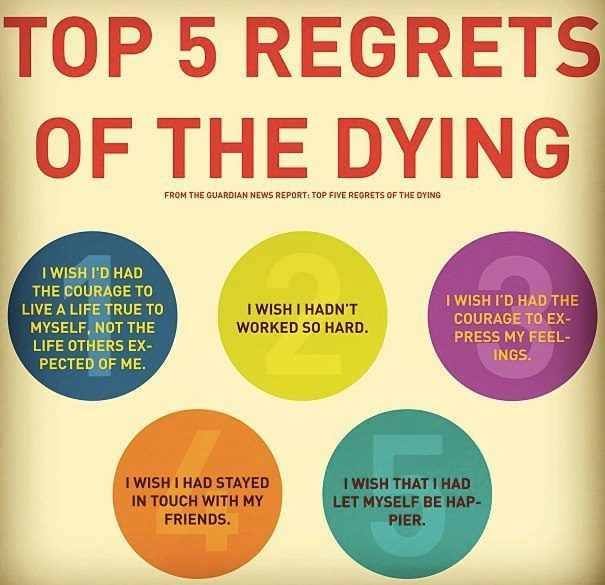
I discussed the first one here. What about the second?
No, that’s not going to be one of mine. True, I’ve worked hard. But I don’t think I’ve worked excessively. It’s good to work hard. Hard work brings satisfaction – especially when you enjoy your work. As long as you find time to relax, which I do.





 Last summer, as part of a long trip to the UK, I was in the northern city of York, because my publisher,