Categories
Books

Writing the Book You Want to Read

I’m delighted to welcome Sue Barnard to my blog today. Sue and I first met about two years ago at an online workshop run by Sally Quilford. Since then we have met twice face-to-face and helped each other with our writing.

Sue4Sue’s recently published debut novel was not one of those I saw in the draft stage, and so I was able to read it simply for enjoyment, and enjoyment describes my reading experience very well. The appealing idea of changing the most famous of love stories is very cleverly handled in The Ghostly Father. Sue doesn’t say that Shakespeare’s version was wrong. She makes both versions right, depending on who is telling the story. And she writes it all so well.

But that’s enough from me. I’ll let Sue take over now.

I love books.  My house is full of them, my Kindle is full of them, and I’m irresistibly drawn to places which sell them.  So much so, in fact, that I spent more than twenty years of my adult life working in a bookshop.  The sheer diversity of subjects, genres and content of books still never fails to amaze me.

Sue1Those who claim to know about such things reckon that everyone has at least one book in them.  Be that as it may, until a few years ago I never imagined that I had a book in me, much less that this book, if it even existed, would ever get any further than the concept stage.  The point at which that situation changed was when, a few years ago, I came across one of those lists of Things You Must Do Before You Die.  The one which leapt off the page and grabbed me by the throat was Write the book you want to read

Fast-rewind thirty-odd years, to when I first saw Franco Zeffirelli’s wonderful film of Romeo & Juliet.  At the end there wasn’t a dry eye in the house, and I came away from the cinema thinking: “Why does the world’s greatest love story have to end in such appalling tragedy?”  Ever since then, that question has lurked, dozing, at the back of my mind.  The exhortation to Write the book you want to read woke up that question, kicked it out of bed, opened the shutters and forced it out into the blinding light of day.  This was when it finally dawned on me that the book I’ve always wanted to read was the version of Romeo & Juliet which has a satisfactory outcome.  If, at any time during those decades of browsing in bookshops, I had ever come across such a book, I would have snapped it up, rushed home and read it in one sitting.

Why, I asked myself, shouldn’t there be such a book? 

And the answer came straight back: Why not indeed? And if that book doesn’t exist, you need to write it yourself.

Even then, it took me a while to get going.  Although I’d dabbled with Creative Writing in the past, and had taken a few courses on the subject, I’d never attempted anything longer than poems or short stories.  The thought of tackling a full-length novel, even one on a subject about which I felt so strongly, was, to say the least of it, a daunting prospect.  I’d been mulling over the idea for a while, but without any concrete results, when fate took a hand.  Back in 2010, whilst on holiday in France, I was (yes, you’ve guessed) browsing in a bookshop, when I chanced upon a novel in the style of the lost diary of a woman who had been the secret lover of Count Dracula.  This, I realised, was the format I needed: a lost manuscript which tells a previously-unknown story.

Back at home, I powered up the laptop and started writing.  Because this was the book I’ve always wanted to read, I was, at that point, writing it mainly for myself.  I wanted to be able to read this version of the story in private, and think, “Well, perhaps this, rather than the ‘lamentable tragedy’ as told by Shakespeare, is what might have happened.”  At this stage, going public with it couldn’t have been further from my thoughts.

After I’d finished the first draft (which took about six months), I mentioned it to a couple of close friends who are both avid readers.  They both asked to see it.  On handing it back, one of them said, “I know what I like, and I like this.”  The other said, “You really ought to take it further.  I think it could even be a best-seller.”

Sue3Even so, despite these votes of confidence, it was another year or two (during which time the manuscript underwent several revisions) before I plucked up the courage to send the manuscript to Crooked Cat Publishing, an independent publisher whom I’d found on Facebook, and for whom I’d recently started doing editing work.  I wasn’t very hopeful, so when I received the email from them telling me they wanted to publish it, I had to print it out and re-read it four times before I was able to convince myself that I hadn’t imagined the whole thing.

The book’s title, The Ghostly Father, is based on a quotation from the play (it’s how Romeo addresses the character of Friar Lawrence), and the story (which is a sort of part-prequel, part-sequel to the original tale) is told from the Friar’s point of view.  I’ve often wondered why, in the play, he behaved as he did – and by giving him what I hope is an interesting and thought-provoking backstory, I’ve tried to offer some possible answers.  Plus, of course, I wanted to reduce the overall body-count, and give the lovers themselves a rather less tragic ending.  I hope I’ve succeeded.

The book which re-tells the world’s most famous love story was officially released, very appropriately, on St Valentine’s Day 2014.  If the early sales figures are anything to go by, it looks as though I’m not by any means the only person who wants to read it.  And for that, I am very grateful.

Sue Barnard, February 2014

In the UK, The Ghostly Father is available from Amazon as a paperback or ebook.

Outside the UK, it’s also available from Amazon as a paperback or ebook.

Thank you, Sue, for visiting me and for writing about this interesting topic.

The novel I’m working on now hasn’t been evolving for quite that long, but it’s one I wish I’d read a long time ago, and one I’ve wanted to write it for several years. Only now have I found a way to do it that I believe works.

I know, I promised a different post this time. Maybe next time… no promises….

Categories
100-word stories Books

100 Word Challenge – Week #122

Click on the image to join the challenge

The challenge: 105 words including:

… the blackness just enveloped me…

A New Reality

I woke to total darkness. The blackness just enveloped me. I checked that my eyes were really open. They were. Only one explanation then. I must have gone blind overnight. I would have to get used to a new reality without sight.

I thought of all the things I would never see again except in my mind’s eye. The view from the window. The sunset over the sea. My children’s changing faces as they grew up. Then I heard something. At least my hearing was all right.

First whispering, then giggling. I reached up and pulled something down.

“Who put this blackout sheet over me?”

Categories
Books Israel

Places in NHNT

My novel, Neither Here Nor There, due to be published later this year, describes several places in Jerusalem that I’ve mentioned before on this blog. Like the market, Machane Yehuda.

Machane Yehuda market

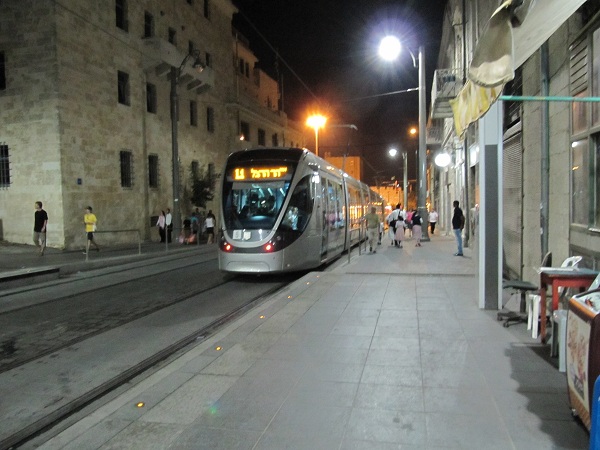
Jaffa Road and the light railway (which has been going for two and a half years).

Jerusalem Light Railway at night

The German Colony, which I mentioned here.

House in German Colony

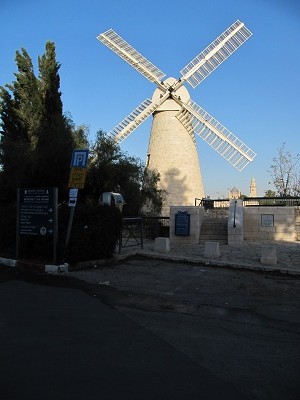
Yemin Moshe, where I used to live, and which I described here and here and here.

Yemin Moshe windmill

There are some other places in Jerusalem that get a mention in the novel. I’ll have to photograph them, too.

There are also places in London that feature in the novel. I haven’t taken photos of them and they’re a bit far away from me for a quick snapping session.

Place can often drive a novel. It certainly drives mine.

A lane in Yemin Moshe

Nothing can happen nowhere. The locale of the happening always colours the happening, and often, to a degree, shapes it.

~ Elizabeth Bowen

Categories
Books

I’m an author – I think

In the past, when people asked me what I did, I’d say, “Well, for a long time I was a computer programmer, and then I was a technical writer.” If they looked confused at that – and most did – I’d say, “I wrote manuals explaining how to use software,” and they’d nod, whether they understood or not.

WhatDoYouDo

Then they’d ask, or I’d feel I had to add, “Now I’m at home and I write.” With raised eyebrows they’d ask, “What sort of thing do you write?” and I’d mumble, “Oh, different things.” Then came the inevitable question: “Have you had anything published?” to which I’d mumble, “A couple of short stories in anthologies,” as if they don’t really count – not because I think that’s true, but because they probably do. Their question probably meant, “Have you had a whole book published?”

Suddenly, everything has changed. Now when people ask me what I do, I say, “Ani soferet” – I’m an author. They look at me with wide eyes. “Wow!” And I smile and nod.

But something bothers me about all this. Was it the signing of a contract that turned me into an author? Surely I’ve been an author since I started writing. Why couldn’t I ever say that before?

On the other hand, I suppose I couldn’t say it because I’d have felt I didn’t deserve the “Wow!” that followed.

Anyway, it’s happened now and I’ve taken a big leap and landed in a bed of Cats – Crooked Cats. There is even a catalogue.

Categories
Books

Revelation Number 1

In my last post, I hinted at two more exciting things that I couldn’t yet divulge.

I am now able to tell you one of them.

For those of you who haven’t seen any of the posts on Facebook and Twitter:

My novel, Neither Here Nor There, is going to be published later this year by Crooked Cat Publishing.

As you can imagine, I’m very excited and looking forward to being a published author.

Categories
Books

Exciting Times

2014 is proving to be an exciting year for me. If nothing else happens, it will still have been an exciting year.

Firstly, Morgen Bailey accepted my three six-word stories for publication on her blog. They will be podcasted on Sunday 22nd March.

When Morgen told me, on the very last day of 2013, that the stories would be published, I thought that might augur well for 2014 and I was right. I have two more exciting things that I would love to tell you, but for now my lips are sealed.

Hopefully, I’ll be able to tell you both of them very soon.

Categories
100-word stories Books

100 Word Challenge – Week #119

Click on the image to join the challenge

I haven’t done this for almost a year.

The prompt is:

… whenever I hear it, I think of you ….

I’m not sure I like my attempt.

Solomon and John

John Smith: Solomon! So glad I found you after all this time. Thirty years, is it?

Solomon Grundy: Forty more like. Isn’t Facebook wonderful? I’ve thought of you over the years.

John Smith: Me, too. There’s this rhyme. Whenever I hear it I think of you.

Solomon Grundy: What rhyme is that?

John Smith: It goes like this. Solomon Grundy, born on Monday, christened on Tuesday, married on Wednesday, took ill on Thursday, grew worse on Friday, died on

Solomon Grundy has gone offline.

“Oh, what a shame. Must be the end of Solomon Grundy. And we’d only just met up again. Back to the Saturday review then.”

Categories
Books Israel

Ayelet Tsabari and Place

Ayelet Tsabari “was born in Israel to a large family of Yemeni descent. She grew up in a suburb of Tel Aviv, served in the Israeli army, and travelled extensively throughout South East Asia, Europe and North America. She now lives in Toronto.”

What better person to run a one-day writing course entitled: Wish you were here; writing about place? That’s what Ayelet did on Thursday and I was fortunate enough to be able to attend it.

These are the main points she made:

  • Research well.
  • Use details to introduce a place.
  • Don’t overwrite. Pick the most appropriate and vivid details and the most precise words to describe them.
  • Use all five senses.
  • Introduce a place gradually.
  • Let the description unfold as the character moves through the scene.
  • Place is deeply connected to the emotions of the characters. Their experience of the place is influenced by their feelings, state of mind, mood and judgment. In describing a place, choose words that reflect the character’s emotions.

All the points were illustrated with examples and there were also exercises. It was a most enjoyable and profitable day.

The Amazon page for Ayelet’s book – The Best Place on Earth: Stories  – contains a link to an excerpt from one of her stories and I can tell you it’s good! You can read it at amazon.com or amazon.co.uk.

On the way to the course, I had my own struggle with place. The course took place in the small town of Beit Zayit, at the home of Judy Labensohn, another writer, who is running the next course in the series, which I’ll be blogging about soon. I decided to drive there via Ein Karem – not such a good idea as it turned out, although I had the best of reasons. I wanted to avoid the morning traffic jams, and the route I chose did look the shortest.

Two unrelated problems held me up. Firstly, the road to Ein Karem, one on which we have travelled many times, was not there. What a weird feeling! It wasn’t that the road was blocked off. It was as if there had never been a road there.

I had to come to my senses quickly enough to decide to turn left and get to the other road to Ein Karem – through morning traffic jams, of course.

Then I missed the road I wanted to take to Beit Zayit. In fact, I think I saw the road but there was no sign on it and it probably isn’t possible to reach Beit Zayit that way. So I ended up in Mevasseret and had to turn towards Jerusalem and turn off at the main road to Beit Zayit. Fortunately, I’d left plenty of time for this journey (or so I thought) and arrived only one minute after the starting time. Next time, I’ll make sure I find the best way of going, and one that exists!

I’ll be blogging about place again, soon – as a guest blog for my friend, Sue Barnard, whose first novel, The Ghostly Father, is about to be released.

Categories
Books Social anxiety

Hiding your Identity

I read an interesting blog post today. It was written by Gila Green, a published writer of English living in Israel. She poses the question of whether it’s wise for Israeli writers to reveal their address, because doing so would give them even less of a chance of being accepted for publication.

I live in... erm...
I live in… erm…

The question reminds me of an argument that arose in the group therapy course I took a few years ago. Some people insisted that social anxiety should be hidden while others preferred to reveal it. I noticed that those who advocated hiding it were better able to; they were the ones who appeared more “normal.”

So there’s no single answer to the question of whether to hide social anxiety. It depends on the individual and what suits them best.

Just as I’m not able to successfully hide my social anxiety, I don’t think I could hide my address. It’s part of who I am. I might not bring it up straight away in a correspondence, but I wouldn’t pretend to live elsewhere.

And, as Gila says, place is an important aspect of a story. Sometimes it’s described as another character. I wouldn’t want to lose that part of my writing, because it would be like losing a part of me.

However, other writers will disagree with this and that’s their prerogative. They must do what suits them best.

Categories
Blogging Books Social anxiety

One one fourteen

I realised what I want from 2014 when I commented on Annalisa’s blog: “I had fun in 2013. I want 2014 to be fun, too, but more productive and fulfilling. I want to push myself more.”

Last night I had more fun when we welcomed 2014 with a little celebration at folk dancing. The January New Year in Israel is always a bit subdued compared to many other parts of the world. Although we know it’s not religious, there’s a feeling that this holiday isn’t really ours. “Happy New Year” refers to a different time and today is a normal working day.

Before that I made a decision about the 100k in 100 days challenge. I’m going to do it. I’m going to write lots of blog posts and stories and more and hope to reach the target. I succeeded at NaNoWriMo in November, so there’s no reason I shouldn’t be able to do this.

The only problem is that I haven’t done enough planning and will have to decide what to write as I go along. Any suggestions will be gratefully received.

One of the ways I think I should push myself is by blogging more about social anxiety and how it comes into play in everything I do. Because not mentioning it is like trying to pretend it doesn’t exist, which I did for much too long. I started writing in order to raise awareness of social anxiety and I need to carry on doing that.

So that’s what my ‘Fourteen will be about: Fun, Fulfilment and Forcing myself to cross new boundaries.

What will your 2014 be about?