Categories
Social anxiety

A to Z Challenge: L is for LISTENING

.

.

Now, here’s something that people with social anxiety are generally good at. You can tell us your troubles and we’ll listen, without trying to change the subject.

But please, listen to us, as well. We also have problems. It might be harder for us to come out with them, but that doesn’t mean we don’t want to.

Categories
Books Social anxiety

A to Z Challenge: K is for KAFKA

I have to admit it: I’ve never read anything by Kafka. What I’ve read about him has put me off. I’m afraid I won’t understand his writing.

But I do like this quote:

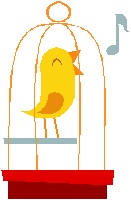
A cage went in search of a bird.

I think it illustrates my message for today:

No one chooses to have social anxiety.

Categories
Social anxiety

A to Z Challenge: J is for JOSHUA

I chose Joshua because he inspired the name of this blog. Like Joshua, I’m trying to knock down walls. His obviously weren’t as strong as mine!

I love this rendering of the song:

Categories
Books

A to Z Challenge: I is for ITS or IT’S

Of all the mistakes I see in English spelling/grammar (and there’s no shortage of them) this is the one that bugs me the most. I don’t know why. Maybe because it’s so common. Or because it’s one of the first rules I learned.

I was seven years old. Our teacher took a whole lesson to explain and I’ve never forgotten it. Here’s the rule as she explained it:

IT’S usually stands for IT IS. Sometimes it stands for IT HAS.
ITS is correct if you can insert the word OWN after it.

That’s all there is to it. So why do people get it wrong so often?

Because ITS without an apostrophe is possessive. It means belonging to it. And the possessive form with a noun is spelt with an apostrophe, as in MIRIAM’S BUGBEAR. So some people’s logic tells them that ITS meaning belonging to it also requires an apostrophe. It doesn’t. Logic is not always a sensible attribute to use when writing English.

Another reason is that English grammar is no longer taught as it used to be. That’s considered unnecessary these days. Grrr!

Categories
Social anxiety

A to Z Challenge: H is for HIDDEN

An SAer is someone who has social anxiety.

Social anxiety could be called the hidden disorder for several reasons:

  • It’s not usually something you see immediately. Some SAers are good at hiding it. You could mistake it for aloofness, stupidity or something else.
  • SAers aren’t good at talking, and it’s especially hard to describe SA to someone who hasn’t experienced it.
  • SAers are afraid to talk about SA. There is a stigma involved in mentioning it.
  • TV and radio programmes about mental health tend to focus on depression and schizophrenia. This is understandable. It’s harder to interview SAers. They’re generally not good at explaining – especially in a broadcast interview.

SA must be brought out of hiding. I’m absolutely certain of that.

Categories
Social anxiety

A to Z Challenge: G is for GETTING IT WRONG

Social anxiety is a lot about being so afraid to say or do THE WRONG THING that you don’t do anything – which is often definitely the wrong thing.

So when I attended a funeral recently and my friend, the chief mourner, thanked me for coming, I just nodded, certain that anything I might say would be THE WRONG THING.

The trouble is, I probably would get it wrong, because I never learned to get it right. I need a Mr Right to teach me, although I wouldn’t want Mr Right’s fate to befall that person. Remember? The more right Mr Wrong became, the more wrong Mr Right became. Oh dear.

Categories
Social anxiety

A to Z Challenge: F is for FIGHT OR FLIGHT

I copied this from here:

The fight or flight response is the response of the body to a perceived threat. When faced with danger, the body releases hormones such as adrenaline and cortisol. These hormones give us a burst of energy and strength by increasing the heart rate, slowing digestion and directing blood to major muscle groups. Although the response is helpful in cases of physical threat (such as needing to run away from a bear), it is inappropriate and maladaptive when it occurs in social or performance situations, as is the case with social anxiety disorder.

You’re telling me?

Categories
Blogging

A to Z Challenge: E is for ENJOYMENT

Nicola Morgan is someone who knows how to ask the right questions. (Gill is another.)

About my two years of blogging, she asked, “Have you enjoyed it?”

I didn’t know how to answer that at first. I know it’s been a positive experience. I know the things I worried about when I began it – criticism, ridicule, disregard – didn’t happen.

But have I enjoyed it? Yes. I’ve enjoyed connecting with people through my blog. Most of all, I’ve enjoyed meeting up with two of those people in real life. One of them, Cathy Walter, I met for the first time. The other, Erika, knew me but didn’t know me – not the real me. I do hope to meet more of my online friends in real life, because I enjoy doing that.

I think we should all be clear about what we enjoy, because:

Enjoyment is what life is for.

That and helping others to enjoy life.

Categories
Social anxiety

A to Z Challenge: D is for DANCING

Dancing is my relaxation. Not for the body, but for the mind. When I dance, I don’t think about work or writing or how embarrassed I feel about something I said or did.

How do you relax?

Categories
Social anxiety

A to Z Challenge: C is for CRITICISM

It’s easy to be critical. Other people often don’t behave the way you would, so you criticise them. But do you really understand? Do you know all the reasons why they acted as they did? Or the reasons why they didn’t act?

People who suffer from social anxiety worry about what others think of their behaviour. The worry itself causes them to act differently from the way you might expect, or not to act at all. So…

Don’t be quick to criticise others. You don’t always know what lies behind their behaviour.

The comment box is at the top.