Author, editor, attempter of this thing called life. Social anxiety warrior. Re-Connections, a collection of short stories, published with Ocelot Press, 15/10/2025.
This post is one of 26 I am writing for the A-Z Challenge on the subject of writing a memoir. I’m not an expert in writing memoirs, but I’m exploring the topic with thoughts about writing one, and am happy to share the fruits of my exploration.
—-0—-
How do we get from starting to write to a ready-to-publish memoir? Many qualities make up the craft of memoir writing:
Memory
Detachment
Insight into the past
Story-telling
Humour
Ability to draw the reader in
Order
Logic
Understanding
Perseverance
I’ll be discussing these in future posts. Can you think of any to add?
This post is one of 26 I am writing for the A-Z Challenge on the subject of writing a memoir. I’m not an expert in writing memoirs, but I’m exploring the topic with thoughts about writing one, and am happy to share the fruits of my exploration.
—-0—-
Where do I begin? Every beginning is hard to write, whether it’s the beginning of a fictional story, an essay or a memoir. The beginning has to draw the reader in, to make the reader want to finish the page, the chapter, the book.
But the good thing is: the beginning doesn’t have to be written at the beginning. You can write it in the middle, at the end or whenever you like. It’s often easier to write it at the end when you know what it has to introduce.
This post is one of 26 I am writing for the A-Z Challenge on the subject of writing a memoir. I’m not an expert in writing memoirs, but I’m exploring the topic with thoughts about writing one, and am happy to share the fruits of my exploration.
And today a special “THANK YOU” to Arlee Bird who started this challenge.
—-0—-
One of my first memories is of Daphne Oxenford saying, “Are you sitting comfortably? Then we’ll begin.” These words, spoken at a quarter to two every day, always meant that I was about to hear another story on the radio programme, Listen With Mother.
To this day, if I happen to notice that it’s a quarter to two, I hum the signature tune of Listen With Mother, either to myself or out loud. My husband joins in.
This seems a good way to begin my series of A-Z posts about writing a memoir. What does my memory mean to you, my readers? Well, if you’re from the UK and old enough to remember Listen With Mother, you might feel as nostalgic as I do.
What if you’re not? Why would you be interested to hear about that piece of information?
The answer is, you probably wouldn’t be interested, as it stands. But what if I told you about the only story I remember out of all those I heard every day at a quarter to two? The story was about a dog who rushed home for his meal and burnt his tongue on the hot food, but then remembered being told to start at the edge because food at the edge is cooler. I remembered the story all these years because it taught me something.
“Okay, but that’s not so interesting to me,” you might say.
What if I told you my mother used to say, “Now you’ve listened to your programme, you must keep quiet and let me listen to mine.” And I tried to keep quiet for the whole hour of Woman’s Hour because I had listened to my fifteen minute-long programme. Only at that time I didn’t realise my mother’s statement wasn’t as fair as it sounded, because I didn’t have a good idea of time.
“That could be interesting,” you might say. “But only if it has some bearing on the theme of your memoir, or one of its topics.”
“How would that work out in practice?” I might ask.
“Well, say you wanted to show that your mother used to tell you things that weren’t really true for various reasons. Then you would give several examples of times when she did that.”
“Like telling me that they moved house just so that I could go to the school I was at?”
“Exactly.”
“That backfired big time.”
“Then write about it in your memoir.”
I will. And I’ll be returning to the topic of theme in other posts.
How about you? What are your first memories? Why would your readers want to know about them?
I’m popping out of hibernation just to say it’s my blog birthday today.
This was my first post:
Speech is silver, silence is…
…not golden. Just a fake gold that soon dulls. Like the necklace I bought in Cyprus. They told me it was gold. I knew they were lying, but I bought it anyway. I felt I had to buy something because they gave me tea….
I’ve been keeping silent for most of my life. It’s time to talk.
And I’ve been talking for four years. Thank you so much for listening and encouraging me to continue.
…when everything starts to get on top of me and blog posts are squashed under the weight, but have no fear. There will be a post on this very blog almost every day of April.
Yes, it’s the A-Z Challenge and I will be discussing what I have learnt about memoir writing.
Now back to:
Planning the A-Z posts
Preparing to submit my pocket novel
Going over all the comments I received from my writing group this week
Spring cleaning
I think there’s more but I’m too tired to remember what it is
This book was recommended to me by my friend, Marallyn. She was in my previous writing group. Whenever I submitted yet another poor attempt to write about social anxiety, she said, “You must read The Mill River Recluse. That’s the way to write about social anxiety.” I’ve also seen the book praised elsewhere.
It’s a lovely, well-told story. It certainly kept me turning the pages. The story is believable, has believable characters and deserves to be read.
However, I do have some reservations about it. Mary, the recluse, has social anxiety. The reason for this is mentioned three times in the book (which I thought a bit excessive) and relates to one terrible incident that occurred when she was sixteen. She mentions that she was always shy, but I still think this is too easy. One incident, however bad, doesn’t cause social anxiety on its own. There has to be a lot more than that. I would have liked to have heard much more about Mary’s childhood and what led to her condition.
The consequence of Mary’s anxiety – becoming a recluse seen generally by only one other person and later by two others – is a very extreme outcome of social anxiety. This is mentioned in the book by a professional who meets her and says, “I’ve never seen such an extreme case of social anxiety.” Most people with social anxiety don’t keep themselves completely hidden in that way. They force themselves to get out and function in society however much of a struggle that is. I think someone who reads of an extreme case like this could make light of the effort made by someone who appears to function fairly normally.
Yesterday I began to write my reasons why I no longer want to hide my past, and how I should answer a writing colleague who wonders why. He deserves an answer; as well as asking me to my face, he wrote the question on his critique of my personal essay: “Why can’t the writer just MOVE ON and forget about all these injustices which are way gone?”
Interestingly, the same man also wrote, “I learned a lot about this social anxiety problem,” and he told us he’d looked up the term.
It’s when we forget to listen to stories of misfortune, the same events happen over and over again.
In writing, we need to consider what readers can gain. The rest of my reasons for writing about my past are for the readers:
I want to help readers to understand me and the many others like me. I want to clear up the misconceptions: that we’re stuck up, don’t want to talk, etc.
I hope, like my writing colleague, readers will learn about social anxiety, which is much more common than most people think.
I hope readers will learn about bullying and what it can do to the one on the receiving end of it.
If my writing could also lead to help for those who are suffering now, that would be the best reason of all.
I didn’t gain anything through all the years I tried to forget what happened. As Angela Brown said in her comment on my post from yesterday:
Forgive, forget, move on. Easier said than done because, in more instances observed, moving on doesn’t come from forgetting, it comes from the growth learned and earned from experiences.
Remembering is much healthier, if done in the right way. I don’t write about the past to perpetuate some feeling of victimhood. I’m not stuck in the past. My essay ends on a positive note with my hopes for the future. Looking back has helped me to look forward to something better.
I’ve been working on a personal essay with my writing group. At the beginning of the year, I submitted fictional stories for them to critique, but after reading personal essays by other members, I decided to try my hand at one, too.
My essay discusses how I became aware of social anxiety and the effect that awareness has had on me. Naturally, it also describes my childhood, explaining how I caught social anxiety in the first place. So far, I have submitted the essay twice. Each time, the members and the mentor said they wanted to know more. They wanted more examples, more explanations, more dialogue. So I’m still working on it and the essay is growing.
One man asked me a question after the last meeting. “I’ve heard stories about difficult childhoods before,” he said. “I always wonder why the people can’t just forget what happened and move on.”
An elephant never forgets. Should we?
I stood there transfixed, not knowing what to say. I wasn’t hurt by the question; I knew he’d asked it because he wanted to understand. The truth is that there are many answers and someone was waiting to give me a lift home. But even if I’d had all the time in the world, I wouldn’t have been able to respond because… well… I have social anxiety. I don’t know how to think up responses on the spot.
“I suppose it’s easier said than done,” he said.
“Yes,” I replied, escaping with my lift-giver.
While editing my essay, I’ve been thinking about how I should have responded. How I could respond in writing. How I’m going to respond right here on my personal blog.
I tried to do exactly what my fellow writer suggested. When I left school, I tried to put all the nasty experiences behind me and start again as if they had never happened. But they did happen. They shaped the person I became. Ignoring them meant that I had less to talk about, because a big part of me was buried along with them. This was true even on the basic level: when anyone mentioned childhood experiences, I couldn’t join in with mine.
You can’t shut out your own misfortunes because you need to piece together the reasons it happened, in order to communicate that to yourself and others.
says Joe Warnimont in the post.
There are other, less personal reasons why I want to write about these things. But I think I’ve written enough for one blog post. I’ll continue this another time, maybe tomorrow.


 This book was recommended to me by my friend,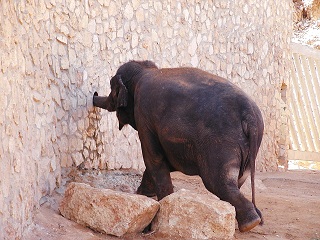


 Miriam Drori, Author