Categories
Holidays

Still Standing

As I look through the photos from my recent 5-week trip to the UK, several themes occur to me, one of which is old buildings.

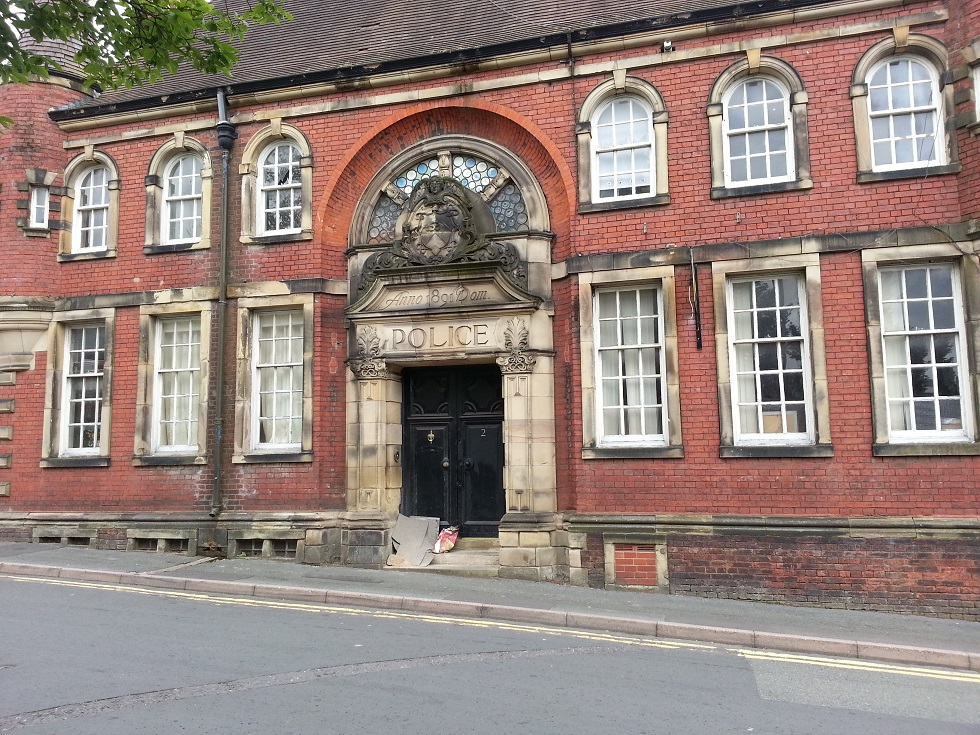
They start with Leek, near Stoke-on-Trent, where I went out for a short wander before rain sent me scurrying back. (I hadn’t expected to need a raincoat.)Leek Leek Leek

.

.

.

.

.

.

.

.

Then there was York, which has its fair share of ancient buildings.

Clifford’s Tower
York Cathedral
York Cathedral
St Mary's Abbey, gardens of Yorkshire Museum
St Mary’s Abbey, gardens of Yorkshire Museum

.

.

.

.

.

.

.

.

.

.

While staying in the Wye Valley, we saw:

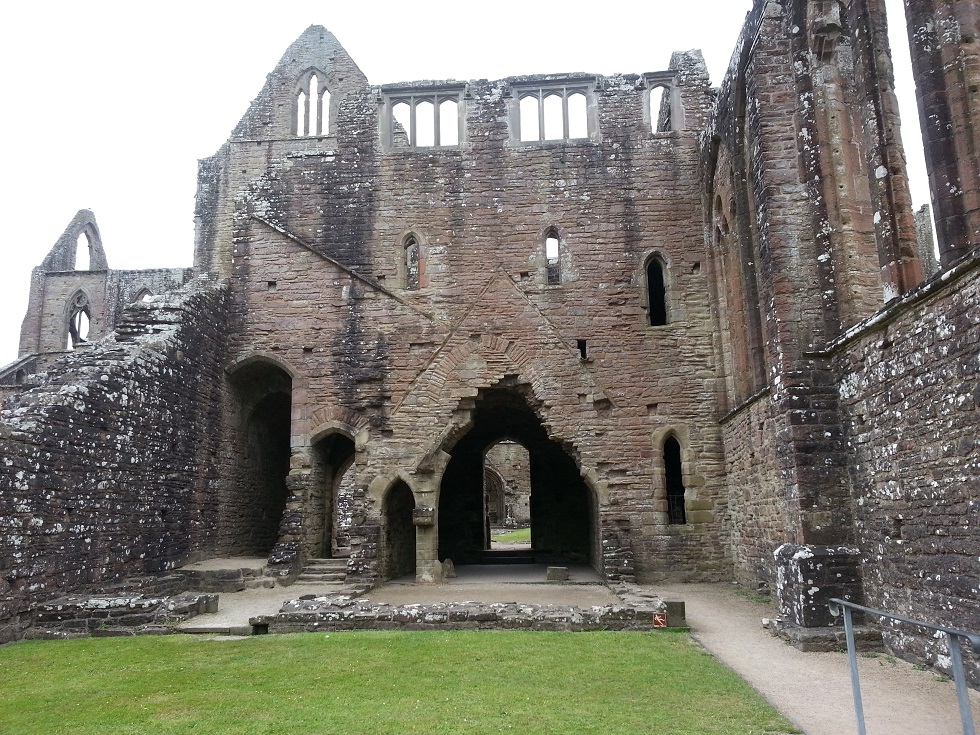
Tintern Abbey
Tintern Abbey
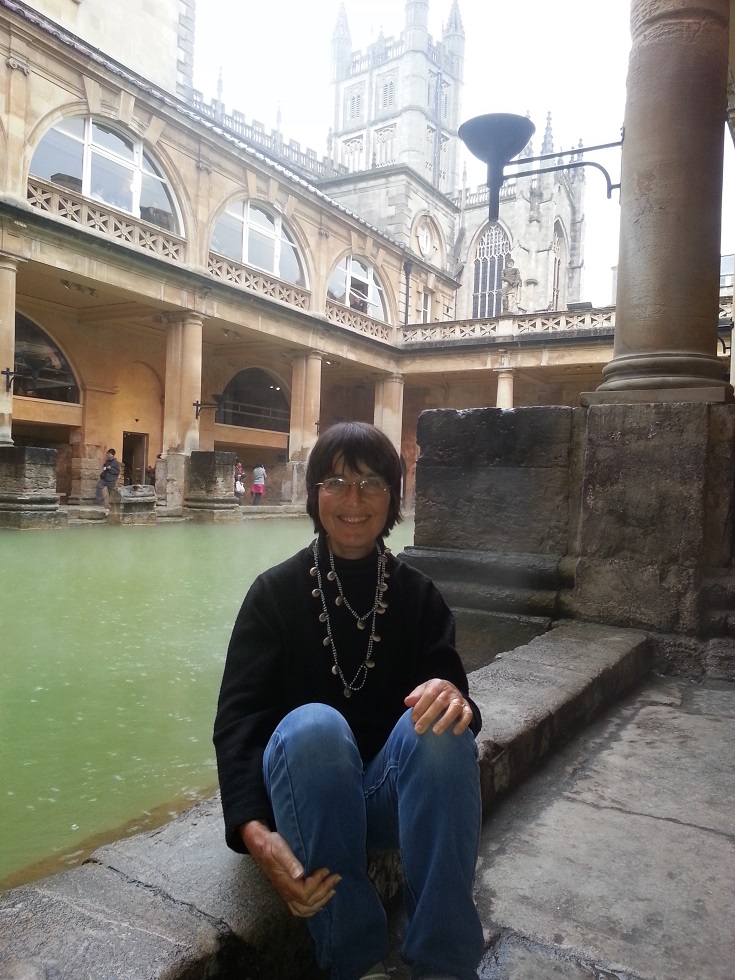
Bath: Roman Baths
Bath: Roman Baths
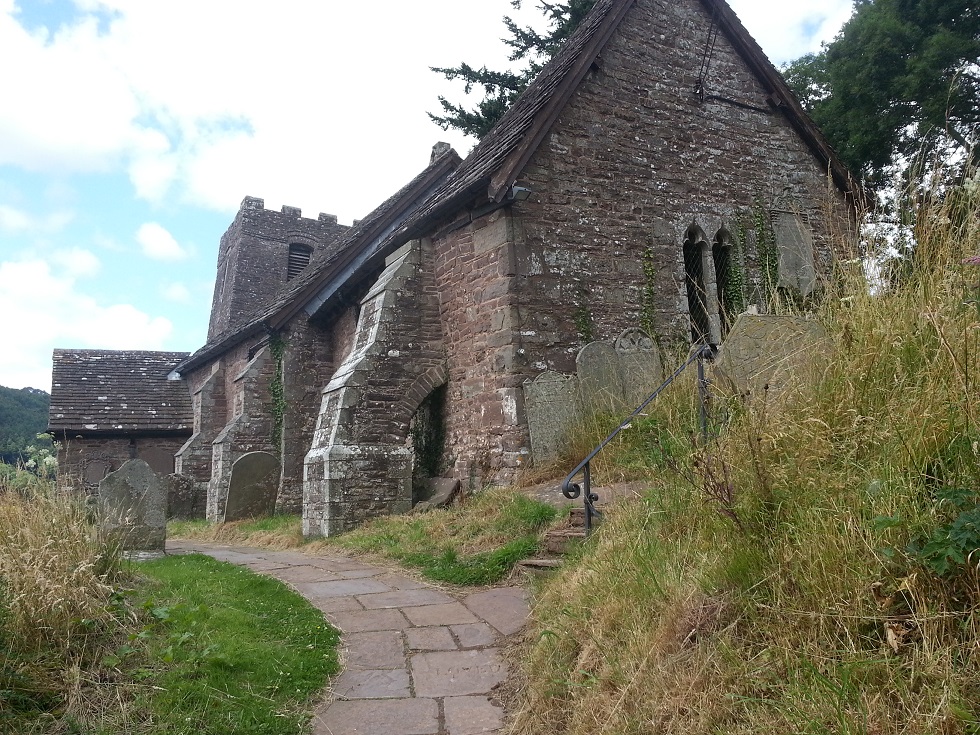
St Martin's Church, Cwmyoy
St Martin’s Church, Cwmyoy. Yes, it really does lean even more than that tower in Pisa.
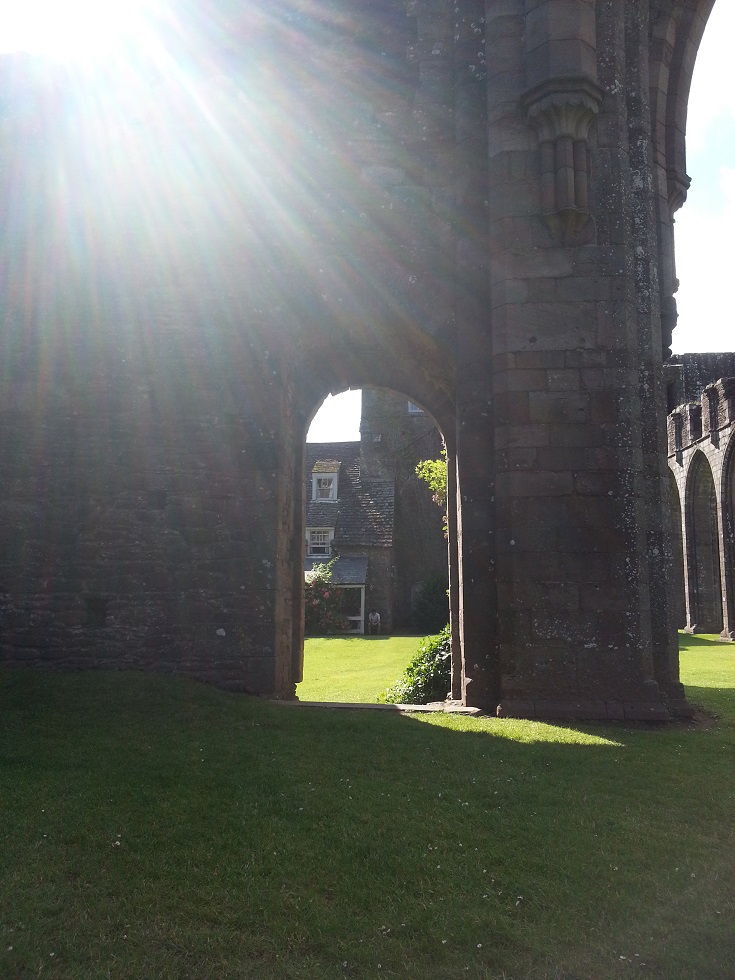
Llanthony Priory
Llanthony Priory

.

.

.

.

.

.

.

.

.

.

.

.

.

.

.

.

.

.

.

.

.

.

.

.

.

.

.

.

.

.

.

.

.

.

.

.

.

.

.

.

.

.

Those buildings have seen so many events since they were built: war and peace, births and deaths. Despite it all, they’re still standing, ready for us to enter between their ancient walls, read their ancient signs and muse on centuries of history.

Categories
Books Israel

Summer News

The first bit of news is that it is cooler than it was when we arrived home. Phew!

The second is that I will write about my trip. Maybe even tomorrow.

The third is that my first in a series of articles has appeared in the English Informer in the UK and the English Informer in France.

The fourth is that my publisher, Crooked Cat, is having a book sale on Amazon, but not for long. A large collection of excellent books is up for grabs. So is mine. Mine, too. (If you’re not in the UK, search for ‘Crooked Cat Publishing’ on your Amazon.)

CrookedCatSummerSale2015

Categories
Uncategorized

I’m Not Here

I just appear to be back, sitting at my desk, typing on my laptop.

In reality I’m still in the UK, hiking in the Wye Valley, meeting up with authors and other friends.

I have lots to say and no time to say it. In the meantime, I’ll leave you with some links that didn’t get much of a mention before:

What I wanted to be when I grew up, on Girl Talk

Talking with the English Informer

Excerpt from Neither Here Nor There, Chapter 1, in the English Informer

Excerpt from Neither Here Nor There, Chapter 13, in the English Informer

Categories
Books Interviews

A Couple of Revolutions: Interview with T.E.Taylor

Today I’m lucky enough to be visited by Tim Taylor, who, like me, is published by Crooked Cat Publishing. He has a new book out in five days.
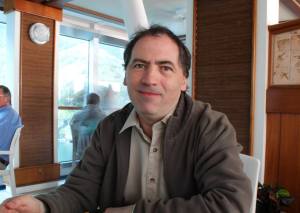
Tim TaylorHello Tim and welcome to Jerusalem. Have you ever visited Jerusalem in the flesh, as it were?

I’m afraid not, though it’s a city I’d like to see some day. I love places that are steeped in history. Thank you for the opportunity to make a virtual visit, though I’m sure it would be even better to come in person!

Tell us about the new novel.

Revolution Day

Revolution Day will be published by Crooked Cat on 30 June. It follows a year in the life of Carlos Almanzor, the autocratic ruler of a Latin American country. Now in his seventies, Carlos is feeling his age and seeing enemies around every corner. And with good reason: his Vice-President, Manuel Jimenez, though outwardly loyal, is burning with frustration at his subordinate position. When his attempt to augment his role is met with humiliating rejection, Manuel resolves to take action. But how? Since Angel, the Head of the Army, is loyal to the President, he must be patient and cunning if he is to find a way to undermine Carlos’ position.  

 Interspersed with the main narrative are excerpts from a memoir being written by Carlos’ estranged and imprisoned wife Juanita, in which she recalls the revolution that brought him to power and how, once a liberal idealist, he changed over time into an autocrat and embraced repression as the means of sustaining his position. In time, as Manuel makes his own bid for power, Juanita will find herself an unwitting participant in his plans.

That sounds very interesting. Unfortunately, it’s a plot that rings very true. Does this novel have any connection with your first novel – Zeus of Ithome, published by Crooked Cat in 2013?
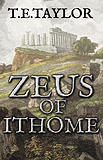
Zeus of IthomeThere is a connection in that both novels involve a revolution. But in most respects, they are very different novels. Revolution Day is set in the present day – albeit with some reflection on previous decades – and in a fictional country. Zeus is set in a real place (southern and central Greece) in the fourth century BC. It describes actual historical events – the struggle of the Messenian people to free themselves from three centuries of slavery under the Spartans, and the wider events that formed the backdrop to their final revolt – albeit through the lives of (mostly) fictional characters. Diocles, the central character, is a seventeen year old helot slave at the start of the book. Forced to flee his home, he falls in with ageing rebel Aristomenes, who still cherishes dreams of revolution and wants to seek advice from the oracle at Delphi. Later, Diocles’ travels take him to Thebes, where he meets Epaminondas, a historical Theban general who also has no love for the Spartans. As war brews between Thebes and Sparta, the conditions at last become right for Diocles and Aristomenes to return to Messenia and begin their revolt in earnest.  

Have you visited Greece? Can a visit help in any way with a novel set so long ago?

I had been to Greece in my teens – a good while ago! – and visited some of the places that feature in the novel, such as Delphi (and more recently to Crete, which doesn’t). I think those rather distant memories were of some help in giving me a feel for the landscape. For example, there is one scene where Diocles crosses the Gulf of Patras in a small boat and is impressed by a mountain looming above the shore behind him. I remember admiring that same view myself – albeit from a car ferry!

Where else did you get background information from?

I already had a good background knowledge about ancient Greece, having studied Classics at university. I read the ancient sources for the period and some books by modern historians, and did lots of internet research, for example about details of clothing and authentic Messenian names. I made extensive use of Google Earth in tracking the topology of the places the characters travel through. I was delighted (and relieved!) when readers who had been to places in the novel I have never visited – such as Mount Ithome, the ancient sanctuary of the Messenians – verified my description of them.  

How did you manage when you had questions that couldn’t be answered?

One of the fun things about writing historical fiction – particularly when it’s set in ancient times – is that where evidence is lacking you can make things up, provided that they are plausibly consistent with the known facts.  

I see we have at least two other interests in common: music and walking. Where has music taken you?

Hmm. Well, in my twenties it took me up and down the motorway to such exotic places as Dover, Northampton and, um, Stevenage! Nowadays I play mostly for fun, but I do still play in public once in a while.

You said somewhere that you like walking up hills. I’m not sure I do. I like the feeling of accomplishment when I reach the top and the knowledge that I can now walk downhill. What do you like about walking up?

When walking up I am buoyed by the expectation of reaching the top where I will experience that feeling of accomplishment, which I agree is often the best thing of all (sometimes the view may be even more rewarding). There is a certain satisfaction as you reach prominent points on the route and see lower hills drop below your line of sight, knowing that you are that little bit closer to your goal. On the way down, although there is the afterglow of that sense of achievement, you no longer have the same sense of purpose. Also, if the hill is steep, I find walking down very hard on the knees and toes – I do genuinely prefer walking up!

What’s the next novel going to be?

It will probably be a follow-up to Zeus of Ithome, taking in the early career of Philip II of Macedon. As a teenager he was in Thebes, where he came under the influence of Epaminondas, shortly after the time when the first novel ends. I am doing some research on this right now.

So you’re doing what I’m planning: to write a novel that’s very different to the first and then write a sequel to the first.

Thank you so much for coming, Tim, albeit abstractly. And lots of luck with your new book.

You’re welcome, Miriam. And thank you very much for hosting me!

Links

Revolution Day on Amazon UK

Revolution Day on Amazon US

Zeus of Ithome on Amazon UK

Zeus of Ithome on Amazon US

Facebook

Twitter

Website

***

I’m taking a break until the beginning of August. Have a great summer (or winter if you’re in the other hemisphere).
Categories
Books

Anniversary

Today I celebrate a special anniversary. On this day, a year ago, my first novel, Neither Here Nor There, was published. I will always be indebted to the people at Crooked Cat Publishing for making that happen.

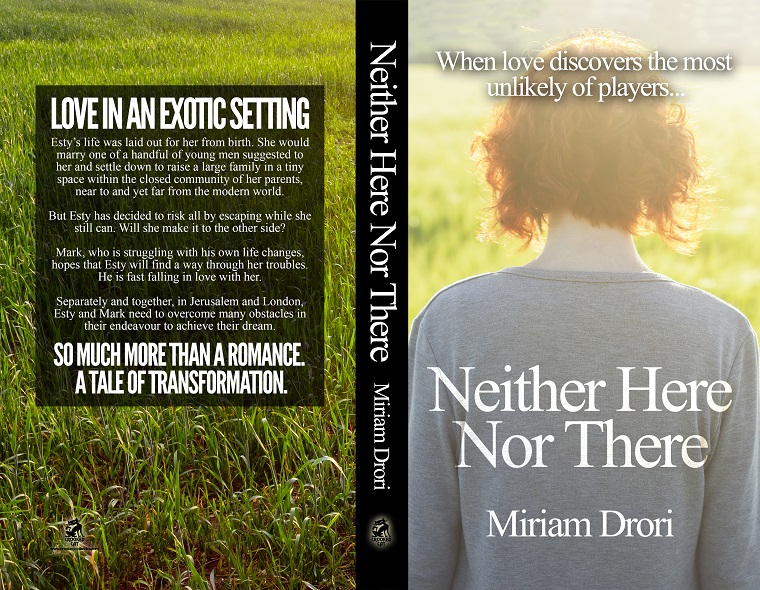
NeitherHereNorThereCoverLast month, I posted a poem based on the acknowledgements. Today I want to reflect on some of the things that have happened to me because of that event:

  • I met a wonderful group of authors, some of whom I have highlighted in various posts.
  • I joined Toastmasters and continue to learn how to give speeches.
  • I gave several online interviews.
  • I wrote several guest posts that were published around the blogosphere.
  • I read from my novel, first to the attendees of my offline launch party and later to a larger audience.
  • I took part in Indie Authors Appreciation Week, organised by Carmilla Voiez.
  • I gave my first author talk.
  • And shortly there will be a very special event that I will tell you about in August.
Indie Authors Appreciation Week Poster
My flyer for Indie Authors Appreciation Week
Categories
Books Interviews

Triple A: Author Ailsa Abraham

I think all human beings are interesting, but sometimes it’s hard to discover the interesting parts. That’s not true of my guest today – ex-biker, shaman, Bipolar coper, expat, caravanner, author, knitter and much more. Her magic carpet brought her to a walled city, though possibly not the walled city she expected to find.

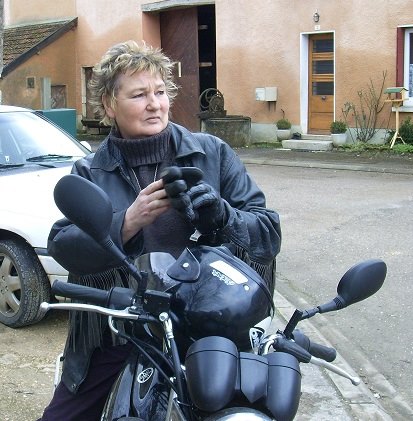
Ailsa on Yamaha

Hello Ailsa. I’m awarding you the dubious privilege of being allowed inside the walls of my world. I’m afraid it’s just me in here, so not much to see.

Rubbish, came to see you and it’s great to be here.

Part of me is now smiling. The other part is thinking: it’s nice of you to say that, but….

You’ve had your own experiences of mental health problems. Is there anything you want to tell us about them? What message do you want to give readers that might change their attitude towards mental health issues?

Yes, I have. The worst was being misdiagnosed for thirty years, which is not uncommon for Bipolars. We don’t present to the doctor when we are up so generally get wrongly-classified as depressives. This results in us not getting the correct medication which makes the situation worse. Since I had the correct diagnosis of Cyclothemic Bipolar things have been much better. It means my mood changes are very rapid over a day or two. Other Bipolars can stay in one phase for months or even a year. I’ll be on stabilising medication for the rest of my life but that is fine.

Message? Yes. Please give people a bit of slack. You don’t know what kind of hell they might be going through and make allowances, especially if they then apologise. I am still hurting very much because people I snapped at when having an extremely difficult time with my Bipolar, won’t accept my most sincere apologies and refuse to speak to me. That is their decision but I still cry about it.

Generally people with mental health problems aren’t dangerous. No, it isn’t easy to cope with someone whose moods change unexpectedly but if you make the effort to manage that, they are very grateful and make loyal friends. We’re just happy that anyone will bother with us. Mental health problems interfere very much with self-esteem so no matter how bad YOU think I am, I’m thinking worse, believe me!

“Generally people with mental health problems aren’t dangerous.” I wish others would remember that, although I understand why it’s hard. When you read that a particular murderer is a loner, it’s easy to imagine that all loners are potential murderers.

You’ve lived in France for a long time. What do you miss most about the UK?

Interesting question. I’ve been here so long that it’s home. The UK is a foreign country and I love visiting but don’t miss it. The Old Feller goes back to visit family and buy teabags which are the only thing we can’t get over here, well, not good, proper ones. I visit my family in Scotland and other friends in England but in general it’s people I miss, not places.

What are you pleased to have got away from?

Overcrowding, pokey rooms and tiny gardens!

Four Go Mad in Catalonia

What’s your connection to Judaism?

Easy. My father and grandfather were Jewish but, like the Old Feller, goy mother so not considered Jewish myself (except by the reformed Synagogue). When my father was dying, a Jewish neighbour looked after me to free mother to go to the hospital. Auntie Wyantie (Mrs. Wynant) talked to me in Yiddish and made me apricot dumplings etc. A lot of that is stuck in my mind.

Tell us a little about magic.

Wow! I could write a short book but it would meet with disapproval from so many other magic-users. OK – in a nutshell it is an ability to control energies. Often it is applied human psychology which means that when people have asked me to “work on” something for them they are more confident that it will go right – the placebo effect. Similarly if I were to tell someone I was exacting justice on them for a wrong done to someone, that might play on their psyche too. I always liken it to any other ability like being musical or able to paint. One can take lessons but it helps to have an innate gift. Also, practice, practice, practice. I hate to think how many hours I’ve spent in meditation trying to control my mind and link into energies.

No we do not need to cover ourselves in odd garments, dance naked or use esoteric paraphernalia. If you really want to know how real witches work, read Terry Pratchett. Weatherwax, Ogg and Magrat are more like my types – a bread knife and a chipped teacup rather than ornate daggers and chalices. Intention is all. I could go on. Remember, however, that where you have three magic-users in the same place you’ll get six different opinions on the same question.

Ha-ha! That sounds like what they say about Jews. How does all that use of magic relate to your novels?

The ones written under my own name, very much. My experiences working with covens and knowing other pagans was essential. I couldn’t have written the books without it and one has to have “lived” it to understand it. There is a high price to pay for manoeuvring energies which is not understood by outsiders. I was involved in pagan religions and so know the rituals inside out therefore the books ring true. The philosophies quoted within are real.

Crooked Cat Books

I enjoyed your two Crooked Cat-published novels very much. What do you have in store for us?

There has been a demand from readers for more adventures of Iamo and Riga from the first two books and I would like to see more of Adrian and Helen who are non-magical but some of my favourite characters. Dagda is kicking me to write a fourth with him as the main character which would be very tempting as a Native American Black Shaman is too good to leave hanging around without a story. I’m also in the middle of writing my comical memoirs of twenty-five years in France. That is going to be self-published for translation reasons but Crooked Cat are being very helpful with it. The title will be “Knitting With Eels” and I hope to have it out by Spring next year.

Thank you so much for coming, Ailsa. You may leave now… if you can find the way out!

BIO – Ailsa Abraham retired early from a string of jobs, ending up with teaching English to adults. She has lived in France since 1990 and is married with no children but six grandchildren. She copes with Bipolar Condition, a twisted spine, Chronic Fatigue Syndrome and increasing deafness with her usual wry humour – “well if I didn’t have all those, I’d have to work for a living, instead of writing, which is much more fun.” Her ambition in life is to keep breathing and maybe move back to the UK. She has no intention of stopping writing. Her other passions are running an orphanage for homeless teddy bears plus knitting or crochet now that she has had to curtail her activities on her beloved black Yamaha motorbike.

As Ailsa Abraham:

Alchemy and Shaman’s Drum published by Crooked Cat available from Amazon UK and Amazon US

Four Go Mad in Catalonia (comical memoir of a holiday) – self-published, available from Smashwords

Twitter – @ailsaabraham

Facebook Group

Website and blog

Categories
Israel Social anxiety

2015 Bloggers’ Scavenger Hunt – Take 2

As Firefox likes to say: Well, this is embarrassing!

But this really is.

At the beginning of the scavenger hunt that I described in my previous post, Tali, who runs Israel ScaVentures, held up some cards with words on them and asked us to think of associations. Words like DANGER and OPPORTUNITY.

I’m not good at these excercises. My mind tends to go blank when it’s expected to be spontaneous. Fortunately I didn’t have to say anything; the others all come up with associated words.

Then Tali held up a card with the word

WallsI didn’t suggest anything for that word, either.

All the words were connected to our activities for the rest of the morning. WALLS was no exception.

Moses Montefiore, the British philanthropist, decided to build the neighbourhood of Yemin Moshe in an attempt to alleviate the poverty and overcrowding within the old city walls. 15,000 people lived there at the time (mid-19th century).

Montefiore also used money bequeathed by the American, Judah Touro, to set up the adjacent neighbourhood of Mishkenot She’ananim. Its high walls and barred windows were designed to give people the confidence to move into it.

Attacks by Arabs during the 1930s prompted the destruction of internal walls so that fighters could move around Yemin Moshe without detection. The five iron gates were also built at that time, effectively walling in the neighbourhood.

Tali Kaplinski Tarlow of Israel ScaVentures

But before we learned all that, when Tali held out that card with the word WALLS, I thought of an association immediately. But I didn’t say it. I was too embarrassed. What I thought of was social anxiety and the way it builds an imaginary wall around a person, keeping that person separate from the rest of society. It’s the reason for the title of this blog. It’ll come up in the interview I’m posting on Thursday.

But it didn’t come out of my mouth on Sunday.

As I might have written in a story about me, “She sighed, slowly shaking her head from side to side.”

Links

Israel ScaVentures

The Almond Bakery Café that replenished us with cakes after the hunt.

Categories
Israel

2015 Bloggers’ Scavenger Hunt – Take 1

Yesterday morning I attended my third scavenger hunt, organised by Israel ScaVentures.

Israel ScaVenturesAlthough the whole event took just two hours, I feel it needs at least two blog posts to do it justice. This one is about what we saw and learned.

ScavengerHunt2
Selfie by Yoni Cantor Wiseman

This year’s hunt took place in the Jerusalem neighbourhood of Yemin Moshe. The location was very significant for me because we lived there for thirteen years. It’s one of the first neighbourhoods to have been built outside the city walls. I have blogged about Yemin Moshe several times. Here’s the list, if you’re interested:

A-Z Challenge: W is for Western, Wailing, Wall, Windmill

Root Finder

Writing Seminar and Memories

Places in NHNT

So obviously I knew all there is to know about Yemin Moshe. Wrong. I discovered plenty from the scavenger hunt. The Lion Fountain, we read from the excellent Mission Pack, was donated to Jerusalem by Germany in 1989 and each part of it symbolises something.

I heard a third reason why the windmill was hardly used, on top of the two I mentioned here: it was designed to work with British wheat and was not suitable for the hard wheat of Jerusalem.

And there was plenty more fascinating information, all absorbed in a friendly, fun atmosphere.

Other posts about the hunt can be found at:

One Tired Ema

Managing Greatness

i-Point Media Group

Handmade in Israel – the most detailed post.

If you’re in Jerusalem, Israel ScaVentures is a great, fun way of learning about this special city.

Photo by Yoni Cantor Wiseman
Categories
Books

May Report

At the beginning of this month, I pledged to:

  • Read 1 book
  • Write 2 short stories
  • Write 3 poems
  • Do 4 submissions
  • Write 5 blog posts

How did I do with that?

I read more than one book. In fact I read two whole books (although one was very short). I also finished the one I’d been reading before May, I gave up on one book part of the way through because I wasn’t enjoying it, and I started another that’s interesting but heavy-going. Not bad!

I wrote one short story and two poems.

If you count two submissions to the same competition separately, then I managed four submissions.

And this is my fifth blog post this month.

I also did quite a lot of work on my WIP. And I gave my first ever author talk, which went well and led to a lively discussion. So altogether I’m very pleased with what I’ve achieved this month. I think, in general, goals are good, as long as they are realistic and you allow yourself some leeway.

Next month I will mostly be preparing for an exciting time ahead.

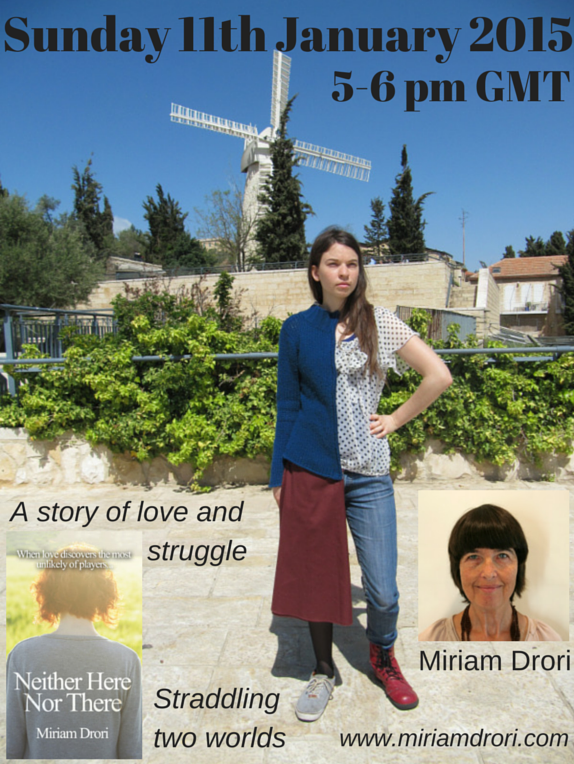
Flyer for author talk

Categories
Books Rhymes

Two Poems

As part of the May Mayhem challenge, I wrote two poems this month.

For the first, I took the acknowledgements from my novel, Neither Here Nor There, and turned them into rhyming verses.

Acknowledgements for Neither Here Nor There

NeitherHereNorThereCoverSeveral people a role they took.
Without them there would be no book.

Gill reappeared from a thorny past —
One that I had tried to cast
Away. She helped me understand
Myself, and taking me by the hand,
With friendship, advice and support,
She showed me the ball was in my court
And told me with tact and sobriety
All about social anxiety.

I joined a local writing group.
Its members formed a merry troupe.
They helped me learn how to write,
Critiquing till I saw some light.
Of David the mentor I’m in awe.
He always finds what no one saw.
Judy, who ran my other group,
Brought fresh ideas into my hoop.

Romance themed Sally’s excellent workshop,
Where I created a heroine and a heartthrob,
And devised a plot with conflicts in heaps
That threatened to separate these struggling young peeps.
Sue and Gail, course-made friends,
Critiqued my drafts from beginnings to ends,
Turning the words that came from my head
Into a novel that could be read.

I hadn’t let anyone close to me read,
Expecting disapproval I didn’t need.
But after acceptance Other Half found
Bloopers. So glad they left the ground.
Crooked Cat Publishers, Steph and Laurence,
Introduced me to authors in their torrents,
And produced an opus with delightful cover,
My name below its troubled lover.

A big THANK YOU to those and others, for they
Provided support and showed me the way.

Here are the original acknowledgements for comparison:

Several people made this novel possible and I will always be grateful to them.

Gill Downs, who has been my friend, advisor and supporter ever since we remet twelve years ago.

David Brauner and Judy Labensohn, who taught me about writing.

Sally Quilford, who ran the excellent pocket novel workshop that led me to consider writing a romance.

Sue Barnard and Gail Richards, who spared no time or effort in helping to turn my draft into a real novel.

David Drori, who pointed out several problems when I thought there were no more left.

Laurence and Steph Patterson of Crooked Cat Publishing, who accepted me into their warm basket of cats and used their professional expertise to produce a volume of high calibre.

Thank you to all, and to everyone else who gave me encouragement along the way.

***

In a rather nonsensical poem, I varied the number of lines in each verse: 9, 7, 5, 3, 1. Someone has probably done this before and given the form a name.

Eye Spy

I wonder why
There is no Y
That I can spy
In “shepherd’s pie”
But there is a Y
In “your red tie”
Which lost its dye
In a wash that I
Set too high.

It makes me sigh
And even cry
When in your eye
I see that I
Am seen as shy.
It’s a lie
That I decry.

The bread that I
Like best is rye.
It makes my
Smile wry.
Does that apply?

Saying “Hi,”
Drinking chai,
By the by.

Hello goodbye.

I’ll tell you how well I did with the challenge in another post, later today. Sorry it has to be today because it’s the end of the month. See you soon….