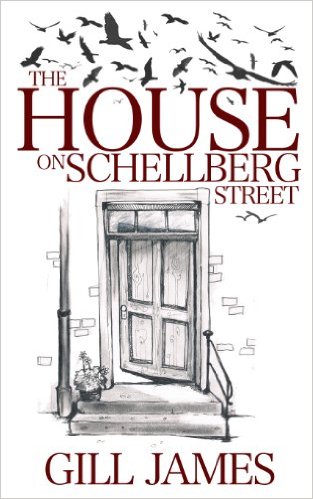

My guest today is Clara Lehrs, brought to you by Gill James. Clara lehrs appears in the YA/adult novel, The House on Schellberg Street, published by Crooked Cat Publishing.
Rexingen, 15 February 1942
Dear Ernst, Käthe, Rudi and Renate,
I’ve no idea if, when or how you will ever get this letter but I hope that one day one of you will read it, and pass it on to the others. I hope you are all still in touch.
I would like to assure you that I am well and content here in Rexingen. The people are very kind, even though we are poor and I have had to become Jewish again. There is a lot of warmth and everyone shares what little they have. There is a lot of love and spirits for the most part remain undaunted. It is so clear to me that in fact we believe in the same God, whatever he – or she – actually is. We’re not clever enough yet to understand these things fully.
I’ve taken on the role again of being Mutti Lehrs. I’ve befriended one young woman particularly who lost her husband just after she became pregnant with her second child. Her little daughter, Kyla, is delightful and comes to me when her Mutti needs a rest. And somehow that set everything in motion and suddenly all of the younger children in the village began to regard me as their second grandmother. So Renate, if you ever come here, you will have a lot of new cousins to get to know. It seems I have found a purpose again.
We all gather in the evenings to share a meal and sit round the log fire. We’re often hungry but at least here we are better off than those who live in ghettos in the towns. We grow a few vegetables and make use of what grows naturally. Occasionally we hunt.
You may wonder why I hesitated and hesitated about leaving and didn’t in the end join you all in England. Well, I just could not leave the Hilfsklasse to survive on its own. You may argue that I’ve had to anyway. This is true. But even here there is something of a miracle: by the time I was ordered to leave everything there was in good hands. Karl Shubert was comfortable in my house and Helga Gödde and Hani were really helping. Renate, you should be so proud of your friend. She will make an excellent teacher one day. Hopefully all of this nonsense will soon come to an end and people will be able to resume their normal lives.
Today is a pretty day. The countryside is covered in snow. I’m sure the sun will shine later. That’s the thing. All of this human silliness and nature takes not one bit of notice. The seasons come and go. The sun still feeds this planet. Oh boys and Käthe, what you and Professor Einstein could tell me all about that! And Hans too.
Ernst, I want to thank you for taking such good care of our family. I’m sorry your old stubborn mother would not comply, but Herr Hitler, of course, didn’t know what he was taking on when he challenged CLARA Lehrs. No doubt you are doing a deal of good furthering the work of the Waldorf schools in England.
Rudi, did you ever get to Canada? I hope you are still enjoying playing with your numbers and I hope you are taking good care of that chest of yours. Have either of you two met a nice young lady yet? I’d like a few more grandchildren, thank you, even though I have Renate and all the fine youngsters here.
Käthe I’m so sorry that you and Hans have to live apart. Given the nature of his work it’s understandable. But at least you are with your child in England. Some families I know have to be split up. To think that Hans is involved in designing some of the very weapons that are being used on you in England. Gruesome. I don’t condemn him for it. It is just the way things have worked out. Be courageous my dear.
Renate, I hope it’s not too confusing for you. Perhaps you now wonder whether you are German or English, Jewish or Christian but actually you are all of those things but more than anything else you are Renate, who is now stronger because of everything that has happened to her. Remember, home is where you are and what you make of it.
Well, now I’m feeling my age and I’m actually very sleepy. I hope that I can get this letter to you soon and that soon after that we can all meet again,
Your loving Mutti and Oma,
Clara Lehrs.
About The House on Schellberg Street
 Renate Edler loves to visit her grandmother in the house on Schellberg Street. She often meets up with her friend Hani Gödde who lives nearby. This year, though, it is not to be. Renate finds out a terrible secret about her family. She has to leave behind her home and her friends and become somebody she never thought she could be. The house on Schellberg Street needs to stay strong.
Will it and those who work in it be strong enough? Will Renate ever feel at home again? And what of those left behind?
About Gill James
 Gill James writes for children and young adults. She is also a prolific writer of short fiction and flash fiction. As well as being published by several companies, she is a publisher / editor working with Bridge House, Chapeltown and The Red Telephone. She works at the University of Salford as lecturer in English and Creative Writing.
 .
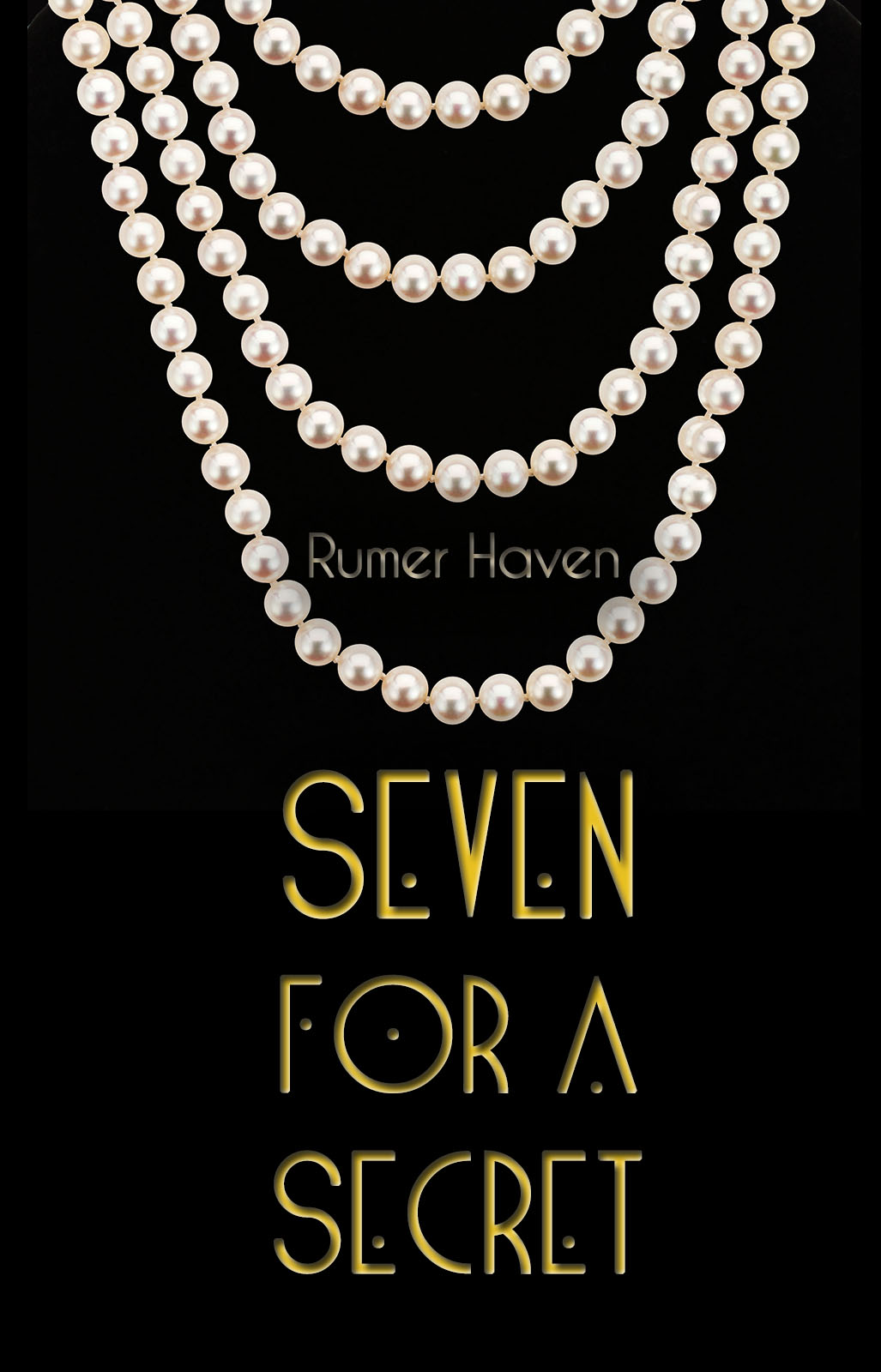
 Seven for a Secret is a romantic tale told through two time periods, the year 2000 and the 1920s. Set in Chicago, each era follows its own love story, with the past and present interrelating through mystical means. Lon is the hero of the Jazz Age story, in which he meets a young socialite, Eva, who is betrothed to someone else. The two become fast friends and confidantes, however, sharing a connection they’ve never enjoyed before in their stifling upper-class milieu.
 Rumer Haven is probably the most social recluse you could ever meet. When she’s not babbling her fool head off among friends and family, she’s pacified with a good story that she’s reading, writing, or revising – or binge-watching something on Netflix. A former teacher hailing from Chicago, she presently lives in London with her husband and probably a ghost or two. Rumer has always had a penchant for the past and paranormal, which inspires her writing to explore dimensions of time, love, and the soul. She debuted in 2014 with Seven for a Secret, and her next novel, What the Clocks Know, is due for release by Crooked Cat Publishing in early 2016.
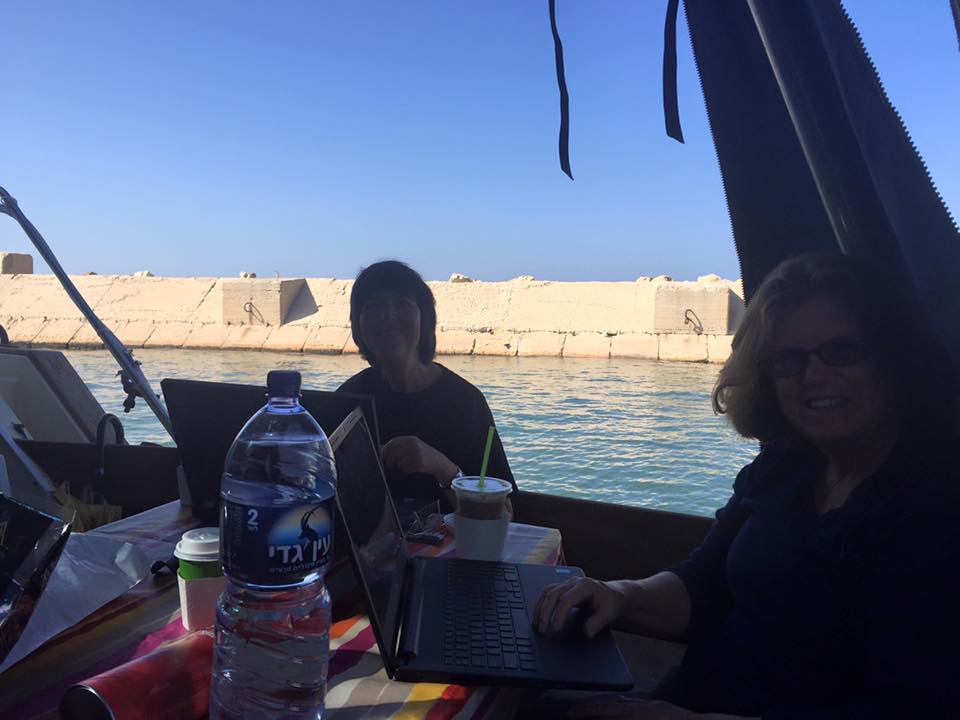
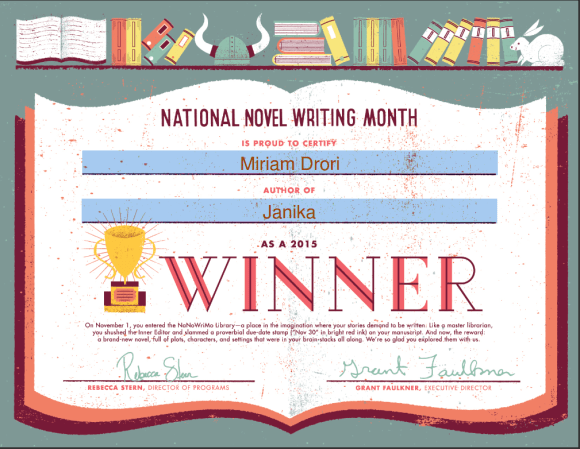 Yes, I’m happy to be able to say I wrote 50,000 words during November. I also met some lovely writers and enjoyed writing not only at home but also at cafés, in a large hall and on a boat!
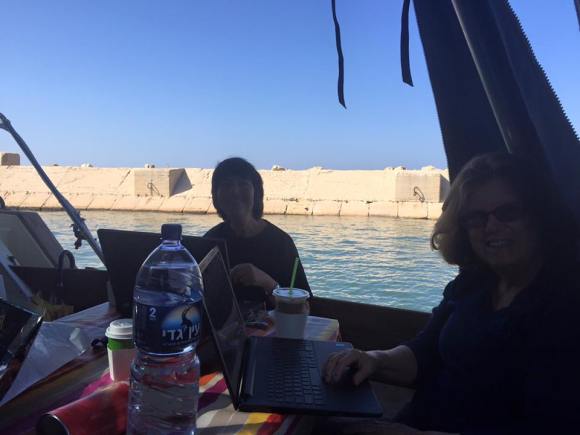 November was also a month of many stabbing attacks and other terrorist attacks, and unfortunately this latest wave isn’t over yet. Despite the news, we continued to go out and meet each other. It’s not that we’re not afraid; just a sense that life has to go on regardless.
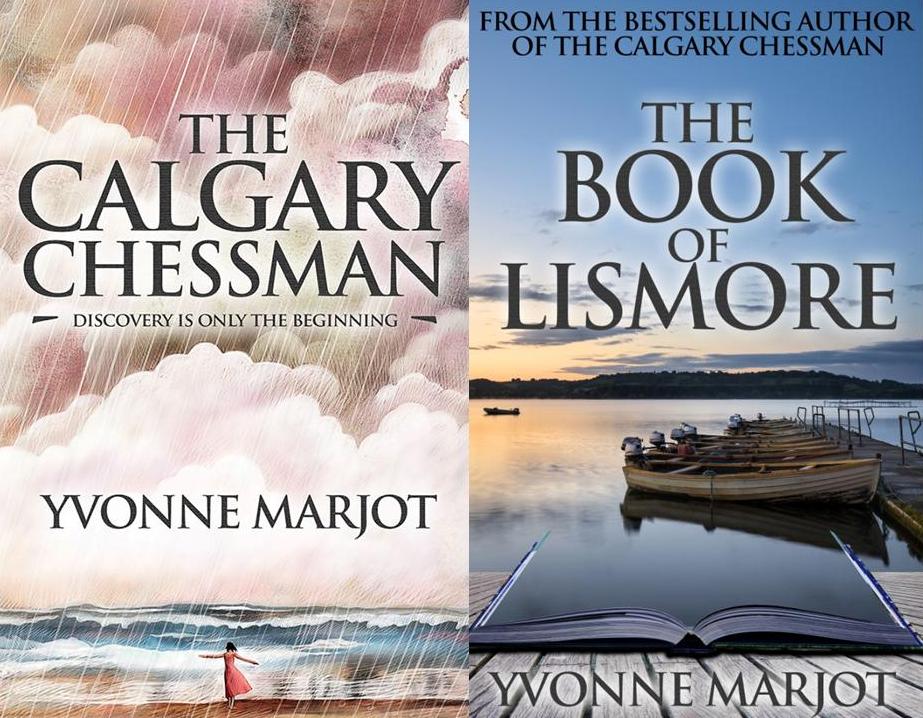
 Discovery is Only the Beginning
 Yvonne Marjot was born in England, grew up in New Zealand, and now lives on the Isle of Mull in western Scotland. She has a Masters in Botany from Victoria University of Wellington, and a keen interest in the interface between the natural and human worlds. She has always made up stories and poems, and once won a case of port in a poetry competition (New Zealand Listener, May 1996). In 2012 she won the Britwriters Award for poetry, and her first volume of poetry, The Knitted Curiosity Cabinet, was published by Indigo Dreams Publishing.

 You died long before I was born and I really wish I had had the chance to meet you.
 What an extraordinary woman you were! From a sheltered upbringing in a quiet backwater, you left Corsica in 1917 to nurse at the Western Front, something that would have been unthinkable for a Corsican woman a generation earlier. But you were always deeply attached to the island and now I understand why. I feel something of that bond myself.
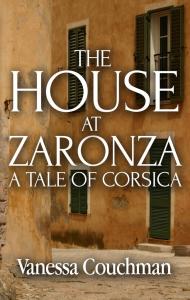 Set in early 20th-century Corsica and at the Western Front in World War I, The House at Zaronza is loosely inspired by a true story. Maria Orsini, the daughter of a bourgeois family in a Corsican village, and the local schoolmaster carry on a secret romance. Maria’s parents have other plans for her future and she sees her dreams crumble. Her life is played out against the backdrop of Corsica, the ‘island of beauty’, and the turmoil of World War I. This is a story about love, betrayal, loss and reconciliation in a strict patriarchal society, whose values are challenged as the world changes.
 Vanessa lives in France and is passionate about French and Corsican history and culture, the inspiration for her writing. The House at Zaronza is based on an intriguing true story that she came across when holidaying on the beguiling Mediterranean island of Corsica.