Author, editor, attempter of this thing called life. Social anxiety warrior. Re-Connections, a collection of short stories, published with Ocelot Press, 15/10/2025.
Holocaust Remembrance Day started off fittingly dark.
This year we remember the Holocaust in the aftermath of the 7th October massacre, the worst tragedy that has befallen the Jewish people since the Holocaust. There are some who want to call that day another Holocaust, but most disagree. During those awful years, while a few brave individuals risked their lives to save others, most Jews had nowhere to turn. Today, we have a state and an army.
In recent years, when the siren went off, I’ve stood on the balcony facing Jerusalem’s Yad Vashem, the Holocaust Museum. This year, in Tel Aviv, I took a short walk ending at Jerusalem Beach.
There I stood on the raised platform, watching the movement around me. On one side, the waves constantly rose and fell on this windy day. On the other side, people walked or ran past and traffic came in waves, often halting at the traffic light. In the distance, four young men kicked and headed a ball to each other.
At ten o’clock, the siren went off and everything stopped. Traffic came to a standstill, walkers and runners stood still, the young men let the ball roll to a stop as they, too, stood still. Only the waves continued to roll, oblivious to the occasion. Two minutes later the siren stopped, traffic started up, people continued their activities and I walked home.
I’m thinking of the six million who died in the Holocaust. I’m thinking of the one thousand two hundred who died on 7th October. I’m thinking of all the hostages still in Gaza after seven months, who didn’t hear the siren and probably don’t know that today is Holocaust Remembrance Day. I’m thinking please, bring them home.
“A memoir-in-miniature” says the front cover, the words hovering over a cardboard box, its flaps raised, inviting me to unpack it. Written on the side of the box is the author’s name, leaving me in no doubt about the contents within.
But I’m wrong, not about the overall goal of this book but about the way it’s presented. The chapters are short, flash-fiction style, and all the words have been chosen with care and precision, clearly requiring several rewrites. And not only that. The formatting is also special. There are words crossed out, tables and diagrams, short lines, indented lines, framed lines, columns, blank spaces.
I have to admit that, as a person who struggles with visual clues, I don’t always understand the reasons for all these unusual formats. But I’m certain there are reasons as I read the book, and even more so at the end when I read the book-club-type questions. “What do you think is the difference between her [Jennifer’s] use of strikethroughs vs parentheses?” For me, the answer doesn’t matter; what’s important is that reasons exist, proving that everything in this book was carefully thought out.
And yet, none of this interfered with my enjoyment of the memoir, my wish to discover how the story would continue and end. I wasn’t disappointed.
Rereading my review of a few days ago, I notice I didn’t even mention the love story the memoir tells, the differences of opinion between the two players in the story, caused by their different backgrounds and attitudes towards religion. It made me keep thinking: surely this is the part when they agree to separate.
Although the love story formed the whole plot, it was the telling of it that made this book special.
Places We Left Behind
“For anyone who has ever loved deeply and been willing to take risks for the sake of love.” Rachel Barenbaum author of Atomic Anna
When American-born Jennifer falls in love with French-born Philippe during the First Intifada in Israel, she understands their relationship isn’t perfect.
Both 23, both Jewish, they lead very different lives: she’s a secular tourist, he’s an observant immigrant. Despite their opposing outlooks on two fundamental issues—country and religion—they are determined to make it work. For the next 20 years, they root and uproot their growing family, each longing for a singular place to call home.
In Places We Left Behind, Jennifer puts her marriage under a microscope, examining commitment and compromise, faith and family while moving between prose and poetry, playing with language and form, daring the reader to read between the lines.
Jennifer Lang
American-French-Israeli hybrid; obsessed with identity, language, home, belonging
1995-today: Stories in BabyCenter, Parenting, Parents, Natural Solutions, Woman’s Day, Real Simple, Baltimore Review, Under the Sun, Barren Magazine, Quarter After Eight, Citron Review and on NPR
MFA in Writing from Vermont College of Fine Arts; an Assistant Editor at Brevity Journal
Yogini, practicing since 1995, teaching since 2003
IG: jenlangwrites FB: jenlangwrites
AWARDS for Places We Left Behind: *Finalist in Multicultural Nonfiction in American Book Fest’s 20th Annual Best Book Awards *Finalist in Multicultural Nonfiction in the IAN Book of the Year Awards 2024 *Gold Book Award Winner of Literary Titan
Last week, on the 11th April, I attended a wonderful workshop facilitated by Judy Lev. At the beginning of the workshop, we had to write a first draft about anything we wanted. Then we learned how to work on our drafts. Then we tried to put the tips into practice. I ended up with this:
Today, I commemorate the eleventh of April, the day of my marriage to David nearly five decades ago. This is the first year I celebrate that date alone.
Yes, celebrate. Because no one can take away the memories of forty-five sunny years, and reflecting on them makes me happy. Now, I live in a new place, I see my family often, the sun still shines and I can be happy in other ways.
When I post memories with David on social media, people say, “I see it’s hard for you.” But I don’t feel that way; the memories make me smile. When I explain that, they shake their heads in disbelief. But it’s true, honestly.
No doubt, the piece could be improved further, but it’ll do for now.
Following on from my previous post, I have created a new Facebook account, which is only for friend friends. When I’ve created an author page, I’ll post the link here.
I can think of several options that I’d better not repeat here. But the event that brought about this post is that I was thrown off Facebook, with no reason given or any route to appeal the decision.
I have been on Facebook since 2009, if not earlier. (I have no way of knowing any more.) All my history, memories, friendships, groups, photos have vanished in one fell swoop. That’s a huge part of my life.
But, you know, it’s not the end of the world. I can think of many things that could have happened to me that are much worse than this. I could have:
suffered an accident and been rendered unable to walk or dance
suffered a robbery
suffered a loss* (That happened six months ago; I certainly wouldn’t want a repeat.)
suffered many other events I don’t want to dwell on
The worst thing I can think of at the moment is that I could have been kidnapped by terrorists and held for over five months (so far), suffering hunger, torture, rape and more.
One happier piece of news is that I’m moving from Jerusalem to Tel Aviv. I’ll have to change the tagline of this blog. I will post more about this after the move.
* On the subject of loss, I have an essay in this new anthology of poems, stories and essays:
The author Joan Livingston called my contibution a “Great piece of writing!”
Here’s a shout-out for Lisa’s wonderful and informative blog, in which she describes nature trails and historic ruins, gorgeous birds and flowers. If you want to see a beautiful side of Israel, one that you won’t see on the news, this is the place to go. We’ve all been through hell, but Lisa’s hell began long before 7th October. It’s lovely to see her back.
Over the past two months, I’ve watched many more videos, seen more pictures, and read more comments than is good for me. Some of them I saved to refer back to and maybe share later. Like this one:
He was released in a prisoner exchange: 1027 prisoners for one Israeli soldier.
I think that shows so much about Israel. For instance:
We value life.
We look after prisoners.
Our doctors treat all patients equally.
What it shows about Hamas is obvious.
And that’s why there is no comparison and can never be one between Israel and Hamas.
We have heard, but generally not watched (because it’s too harrowing) what they did on 7th October. We’re only starting to hear how they mistreated the people they kidnapped. And that’s from those they chose to release. Who knows what they’re doing to the ones still being held?
Israelis don’t always see eye to eye. But when disaster strikes, that’s when we’re the most united. While the world continues to chant meaningless slogans and repeat lies, we’ll get on with the war we didn’t choose and don’t want. Why? I think Golda Meir, prime minister of Israel from 1969 to 1974, explained it well:
Take care, wherever you are in this dangerous world.
I haven’t written a poem for a long time, but this one suddenly turned up in my mind. I was listening to the song Days of Binyamina – ימי בנימינה, in which a man looks back fondly at his carefree childhood. The chorus begins: אני רוצה לחזור אל הימים הכי יפים שלי. I didn’t like the translations I found and wrote my own: I want to go back to the good old days. A more correct translation might have been: I want to go back to my good old days, but that doesn’t sound right in English. You know what? On second thoughts, why not?
I want to go back
I want to go back to my good old days When the love of my life was alive, When we walked and talked and toured the world, And returned to our beautiful hive.
I want to go back to my good old days When we lived in a bubble of bliss, When the baddies stayed outside the fence And rockets went to space.
I want to go back but I know I can’t. So I’ll stay in present. At least I still dance.
I know the “good old days” are a delusion that never existed. Everything is relative.
I’ve given this post a different title, but in a way it’s part of That’s Not Me! Yes, I think it can include the banner.
In a recent guest post, Ritu Bhathal wrote about the problem of not identifying with the protagonists of the stories she read. That was what led her to write her own stories about British Asian characters.
I found myself identifying with what she had to say. The stories I’ve read have not often included Jewish characters, and almost never British Jews.
“Does that matter?” you might ask. I’m sure it does, especially for a child, growing up and trying to make sense of her world.
The characters in the novels I read as a child never struggled to fit in due to being Jewish. They never worried if they were saying the “correct” thing, whether to non-Jews or to other Jews. They never had to forgo an activity because it didn’t chime with their religion. They seemed to live such uncomplicated lives.
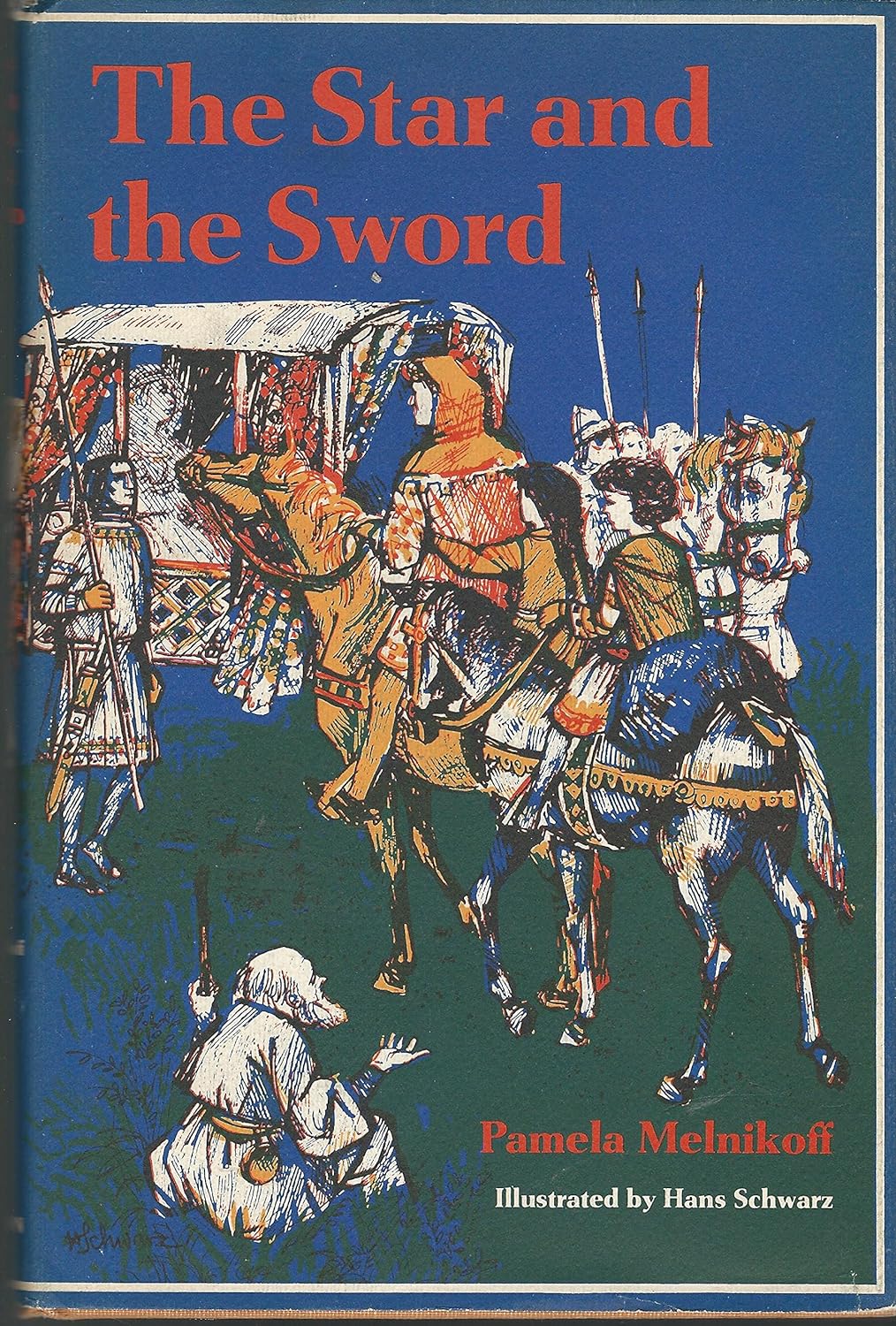
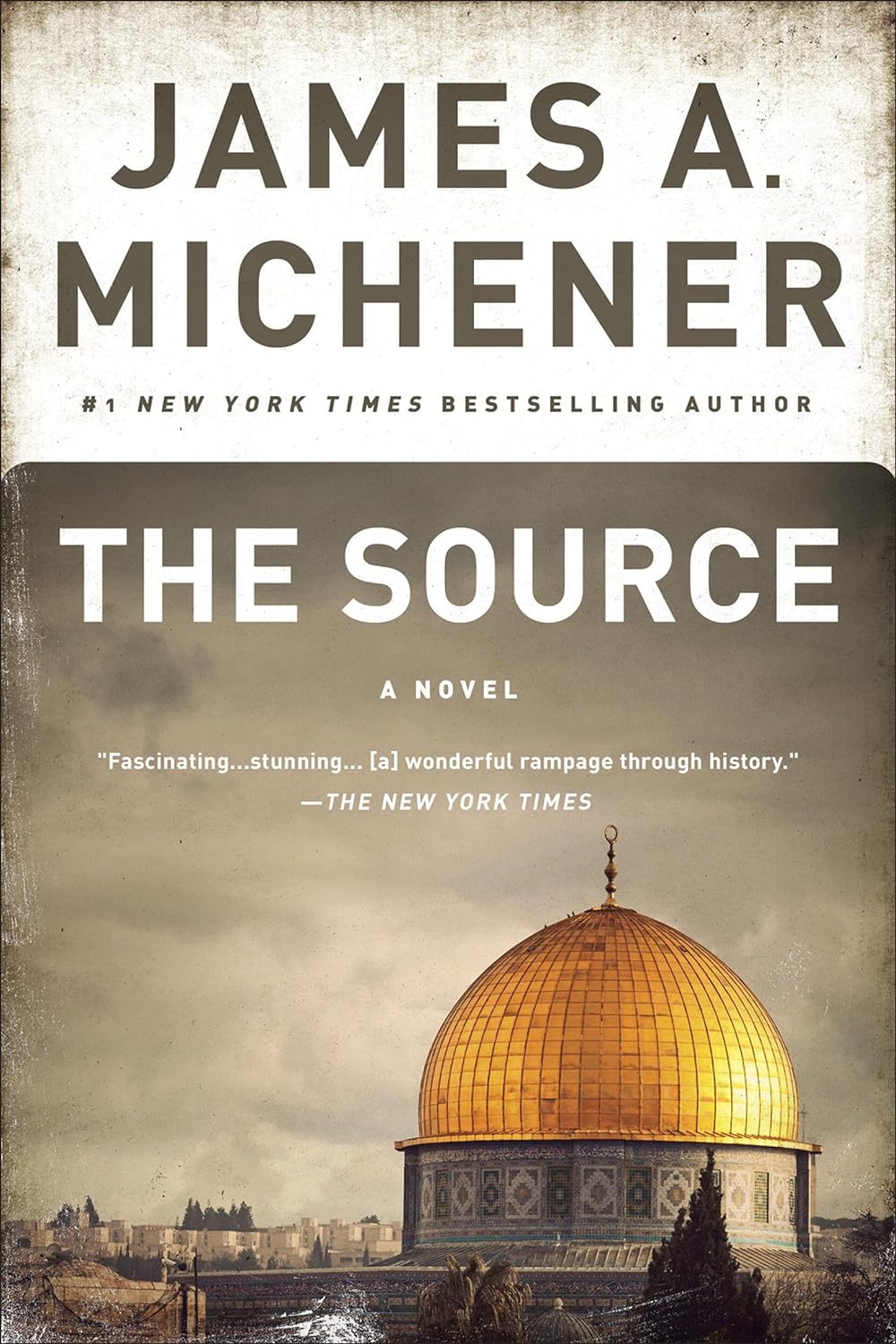
When I did read a book about Jews, I devoured it, even when it was set in the twelfth century (The Star and the Sword by Pamela Melnikoff). Even when it was a thousand pages long, like The Source by James A. Michener. Even when the Jews mostly weren’t British, as in Exodus by Leon Uris, as well as The Source.
In my case, the lack of Jewish characters in fiction didn’t cause me to start writing them. It took me several decades to even attempt to write my own stories. No. In my case, the rare books with Jewish characters, especially Exodus, influenced my decision to live in Israel. Because before and after the twelfth century and up to five years before I was born, Jews had nowhere to go where they felt protected. And now, we had our own country and I wanted to be part of it.
I have to say that, considering what’s going on in the world now and the way Jews are being treated, I’m gladder than ever that I made the decision to move. Israel is the only place where I’m never afraid to say who I am. It’s also the only place where I feel the authorities have my back. I know mistakes were made recently that enabled an enormous massacre to take place, but I don’t think that will happen again.
In contrast, the absence of a different group of characters from novels did influence my decision to write. I saw no characters with social anxiety, no characters who struggled to join in a conversation or to put themselves into the limelight, and there are still very few such fictional characters. I wondered if that was because they’re hard to write. If a character doesn’t say much, they could be considered uninteresting and therefore a bad template for a protagonist. But I decided to have a go, anyway, and I believe I succeeded. Even if a character doesn’t talk a lot, they can have an interesting variety of thoughts, and the people around them can have plenty to say. My uplit novel, Cultivating a Fuji, has two characters who have developed social anxiety. My Jerusalem Murder Mystery series (book 2 to come soon) has one.
It turns out it’s possible to write a character with social anxiety, and I expect the reason why authors don’t do it, despite the very large number of people who live with the condition, is that the topic doesn’t interest them. I would argue that it should interest them, because even if they don’t have first-hand experience of it, they probably know someone who does.
How about you? Did/do you see yourself in books? Do you think it’s important to see yourself in books? Have you written stories with characters like you?
Today, in the series That’s Not Me!, we have an author who is yet to publish a book but will be publishing one soon. She brings us a brilliant short story followed by an explanation. Any more that I could say would only detract from the reading experience. What I will say is that I’m sure her debut novel, when it comes out, will be exceptional.
That’s Not Me!examines how much of our fiction is autobiographical and why some authors try to insist there’s no link between their fictional characters and themselves. If you want to take part, have a look here and get in touch. You don’t have to be a writer. Readers also have views!
Wheels of Circumstance
By Claudia Chianese
Mama and I press our bodies flat against the frigid ground and pray the wheels do not stop. A gloved finger to her lips tells me what I intuitively know: we are in danger, and a disturbance may reveal our presence.
The day is crisp; the strong sun’s reflection on clean snow hinders our vision. I am a fawn watching a doe’s movement frozen by headlights, mirroring the behavior. Mama’s fudge colored eyes wide and alert do not move while her lashes flitter.
The wheels stop not by choice, but by circumstance. They rotate in the mud clockwise many times. When the engine shifts gear, the wheels twirl counterclockwise so fast, the steel spokes blur together. The vehicle, encumbered in mud, stalls and several soldiers jump out. I tremble, and see only soldiers’ feet in heavy boots with metal toes from where I am lying. I close my eyes at the thought of a soldier lifting his leg to kick me.
The engine restarts and the uniformed men study the wheels as they spin again. The puddle gets deeper, a chocolate cesspool, and goop splashes, dirtying my face. I watch two soldiers shift metal guns slung on their backs, and ready themselves to shove the vehicle from behind as a driver yells in a foreign language that reeks of anger. The noise muffles the sounds I do not make.
The soldiers rock the truck, making the ditch bigger, and the wheels more trapped. The engine cuts out leaving a quiet sound. The driver jumps out of the cab enraged, a semiautomatic gun raised above his head, and shoots into the air and around the tires.
Mama rolls her body on mine, secures my mouth shut with her hand to muffle any sound, and listens to an approaching noise, another vehicle.
The soldiers, who were pushing the pick-up yell, punch the driver and point to a deflated tire, as the second truck comes to a halt.
With chains and shovels, the angry team of men release the truck from the muck, and afterwards shove and slap each other in good cheer at the success of their efforts.
I start to cry when they drive off.
It is November 4, 1956 and what started as a birthday lunch at the University with Papa is the Hungarian Revolution.
In the morning, we sleep late and dress leisurely for the special day. I wear my favorite navy blue taffeta dress. Mama insists I wear leggings with my green winter coat adorned by gold buttons and a velvet collar, a matching headscarf tied under my chin. The leggings have inside zippers.
Mamma wears a camel wrap coat and a fake fur hat.
My birthday gift is a white rabbit muff with a cord I loop around my neck making certain it is not lost. I skip to the 9:45AM train to Budapest and nestle my hands inside my birthday gift, occasionally, fluffing the rabbit fur on the ride.
We arrive an hour later, and when we step down from the train, the crowd is noisy and the station disorganized. People run in different directions and change course unexpectedly. Papa is at the exit gate not at the University. He whispers in Mama’s ear after their kiss and her eyes droop in disgust. Papa grabs me in a birthday hug that lifts me off the ground and smiles his million-dollar smile.
There is a “change in plan” goes the conversation between tickles to my chin and behind my ears. Mama and I are to take the train to Austria; Aunt Marion will greet us for a Birthday Holiday. Papa will come on the weekend. Mama’s eyes continually question his prediction. I am happy with the promise.
We get back on the train. Papa hands us a bag lunch and an envelope with Aunt Marion’s address and spending money. We wave from the window not knowing it is for the last time.
Mama reads a newspaper on the train, turning the pages quickly and with tears in her eyes. “Who is Aunt Marion? Do I know Aunt Marion?” I ask of her.
“Aunt Marion is Papa’s relative, really a cousin. I have not met her either. It will be nice . . . I think. Yes, Trudy it will be nice. Now close your eyes and rest, we have a busy day.”
Near the Austria-Hungary border, the train stops, empties, and people are rude and loud.
“Is everyone on holiday, Mama?”
“Well, it seems…” and Mama holds my hand with intensity. “Let me ask for directions,” she says and approaches the conductor now standing on the platform. I cannot hear but watch heads nodding and shaking. Mama continues walking tentatively and then with determination.
“I am going to call Aunt Marion and see if she knows another way.”
Mama deposits several coins in a pay phone, and engages in a speedy conversation.
Smiling Mama says, “Sure enough, Trudy, we can follow the road and cut through the pasture. It will be fun and faster, maybe we’ll see a deer.”
Our walk is interrupted by the sound of Soviet tanks, trucks, and gunfire. Mama pulls us down behind tall grass brushed with snow. We listen, hidden until the sounds of people screaming and crying disappear.
Mama explains. “Mean people are invading our country and we must leave, for now. Papa will talk with them. It will be fine. We will cut through the meadow, and cross the border to meet Aunt Marion. She told me the way.”
That was before circumstance and the mud. Now Mama’s eyes close and there is blood on her coat. The fake fur hat sits crooked on her head surrounded by brunette hair curled for my celebration and I grow up fast within these seconds.
“Trudy, run ahead and tell Aunt Marion I stopped to rest.” Her soft words linger as she hands me the envelope and struggles to say, “She will help us. Run like the wind and do not look back.”
I kneel beside Mama. “Let me stay Mama, you need help, let me stay.” My words hang small and meaningless in the air.
Mama opens her eyes, “Gertrude Zimmerman, stop your silliness, listen to your Mama, go find Aunt Marion. Run… I’ll see you in. . . .
I finish her sentence, “Heaven.”
The sounds of wheels stay connected to the loss of Mama, her love buried in my memories.
That’s Not Me
In 1966, during college orientation, we were instructed to look to our left, then to our right, and told one of us would not graduate. The glaring statistic stimulated conversation.
Vera, on my right, was from Long Island, and had an unfamiliar accent. She escaped from Hungary as a child and remembered running across the border grasping her mother’s hand.
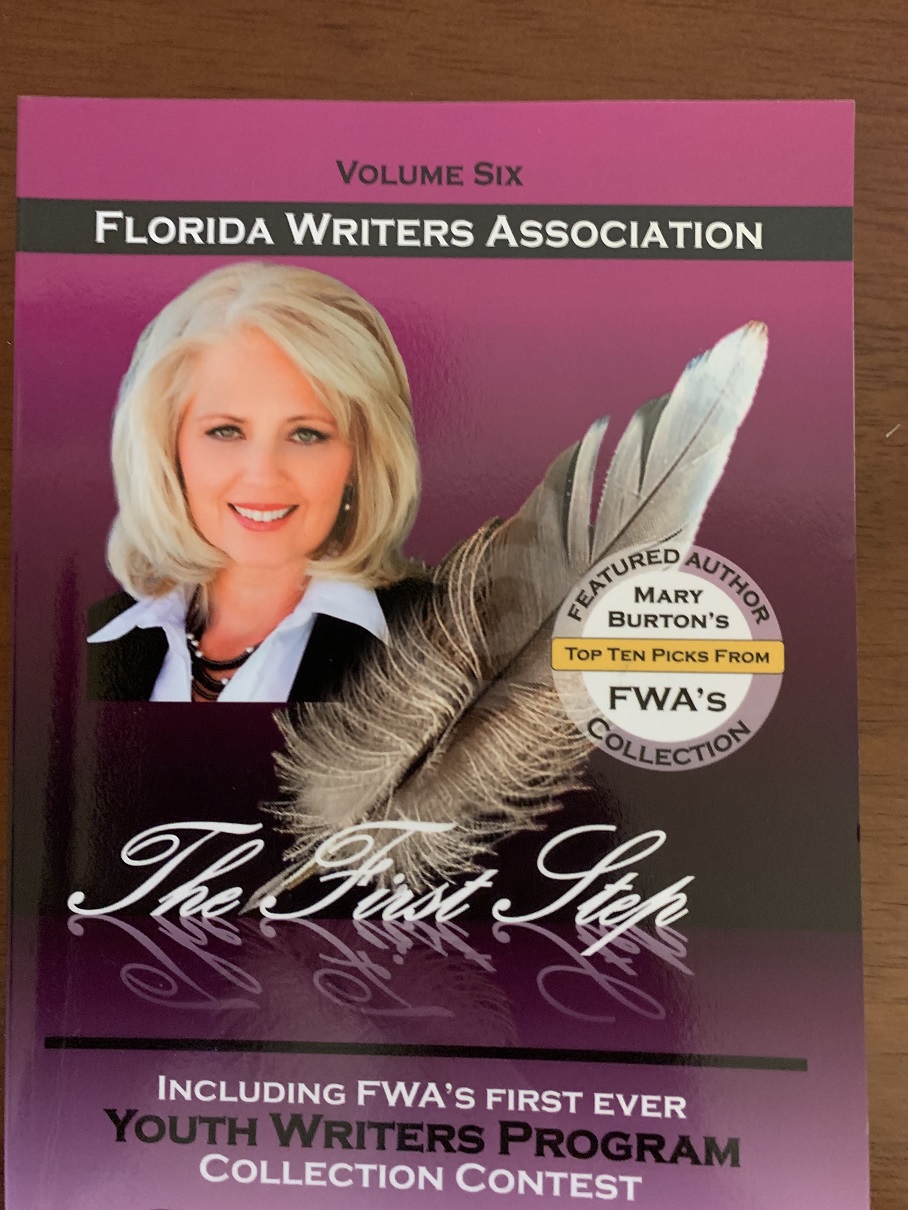
I was watching Betty Boop cartoons while she was chased by Russians. Her experience stayed with me and is incorporated in my fiction story, Wheels of Circumstance, published in Florida Writers Association Collection, Volume Four. Vera only said she’d fled the country, the rest of the story is fiction, or maybe not.
. . . Just saying, I never saw her again.
BIO
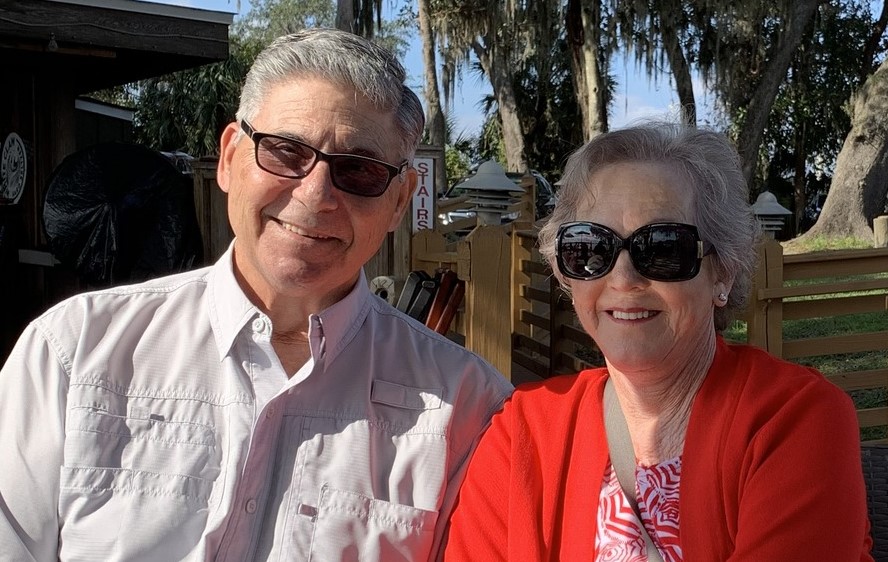
Claudia started writing when she and her husband retired and moved to Florida from New Jersey, in 2008. They have been married for fifty-two years, have one daughter and two adult grandchildren.
Three of her short stories, Acerbic, Wheels of Circumstance, and First Step Back have been previously published in Florida Writer Association’s anthology collections.
Claudia graduated with a BS in Education from SUNY at Oneonta in 1970 and has a MS in Education from the City University of New York Herbert H. Lehman College.
Her work experience includes:
Adjunct Professor at Sussex CCC in Newton New Jersey 2002-2006
Here’s an author who is new to me. What she has to say is fascinating. Also, the spark for her writing is something I can relate to.
That’s Not Me!examines how much of our fiction is autobiographical and why some authors try to insist there’s no link between their fictional characters and themselves. If you want to take part, have a look here and get in touch. You don’t have to be a writer. Readers also have views!
That’s Not Me!
When I started out writing short stories, the ones that garnered the most positive responses were ones that centred around my cultural heritage.
For clarity, I am a British-born Indian, Sikh to be precise, born to Kenyan-born Indian parents. Quite a colourful mish mash there to keep my inspiration wells filled with all sorts of ideas.
I have always been an avid reader, and one thing I found was that there was a gaping hole in the book world. Sure, there are plenty of lauded Indian writers, but there were very few books I could read where I related to the characters.
As a Brit, there were plenty of contemporary choices to relate to. As an Indian, I could find umpteen books set in the Motherland.
But there was a gap.
Very few characters looked like me. There were a handful of authors (if that) dealing with British Asians as the protagonists of their stories.
And so, I embarked upon a mission to write a story about someone who looked a little like me.
Not literally, of course.
I mean a book with a British Indian family at the heart, dealing with the crossover issues I lived with all my life; not being fully Western, and not all that Eastern, either.
It took a while to write. But I poured everything into that first book, Marriage Unarranged, and when I first announced I was self-publishing it, I was met with so much encouragement from my blogging community, the social media following I had gathered, and friends and family close to me.
What I hadn’t expected was the volume of questions I got, from people I knew, as well as other readers, about whether this story was my story.
Well, yes, it is my story, in that I made it up and wrote it. But it isn’t my story if you know what I mean.
This was when it hit home that because there weren’t as many authors in my genre, from my background, it almost felt as if readers out there thought we only had our own stories to tell.
Sure, there were a lot of books out there that were partially autobiographical, sometimes with tragic backgrounds, but we, as POC writers, also have imaginations and people who looked like us could also have romances and first world problems, as they say, that could form the basis of stories.
My main character, Aashi was a young woman, of a similar age to me, born in Birmingham, where I grew up. Those were the similarities. And that’s where they ended.
Life is your biggest source of inspiration, or so I believe, and there may have been certain real-life interactions that ignited a spark of an idea for scenes in the story, or quite possibly the shadow of a person would be built upon to create a minor character, but the whys and the wherefores were all made up.
It was fiction, after all. The amount of time I had to field questions about whether this was based on my life was unreal.
My second book, Straight As A Jalebi, was a lot easier to defend, though I should never have had to, in the first place, as the main character, Sunny, is a gay guy. I am not male, and not gay!
But I have to say, the third book, In God’s Hands, which I am writing, might be tougher to explain away, since the main theme is infertility through the eyes of a British Asian couple, and I have been down that road.
Maybe that is why it is the hardest story I have had to write, as I recall my own experiences, but try to ensure they are not what I am basing my plot around. Because this isn’t my story, it’s Kiran’s. This is where I have dug deep to use my feelings and reached out to others in similar situations to do my research, to give a rounded, realistic account of her fertility journey that doesn’t mirror mine.
But, just to reiterate, characters and stories I write? That’s Not Me!
Author Bio
Ritu Bhathal was born in Birmingham in the mid-1970s to migrant parents, hailing from Kenya but with Indian origin. This colourful background has been a constant source of inspiration to her.
From childhood, Ritu always enjoyed reading. This love of books is credited to her mother. The joy of reading spurred her on to become creative in her writing, from fiction to poetry. Winning little writing competitions at school and locally encouraged her to continue writing.
As a wife, mother, daughter, sister, and teacher, she has drawn on inspiration from many avenues to create the poems and stories that she writes.
A qualified teacher, having studied at Kingston University, she now deals with classes of children and managing a team of staff as a side-line to her writing!
She also writes a blog, www.butismileanyway.com, a mixture of life and creativity, thoughts and opinions, which was awarded first place in the Best Overall Blog category at the 2017 Annual Bloggers Bash Awards, and Best Book Blog in 2019.
Ritu has two novels, Marriage Unarranged and Straight As A Jalebi, published by Spellbound Books, and a third in the series, In God’s Hands, coming out soon.
Ritu is happily married and living in Kent, with her Hubby Dearest, and two teenaged children, not forgetting the fur baby Sonu Singh.












 Miriam Drori, Author