Categories
Uncategorized

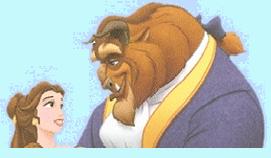
Beauty and the Beast

Beauty and the Beast

Beauty is only skin deep, they say. But how “only” is “only”?

Beauty is in the eye of the beholder, they say. Yet, many beholders seem to agree with each other. But so what? Who cares? Why should looks matter?

Many people whose bodies look less than perfect seem happy and confident. Many others are unhappy with their bodies, although they look fine.

If I sound confused, it’s because I am. I’ve always been happy with my body. When I was younger, I knew that men were attracted to my body, but later turned off by my personality, or apparent lack of it. My “issues” have never been affected by my body or my view of it.

The cause of my recent reflections on body image is an email I received from J, someone I’ve known for a long time. J read my blog and wondered how much social anxiety is affected by body image. J, it transpires, has often refrained from taking part in conversations because of J’s body image, i.e. being fat.

I was stunned by this email for two reasons, and had to reread it to make sure this is really what it said. My first reaction was, “But J isn’t fat and never has been!” Also, I’ve always thought of J as outgoing and talkative. How could I have failed to notice? Well, maybe because I’ve always seen J in friendly, non-threatening situations – situations in which even I have talked a fair amount. And maybe I was too wrapped up in my own problems, although I don’t think that’s true – I tend to be a good observer.

I looked up BDD (Body Dysmorphic Disorder). As far as I know, the definition is too strong for J. But I do know that some sufferers of social anxiety also suffer from BDD, and poor body image has caused them to withdraw from society.

It’s hard for me to understand all this, just as it’s hard for some to understand social anxiety. I believe that it’s a big problem, but don’t really understand why. Why do some people have poor images of their bodies and why should this affect their participation in society?

The other reason why I was stunned by the email is a topic for another post.

Signature

Categories
Books Social anxiety Uncategorized

Every Word Counts

hint fiction (n) : a story of 25 words or less that suggests a larger, more complex story

Changing wordsI’ve just written my entries for a competition of hint fiction at http://www.robertswartwood.com/?page_id=8. I don’t expect that any of my entries will be chosen over the many others for the forthcoming anthology of hint fiction, but I’ve enjoyed the experience of composing them. I enjoyed pondering over each word, wondering whether it best suits its purpose, whether its meaning is exactly the one I want in this particular place.
When you’re allowed no more than twenty-five words, you have to use the best ones you can find. In a novel of fifty thousand words or more, you try to do the same, but there’s a limit to the amount of time you can spend getting it just right. Writing a novel is more of a balancing act.

When you talk, you have practically no time to choose your words. And that leads to embarrassment, if you’re me. It leads to wishing you’d expressed something in a different way or wishing you hadn’t said it at all. And that, in turn, leads to refraining from talking. If you’re me.

Signature

Categories
Blogging Social anxiety

Let’s be weird together

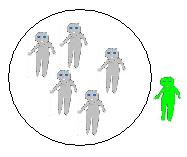
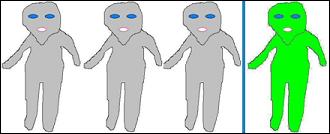
AliensI was delighted to see that at least two people identified with the sentiments of my last post. Delighted that they really got it. Why? Why do I care whether others feel the same way as I do?

As children, our natural tendencies are to want to be like everyone else. We fear being singled out as “different”. But as we grow up, we don’t mind that so much. We even want to be different, to be individuals, not one of the herd. Up to a point. Because if we’re too different, we’re considered weird and that’s not good.

So we hail our individuality and then seek out similar individuals. We form groups of individuals who are all the same. Because really, most of us don’t want to be different at all.

People who suffer from social anxiety feel very different. They know that others think they’re weird and this increases their discomfort in society and causes them to hide from it. Most people who join a social anxiety forum say this: “I thought I was the only one in the world with these problems. I’m so glad to have found other people who go through what I go through.”

This is one of the reasons why I want to publicise the disorder. To help sufferers to feel less isolated in a tough world. We all need to connect to others who understand.

No man is an island, entire of itself.” ~John Donne (1572 – 1631)

Signature

Categories
Social anxiety

Public speaking – yes please

Frustrated presenterIf I said I had a fear of public speaking, you would probably believe me. You’d probably say, “Me, too.” After all, most people do fear public speaking, and I should fear it even more than most. And it’s true that most sufferers of social anxiety do fear public speaking and many to such an extent that they would never dream of trying it.

Sorry, but I don’t. I feel much more at ease giving a presentation in front of a hundred people than talking to one person – not everyone I talk to, but most people.

Why? Because a presentation is planned in advance. When I know what I’m going to say, I know I can look at any number of people and say it. I’m not shy. A conversation is spontaneous. When you talk, you have to be able to think up things to say. While worrying about whether your clothes are suitable for the occasion, whether the other person felt the sweat on your hand when shaking it, whether the expression on your face fits the mood you should be in, you have to make up some witty, or at least presentable, remark. And I’ve never been good at multi-tasking.

So I’m not good at talking, and knowing that makes me more afraid of it. Also, knowing that most people aren’t afraid of it and don’t understand others who are makes me more afraid of making a mess of it. And talking, as opposed to public speaking, is something we all have to do – often. And I want to talk, too. It’s just….

I think I’d rather have had a fear of public speaking.

Signature

Categories
Blogging

Being Brave

Hiking in Switzerland

People tell me I’m very brave for writing what I write in my blog. “I know,” I reply, biting my lip. “Maybe too brave.”

I thought about this blog for a long time before I started it. When I finally decided I was ready for it, I went ahead. I haven’t regretted it … yet. But I’m still frightened.

Once, on holiday in Switzerland, we started off with the children on a three-day hike. Rain was beating down and we knew that we were coming to a path on the edge of a cliff. Two people passed us, going the other way. “You’re brave,” they said to us, admiringly. That’s when we decided to turn back.

I’m not going to turn back. What I’m doing is not life-threatening, as far as I know, and so far nothing bad has happened because of it. Anyway, I’ve been too cautious for too long. It’s time to break out of this protecting, restricting, inhibiting fortress.

So, it’s all right to tell me I’m brave. I’ll take it as a compliment and not as justification for turning back.

Are you brave?

Signature

Categories
Blogging Books

I have been proved wrong

 Baby

In my previous post, I suggested that writers’ blogs are shallow and uninteresting. By writing that, I have been introduced to some very different blogs, and especially mapelba, who poses some thought-provoking questions. The question in her latest post is: “Where do you come from? Does your answer explain your writing?” Some people come from some very dark places. I come from a place of love, protection and loneliness….

~~-~~

I come from a place so deep in suburbia that the bus came only once every half hour – if you were lucky.

I come from a world of secrets and pretence. Of feeling guilty every time I forgot.

I come from a father who I now know was a people pleaser, who needed everyone to think well of him, and who took out his frustrations on his wife. And a mother who never understood that. I come from a mother who never understood many things. I come from parents who had had enough excitement in their lives by the time I was born.

I come from a place where religion is a noose, a chore, a secret, an embarrassment, a reason for keeping quiet. But also a fine tradition, an offloading of worries and hopes, an expression of sadness and joy.

I come from a place where teachers just taught and children were free to torment as much as they wanted. Where no one explained to them that their actions could be a life sentence.

I come from a place where loneliness is the norm and thoughts have no human outlet.

I write to tell the world that whole lives can be spoilt because of where they come from, if no one notices or acts in time.

Categories
Blogging Books

Writers’ Blogs

I write.
My friends write.
They get published.
That’s wonderful.

I’ve been reading a lot of blogs by writers lately. It seems every writer has a blog. That’s not surprising. Writers want to publicise themselves and their work, and writers can write. So, it seems natural that they should blog.

What do they blog about? About writing and publishing, about authors and publishers, about writing competitions and other news in the writing world. And, of course, about themselves, what they’ve written and what they’ve had published.

They write well, of course, because they’re writers. Sometimes, they’re even humorous. And yet, I’m starting to get bored with these blogs, because of the one thing they leave out: personal struggles. Yes, I know, they write about their pets, their children, the places they live in. But they don’t write anything really personal. We readers can’t tell much about their characters. We don’t know about the hurdles they’ve overcome, or the way their personal lives influenced their writing.

And I wonder how honest they are. They treat their writer friends very well, praising them for their skill and their good fortune when they win competitions or have their books accepted by publishers. But do they really mean that? Aren’t they just a tiny bit jealous of other writers’ triumphs? According to Ann Lamont in her wonderfully humorous and informative guide Bird by Bird, they certainly could be:

Jealousy is such a direct attack on whatever measure of confidence you’ve been able to muster. But if you continue to write, you are probably going to have to deal with it, because some wonderful, dazzling successes are going to happen for some of the most awful, angry, undeserving writers you know – people who are, in other words, not you.

Not that I’m jealous. I haven’t got that far, yet. And I’m not criticising anyone else. I’m just wondering how all of this relates to me. This is what I’ve decided:

Writing involves innovating, pushing boundaries, being courageous. And I’m going to continue writing what I write, because, amongst other reasons, I don’t want to turn this into just another writer’s blog.

Signature

Categories
Social anxiety

My teachers failed me

Me at eleven

Me nowWe learn throughout our lives, but most of our learning is done in childhood. In eighteen years, we’re supposed to advance from knowing absolutely nothing to knowing enough to manage on our own in this complicated world. What we need to learn isn’t just how to calculate the area of a triangle, or the difference between “its” and “it’s” [sorry – forget the second one: it’s apparently not important these days and probably not PC to even mention it].

We also have to learn how to get on with other people, how to communicate with them, because we’re all in this world together and we need each other to get anywhere. Besides, it’s pretty boring with only yourself for company.

Most children get sent to school to learn these things. This seems a good idea because, not only do you learn academic subjects, but you also have to interact with a lot of people. What happens if it goes wrong? – pear-shaped, I believe, is the current term.

I didn’t learn how to communicate with others at school. Instead, I learnt not to communicate, because anything I said could be remembered and used to bully me. And my teachers, who knew how to communicate and should have seen what was going on, didn’t think of communicating anything to me or finding anyone else to communicate with me. Reports complaining that I didn’t take enough part in lessons, and monologues after years of my non-communication telling me to change my attitude weren’t exactly the right approach.

Someone should have delved deeper and made me understand how I felt when I was teased or ostracised, or when my only friend suddenly vanished. But no one did.

I’d like to think that things have changed in all the years that have passed since I was at school. I’d like to think that teachers now care about the emotional well-being of their pupils and know how to handle problems. I fear that this is not true. That, just like then, they act when children are disruptive and fail to act when they’re not.

Signature

Categories
Uncategorized

Feeling Lucky

 Me and my backpackThis post is going to be different from its predecessors. I’m going to ramble on and see where it takes me.

I’m back from a three-week trip that was interesting and mostly enjoyable. It was enjoyable because I met a lot of people and, despite all the difficulties, I like to be with people. It was interesting because I made it so. Because I asked questions and also partially opened the blinds to let others see into my world – the good parts and the bad parts. And it brought home something I discovered before: that most people have problems, and it’s only when you’re open about yours that you get to hear about theirs. So, opening up has at least two advantages. It lightens the burden on you, and it helps you to realise that you’re not as strange and different as you thought. You look for similarities, you share your own experiences. You feel better yourself and you hope that you’ve helped in some way.

This probably all sounds obvious to you. But it doesn’t to me, because I’ve spent too many years locked inside my walls with the blinds fastened. Opening up still feels unnatural and therefore difficult. But it’s worth it.

I’m feeling lucky. Lucky to have some wonderful, understanding friends. Lucky to have a lovely, loving family. And lucky to have won a book: Tania Hershman’s The White Road and Other Stories. I hope my luck continues. Maybe I’ll win a short story competition, or find a literary agent, or both….

Categories
Social anxiety

Coming Out

Closet

I’m not gay, but I’m coming out. The process has taken about seven years so far and I still don’t feel comfortable saying, “I have social anxiety.”

“What’s that?” is the typical response. No one asks that about being gay. Once the statement is made, it’s understood. Gayness … gaiety… homosexuality has become an accepted state. Similarly, depression is mostly understood. No one has to ask what depression is.

So what is it with SA? Why don’t people know about it? The definition of SA provides the answer. SA is a fear of people and particularly of what those people think of the sufferer. People with SA tend to avoid talking to others and often avoid social contact altogether. So other people don’t know they exist, or they don’t know what they’re thinking, why they’re so quiet.

That’s why SA doesn’t get the recognition it needs – we need – to fight it, destroy it, prevent it from starting even.

Why has it been so hard to come out? Because I’m afraid of the response. Afraid of the thoughts, even if they’re not spoken. Afraid of being thought strange, weird. It goes against my unwritten, unplanned life policy: to pretend to be the same as everyone else. It’s an impossible quest. You can’t miss out on so many basics of growing up and still behave in the accepted way in every situation. And yet, I still try to do it. And I imagine that by keeping quiet I’m not “found out,” although I know that this is untrue.

***

I’m going away and might not be able to post again this month. I’ll be back. In the meantime,

Signature