
The Jerusalem House of Quality is, according to its website, “a unique artisans center featuring arts and crafts in Jerusalem.”
The Jerusalem House of Quality is, according to its website, “a unique artisans center featuring arts and crafts in Jerusalem.”
The Society for the Protection of Nature in Israel (SPNI) works to preserve plants, animals and natural environments.
.
.
.
.
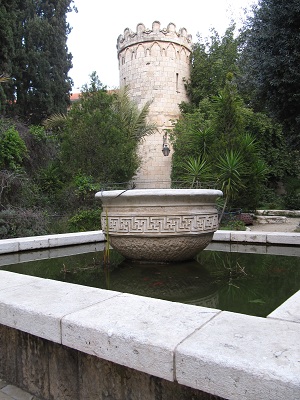
Its office in Jerusalem is in a beautiful garden – part of the Russian Compound that arose in the nineteenth century and expanded to accommodate the many Russian crusaders in Jerusalem at the time.
.
.
.
.
.
.
.
.
.
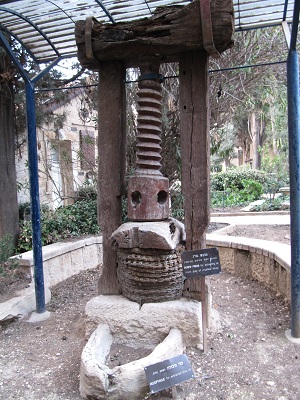
Today the garden contains a permanent display of old agricultural equipment.
.
.
.
.
.
.
.
.
.
.
.

The old city of Jerusalem has been populated for well over three thousand years. During that time it has been ruled by many different people. As the map shows, there are now four quarters: Muslim, Christian, Jewish and Armenian.
The walls of the old city, built in 1538 by Suleiman the Magnificent, contain eleven gates, seven of which are currently open. At the risk of sounding like a tourist guide, I recommend the rampart walk, which provides great views of the old city, as well as areas further afield.
Edit: The map has a mistake that’s very common here. People find it hard to believe that if there’s more than one lion you still say, “Lion Gate.” English!
Overcrowding in the old city of Jerusalem caused residents to venture out of the city walls.
.
.
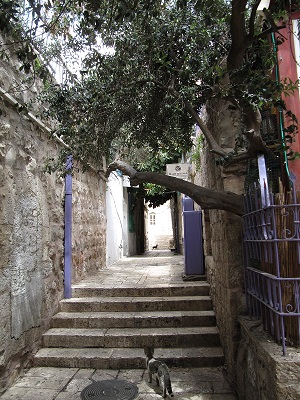
Nahalat Shiva was the third neighbourhood to be built outside the walls and was founded in 1869. Its name means the land or heritage of the seven and refers to the seven people who joined forces to buy the land.
All the residents of a neighbourhood would have known each other and would have been very suspicious of strangers – rather like this dog and cat.
.
.
.
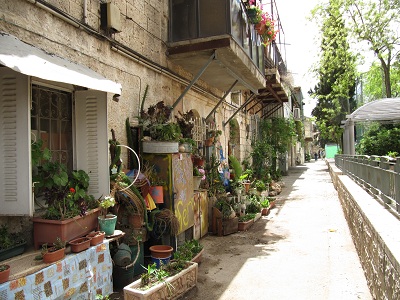
Nachlaot consists of a cluster of neighbourhoods. The first, Mishkenot Yisrael, was built in 1875. All the neighbourhoods were originally intended for specific communities – Jews from different lands. Nowadays, no such separation is necessary.
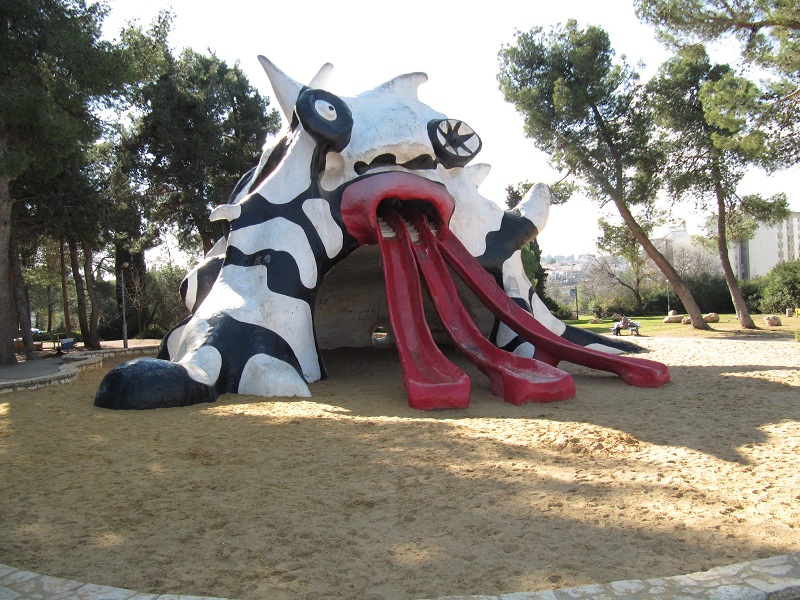
The Monster (Hebrew: Mifletzet, which also begins with M) is a well-known landmark in Jerusalem and one that is enjoyed by children, who love to slide down its three-pronged tongue. It was sculpted in 1971 by French artist Niki de Saint Phalle.
Plans were approved in the 1990s. Construction began in 2002. It was supposed to start functioning in 2005, then 2006, then…. When trains began running in August 2011, there were many teething problems.
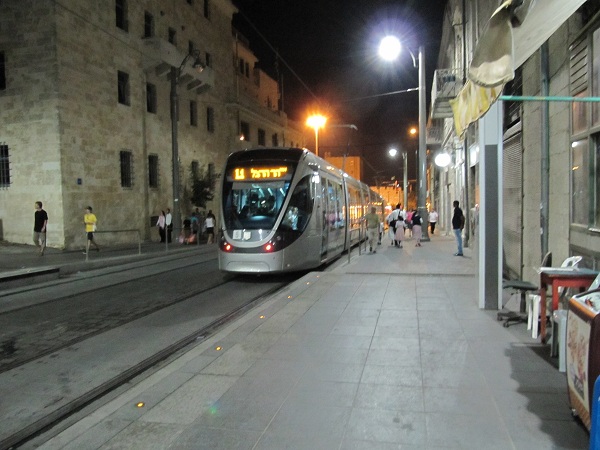
But now it’s working well and
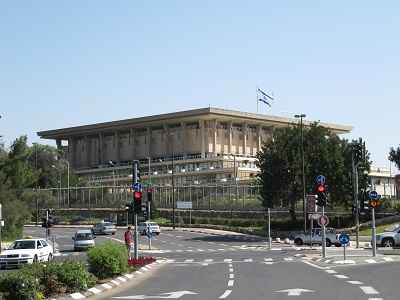
The Knesset is the name for Israel’s parliament. The name means gathering or assembly. The same word is used in the Hebrew term for a synagogue.
The current Knesset building was inaugurated in 1966. There is so much information about it that it’s hard to pick out anything in particular. The Chagall mosaics and tapestries, the seating arrangement for the 120 members shaped like a lamp, the Eternal Flame, the gates made of iron and steel ….
I’m taking a short break. Back soon with L for Light.

.
.
.
.
Jaffa Gate lies at one end of Jaffa Road, which leads to Highway 1, which in turn leads to Tel Aviv-Jaffa. In ancient times, too, Jaffa Road led to the port of Jaffa. Jaffa Gate was inaugurated in 1538 by Suleiman the Magnificent. Its name in Arabic, Bab el-Khalil (Gate of the Friend), refers to Abraham.
.
.
.

Around the corner, cars enter the Old City through a wide gap in the wall. This passage was originally built in 1898 when Kaiser Wilhelm II of Germany visited Jerusalem. The ruling Ottoman Turks agreed to open up the entrance so that the German Emperor would not have to dismount from his carriage to enter the city.

The Israel Museum was founded in 1965 and, as its website states, it “houses encyclopedic collections, including works dating from prehistory to the present day, in its Archaeology, Fine Arts, and Jewish Art and Life Wings, and features the most extensive holdings of biblical and Holy Land archaeology in the world. In just forty-five years, thanks to a legacy of gifts and generous support from its circle of patrons worldwide, the Museum has built a far-ranging collection of nearly 500,000 objects, representing the full scope of world material culture.” It was recently upgraded and expanded to make full use of its 20-acre campus.


.
Theodor Herzl (1860-1904) is known as the father of the modern State of Israel (literally: the visionary of the state). In Israel, he has a town (Herzliya) named after him, several streets and, in Jerusalem, a park – Mount Herzl. It is here that many leaders and fallen soldiers are buried. Herzl was reburied here in 1949.
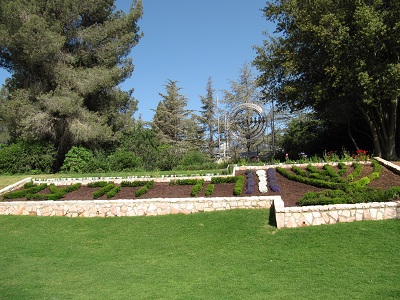
I wanted to photograph Herzl’s tomb, but the area was closed for rehearsals for forthcoming ceremonies, so I snapped these flowers instead. If you can’t read it, you’ll have to believe that it says: Mount Herzl.

 Miriam Drori, Author