I’m not here. That is… I’m somewhere, but I’m not around as I should be to announce my guest post on Jane Bwye’s blog. Jane, who has lived for most of her life in Kenya, is the author of Breath of Africa, a novel dedicated to the youth of Kenya.
So I scheduled this post in advance.
My guest post is about Toastmasters, which I joined recently. You can find it here. If it’s not there yet, it soon will be. And it’s partly to celebrate my birthday, which was yesterday.
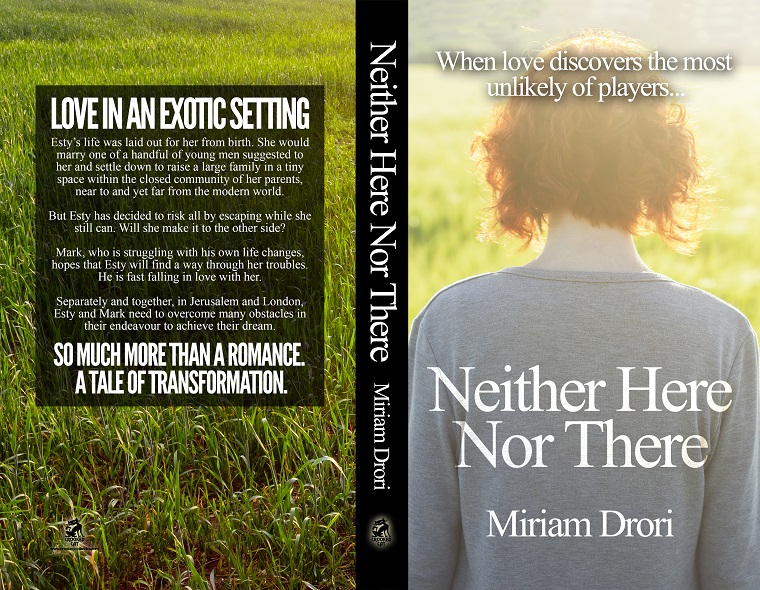
Since Neither Here nor There is my first published book, this is the first time I’ve taken an interest in reviews as a writer. As a reader, I’ve skimmed through reviews to get an idea of whether I might be interested in a book. As a writer, reviews of my book become a lot more significant. They can vastly influence sales, and I want my book to sell because I want to become known as an author, I want people to enjoy reading it and to think about the issues raised in it and I want to make some money (although my expectations are realistic).
So what do I want from a review? Well, it’s always nice to be praised, as long as the praise seems honest. But no book can be liked unequivocally by all readers. There will always be some who find something negative, be it the genre, the writing style, the plot, the characters, the level of editing.
Even as I was writing Neither Here nor There, it was clear to me that readers who hold certain religious beliefs would have specifc problems with it. Esty, my heroine, is in the process of leaving one community for another. Clearly those who belong or are close to the community she is leaving will have problems with the story, despite the fact that I did my best to be fair to both.
I’m sure there will be readers who have different problems with the novel, and I think all those problems should be reflected in the reviews. That’s why I’m pleased to have received my first non-five-star review, and why I hope there will be more.
Although five-star reviews are welcome, too. More than welcome!
~*~*~*~*~
Here are the reviews so far:
I thoroughly enjoyed this book. It is well-written and kept me turning the pages to find out what would happen next. Esty, the main character, is very well-drawn and I was with her all the way as she struggles to establish her identity in a world which is new and puzzling to her. This novel achieves the often difficult balance of raising thought-provoking questions while, at the same time, providing an entertaining and satisfying read. The result is a poignant love story and more than that. I would definitely recommend it.
*
I read this lovely book almost in one sitting (well, reclining, actually, since I was in bed). I was drawn in from the first sentence. Esty has spent all her 19 years in the strictly orthodox haredi community in Jerusalem but decides to leave it and her parents and many siblings. The decision is difficult and Esty is unprepared for what she will find on the secular side of the fence. The character of Esty is well-drawn and the author conveys very convincingly the anguish of being an outsider. This is a fluently-written, heart-warming story.
*
started reading miriam drori’s book NEITHER HERE NOR THERE and can’t put it down…love the characters…the writing and the story…her first-hand knowledge of the settings make them very real…a good book!
*
A sweet, enjoyable romance that does a good job of portraying the angst of first love, especially when one is somewhat socially awkward and unsure of oneself. Many of us have been there and can identify with the hero and heroine. I have to admit that as an Orthodox Jew I had a problem with one of the dominant themes of the novel—Estee’s leaving her closed Orthodox community for secular “freedom”. I credit the author with trying to be even-handed, rather than taking sides, but must caution that some literary license was used in portraying Estee’s family’s community.
*
This is a beautifully-written book, with believable characters and a very real sense of place (both in Jerusalem and London). Esty’s dilemma (torn between her loyalty to her family and her strong desire to follow her own path in life) is perfectly portrayed in a very readable and accessible way. Highly recommended.
I don’t pretend to know enough about the politics and society of Scotland, and the rest of the world, to be able to forecast a possible direction that Scotland will take if and when it becomes independent. But here’s one man with an interesting idea, and he’s written a novel about it: David Brauner.
In ANOTHER GOD: a novel of Independent Scotland, D.r. Brauner unfolds a speculative tale of imagination that opens in Edinburgh and reverberates across the Mediterranean. Through the prism of fiction emerges a kaleidoscopic picture of Scotland’s near-future sovereign reality. This is the book that could sway the outcome of the Scottish referendum.
This book has been praised by some knowledgeable people.
Reva Sharon, author of Pool of the Morning Wind:
A very brave book.
Leslie Cohen, Jerusalem Post:
Set a few years into the future … the novel gives one the feeling of being there.
A.S.I. Acker, Amazon:
Strange, fascinating, and serious… This book is one of a kind, a great feat of imagination, firmly rooted in reality. A novel to be read more than once, each time with deeper appreciation.
What if…? The speculative fiction depicted in ANOTHER GOD has not come to life, not yet. But it could – after Scotland achieves independence. A rabbi’s dream could change the trajectory of one nation and save another nation from destruction. A prime minister’s Machiavellian patriotism could launch a new nation-state on an aimless course into oblivion. One woman’s miracle can produce a love-child. And another woman’s strength and daring might rescue a thousand lives. Scotland’s future history is yet to be written – or is it?
BIO
D.r. Brauner is a writer, editor and photographer. He was born in England, raised in America and holds an MLitt in English Linguistics from the University of Edinburgh. He wrote and photographed for The Jerusalem Post for fifteen years. During the last twenty-five years, he has edited academic papers and books and was the language editor of Yad Vashem Studies Holocaust journal from 2007 to 2014. From the early 1990s to this day, he has mentored a Creative Writing Circle in Jerusalem that has produced hundreds of memoirs, essays, short stories and novels, not a few of which have been published. Wherever David is, he is living in another world of images and books, kites and bikes, hopes and dreams. In this world life is all the better for having met his wife Ruth and finding their sweet dog Daisy.
~
I can’t tell you how likely it is that David’s forecast will come true. But I can tell you he’s an excellent writer. I read and thoroughly enjoyed an earlier version of this novel. As the mentor of the writing group of which I’m a member, David always comes up with ideas for improving our writing that none of the other members thinks of. We are all indebted to him.
ANOTHER GOD: a novel of Independent Scotland is available from Amazon UK and Amazon US, and will be on FeedARead very soon.
Some of you may have seen the quotes I posted recently on Facebook and Twitter, all from my novel, Neither Here Nor There. In case you didn’t, or you want to see them again, here are all seventeen:
…she wasn’t there yet. Now, she was in limbo, neither here nor there. .
…staring at an image that was no longer there – as if the film had stuck just before she’d turned and left his line of vision. .
“Oh you British.” Claude had wrung his hands in mock despair. “You are so… so… réservé.” .
…what a street name… Snake Street. Did the name signify something? Was she being lured into a trap to receive a fatal bite? .
…she was alone in a strange land at the end of a single, short bus ride. .
Who was she indeed? A creature in metamorphosis, something between a caterpillar and a butterfly. .
What if she’d made a terrible mistake – one she’d regret all her life? .
“Do all the mothers on Mars have lots of babies?” .
…familiar but different, as if she were looking at a wall for the first time from the other side. .
Esty must have sensed his growing unease. “Wait. Please. There’s more.” .
“Maybe you could compromise your principles a little by agreeing to their terms.” .
“…as far as they’re concerned, I’m dead. Do you know what that feels like?” .
Now, finally, her punishment had come. She deserved whatever they were going to do to her. .
“You are where you need to be now. That’s all you need to remember.” .
“Sooner or later things will settle down and so will you – here where you belong.” .
“I’m beginning to think you were right all along. Extremism of any sort is dangerous.” .
Esty nodded. “Life is such a gamble. One wrong move and you can ruin it forever.” Noa looked straight into Esty’s eyes. “Look at it the other way. One right move and you will always be thankful.”
The last stop in my blog hop is at the blog of Tim Taylor, who lives near Huddersfield. I had to look up Huddersfield and found it between Manchester and Leeds, in other words, for this ex-Londoner, “Oop north.” Tim is the author of Zeus of Ithome, a novel set in ancient Greece.
I talk about setting a novel where you live, and about setting a novel in a place you’ve never been to. Here.
I’ve been interviewed for the first time (as an author) by Nancy Jardine, author of Topaz Eyes, The Beltane Choice and After Whorl. Read about them here.
Thank you to all three people who went in for my competition. You all had some great ideas, which I really enjoyed reading.
The Answers:
Tsartsar — Cricket (the insect)
Bakbook — Bottle (from the sound of pouring)
Zimzoom — Buzzing
Rishroosh — Rustling
Tiftoof —Dripping
Girgoor — Gurgling
Gimgoom — Stuttering/stammering
Pkak — Cork
Pitzpootz — Crackling
The Winner
Technically, the winner is Sue who translated three of the words correctly. In second place is Jo, who was almost correct in two of her answers. But all the answers made me smile and I think all three deserve a prize. Congratulations! Let’s get in touch….
I listened to this week’s Last Word from BBC Radio 4. Sir Richard MacCormac, an architect who recently died (obviously, otherwise he wouldn’t be on Last Word) said, after explaining that his interest in architecture came from making things as a child:
I now feel an essential aspect of creativity is a kind of playfulness.
This is certainly true of writing. Writers enjoy playing with words. When penning my last post, I particularly liked the beginning paragraph:
These are the comments that halted me in my perusal of the Internet this morning and made me decide to pour out part of my inner world. Sorry if it makes a stain on your day.
Although I went on to some serious stuff, I had fun playing with the opening words.
My Scrabble partners, A, G and D, and my Boggle partners, D and D, will testify to my love of word games. Most writers play word games when they write, employing several techniques in the process. One of those is onomatopoeia.
In other words, I’m talking about words that sound like the things they represent.
Then I came across a list of Hebrew onomatopoeic words, which I have tried to transliterate as closely as possible:
Tsartsar
Bakbook
Zimzoom
Rishroosh
Tiftoof
Girgoor
Gimgoom
Pkak
Pitzpootz
So here’s the competition. Without looking anything up (I’ll have to trust you on that), can you guess what those words mean? Write your answers in the comments and I’ll decide who wins the prize of… well, it depends who wins and whether that person has read Neither Here Nor There, but it might well be the novel itself.
Hint: They are all nouns and most of them translate to “ing” words.
Rules:
The competition is open to anyone who doesn’t know Hebrew.
The competition will end when I decide to end it, so don’t tarry.
These are the comments that halted me in my perusal of the Internet this morning and made me decide to pour out part of my inner world. Sorry if it makes a stain on your day.
…writing helps us cope with our ‘inside world’ in a therapeutic way. It allows us to explore our innermost feelings, fears hopes etc, in a safe environment, safe because we can stop writing at any time we want.
Sometimes internal and external worlds blend, like knitting, and writing can help with the unravelling.
Some time ago, readers of my blog asked me to write about every day life in Israel – about ordinary life that doesn’t make its way to your newspapers. I created a new category and called it, “Everyday life in Israel.” I had no intention of ever writing about politics or to take sides in any conflict. There are plenty of blogs that do that. They are written by people who are much more knowledgeable than I and hold much stronger views.
Me and Jerusalem
That said, the very fact that I live here, and chose to live here, says something about my opinions. I’m always amazed at the surprise shown in the media at the fact that general opinion in Israel is so much at odds with general opinion around the world. The reasons for that are clear to me.
We’re fighting for survival. Ever since the State of Israel was created in 1948, we have fought those trying to destroy us. We continue to do that now no less than previously. Yes, the means we have to protect ourselves have increased over the years, but so have those of all the other sides. I realise the rest of the world doesn’t see this as a fight for survival, but we who live here do, and that makes us think in a different way.
And we know the media lies. We have husbands and sons who serve in the army, who risk their lives to protect us, who risk their lives in an attempt to protect the lives of the citizens caught up in the place – Gaza – that has become such a mess. Clearly the thoughts and opinions coming from this knowledge will be different from those who believe those reports in the media.
So what is life like in a time of war/conflict? I can’t tell you what it’s like for those living in the south of the country where there are constant rocket attacks. I can’t tell you what it’s like for people who have to carry sleeping babies out to relative safety in fifteen seconds, although I do remember a previous war when we did have babies. I can’t tell you what it’s like to lose a son or husband or other family member. I can only tell you what it’s like for me, in one of the safest parts of the country.
I went to folk dancing twice this week in two different places and run by two different people. In the first, we danced to the usual songs but the atmosphere was not as usual. During a break, I sat with a group of people and the conversation was all about the situation. Did we know about the tunnels? How much did we know? Did we know about the mega-attack planned for the eve of the New Year holiday? And someone mentioned something I remember, too. During the ’80s, people who lived in Ashkelon often used to visit nearby Gaza City. They especially liked to buy the furniture sold there. I remember going there too, once, along with friends who lived in Ashkelon. No one felt afraid of going there. Times change.
At the other folk dancing group, the instructor managed to create a lighter mood. I welcomed those few hours when my mind didn’t dwell so much on all this.
Wars and conflicts have changed for me over the years. In the past, we watched the news in the evenings and went to work during the day, where we naturally discussed what was happening but otherwise got on with work.
Now I’m at home, and now there’s social media. I see a lot more of what’s being said around the world and a lot of what I see makes me sad. I’ve often been upset by being misunderstood (which happens often) and I’m similarly upset when my country is misunderstood.
I’ve never written a story that involves this conflict. My romance, Neither Here Nor There, doesn’t mention it. I’ve always thought I wanted to keep away from it, but now I’m not so sure. Anyway, I’ve exposed a bit of my inner world here. It’s not everyday life in Israel, but everyday life in Israel in times of war.
There’s plenty more that I could say and probably some that I wouldn’t say. I’m not about to give out my phone number, for instance, or talk about those closest to me. If you want to ask anything, please do. If you want to pick a fight with me, please don’t. This is not the place for it. You can write your own blog post. You can comment elsewhere. Attacks here will be deleted.
Austerlitz by W. G. Sebald, translated by Anthea Bell
It takes decades for the man called Austerlitz to decide to uncover what he has been avoiding all this time: at the age of four, he was sent away from his home in Prague on the Kindertransport and given a new identity in “the little country town of Bala in Wales.”
Clearly, this is a very special book. It made me think and will make me continue to think. The introduction by James Wood (which I read at the end; otherwise it would have spoilt the novel for me) clarified some of its features for me. I can see reasons for the intentional randomness, the continuous prose, the perpetual distance of the main character, the anonymity of the narrator. I can discern parallels I didn’t notice at first. It’s quite possible this book deserves to be read a second time.
So it ticks a lot of boxes, but I found the format made it difficult to read and I’m not sure that it’s justified. The lack of chapters and for the most part even paragraphs meant that I didn’t know where to stop. I ended up making a rule for myself: I stopped at the first full stop after turning a page. This gave me too many possible stopping places. It also confused me, as I didn’t remember what came just before my starting place.
I’ve never read a book in one sitting, but I think that’s what this one needs.


 Miriam Drori, Author