Have you ever done crime? I mean, of course, have you ever written about crime? Would you like to write about crime? Why would you write about crime?
 I can’t answer those questions for myself, let alone for you. Fortunately, I don’t have to, because fellow Crooked Cat author, Val Penny is here to share some of her experience and answer those difficult questions.
Take it away, Val!
Reasons to Write a Crime Novel
People like crime, at least in novels! Often, I meet dentists and bank managers with clever plot ideas, or nurses who read every crime novel they can lay their hands on. If I visit a writing group, there are always members keenly producing new murderous plots. Lawyers and convicts show equal enthusiasm for this genre. For those who want to write a crime novel, there are several reasons to want to do so. Here are a few of them.
Emotional Release
Often, those who write crime novels find an emotional release in their craft. Crime novelists deal with the dark things that people usually push to the side of their minds in order to get on with every day life. The cathartic attraction of writing can be decisive.
Some crime authors tell of poor sleep patterns, punctured by nightmares that are repaired when they start to write. Others panic, constantly scanning doorways for signs of danger. The stiffening fear that afflicts them resolves when they are busy writing crime.
The Story-Telling Urge
The sources for crime novels are many and varied. Ideas can spring from the news and current affairs; memories from the past and historical events or things that puzzle or fascinate the writer. Once an author begins to exercise their creative muscles, they often find that they run into stories demanding to be told. The stories demand to be told and will not stop coming.
For Companionship
It is often said that writers can be difficult people: gloomy, competitive and quarrelsome. However, for the most part, I have found crime writers to be an inclusive and convivial bunch. They are certainly hard-working. The pressure of producing a book a year is intense, yet they never seem to turn their backs on fun. If you have a chance to go to a crime-writers’ convention, do take it. They are exhausting, exhilarating and irresistible.
An Outlet for Aggression
Most crime-writers will tell you that they are good company because they channel all their belligerent thoughts into their stories, so in real life, the authors are meek and mild. It is not always true, but I can confirm that a crime novel is an excellent place to park your rage! The prospect of giving vent to righteous anger in a safe form can be a particularly pleasing device. When characters require to act in a violent way or commit violence the reader is willing to witness this on the page but they would shy from it in real life. Crime writers can let rip on the page in a way they avoid doing in the real world.
The Thrill of Research
I can personally confirm that the research you do for crime novels and for academic purposes are equally satisfying. It is also extremely diverse. It may involve visiting prisons, refuges, police stations or drug dens. Police are often very willing to be of assistance to crime writers, even if it is just to avoid being irritated when otherwise the writers would get police procedures wrong. This information is most useful and helpful. Indeed, when you are writing a novel, no information or experience is wasted!
Thank you for that, Val.
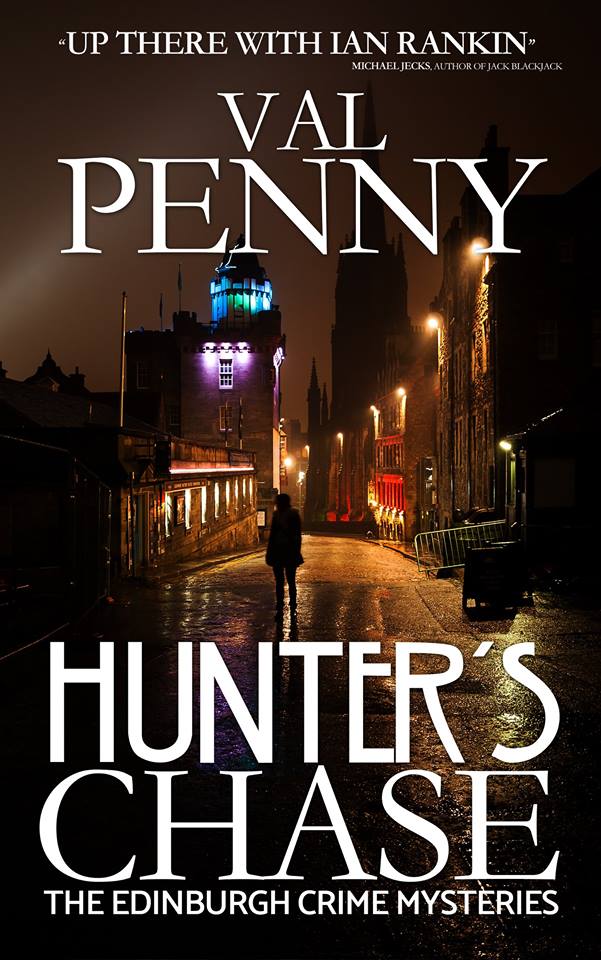
Val Penny’s debut novel, Hunter’s Chase, was published just last week. Here’s the blurb:
 Hunter by name – Hunter by nature: DI Hunter Wilson will not rest until Edinburgh is safe.
DI Hunter Wilson knows there is a new supply of cocaine flooding his city and he needs to find the source but his attention is transferred to murder when a corpse is discovered in the grounds of a golf course. Shortly after the post-mortem, Hunter witnesses a second murder but that is not the end of the slaughter. With a young woman’s life also hanging in the balance, the last thing Hunter needs is a new man on his team: the son of his nemesis, the former Chief Constable. Hunter’s perseverance and patience are put to the test time after time in this taut crime thriller.

 I’m delighted to welcome Beth to the blog. Beth has a few questions about what her friend Flora is getting up to in a little village in Portugal. She’s even nipped out of Forest Dancer by Susan Roebuck to ask them. Over to you, Beth.
 About Forest Dancer
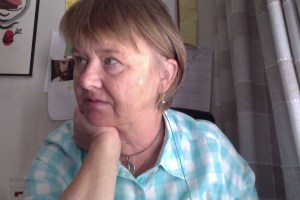 Sue Roebuck is British born and bred, but when she met her husband (who’s Portuguese) in London she was then exported to Portugal and now lives by the Atlantic Ocean watching the cruise ships arrive and depart. She loves her adopted country and believes that her novels about it can bring the beauty and diversity of Portugal to the rest of the world.
 C.J. Sutton is a writer based in Melbourne, Australia. He holds a Postgraduate Degree in journalism and creative writing, and supports the value of study through correspondence. His fictional writing delves into the unpredictability of the human mind and the fears that drive us. As a professional writer C.J. Sutton has worked within the hustle and bustle of newsrooms, the competitive offices of advertising and the trenches of marketing. But his interest in creating new characters and worlds has seen a move into fiction, which has always pleaded for complete attention. Dortmund Hibernate is his debut novel.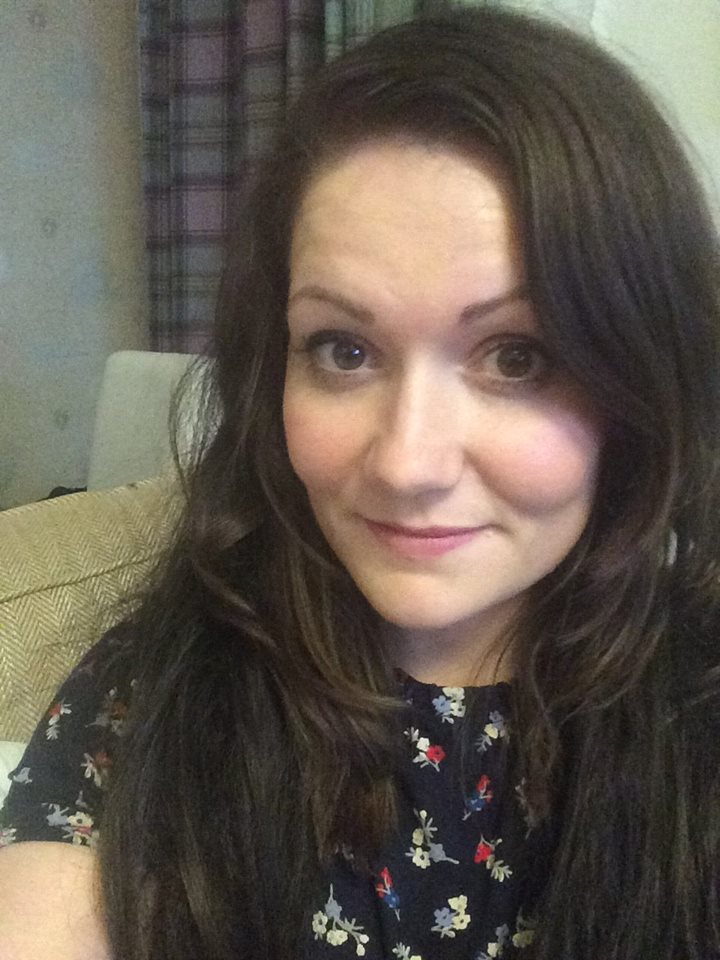


 About Purgatory Hotel
 On a warm day in July 1978, a mother was admitted to hospital, awaiting the arrival of her new baby. She was reading Sleeping Murder by Agatha Christie and the midwives thought it a gruesome choice for an expectant mother. A story of a long forgotten murder and repressed memories. As it turned out her new baby, Anne-Marie would grow up and find herself drawn to all things macabre, and would one day herself turn out a story of murder and memories lost. Anne Marie grew up on the Essex coast with her parents and six siblings in a house that was full of books and movies and set the scene for her lifelong love of both. She began writing short stories when she was still at primary school after reading the book The October Country by Ray Bradbury. He was and still is her favourite author and the reason she decided at age 9 that she too would be a writer someday. In her teens she continued to write short stories and branched out into poetry, publishing a few in her late teens. In her early twenties she began committing herself to writing a novel and wrote one by the age of 20 that she then put away, fearing it was too weird for publication. She wrote Purgatory Hotel over several years, but again kept it aside after several rejections from publishers. Luckily for her, she found a home for her twisted tale with Crooked Cat Books. Her favourite authors include Ray Bradbury, Jack Kerouac, Stephen King, Denis Lehane and Douglas Coupland. She also takes great inspiration from music and movies, her favourite artists being Nick Cave and The Bad Seeds, Johnny Cash, Interpol, David Lynch and David Fincher. Anne-Marie moved to London in 2008 where she lives to this day, amidst books and DVDs, with her husband and daughter.
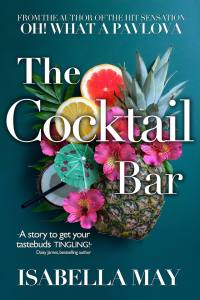 About The Cocktail Bar
 Isabella May lives in (mostly) sunny Andalucia, Spain with her husband, daughter and son, creatively inspired by the sea and the mountains. When she isn’t having her cake and eating it, sampling a new cocktail on the beach, or ferrying her children to and from after school activities, she can usually be found writing.
 So, why have I chosen a charity that helps young people who have decided to change their lifestyle?
 Thanks so much to Miriam for hosting me today. It’s a great pleasure to tell you a little about my book, The Girl in the Gallery. It’s a cozy crime whodunit, the second in my London Murder Mysteries series, but it can be read as a stand-alone novel too.
 Before turning to crime, Alice Castle was a UK newspaper journalist for The Daily Express, The Times and The Daily Telegraph. Her first book, Hot Chocolate, set in Brussels and London, was a European best-seller which sold out in two weeks.
 Miriam Drori, Author