Categories
Books

A-Z Challenge: P is for…

Proust quotes

Memoir Writing

This post is one of 26 I am writing for the A-Z Challenge on the subject of writing a memoir. I’m not an expert in writing memoirs, but I’m exploring the topic with thoughts about writing one, and am happy to share the fruits of my exploration.

—-0—-
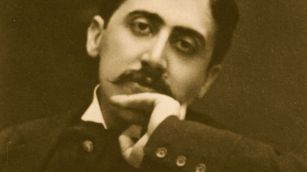
Marcel Proust had a lot to say. Here are some relevant comments:

“Our memory is like a shop in the window of which is exposed now one, now another photograph of the same person. And as a rule the most recent exhibit remains for some time the only one to be seen.”

“We do not succeed in changing things according to our desire, but gradually our desire changes.”

“We are able to find everything in our memory, which is like a dispensary or chemical laboratory in which chance steers our hand sometimes to a soothing drug and sometimes to a dangerous poison.”

“There is no man, however wise, who has not at some period of his youth said things, or lived in a way the consciousness of which is so unpleasant to him in later life that he would gladly, if he could, expunge it from his memory.” Not only in youth….

“That translucent alabaster of our memories.”

“The moments of the past do not remain still; they retain in our memory the motion which drew them towards the future, towards a future which has itself become the past, and draw us on in their train.”

Note: I love to read your comments, especially when they’re attached to the right post. Please remember the Comment link is at the top of this post.

Categories
Books

A-Z Challenge: O is for…

Organisation

Memoir Writing

This post is one of 26 I am writing for the A-Z Challenge on the subject of writing a memoir. I’m not an expert in writing memoirs, but I’m exploring the topic with thoughts about writing one, and am happy to share the fruits of my exploration.

—-0—-

MemoirWriting-Organisation

The first memoir I wrote (and discarded) was organised by topic. Each chapter was about a different topic: parents, other family, secrets, religion, etc.

The second memoir, which I didn’t finish, was organised according to the long correspondence I had with Gill. I told her about events in the order I happened to think of them, and she gradually built up a picture of the girl she knew but didn’t know and the woman she’d only just met.

I don’t think either of those approaches could work as a memoir. There’s a reason why most memoirs are written in chronological order. Readers want to follow the writer’s journey through time and discover how the writer has changed over that time.

Going back to Gornick’s terms, readers want the story and not just the situation.

So I think my third attempt will begin at age one and progress to the current time, concentrating on childhood.

Note: I love to read your comments, especially when they’re attached to the right post. Please remember the Comment link is at the top of this post.

Categories
Books

A-Z Challenge: N is for…

Narrative Voice

Memoir Writing

This post is one of 26 I am writing for the A-Z Challenge on the subject of writing a memoir. I’m not an expert in writing memoirs, but I’m exploring the topic with thoughts about writing one, and am happy to share the fruits of my exploration.

—-0—-

There’s no doubt that the narrator of my memoir is me and the narrator of your memoir is you and the… you get the idea.

The question is: what does the narrative sound like? What voice should you use to describe and connect scenes?

The answer, I discovered from this thought-provoking article, is that memoirs usually have two voices. Here they are called the Voice of Innocence and the Voice of Experience.

MemoirWriting-NarrativeVoice

The Voice of Innocence is the point of view of the child (or teenager or younger adult) who experienced the scene. It can include your feelings at the time the scene took place.

The Voice of Experience is you, now, looking back on the same scene.

Both voices have something to offer the reader. Generally, without one of them, the memoir would not be complete.

The Voice of Experience can pop up anywhere in the narrative, so you can be flexible about your use of the two voices. I think this is the hardest point for me. I try to be over-organised. I would tend to describe each scene with the Voice of Innocence and then add a comment in the Voice of Experience. While such an approach would be suitable for a software development kit (don’t worry about the name – it comes from my technical writing background), it would be far too rigid and non-creative for a memoir.

That’s enough from me. When you begin to ramble, you should know it’s time to stop. Do you want to voice any opinions about voice?

Note: I love to read your comments, especially when they’re attached to the right post. Please remember the Comment link is at the top of this post.

Categories
Books

A-Z Challenge: M is for…

Memoir

Memoir Writing

This post is one of 26 I am writing for the A-Z Challenge on the subject of writing a memoir. I’m not an expert in writing memoirs, but I’m exploring the topic with thoughts about writing one, and am happy to share the fruits of my exploration.

—-0—-

Now that we’ve got half-way through these posts about memoir-writing, we must have a pretty good idea about what a memoir is, right? Well, this is what I think:

A memoir is a slice of life – not a whole life, like an autobiography, but the part or parts of a life that substantiate a message or messages the writer wants to convey.

Linda Joy Myers says (amongst other things) “A memoir is a story with structure, a theme, and a reason for a reader to be engaged.”

This is from Dictionary.com:

1. a record of events written by a person having intimate knowledge of them and based on personal observation.

2. Usually, memoirs.

a. an account of one’s personal life and experiences; autobiography.

b. the published record of the proceedings of a group or organization, as of a learned society.

3. a biography or biographical sketch.

What do you think a memoir is?

Note: I love to read your comments, especially when they’re attached to the right post. Please remember the Comment link is at the top of this post.
Categories
Books

A-Z Challenge: L is for…

List of good memoirs

Memoir Writing

This post is one of 26 I am writing for the A-Z Challenge on the subject of writing a memoir. I’m not an expert in writing memoirs, but I’m exploring the topic with thoughts about writing one, and am happy to share the fruits of my exploration.

—-0—-

How many times have I read that to be a good writer you have to read in your genre?

MemoirWriting-List

These are some great memoirs, which I have read, listed in no particular order. Do you want to add any?

  • Frank McCourt: Angela’s Ashes
  • Jeannette Walls: The Glass Castle
  • Elizabeth Gilbert: Eat, Pray, Love
  • Alice Kaplan: French Lessons: A Memoir
  • Stephen King: On Writing
  • Barack Obama: Dreams from My Father
  • Jean Davison: The Dark Threads
  • Reva Mann: The Rabbi’s Daughter
  • John Grogan: Marley & Me
  • Jo Carroll: Hidden Tiger Raging Mountain (a travel memoir)

Note: I love to read your comments, especially when they’re attached to the right post. Please remember the Comment link is at the top of this post.

Categories
Books

A-Z Challenge: K is for…

Keep on walking

Memoir Writing

This post is one of 26 I am writing for the A-Z Challenge on the subject of writing a memoir. I’m not an expert in writing memoirs, but I’m exploring the topic with thoughts about writing one, and am happy to share the fruits of my exploration.

—-0—-

Inevitably, when you’ve written some of your memoir and have a lot still to go, your enthusiasm will wane. You will have doubts about where it’s all leading and whether it’s really going anywhere.

Linda Joy Myers and Brooke Warner call this the Muddy Middle.

MemoirWriting-WalkingInMud

And the advice? To keep going, of course. Persevere and eventually the sun will shine and you will find dry land.

Note: I love to read your comments, especially when they’re attached to the right post. Please remember the Comment link is at the top of this post.

Categories
Books

A-Z Challenge: J is for…

Journey

Memoir Writing

This post is one of 26 I am writing for the A-Z Challenge on the subject of writing a memoir. I’m not an expert in writing memoirs, but I’m exploring the topic with thoughts about writing one, and am happy to share the fruits of my exploration.

—-0—-

I love this song, which is about the difficult journeys the Jews of Ethiopia undertook to reach Israel in the 1980s and ’90s.

Writing any book is a journey. Writing a memoir is a journey that’s likely to be full of emotion. As you travel through the episodes that make up the memoir, you discover and confront truths you hadn’t grasped before. You have to be prepared for the journey to change you.

Note: I love to read your comments, especially when they’re attached to the right post. Please remember the Comments button is at the top of this post.

Categories
Books

A-Z Challenge: I is for…

Insight

Memoir Writing

This post is one of 26 I am writing for the A-Z Challenge on the subject of writing a memoir. I’m not an expert in writing memoirs, but I’m exploring the topic with thoughts about writing one, and am happy to share the fruits of my exploration.

—-0—-

MemoirWriting-Insight1

To write a memoir, you need to have reached the point where you have insight into episodes from your past that you didn’t have before. This is another reason why you need detachment.

Here’s an episode from my past, aged 15, plus a recent insight:

Mrs B is organising a skiing trip and I’m booked to go. I’ve never been skiing and I’ve never been able to go on a school trip before. I’m very excited.

Mum returns from the parents’ meeting.

“I met R’s mother and we had a long chat. She told me R is also going on the skiing trip.”

I nod. I don’t tell Mum, but I’m expecting trouble. R doesn’t like me. I don’t know why, but I know she doesn’t.

A few days later Mum tells me that Mrs B phoned her. “She’s very sorry, but she’s had to cancel the trip.”

I don’t believe that and my doubts are confirmed by L who suggested I joined the trip in the first place and is still going. How could Mrs B have lied like that?

Decades later, I don’t think Mrs B lied. I think my mother lied because she wanted to protect me from the truth, although really she didn’t protect me from anything and it would have been much better if we could have talked it through.

Note: I love to read your comments, especially when they’re attached to the right post. Please remember the Comments button is at the top of this post.

Categories
Books

A-Z Challenge: H is for…

Humour

Memoir Writing

This post is one of 26 I am writing for the A-Z Challenge on the subject of writing a memoir. I’m not an expert in writing memoirs, but I’m exploring the topic with thoughts about writing one, and am happy to share the fruits of my exploration.

—-0—-

MemoirWriting-Humour

You might be describing terrible events, but somewhere in the memoir there needs to be humour – for your own sake as well as for the reader’s. Readers need a break from all the tension, and so do you.

Probably the time you’re most likely to laugh is when you’re looking back at the former you. This is one reason why you need detachment.

Note: I love to read your comments, especially when they’re attached to the right post. Please remember the Comments button is at the top of this post.

Categories
Books

A-Z Challenge: G is for…

Gornick’s Situation and Story

Memoir Writing

This post is one of 26 I am writing for the A-Z Challenge on the subject of writing a memoir. I’m not an expert in writing memoirs, but I’m exploring the topic with thoughts about writing one, and am happy to share the fruits of my exploration.

—-0—-

MemoirWriting-Gornick

In her book, The Situation and the Story: The Art of Personal Narrative, Vivian Gornick differentiates between these two easily-confused terms. Actually, it’s not the terms that people confuse, because as far as I know Gornick is the only one who uses them. It’s the concept that there are two things going on.

Gornick’s “situation” is the collection of scenes, the where, who and what. The story is the emotional journey the narrator travelled while traversing the scenes. This is what the reader really wants to understand. Without a story, the situation has no interest, or not much.

To illustrate a major point in the book, Gornick describes a speech that moved her while others didn’t. When she analysed the reasons why this particular speech was different from the rest, she came to the conclusion that the speaker was able to choose who she needed to be for the purpose of the speech. That is, out of all her roles in her life, she chose the one that fitted the theme of her speech and stuck to it. She says, “Because the narrator knew who was speaking, she also knew why she was speaking.”

Who am I for the purpose of my memoir? I think I have to be a person who has been affected by social anxiety. The fact that I’m a wife, a mother, a sister, a cousin, a friend, a maths graduate, a former computer programmer, a dancer, a chief cook and bottle washer and more is only relevant if any of these roles have some bearing on social anxiety, or if social anxiety has affected these roles.

Do you know who you are?