This post is the last of 26 I am writing for the A-Z Challenge on the subject of writing a memoir. I’m not an expert in writing memoirs, but I’m exploring the topic with thoughts about writing one, and am happy to share the fruits of my exploration.
—-0—-
We’ve reached the end. But before you fall asleep, we have to go back to the beginning. Now that we’ve travelled through this journey of memoir writing, do we know what the beginning should be?
Well, no. We haven’t exactly written the memoir, just learned about the craft. But I think the beginning needs to reflect the theme of the memoir. It should also reflect a narrative voice, or possibly both (or all) narrative voices.
Thank you for reading my posts on the craft of memoir writing. If you’re about to embark on writing your memoir, I wish you luck.
Unfortunately, but excitingly, I probably won’t be able to respond to your comments before the beginning of May. But do please keep commenting. When the challenge is over, I will write a concluding post with a summary of all the advice you’ve been giving me. And don’t forget, the Comment link is at the top of this post.
This post is one of 26 I am writing for the A-Z Challenge on the subject of writing a memoir. I’m not an expert in writing memoirs, but I’m exploring the topic with thoughts about writing one, and am happy to share the fruits of my exploration.
—-0—-
I don’t need many excuses to include a video of the Beatles. After all, I grew up with them. But this song tells the opposite story to the one that usually makes a good memoir. “Yesterday all my troubles seemed so far away. Now I need a place to hide away.” We like to read about lives that have taken a turn for the better, people who started off badly but turned their lives around.
At least, I do. Don’t you?
Unfortunately, but excitingly, I probably won’t be able to respond to your comments before the beginning of May. But do please keep commenting. When the challenge is over, I will write a concluding post with a summary of all the advice you’ve been giving me. And don’t forget, the Comment link is at the top of this post.
This post is one of 26 I am writing for the A-Z Challenge on the subject of writing a memoir. I’m not an expert in writing memoirs, but I’m exploring the topic with thoughts about writing one, and am happy to share the fruits of my exploration.
—-0—-
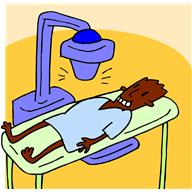
An x-ray machine enables a radiologist to see inside you. Your memoir enables your readers to see inside you. Are you ready for the exposure that publishing a memoir will cause? Am I?
Unfortunately, but excitingly, I probably won’t be able to respond to your comments before the beginning of May. But do please keep commenting. When the challenge is over, I will write a concluding post with a summary of all the advice you’ve been giving me. And don’t forget, the Comment link is at the top of this post.
This post is one of 26 I am writing for the A-Z Challenge on the subject of writing a memoir. I’m not an expert in writing memoirs, but I’m exploring the topic with thoughts about writing one, and am happy to share the fruits of my exploration.
—-0—-
Who? What? When? Where? These are all questions we need to answer as we write the scenes that make up the memoir.
But most of all, we need to ask why. Because the why questions help us to make sense of what happened, and we need to make sense of events before letting readers get to them. Readers aren’t therapists. We don’t go to them with our problems. They want to see solutions.
There are many why questions that need to be answered while writing a memoir. Even if the answers don’t make it into the memoir, I think we should know the answers. Knowing them will provide the clarity we require to make the memoir shine.
Why write a memoir?
Why did that happen to me?
Why did I do that?
Why did they do that?
—-0—-
It’s time for another story from my past. This is one that probably won’t make it to the memoir.
I’ve been reading a lot of A-Z posts. One set of posts that has fascinated me has been Rosalind Adam’s discussion of song lyrics. In her K post, she asked, “Is there a song that speaks directly to you?” I could mention several such songs, but this time I immediately thought of one in Hebrew and the words, “This summer wear white and pray for the best.”
In the summer of 1986 I’d been through one miscarriage and was at the beginning of another pregnancy. I had a pair of white trousers that were slightly wider in the waist than my others and suitable for this stage. If there had been any bleeding, white wouldn’t have been the best colour to wear, but I hoped that wouldn’t happen again. I often wore those trousers that summer and often sang those words to myself. Fortunately, all was well. He weighed 3.875 kg at birth. That’s 8.54 pounds.
I don’t even know the real meaning of that song!
Unfortunately, but excitingly, I probably won’t be able to respond to your comments before the beginning of May. But do please keep commenting. When the challenge is over, I will write a concluding post with a summary of all the advice you’ve been giving me. And don’t forget, the Comment link is at the top of this post.
This post is one of 26 I am writing for the A-Z Challenge on the subject of writing a memoir. I’m not an expert in writing memoirs, but I’m exploring the topic with thoughts about writing one, and am happy to share the fruits of my exploration.
—-0—-
Meaning number 5 of vignette according to dictionary.com:
a small, graceful literary sketch
Our memories are full of often-small scenes arranged higgledy-piggledy. Our task in writing a memoir is to turn these scenes into vignettes and then find some way of ordering them into a book.
There is no need to write the vignettes in the order they will appear in the memoir. You can write them as you think of them. One tip I saw somewhere is this: if some of the vignettes are emotionally draining to write, intersperse them with easier, lighter memories to give yourself a break.
Unfortunately, but excitingly, I probably won’t be able to respond to your comments before the beginning of May. But do please keep commenting. When the challenge is over, I will write a concluding post with a summary of all the advice you’ve been giving me. And don’t forget, the Comment link is at the top of this post.
This post is one of 26 I am writing for the A-Z Challenge on the subject of writing a memoir. I’m not an expert in writing memoirs, but I’m exploring the topic with thoughts about writing one, and am happy to share the fruits of my exploration.
—-0—-
I hope this never happens to you! Or to me. We all understand things in different ways. Our memories are all unique. That’s why, if ten people are present at a scene, each one will describe it in a different way.
I’m sure I’m not the first person to have written this:
The incidents described and views expressed in this memoir are all my own (unless otherwise ascribed). Other people might well see the events in different ways or disagree with my opinions. But it was the way I saw and reacted to events that influenced me. Anyone who disagrees with me is welcome to write their own memoir.
In other words, I might have got a scene completely wrong. I may have inadvertently changed the facts, or I may have interpreted them incorrectly. But as long as I believe or believed in the facts and my interpretation as written, the outcome has been part of my emotional journey, and so these things deserve a place in my memoir.
André Aciman has some interesting things to say about truth in memoir here.
Unfortunately, but excitingly, I probably won’t be able to respond to your comments before the beginning of May. But do please keep commenting. When the challenge is over, I will write a concluding post with a summary of all the advice you’ve been giving me. And don’t forget, the Comment link is at the top of this post.
This post is one of 26 I am writing for the A-Z Challenge on the subject of writing a memoir. I’m not an expert in writing memoirs, but I’m exploring the topic with thoughts about writing one, and am happy to share the fruits of my exploration.
—-0—-
If you’re famous, think no further. Anything you write about your life will interest your readers, who are probably also your fans. The topic of your memoir is you.
But most memoir writers are not famous. People won’t read your memoir because they’re interested in the life behind the author. They’ll read it because they’re interested in the topic of the memoir, whether because they’ve had similar experiences, or know others who have, or are simply interested to read about how you coped with what life threw at you.
So you need to have a theme, or several themes. You need to know the messages you want to tell your readers. And then, as you write, you have to stay focused on those themes. Don’t wander off into unrelated memories, however humorous or sad or heart-warming they are. Everything in your memoir must be related to your topic. Every scene should add to the thoughts you want your readers to take away.
Note: I love to read your comments, especially when they’re attached to the right post. Please remember the Comment link is at the top of this post.
This post is one of 26 I am writing for the A-Z Challenge on the subject of writing a memoir. I’m not an expert in writing memoirs, but I’m exploring the topic with thoughts about writing one, and am happy to share the fruits of my exploration.
—-0—-
If you’re going to mention, in your memoir, that there have been secrets in your past, you have to tell the reader what those secrets were, because the reader will want to know. Hopefully those secrets no longer have to be kept secret. Otherwise, you’d better not write about them.
In an article in the Independent, Ruth Rendell is mentioned as having written in her first Barbara Vine novel, A Dark-Adapted Eye: “Secrets, having them, creating them, keeping them and half-keeping them were the breath of life to her.” Ruth Rendell, the article says, has her own secrets although that particular interviewer found her in an unusually talkative mood and she even, though briefly, discussed her childhood.
But she didn’t say whether she had to keep secrets as a child. Maybe she did and she was good at it. I hated having to keep secrets as a child. Secrets stopped me from talking – I was so afraid of making a mistake – and that in turn took away my self-confidence.
So, while secrets have been a breath of life to Rendell’s character and, it seems, to Rendell herself, for me they have had the opposite effect.
How have secrets affected you?
Note: I love to read your comments, especially when they’re attached to the right post. Please remember the Comment link is at the top of this post.
What research do we have to do for a memoir? Isn’t it just something we write from memory?
Well, not exactly. We may have to research historical information to make sure it fits our narrative. We may have to research the lives of our parents or other family members.
And we may need to research just to jog our memories. Maybe others can remind us of long-forgotten events. What better place is there to do that than at a reunion, where participants naturally reflect on their common past?
Apparently I’m going to a school reunion in August. After struggling with the question of whether to go, I do seem to be headed in that direction. (I’ve attended two previous school reunions, and they weren’t easy, despite the fact that all the women were very pleasant.)
Now I have to answer another question. Do I want to ask people to relate everything they remember about me for the purpose of my memoir?
I think the answer is yes, but I’m still a bit worried. Is there anything they might say that I don’t want to hear? I don’t think there is. I certainly can’t think of anything specific. But I’m not sure.
What would you do?
Note: I love to read your comments, especially when they’re attached to the right post. Please remember the Comment link is at the top of this post.
This post is one of 26 I am writing for the A-Z Challenge on the subject of writing a memoir. I’m not an expert in writing memoirs, but I’m exploring the topic with thoughts about writing one, and am happy to share the fruits of my exploration.
—-0—-
A memoir is a factual account. There’s nothing made up (although some believe a memoir can embellish the truth). Except for the dialogue. That’s a convention. We write scenes with dialogue because dialogue makes the scenes more interesting to read. No one expects narrators to remember the exact words someone used to talk – unless you’re discussing a certain word or phrase the speaker always used. It’s accepted that speech is made up. As long as the meaning remains the same, readers don’t mind.
Of course I can’t vouch for the reactions of speakers who don’t like the words attributed to them!
Note: I love to read your comments, especially when they’re attached to the right post. Please remember the Comment link is at the top of this post.






 Miriam Drori, Author