Categories
Books Letters from Elsewhere

Letters from Elsewhere: Fra’ Roberto

Letters from Elsewhere

I’m delighted to welcome Fra’ Roberto to the blog today. He comes from the pages of The Ghostly Father by Sue Barnard and is sharing an excerpt from his diary. Take it away, Fra’.

FRA’ ROBERTO’S DIARY

Today we welcomed two new postulants to the friary. 

As always, I instructed Fra’ Amadeo that I wanted to meet them in person before I learned anything about their backgrounds.  I prefer to form my initial opinions of people purely on their own merits, and this is much easier if my mind is not cluttered by any preconceptions.

The new postulants are called Gianni and Sebastiano.  From their appearance, I divined that they are both around twenty years of age.  Gianni is short and slight, and despite his cheerful demeanour, he looked (to my mind at least) as though he bore the signs of a deprived and impoverished past.  Sebastiano, by contrast, is tall, solid in frame, and appeared well-nourished and well-cared-for, yet I discerned in him traces of an indefinable sadness.  These differences aside, both of them looked nervous and bewildered as they stood before me in their postulants’ robes.  But perhaps this is only to be expected; they stand on the threshold of a whole new mode of life, completely different from whatever they might have previously known.

One reason for such nervousness became evident during our brief conversation.  It transpired that Sebastiano had his own preconceptions about life in holy orders.  He was familiar with the Rule of Saint Benedict and the principles of poverty, chastity and obedience, but like so many postulants before him, he appeared to hold the belief that this would entail long periods of discomfort and self-denial. 

It continues to trouble me that those outside the cloister should have this unfavourable (and incorrect) perception of monastic life.  Sebastiano appeared genuinely surprised when I explained that we in the Order of Saint Francis do not condone unnecessary fasting, sleep deprivation or self-chastisement.  As our founder has decreed, our purpose is to serve – and none of these practices are conducive to full and proper service to God or to our fellow men. 

I sense that both of these young men, but especially Sebastiano, have come to us under difficult, perchance even troubled, circumstances.  Tomorrow I shall ask Fra’ Amadeo to tell me what he knows of their stories.  In the meantime, I shall say an extra prayer for each of them at Completorium.  May the Lord Almighty grant them a quiet night.  Amen.

I’ve read your story, Fra’. It’s so much more satisfying than Shakespeare’s version. I’ll never understand why the Bard thought to change it as he did…

About The Ghostly Father

tgf2bfront

Romeo & Juliet – was this what really happened?

When Juliet Roberts is asked to make sense of an ancient Italian manuscript, she little suspects that she will find herself propelled into the midst of one of the greatest love stories of all time. But this is only the beginning. As more hidden secrets come to light, Juliet discovers that the tragic tale of her famous namesake might have had a very different outcome…

A favourite classic story with a major new twist.

About Sue Barnard


Sue Barnard was born in North Wales but has spent most of her life in and around Manchester. After graduating from Durham University, where she studied French and Italian, Sue got married then had a variety of office jobs before becoming a full-time parent. If she had her way, the phrase “non-working mother” would be banned from the English language.

Since then she has had a series of part-time jobs, including some work as a freelance copywriter. In parallel with this she took several courses in Creative Writing. Her writing achievements include winning the Writing Magazine New Subscribers Poetry Competition for 2013. She is also very interested in Family History. Her own background is stranger than fiction; she’d write a book about it if she thought anybody would believe her.

Sue BarnardSue has a mind which is sufficiently warped as to be capable of compiling questions for BBC Radio 4’s fiendishly difficult Round Britain Quiz. This once caused one of her sons to describe her as “professionally weird.” The label has stuck.

Sue joined the editorial team of Crooked Cat Publishing in 2013. Her first novel, The Ghostly Father (a new take on the traditional story of Romeo & Juliet) was officially released on St Valentine’s Day 2014.  This was followed in July 2014 by her second novel, a romantic mystery entitled Nice Girls Don’t.  Her third novel, The Unkindest Cut of All (a murder mystery set in a theatre), was released in June 2015.

You can find Sue on Facebook, Twitter (@SusanB2011), or follow her blog here.
 

Categories
Books Letters from Elsewhere

Letters from Elsewhere: Marie Hunter

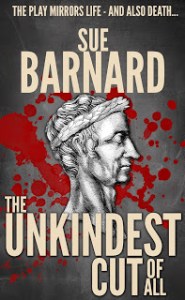
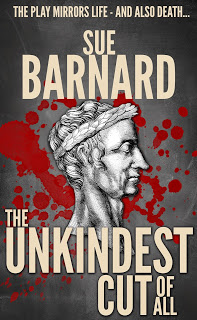
Letters from ElsewhereSue BarnardMy guest today is Marie, wife of John Hunter, who has been directing an amateur dramatic society’s production of Shakespeare’s Julius Caesar. Marie, who comes from The Unkindest Cut of All  by Sue Barnard, has been kind enough to share an entry from her diary.

Monday 10th March

Well, that went pretty well for a first night, considering all the problems we’ve had.  It didn’t help that Brian arrived five minutes late, which sent John into a blind panic before we’d even started.  But then, that’s Brian for you.  Always thinks that normal rules don’t apply to him.  To be quite honest I’ve no idea how anyone ever puts up with him.  The play’s the thing, I suppose.

After all this time, I find it hard to believe that we’ve actually got to this stage.  John has been eating, breathing and sleeping that wretched play for the past two months.  Well, longer than that, I suppose, if I include all the time he spent reading and studying it before they started rehearsing.

Heaven alone knows why he wanted to do Julius Caesar.  I know he’s always loved Shakespeare, but it definitely wouldn’t have been my first choice of play.  And in any case, why pick a tragedy, when there are so many good comedies to choose from? But then, as Sarah pointed out, at least John didn’t go for Titus Andronicus.  We should be grateful for small mercies.  Maybe it was the timing – Ides of March, and all that. 

I did Julius Caesar at school.  I didn’t remember a great deal about it, apart from one lesson when we were reading one of the scenes in class, and at the point where it says Enter the Ghost of Caesar, the classroom door opened and in walked the headmistress, who must have been pushing sixty and looked like something out of a horror film.  It seemed absolutely hilarious to us at the time. 

Nobody could accuse me of not remembering a great deal about it now!  But it’s always the same.  When John gets his teeth into a task, it takes over his entire life – and mine – for the duration. By the time we get to performance week, I reckon I could be the all-purpose emergency understudy for the whole cast.

Thank goodness for Sarah.  She’s been an absolute trooper, taking over only a couple of weeks ago when Diane fell ill.  Nobody’s quite sure what was the matter with Diane, but her mother rang me this afternoon to say that she’s been rushed into hospital.  Poor girl.  I know she felt really bad about having to drop out. I’m going to go and see her tomorrow.  The cast all signed a card for her after the performance tonight.  I hope that might cheer her up a bit.

One down, five to go.  Maybe when the week is over I might actually get my husband back!  But we’ve still got to get through the rest of the run first.  Here’s hoping nothing else goes wrong between now and Saturday evening…

.TheUnkindestCutOfAll


The Unkindest Cut of All, by Sue Barnard, is available for download – and from today for the next seven days, it is on special offer at a princely 99p.  For more details, click here.


Categories
Letters from Elsewhere

Letters from Elsewhere: Mr Sykes

Letters from ElsewhereI’m delighted to welcome Mr Sykes to my blog today. Actually, between you and me, I was surprised to learn that Mr Sykes is only in his sixties, because he seems like a very sweet old man in the novel (Nice Girls Don’t by Sue Barnard) and “sixties” isn’t old in my book – not any more. I suppose in the early ’80s we had a different attitude to age – I know I did!

It’s 1982. A few years ago Mr Sykes took early retirement to look after his wife, after she was left crippled by an accident.

Following her death two years ago, he has slowly begun to rebuild his life.  Every day he comes to the local library to do The Times crossword.  He is well-liked by the library staff, especially Emily, whom he treats with old-fashioned gentlemanly charm.

But events are about to take an interesting turn, in both his life and Emily’s…

6th April 1982

The crossword was a real stinker today.  I think they must have got that dreadful compiler back again.  Goodness knows how he thinks up the clues, but most of them are impossible to solve from first principles.  I have to hazard a guess at the answers, then work back to try to make them fit.  It takes all the pleasure out of it.

 Emily was full of a cold today.  Poor girl; she looked like death warmed up.  I think she was on the late shift yesterday, too.  Frankly I’m surprised she came into work at all.  But then, I suppose she’s worried about the cutbacks.  If she wants to stand any chance of not being made redundant, she daren’t give the Council any reason to criticise her.  And I’ve no idea what I’ll do if they close the library altogether.  It’s been my lifeline since I lost Hilda, even if one day is very much like the next.

 Having said that, something rather different happened this morning.  I was looking through the dictionary trying to find a word which would fit the letters I had for 14 down, when a young man (well, probably in his late twenties, I would guess) wandered into the reference section carrying a pile of books about researching family history.  He spread them out on the table next to where I was sitting, and seemed to be trying to decide which ones to take out.  It struck me as odd because he seemed a bit young to be interested in that sort of thing.  Anyway, we got chatting, and it turns out that his grandfather died about six months ago, and that he’s now uncovered some kind of mystery about the old man’s past. 

 He said that he’s found a lot of old papers amongst his grandfather’s stuff, but can’t make much sense of them.  I told him about my own interest in family history, and offered to help.  I didn’t think he’d really be interested, but he leapt at the chance.  He’s going to bring it all in tomorrow for me to have a look at.

 He seemed like a pleasant young fellow, and very well-spoken.  It was only after he’d gone that I realised I don’t know his name.  I must make sure that we introduce ourselves properly tomorrow.

 I’ve no idea if we’ll find anything interesting, but it will make a nice change to have something else to think about for a little while…

About Nice Girls Don’t

NiceGirlsDont - Sue BarnardWho knows what secrets lie hidden in your family’s past?

Southern England, 1982. At 25, single, and under threat of redundancy from her job in a local library, Emily feels as though her life is going nowhere – until the day when Carl comes into the library asking for books about tracing family history.

Carl is baffled by a mystery about his late grandfather: why is the name by which Carl had always known him different from the name on his old passport?

Fascinated as much by Carl himself as by the puzzle he wants to solve, Emily tries to help him find the answers. As their relationship develops, their quest for the truth takes them along a complicated paper-trail which leads, eventually, to the battlefields of the Great War.

In the meantime, Emily discovers that her own family also has its fair share of secrets and lies. And old sins can still cast long shadows…

Can Emily finally lay the ghosts of the past to rest and look forward to a brighter future?

About Sue Barnard

Sue BarnardSue Barnard was born in North Wales but has spent most of her life in and around Manchester. After graduating from Durham University, where she studied French and Italian, Sue got married then had a variety of office jobs before becoming a full-time parent. If she had her way, the phrase non-working mother” would be banned from the English language.

Since then she has had a series of part-time jobs, including some work as a freelance copywriter. In parallel with this she took several courses in Creative Writing. Her writing achievements include winning the Writing Magazine New Subscribers Poetry Competition for 2013. She is also very interested in Family History. Her own background is stranger than fiction; she’d write a book about it if she thought anybody would believe her.

Sue has a mind which is sufficiently warped as to be capable of compiling questions for BBC Radio 4’s fiendishly difficult Round Britain Quiz. This once caused one of her sons to describe her as “professionally weird.” The label has stuck.

Sue joined the editorial team of Crooked Cat Publishing in 2013. Her first novel, The Ghostly Father (a new take on the traditional story of Romeo & Juliet) was officially released on St Valentine’s Day 2014.  This was followed in July 2014 by her second novel, a romantic mystery entitled Nice Girls Don’t.  Her third novel, The Unkindest Cut of All (a murder mystery set in a theatre), was released in June 2015.

You can find Sue on Facebook, Twitter (@SusanB2011), or follow her blog here.

Categories
Books Rhymes

Two Poems

As part of the May Mayhem challenge, I wrote two poems this month.

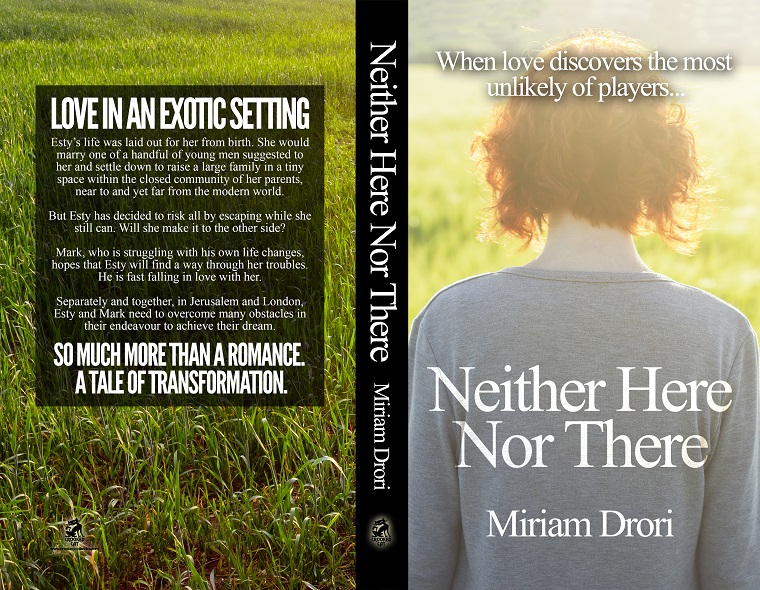
For the first, I took the acknowledgements from my novel, Neither Here Nor There, and turned them into rhyming verses.

Acknowledgements for Neither Here Nor There

NeitherHereNorThereCoverSeveral people a role they took.
Without them there would be no book.

Gill reappeared from a thorny past —
One that I had tried to cast
Away. She helped me understand
Myself, and taking me by the hand,
With friendship, advice and support,
She showed me the ball was in my court
And told me with tact and sobriety
All about social anxiety.

I joined a local writing group.
Its members formed a merry troupe.
They helped me learn how to write,
Critiquing till I saw some light.
Of David the mentor I’m in awe.
He always finds what no one saw.
Judy, who ran my other group,
Brought fresh ideas into my hoop.

Romance themed Sally’s excellent workshop,
Where I created a heroine and a heartthrob,
And devised a plot with conflicts in heaps
That threatened to separate these struggling young peeps.
Sue and Gail, course-made friends,
Critiqued my drafts from beginnings to ends,
Turning the words that came from my head
Into a novel that could be read.

I hadn’t let anyone close to me read,
Expecting disapproval I didn’t need.
But after acceptance Other Half found
Bloopers. So glad they left the ground.
Crooked Cat Publishers, Steph and Laurence,
Introduced me to authors in their torrents,
And produced an opus with delightful cover,
My name below its troubled lover.

A big THANK YOU to those and others, for they
Provided support and showed me the way.

Here are the original acknowledgements for comparison:

Several people made this novel possible and I will always be grateful to them.

Gill Downs, who has been my friend, advisor and supporter ever since we remet twelve years ago.

David Brauner and Judy Labensohn, who taught me about writing.

Sally Quilford, who ran the excellent pocket novel workshop that led me to consider writing a romance.

Sue Barnard and Gail Richards, who spared no time or effort in helping to turn my draft into a real novel.

David Drori, who pointed out several problems when I thought there were no more left.

Laurence and Steph Patterson of Crooked Cat Publishing, who accepted me into their warm basket of cats and used their professional expertise to produce a volume of high calibre.

Thank you to all, and to everyone else who gave me encouragement along the way.

***

In a rather nonsensical poem, I varied the number of lines in each verse: 9, 7, 5, 3, 1. Someone has probably done this before and given the form a name.

Eye Spy

I wonder why
There is no Y
That I can spy
In “shepherd’s pie”
But there is a Y
In “your red tie”
Which lost its dye
In a wash that I
Set too high.

It makes me sigh
And even cry
When in your eye
I see that I
Am seen as shy.
It’s a lie
That I decry.

The bread that I
Like best is rye.
It makes my
Smile wry.
Does that apply?

Saying “Hi,”
Drinking chai,
By the by.

Hello goodbye.

I’ll tell you how well I did with the challenge in another post, later today. Sorry it has to be today because it’s the end of the month. See you soon….

Categories
Books

Blog Hop, Stage 7

Moving a little in a southerly direction, I’m visiting Sue Barnard, author of The Ghostly Father and Nice Girls Don’t. I have read both novels and heartily recommend them.

This time, I’m talking about place in writing. What do you think? Who writes about place?

Here’s the new schedule:

18 June Catriona King My Route to Publication
20 June Cathie Dunn The Background to my Novel
22 June Sarah Louise Smith Arranged Marriage
22 June Jeff Gardiner Life-changing Decisions
6 July Nancy Jardine Closed Communities
11 July K B Walker On Emigration from Britain
22 July Sue Barnard Who Writes about Place?
T.E.Taylor Writing about the place you live in and places you haven’t been to
Categories
Books

2014 A to Z Challenge: B

AuthorsPair 1

Bill Bryson

Wikipedia says,

William McGuireBillBryson, OBE, FRS (born December 8, 1951) is a best-selling American author of humorous books on travel, as well as books on the English language and science. Born in America, he was a resident of Britain for most of his adult life before returning to the U.S. in 1995. In 2003 Bryson moved back to Britain, living in the old rectory of Wramplingham, Norfolk, and served as chancellor of Durham University from 2005 through 2011.

Bryson shot to prominence in the United Kingdom with the publication of Notes from a Small Island (1995), an exploration of Britain, and its accompanying television series. He received widespread recognition again with the publication of A Short History of Nearly Everything (2003), a book widely acclaimed for its accessible communication of science.

Sue Barnard

Crooked Cat says,

Sue Barnard lives by the principle that an immaculate house is a sign of a wasted life. Hence, her house is chaotic but her life is very fulfilled.

Sue BarnardAfter graduating from Durham University with a degree in French, Sue had a variety of office jobs before becoming a full-time parent. If she had her way, the phrase “non-working mother” would be banned from the English language.

Since then she has had a series of part-time jobs, including some work as a freelance copywriter. In parallel with this she took several courses in Creative Writing. Her writing achievements include winning the Writing Magazine New Subscribers Poetry Competition for 2013.  She is also very interested in Family History. Her own background is stranger than fiction; she’d write a book about it if she thought anybody would believe her.

The Ghostly Father was published by Crooked Cat Publishing on 14th February, 2014.

The Link

BillBrysonBookYou may have noticed from the above that the link is Durham University. Sue studied there from 1974 to 1977. Bill Bryson was its Chancellor from 2005 to 2011. In addition, Sue has a signed copy of one of his books and she sent me a photo of it.

Thank you, Sue. Some time in the future you should write a memoir and people will have to believe you.

Pair 2

Enid Bagnold

Wikipedia says,

Enid Algerine Bagnold, Lady Jones, CBE (27 October 1889 – 31 March 1981), known by her maiden name as Enid Bagnold, was a British author and playwright, best known for the 1935 story National Velvet which was filmed in 1944 with Elizabeth Taylor.

She was born in Rochester, Kent, daughter of Colonel Arthur Henry Bagnold and his wife Ethel Alger, and brought up mostly in Jamaica. She went to art school at the school of Walter Sickert in London, and then worked for Frank Harris, who was also her first lover.

She was a nurse during World War I, writing critically of the hospital administration and being dismissed as a result. She was a driver in France for the remainder of the war years. She wrote of her hospital experiences in A Diary Without Dates and her driving experiences in The Happy Foreigner.

Her brother Ralph Bagnold founded the Long Range Desert Group (LRDG) during World War II, a precursor of the SAS.

In 1920, she married Sir Roderick Jones (Chairman of Reuters) but continued to use her maiden name for her writing. They lived at North End House in Rottingdean, near Brighton, Sussex, (previously the home of Sir Edward Burne-Jones), the garden of which inspired her play The Chalk Garden. They had four children. Their great-granddaughter is Samantha Cameron, wife of the United Kingdom’s current Prime Minister and Conservative Party leader David Cameron.

Jane Bwye

Crooked Cat says,

Jane Bwye has been a businesswoman and intermittent freelance journalist for fifty years, mostly in Kenya. She cut short an Oxford career to get married, was widowed in her early twenties, and left with three small children – but was lucky enough to remarry. Now her six children and seven grandkids are scattered over three continents, so she’s developed a taste for travel. She has “walked” round the world, buying a bird book in every country she visited.

She has edited a cookbook, “Museum Mixtures”, in aid of the Kenya Museum Society, and is working on a short History of her local church. Her first novel, Breath of Africa, which is dedicated to the youth of Kenya, had a gestation period of thirty years. The plot and characters are fictitious, but the story draws on Jane’s experiences in a country going through the throes of re-birth.

The Link

Jane says of Enid Bagnold, “She lived just up the beach, in my county, East Sussex, and we share a love of horses: her novel ‘National Velvet’ was a favourite of mine as a child.”

Thank you, Jane.

Categories
Books

Writing the Book You Want to Read

I’m delighted to welcome Sue Barnard to my blog today. Sue and I first met about two years ago at an online workshop run by Sally Quilford. Since then we have met twice face-to-face and helped each other with our writing.

Sue4Sue’s recently published debut novel was not one of those I saw in the draft stage, and so I was able to read it simply for enjoyment, and enjoyment describes my reading experience very well. The appealing idea of changing the most famous of love stories is very cleverly handled in The Ghostly Father. Sue doesn’t say that Shakespeare’s version was wrong. She makes both versions right, depending on who is telling the story. And she writes it all so well.

But that’s enough from me. I’ll let Sue take over now.

I love books.  My house is full of them, my Kindle is full of them, and I’m irresistibly drawn to places which sell them.  So much so, in fact, that I spent more than twenty years of my adult life working in a bookshop.  The sheer diversity of subjects, genres and content of books still never fails to amaze me.

Sue1Those who claim to know about such things reckon that everyone has at least one book in them.  Be that as it may, until a few years ago I never imagined that I had a book in me, much less that this book, if it even existed, would ever get any further than the concept stage.  The point at which that situation changed was when, a few years ago, I came across one of those lists of Things You Must Do Before You Die.  The one which leapt off the page and grabbed me by the throat was Write the book you want to read

Fast-rewind thirty-odd years, to when I first saw Franco Zeffirelli’s wonderful film of Romeo & Juliet.  At the end there wasn’t a dry eye in the house, and I came away from the cinema thinking: “Why does the world’s greatest love story have to end in such appalling tragedy?”  Ever since then, that question has lurked, dozing, at the back of my mind.  The exhortation to Write the book you want to read woke up that question, kicked it out of bed, opened the shutters and forced it out into the blinding light of day.  This was when it finally dawned on me that the book I’ve always wanted to read was the version of Romeo & Juliet which has a satisfactory outcome.  If, at any time during those decades of browsing in bookshops, I had ever come across such a book, I would have snapped it up, rushed home and read it in one sitting.

Why, I asked myself, shouldn’t there be such a book? 

And the answer came straight back: Why not indeed? And if that book doesn’t exist, you need to write it yourself.

Even then, it took me a while to get going.  Although I’d dabbled with Creative Writing in the past, and had taken a few courses on the subject, I’d never attempted anything longer than poems or short stories.  The thought of tackling a full-length novel, even one on a subject about which I felt so strongly, was, to say the least of it, a daunting prospect.  I’d been mulling over the idea for a while, but without any concrete results, when fate took a hand.  Back in 2010, whilst on holiday in France, I was (yes, you’ve guessed) browsing in a bookshop, when I chanced upon a novel in the style of the lost diary of a woman who had been the secret lover of Count Dracula.  This, I realised, was the format I needed: a lost manuscript which tells a previously-unknown story.

Back at home, I powered up the laptop and started writing.  Because this was the book I’ve always wanted to read, I was, at that point, writing it mainly for myself.  I wanted to be able to read this version of the story in private, and think, “Well, perhaps this, rather than the ‘lamentable tragedy’ as told by Shakespeare, is what might have happened.”  At this stage, going public with it couldn’t have been further from my thoughts.

After I’d finished the first draft (which took about six months), I mentioned it to a couple of close friends who are both avid readers.  They both asked to see it.  On handing it back, one of them said, “I know what I like, and I like this.”  The other said, “You really ought to take it further.  I think it could even be a best-seller.”

Sue3Even so, despite these votes of confidence, it was another year or two (during which time the manuscript underwent several revisions) before I plucked up the courage to send the manuscript to Crooked Cat Publishing, an independent publisher whom I’d found on Facebook, and for whom I’d recently started doing editing work.  I wasn’t very hopeful, so when I received the email from them telling me they wanted to publish it, I had to print it out and re-read it four times before I was able to convince myself that I hadn’t imagined the whole thing.

The book’s title, The Ghostly Father, is based on a quotation from the play (it’s how Romeo addresses the character of Friar Lawrence), and the story (which is a sort of part-prequel, part-sequel to the original tale) is told from the Friar’s point of view.  I’ve often wondered why, in the play, he behaved as he did – and by giving him what I hope is an interesting and thought-provoking backstory, I’ve tried to offer some possible answers.  Plus, of course, I wanted to reduce the overall body-count, and give the lovers themselves a rather less tragic ending.  I hope I’ve succeeded.

The book which re-tells the world’s most famous love story was officially released, very appropriately, on St Valentine’s Day 2014.  If the early sales figures are anything to go by, it looks as though I’m not by any means the only person who wants to read it.  And for that, I am very grateful.

Sue Barnard, February 2014

In the UK, The Ghostly Father is available from Amazon as a paperback or ebook.

Outside the UK, it’s also available from Amazon as a paperback or ebook.

Thank you, Sue, for visiting me and for writing about this interesting topic.

The novel I’m working on now hasn’t been evolving for quite that long, but it’s one I wish I’d read a long time ago, and one I’ve wanted to write it for several years. Only now have I found a way to do it that I believe works.

I know, I promised a different post this time. Maybe next time… no promises….

Categories
Books Israel

Ayelet Tsabari and Place

Ayelet Tsabari “was born in Israel to a large family of Yemeni descent. She grew up in a suburb of Tel Aviv, served in the Israeli army, and travelled extensively throughout South East Asia, Europe and North America. She now lives in Toronto.”

What better person to run a one-day writing course entitled: Wish you were here; writing about place? That’s what Ayelet did on Thursday and I was fortunate enough to be able to attend it.

These are the main points she made:

  • Research well.
  • Use details to introduce a place.
  • Don’t overwrite. Pick the most appropriate and vivid details and the most precise words to describe them.
  • Use all five senses.
  • Introduce a place gradually.
  • Let the description unfold as the character moves through the scene.
  • Place is deeply connected to the emotions of the characters. Their experience of the place is influenced by their feelings, state of mind, mood and judgment. In describing a place, choose words that reflect the character’s emotions.

All the points were illustrated with examples and there were also exercises. It was a most enjoyable and profitable day.

The Amazon page for Ayelet’s book – The Best Place on Earth: Stories  – contains a link to an excerpt from one of her stories and I can tell you it’s good! You can read it at amazon.com or amazon.co.uk.

On the way to the course, I had my own struggle with place. The course took place in the small town of Beit Zayit, at the home of Judy Labensohn, another writer, who is running the next course in the series, which I’ll be blogging about soon. I decided to drive there via Ein Karem – not such a good idea as it turned out, although I had the best of reasons. I wanted to avoid the morning traffic jams, and the route I chose did look the shortest.

Two unrelated problems held me up. Firstly, the road to Ein Karem, one on which we have travelled many times, was not there. What a weird feeling! It wasn’t that the road was blocked off. It was as if there had never been a road there.

I had to come to my senses quickly enough to decide to turn left and get to the other road to Ein Karem – through morning traffic jams, of course.

Then I missed the road I wanted to take to Beit Zayit. In fact, I think I saw the road but there was no sign on it and it probably isn’t possible to reach Beit Zayit that way. So I ended up in Mevasseret and had to turn towards Jerusalem and turn off at the main road to Beit Zayit. Fortunately, I’d left plenty of time for this journey (or so I thought) and arrived only one minute after the starting time. Next time, I’ll make sure I find the best way of going, and one that exists!

I’ll be blogging about place again, soon – as a guest blog for my friend, Sue Barnard, whose first novel, The Ghostly Father, is about to be released.

Categories
Books Holidays Reunions

The Social Sandwich, Part 10

This is the tenth in a series of posts describing my recent trip to England, Ireland, the Netherlands and Wales, from writing course to school reunion and more.

Three more nights with M1 and her husband, who always has interesting things to say – things that make me think afterwards.

One day M1 and I met up with another friend from uni and a friend of hers. We visited Wellington Arch, a landmark well worth seeing and one that most Londoners seem not to have heard of, and various memorials nearby.

War Memorial, Hyde Park Corner

Then we had a special tea in the Tophams Hotel.

Taking tea at Tophams Hotel
Taking tea at the Tophams Hotel
(my fringe was covering my eyes by this stage)

In the evening M1 and I saw a musical: Chorus Line, which we enjoyed. We also enjoyed watching a couple of German guys in front of us, who took loads of photos before the performance, including photos of themselves with the camera held out in front. What do people do with all those photos?

The next day, I met some more writers: Sue and Gail, who I met for the first time last year, and Sally Quilford. Sally has published umpteen books, runs courses and has a busy life, so I was delighted and honoured that she found time to travel to London to meet us. After a fun lunch together, we visited the Pompeii exhibition, which was fascinating but tiring. Unfortunately, we were so busy chatting and touring that no one thought of taking a photo, so you’ll have to trust me that we really did meet.

The next day, on my way to yet another temporary abode, I met Cathy (another writer) for lunch. Then I went on to meet Gill and other members of her family, and to join them for dinner. Yes, meeting people isn’t good for the waistline. Fortunately, the trip didn’t do any lasting damage.

Next was the school reunion. This was my third school reunion. The first one was wonderful, the second much harder. What would this one be like?