Categories
Books That's Not Me

That’s Not Me: Miriam Drori

Today’s guest in the series That’s Not Me! is not a guest at all. It’s me, Miriam Drori, author, editor, blogger and much more. What do I have to say on the topic?
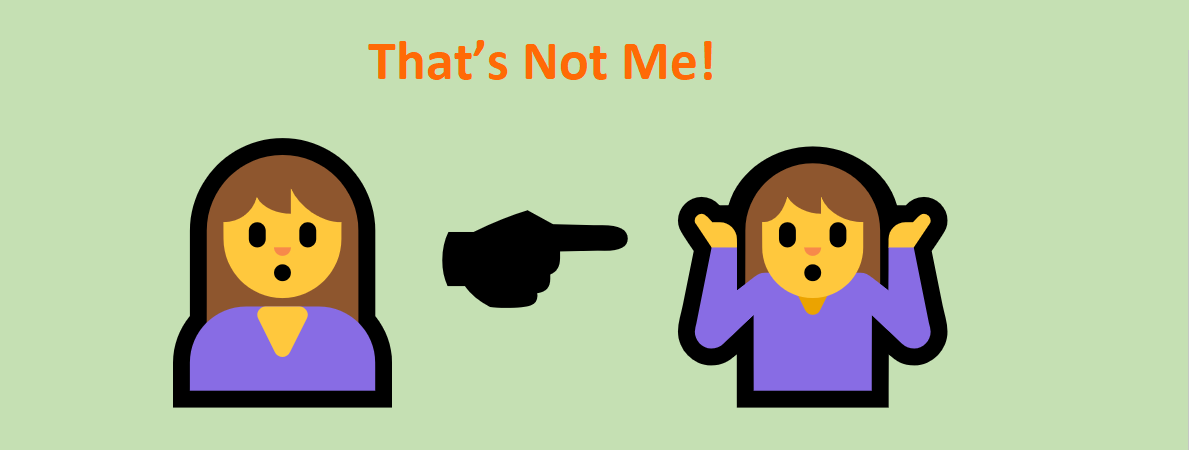
That’s Not Me! examines how much of our fiction is autobiographical and why some authors try to insist there’s no link between their fictional characters and themselves. If you want to take part, have a look here and get in touch. You don’t have to be a writer. Readers also have views!


An Admission

Of all the characters I’ve written so far, the one who’s closest to me is Martin in Cultivating a Fuji. This is how I described the connection in About the Author on Amazon:

Miriam Drori was born and brought up in London at about the same time as Martin. Like Martin, she studied Maths and went on to work as a computer programmer. Like Martin, she was bullied at school and, as a result, social anxiety paid a visit and refused to leave.

There, the similarities end. Miriam also studied Music. She emigrated, married and had three children. Her career path veered onto technical writing and then took a sharp turn, landing in the field of creative writing. Now, she enjoys reading, hiking, dancing, touring and public speaking. And writing, of course.

Although most of the current and past events in the story are completely imagined, some are taken from my life. I am now going to admit, for the first time, that I did something out of spite, because, in a way, I’m still angry about the way I was treated all those years ago. What was the spiteful thing I did?

I used someone’s real name.

And while that person, if she’s still alive, will probably never know what I did, it was not very nice of me. Here’s the excerpt:

February 1962

Miss Spector surveyed the classroom. All the children were writing except for Martin. She walked over to him and in a loud voice said, “Martin, why aren’t you writing?”

Martin looked up at her. “Because I don’t know what I want to be when I grow up.”

“There must be something you’d like to be. A doctor? An astronaut? A teacher?”

Someone said, “Martin wants to be a dustman,” and everyone laughed, including Miss Spector. Everyone except for Martin.

Martin looked down at the empty page of his exercise book.

“Well, think about it, Martin, and write your composition at home. I want to see it tomorrow.”

The next day, Miss Spector made Martin read out his composition to the class. It went:

I want to be an engineer, because an engineer works with machines and not with people. With people, you never know what they’re going to do, but machines do exactly what you tell them to do. Every time you press a button, the machine always does the same thing.

“Martin,” said Miss Spector. “How do you know about engineers?”

“My daddy told me about engineers yesterday. We talked about lots of different jobs I could do, and I chose that one.”

Someone said, “Martin said that because he doesn’t like us.”

Someone else said, “Yeah, because he’s funny and we laugh at him.”

The children laughed. Miss Spector laughed. Only Martin didn’t laugh.

I tweaked that story to better fit Martin but the essence of it is the same and Miss Spector was the teacher’s name. She was only eighteen at the time, so can be forgiven for not knowing better, but I still blame her for taking the side of the popular kids against me, and for not understanding the effect such treatment could have on a vulnerable eight-year-old.


I don’t have to put a bio, blurb or links here, because you can find those by clicking on the headings up at the top ­.

Next week, I intend to post a summary of all the posts so far. Remember to let me know if you want to take part in this series.

Categories
Books

Easter Eggs

I have to admit, I’ve never heard of this meaning of “Easter eggs” before, but it’s a great term for an interesting topic. I’ll let Rumer Haven explain.


Thanks so much for hosting me, Miriam!
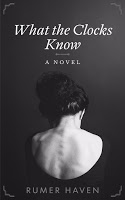
As the oft-repeated saying goes, “Write what you know.” And so writers often do, me certainly included. As I’ve related time and again when people ask, yes, What the Clocks Know is inspired in part by real life. The protagonist’s move to London parallels my own, as does her emotional response to the life changes she undertakes.
But that’s the bigger stuff that helps drive the plot and underlies the themes. There are a lot of little things writers will include from their own experiences, too, and I’m no exception. In fact, no one loves an inside joke more than I do, so I deliberately plant these personal “Easter eggs” in my stories to give myself and people who know me a chuckle. Here are just a few that appear in What the Clocks Know:

1. Chapter One alone is pretty loaded with ’em. I’m ridiculously nostalgic for my childhood and past pop culture, so I drew from that to initially ground Margot in the ordinary world she lives in during the present before she enters a rather extraordinary one of the past.

  • High school friends will remember the way I put dimes in my black loafers instead of pennies.
  • College friends might recall the “squirty bird” I purchased at the Meijer store off campus–a big, bright plastic parrot that squirted water out of its beak. One of my rooms at the sorority house had a flat roof just outside the window, so at night, I liked to climb out and wait (unseen) for unsuspecting friends to pop in and chat with my roommate, then douse them through the window screen.
  • Speaking of the sorority, yes, I was in one, and yes, we had a traditional symbol that we’d form with our index fingers and thumbs when posing for group photos. Unfortunately, many sisters had the tendency to position this diamond-shaped symbol below waist-level, which made me laugh hysterically–Really? Did they not see the innuendo there? But apparently I wasn’t the only one to catch it, as the alumni magazine now bans this pose from all its photos.

2. In Chapter Two, while Margot is still at her childhood home, she finds an old grade school journal akin to one I kept in sixth grade. Reading through some of the entries reminds her of a classmate who lived off a dirt road that I based on my actual school bus route. Though now paved over, this road has forever creeped out locals and become an urban legend, as depicted in the eponymous film Munger Road. I was shocked when the movie came out after I’d already incorporated this reference into my first draft–just goes to show the mark that road makes on locals!

3. The once nameless waiter at the Troubadour cafe in Chapter Five only first became “Hal” during the late stages of editing–named for the actual Troubadour employee who gave me permission to reference the independent cafe by name. He was so pleasant and enthusiastic about the book that when he jokingly suggested I name a character after him, I decided to do just that.
4. Speaking of cafes, though not mentioned by name, the Chicago coffee house that Margot describes to Chloe at the Troubadour is the very same Bourgeois Pig Cafe featured in my last novel, Seven for a Secret. I frequented that place when I lived in Chicago’s Lincoln Park, loving and missing it so much that I held my Seven for a Secret launch party there as well in 2014.
5. There are occasional references to the French Revolution and, more specifically, Bastille Day–which is my birthday.
I could go on and on with these little hidden eggs, I’m sure, but I’ll leave the challenge to you as you read What the Clocks Know. Happy hunting! I mean, reading!
~ * ~

About What the Clocks Know:
Finding a ghost isn’t what Margot had in mind when she went ‘soul searching’, but somehow her future may depend on Charlotte’s past.

Woven between 21st-century and Victorian London, What the Clocks Know is a haunting story of love and identity. A paranormal women’s fiction, this title is available as of March 18, 2016 from Crooked Cat Publishing.

“A unique tale of the paranormal – as beautiful as it is haunting.”
~ Shani Struthers, author of Jessamine and the Psychic Surveys series

** Add it! **
http://www.goodreads.com/book/show/29368003-what-the-clocks-know
** Read it! **
Amazon US – http://amzn.to/21DZoCw
Amazon UK – http://amzn.to/1QsiFfr
~ * ~

Author Bio:

Rumer Haven is probably the most social recluse you could ever meet. When she’s not babbling her fool head off among friends and family, she’s pacified with a good story that she’s reading, writing, or revising—or binge-watching something on Netflix. A former teacher hailing from Chicago, she presently lives in London with her husband and probably a ghost or two. Rumer has always had a penchant for the past and paranormal, which inspires her writing to explore dimensions of time, love, and the soul. She debuted in 2014 with Seven for a Secret (in which a Jazz Age tragedy haunts a modern woman’s love life), and her award-winning short story “Four Somethings & a Sixpence” (about a bride who gets a little something she didn’t register for) was released in 2015. What the Clocks Know is her second novel.

Learn more about Rumer at:
Website – http://www.rumerhaven.com
Facebook – http://www.facebook.com/rumerhaven
Twitter – @RumerHaven

Thank you for coming, Rumer, and for revealing all those Easter eggs.

As for the novel, What the Clocks Know,  I can attest to its excellence because I helped with the final editing, so am privileged to have read it.

Categories
Books

Meet My Main Character

I’m joining in the Meet My Main Character blog hop, in which I answer a few questions about my main character and pass the baton on to two or three other writers. I had a little problem with the latter, as you’ll see later.

I was tagged by fellow Crooked Cat author, Michela O’Brien, whose latest novel, A Summer of Love, was released in January 2013.

What is the name of the main character? Is she real or fictitious?

Esty Sherman. She is fictitious. The name Esty is short for Esther.

When and where is the story set?

This is a contemporary story that takes place over about four months in Jerusalem, apart from a brief trip to London.

What should we know about Esty?

Esty was born and brought up within the closed haredi community. But she has long felt she didn’t belong there and has decided to leave everything and everyone she knew and start afresh.

What is the main conflict? What messes up her life?

Contacts with people from her former life make her current life very hard. She is finding it hard enough to acclimatise to new ways of life without constant reminders from the past.

What is Esty’s goal?

To become part of her new world and to become a permanent part of Mark’s life. At least, these are Esty’s goals for most of the time.

What is the book’s title?

Neither Here Nor There, because Esty is no longer a member of her old community but still feels she doesn’t completely belong  in the world she has chosen.

~

As I mentioned, I had a problem finding people to continue with this. All the ones I asked had either done it before or were much too busy.

If you would like to answer these questions, please let me know. I will edit this post to tag you, and you can post your answers next week.

Categories
Books Israel

Places in NHNT

My novel, Neither Here Nor There, due to be published later this year, describes several places in Jerusalem that I’ve mentioned before on this blog. Like the market, Machane Yehuda.

Machane Yehuda market

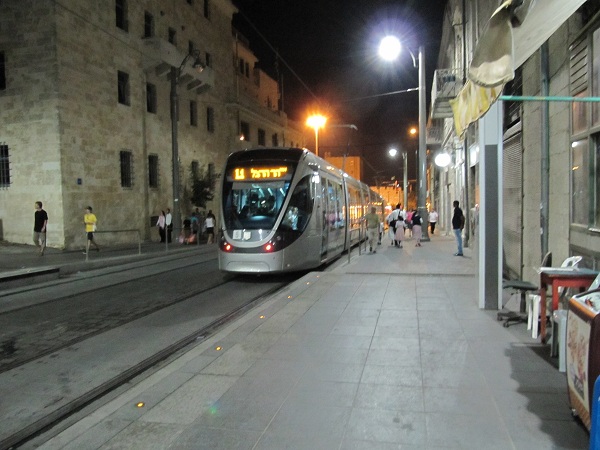
Jaffa Road and the light railway (which has been going for two and a half years).

Jerusalem Light Railway at night

The German Colony, which I mentioned here.

House in German Colony

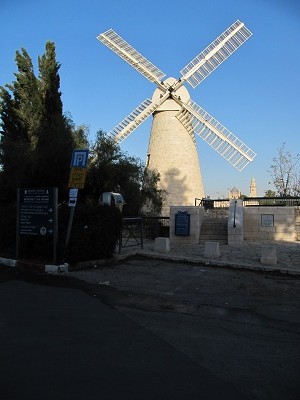
Yemin Moshe, where I used to live, and which I described here and here and here.

Yemin Moshe windmill

There are some other places in Jerusalem that get a mention in the novel. I’ll have to photograph them, too.

There are also places in London that feature in the novel. I haven’t taken photos of them and they’re a bit far away from me for a quick snapping session.

Place can often drive a novel. It certainly drives mine.

A lane in Yemin Moshe

Nothing can happen nowhere. The locale of the happening always colours the happening, and often, to a degree, shapes it.

~ Elizabeth Bowen

Categories
Small stones

Small Stone 28/1/11

While walking, I hear many accents and languages, and see many colours.
Where I live, I sense these things, too.
But there, I don’t remark on them because I’m used to them.
Here, I do because London has changed since  I lived here.
The outsider notices more.