Categories
Books That's Not Me

That’s Not Me: Jennifer C. Wilson

That’s right. Jennifer is back on That’s Not Me!, so that you can get more of her humour and words of wisdom.
This time she’s talking about another of her books.

That’s Not Me! examines how much of our fiction is autobiographical and why some authors try to insist there’s no link between their fictional characters and themselves. If you want to take part, have a look here and get in touch. You don’t have to be a writer. Readers also have views!

Over to you, Jen.


Well, if it was ridiculous to claim there was none of me in Kate, from The Last Plantagenet? (you can visit that blog here), it’ll be even more stupid to make such a statement about Lexie, in Twelve Dates ‘Till Christmas! Although apart from one scene, this time, it really wasn’t intentional.

Without giving the game away, Callum and Lexie are those friends who happily go along to each other’s formal events as a ‘plus one’ when required. And not just personal events, but the occasional corporate function too. It’s for one of these evenings where Callum springs it on Lexie that he’s entered them into a “Mr and Mrs” quiz. To say Lexie is unimpressed is an understatement…

Having never played the game myself, I took to the internet to find some good questions, and set about writing the scene. When it came to Lexie, I figured, why not add a sprinkling of ‘me’ in there? After all, ‘write what you know’ again, right? And although the questions give a good insight into Lexie, they aren’t anything too plot-essential; it’s about demonstrating how well Callum and Lexie know each other, after all, not necessarily about the answers themselves. So, when it came to Lexie having won a Young Environmentalist of the Year Award (and still treasuring the plaque she got for it), or wanting to meet Sir David Attenborough, well, that’s all me. Plain and simple. Even Callum’s responses have an element of me in them – I’d love to visit Australia, but the arachnophobe in me keeps me anxious…

Other than that bit of the story though, I didn’t think I’d taken that much of myself this time around. Perhaps a love of a fun social life, and hanging out with friends on a regular basis. Alright, maybe being taken on a date to the Natural History Museum’s ice-rink would be incredibly romantic (or at least it would be if I could skate, which I cannot). And fine, there’s certainly something in the comment that Lexie owns mostly lively prints rather than wearing the calm neutrals of her friend’s preference.

In my defence (if I need any), Twelve Dates was my first foray into completely contemporary fiction, having spent the majority of my writing life either in the 1400/1500s, or slightly cheating and writing about characters who were from that era, even if they were contemporary ghosts in my stories. Is it any real wonder then, that I reached out to what I know best, i.e. me? Lexie has a number of characteristics / lifestyle aspects that I don’t have (see above, re NHM), so there’s clearly an element of wishful thinking in the mix too. But is there any real harm in that?

When it comes to writing about real people, there’s always a risk. If somebody who considers you a good friend sees themselves in your antagonist, there’s potential to damage the friendship there. Even if they recognise some of their traits in your leading lady, or romantic hero, who’s to say they’ll be happy with the situation? Well, the one person whose reaction you know with 100% certainty is your own, isn’t it? (Or at least, you’d hope so – if not, you’ve really only got yourself to blame…). It makes some sense then, to look to your own traits, experiences and motivations, where they’re applicable. For me, that might not sit so well when writing about women packed off to arranged marriages in the 1400s, but for a twenties/thirties (alright, late-thirties!) professional woman, navigating modern personal and professional dramas? I have pretty good first-hand knowledge of how that works. And I might as well use it.

I might think twice if I ever write a toxic, manipulative witch though – can’t go being too obvious with giving my personality away!

Blurb

Callum and Lexie are perfect for each other – at least, that’s what everyone tells them. But they’re just good friends, aren’t they? And neither wants to ruin the solid friendship that’s treated them so well since university.

But when an old school friend of Callum’s asks Lexie for a date, and passions overflow on a work night out, could it be the trigger to show each of them what they have been missing out on all this time?

With twelve weeks until Christmas, that’s a lot of opportunity for romance – and for misunderstandings…

Buy link

Twelve Dates ‘Till Christmas

About Jennifer C. Wilson

Jennifer has been stalking dead monarchs since she was a child. It started with Mary, Queen of Scots, and now also includes Richard III. At least now it results in a story!

She won North Tyneside Libraries’ Story Tyne short story competition in 2014 (no dead monarchs, but still not a cheerful read), and has been filling notebooks and hard-drives ever since. Her Kindred Spirits series, following the ‘lives’ of some very interesting ghostly communities, is published by Darkstroke, and her historical / contemporary romances by Ocelot Press.

Social media links

Categories
Books SIM Talks with Miriam Social anxiety

SIM Talk 5: CJ Sutton

#SIMTalksWithMiriam

A hearty welcome, please, for C.J. Sutton, author of Dortmund Hibernate and This Strange Hell. He’s travelled a long way to be here. Over to you, CJ.

Taming the Mind

Social anxiety is an issue very close to me. Despite finding techniques to create a confident exterior, being placed in a crowded room or asked personal questions can still cause the heart to beat faster than it should. Many writers, to varying degrees, live with social anxiety. Our ideas thrive in our minds, transferred onto the screen and page for others to see at their leisure without our physical presence. This craft works best in isolation.

C.J. Sutton, authorI learned quite quickly that I could tell a story. But my storytelling needed preparation if I was to be placed on that stage. Put a blank page in front of me and I’ll smash out a short story before the day is out. Replace the page with real faces and the result would not be identical.

Being socially anxious can mean even the most mundane task, such as ordering a meal or getting a haircut, can lead to avoidance. I know people who fear speaking on telephones and attending meetings but will happily hold a snake or ride a rollercoaster. What is the cause? It’s hard to say, because the mind is rogue, and everyone finds fear in a different cave.

The characters I create are constantly in situations I would dread. Being the creator of those scenes allows a unique perspective. One can explore the why and the when, constructing responses that appear resolute. But I am never anxious when I’m writing. Never. 

In my debut novel Dortmund Hibernate, the protagonist is a psychologist tasked with nine criminally insane patients. He faces drug dealers, gangsters, sex addicts, murderers, rapists and all manner of sick minds. In his approach to his patients, this psychologist uses his education and passion for the job to remain calm and seek best solutions. But when having a drink at a bar, this changed. Suddenly, he cares what everyone else thinks of him and the room is suffocating.

This Strange Life by C.J. SuttonIn my new novel This Strange Hell, a main character lives in a town governed by a violent gang and hidden from police patrol. When this gang enters a public place wielding guns and requesting donations, she is a pillar amongst the locals and does what she can to keep her friends at ease. Ten pages later, when meeting a love interest for a meal on her birthday, this same character is trembling and acting out of the norm. She owns guns and works off the land. Informal. When life becomes formal, she starts to crumble.

Social anxiety is different for everybody. Whether it’s crowds, queues, attention or expectation, the feeling of being trapped in that situation can be the equivalent of pain. People may call someone out for being shy or introverted, and they may think that person is rude or uninterested. But within, their hearts are fluttering and terror dawns.

I know social anxiety.

Thank you, CJ. And yes, social anxiety is different for everybody. When I mention having social anxiety, people assume I don’t like doing public speaking or talking to strangers. Neither is true.

THIS STRANGE HELL by C. J. Sutton

A suited man runs from a burning tower in Melbourne as bodies rain down upon him.

Before the city’s millions can compose, he boards a train into the countryside. Hiding his identity and changing his appearance, the man finds his way to Sulley Ridge, a lawless town in the heart of the harsh Victorian outback.

The following day, a burned man wakes up in a hospital bed. Surging with rage, he speaks a name. Within an hour, the suited man’s face is across every screen in the country. It’s the greatest manhunt Australia has ever seen.

But as he tries to camouflage in Sulley Ridge, he soon realises the town has its own problems. Under the iron fist of a violent leader, the locals are trapped within slow and torturous decay…

As we learn more about the night of the burning tower, the connection between the suited man and the burned man threatens to leave a trail of destruction across the state.

Here is the story of a man on the run from his past, as the line between sanity and evil is danced upon.

Here is the tale of This Strange Hell.

Find C.J. Sutton

on his website, Facebook, Twitter and Instagram.

He previously appeared on this blog when he brought Walter Perch along to Letters from Elsewhere.

~~~

Another fascinating letter from elsewhere was written by Dr Eloise Kluft, who was brought by Stephanie Bretherton, author of Bone Lines. This book is now published and available from all the places listed on her website.

~~~

Do you know what Uplift means? I hope to blog about this in a few days. It has connections with my new book, Cultivating a Fuji, out in May.

Categories
Books Reviews

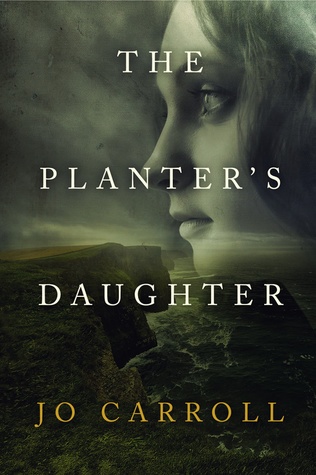
The Planter’s Daughter

I’ve just finished reading an amazing book. Books that I mention on this blog are all special, but this one is extra special and I’m shouting about it from every rooftop I can find.

Here’s my review:

33635771

I was in Liverpool, Australia, New Zealand and Ireland – not now, but nearly two hundred years ago. Actually, I’ve only been to one of those places and what I saw in no way prepared me for what I read in this book. The descriptions are so vivid, the scenes so real that I felt I was there with the characters, through all their hopes and suffering.

I’ve never read a historical story that has held my attention as this one did. Most historical fiction has sections that are less interesting, that I have to struggle through to move on to more appealing parts. But this novel captivated me throughout.

I’ve read Jo Carroll’s travel memoirs, but never realised she was capable of this. I salute her and sincerely hope she’s planning more novels like this one.

Blurb

It’s 1848. And Sara, aged fourteen, must leave her family in the stinking potato fields of Ireland to seek a better life with her wealthy aunt in Liverpool. But her uncle has different ideas.

Will she find solace among the dockers? She finds love, but becomes embroiled in the unrest of the Irish men and women who live in squalor in the Liverpool slums. Yet her efforts to help them only enrage her uncle further.

Her escape takes her to the other side of the world. But there is no comfort in the dusty outback of Australia nor the gold fields of New Zealand. For she has left behind something more precious to her than life itself.