Categories
Books That's Not Me

That’s Not Me: Val Penny

Next up (on my special birthday, as it happens) in the series That’s Not Me! is Val Penny, author of crime fiction set in Scotland.
That’s Not Me! examines how much of our fiction is autobiographical and why some authors try to insist there’s no link between their fictional characters and themselves. Over to you, Val.


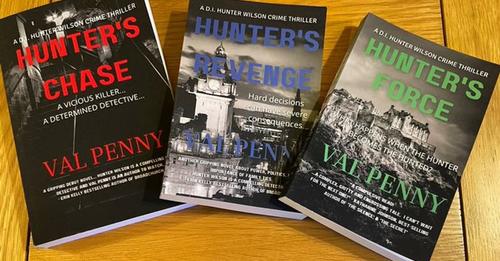
Thank you for inviting me to your blog today. Let me tell your readers about my novels and my main character, DI Hunter Wilson.
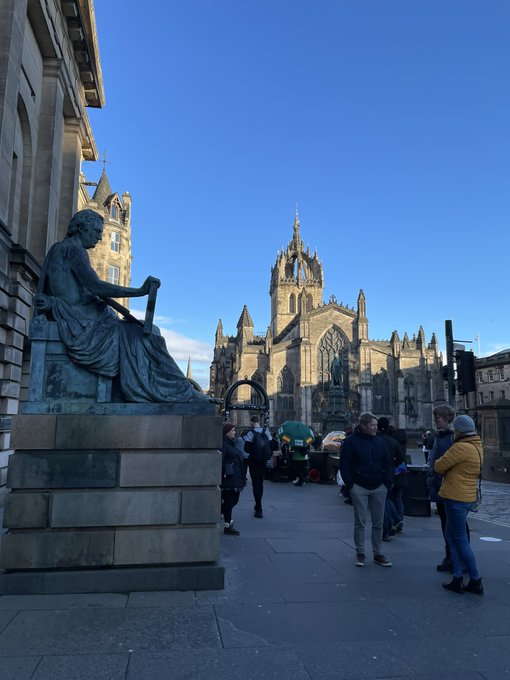
I write crime fiction set in Edinburgh, the capital city of Scotland. In every one of my books somebody is murdered. Now many tutors of writing advise their students to ‘write what you know’. I have only followed this advice to a certain extent. I have certainly never committed a murder, nor been involved in investigating such a crime. However, I do know Edinburgh well.
I decided to write crime fiction because that is the genre I most enjoy reading. I was also a lawyer for many years, a lifetime ago and met many of the types of people I write about.

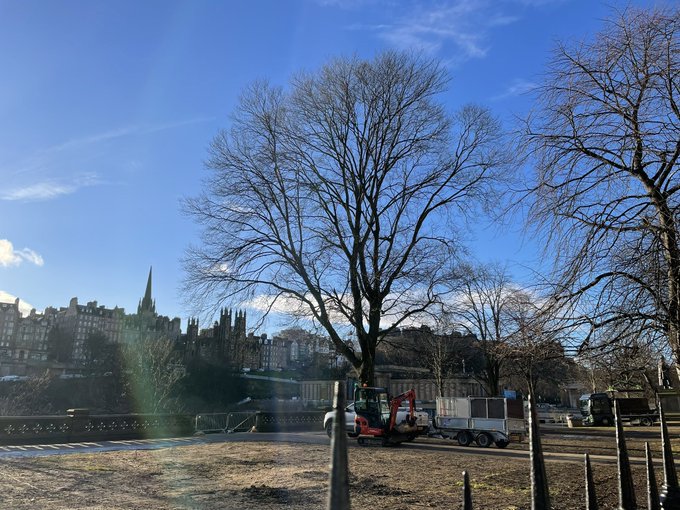
When I was choosing where to set my books, I considered creating an imaginary Scottish town, much like Peter Robinson who created the fictional English town of Eastvale in the Yorkshire Dales. However, when I thought about it, Edinburgh is a small city (about 600,000 people) and it is a place many people know about through travel documentaries or have visited on vacation. It has a wide variety of types of housing, universities, a prison a beach and hills so why not base my stories here.

To tell my stories I needed a character that I and my readers could depend upon. Enter, DI Hunter Wilson.

I wanted a name that reflected the policeman’s job, fighting crime. One day when my husband and I were going to my mother’s house in Edinburgh, we passed a lawyer’s office. The name on the facia was Wilson Hunter. Perfect! However, my husband thought that I better not use that name, in case the lawyer objected, and so Hunter Wilson was born.

Although not consciously based on anybody in particular, when I drew up the biography for Hunter Wilson, I realised that his character reflected one of my uncles. He is an intelligent, hardworking man who is respected by his colleagues and has a wide circle of friends with whom he shares hobbies and interests and has deep love for his family.

Hunter, like my uncle, is loyal and determined. He is not pushy but does not shy away from difficult decisions, but perseveres with his work until he reaches a successful conclusion. Like my uncle, Hunter was denied promotion by a boss with whom he clashed. However, unlike my uncle, who has been married for over fifty years, Hunter is divorced. He also drinks strong coffee, my uncle is definitely a tea-jenny!

Hunter and his team are faced with many unpleasant characters and difficult situations in my novels. I am often asked if these are based on real events. The answer is a resounding, sometimes.
Authors are terrible thieves and grab ideas or characters from all sorts of places; a couple overheard in a coffee shop, a man talking in the phone in a train, or an event reported in a newspaper or on television. I have notebooks everywhere to jot down ideas or phrases as they come to me. Indeed, as I live in the very wet West of Scotland, one of the best presents I ever got was a waterproof notebook! You will often see me using this at bus-stops or in train stations during a sudden downpour.

Although my stories and characters are not autobiographical, there is definitely a lot of me and my life-experience in my novels and I hope that readers enjoy that and their visits with me to Edinburgh too.

Thank you again for inviting me to your blog today and allowing me to share some secrets about DI Hunter Wilson with your readers.

BIO

Val Penny has an Llb degree from the University of Edinburgh and her MSc from Napier University. She has had many jobs including hairdresser, waitress, banker, azalea farmer and lecturer but has not yet achieved either of her childhood dreams of being a ballerina or owning a candy store.

Until those dreams come true, she has turned her hand to writing poetry, short stories, nonfiction books, and novels. Her novels are published by SpellBound Books Ltd. Val is an American author living in SW Scotland. She has two adult daughters of whom she is justly proud and lives with her husband and their cat.

Contact Details

Val’s Books


To take part in this series, see the page That’s Not Me.

You don’t have to be an author to write a guest post. You might be a reader with views on the topic…

Categories
Books That's Not Me

That’s Not Me: Jennifer C. Wilson

Today, it’s my pleasure to introduce my third victim guest author in the series That’s Not Me!

It’s Jennifer C. Wilson, fellow member of Ocelot Press and author of several historical novels. Will she deny the obvious?


It would be pointless to pretend for even a second that there’s no hint of me in Kate, the leading character in The Last Plantagenet? In the second paragraph, I describe her ideal Saturday, and anyone who’s ever met me will absolutely recognise me in that description – hanging out at a castle, watching knights joust, eating and drinking medieval food – that’s heaven for me. Even more than that, and without giving the game away, some of the final scenes were written whilst I was in Leicester, having been lucky enough to ‘win’ a place at Compline for Richard III in the public ballot (I had only entered to be able to say I was part of the process).

Being in Leicester that weekend in March 2015 was an incredible experience; how many writers can say they’ve attended part of the funeral service for their leading man? Not that many surely, and even fewer amongst writers of historical fiction! Sitting in the hotel bar after Compline, I was scribbling intently in my notebook, desperate to capture every second of the day.

I’ve always been fascinated by history, and having devoured the fiction and non-fiction titles around the Tudors in Hexham library, decided that since I had no interest in going ‘forward’ in time, I’d try going ‘backward’ – that’s when I discovered Richard III. I think, like so many people, I’ve always been drawn to the underdog (another thing we learn early on about Kate!), and with Macbeth being another of my favourite monarchs, I felt an immediate sympathy to another king who had been lost in many ways to a fictional version of himself (written by the same man as Macbeth, nonetheless: Shakespeare has a lot to answer for!).

Years later, when I was trying to actually finish a new project for the first time in years, the idea of a timeslip novel came to mind. When I thought about who I would most like to go back in time and meet, the first answer which came to mind was, of course, Richard III. Given that I never thought I’d publish the story, I didn’t even try and hide myself particularly well in Kate’s character! After all, as the introduction to this blog series says, “write what you know” is the most common advice given to writers; since it was mostly done as a challenge to myself, that seemed the most obvious approach.

Now, obviously (sadly), I haven’t personally travelled back to 1485 (or at least, not that I remember…), but what I have done is visit many, many castles and other historical venues, and developed a healthy (honest) obsession with a certain King Richard. Based on those facts, the character of Kate wasn’t hard to conjure up, nor was working out how she (OK, how I) would react in particular situations, such as suddenly finding herself in the middle of a late-medieval kitchen, then face-to-face with her historical hero. So yes, there’s an element of wish-fulfilment in there, but then, another often-repeated piece of writing advice is that “if you don’t enjoy what you’re writing, how will your readers?” I certainly enjoyed writing The Last Plantagenet?, and there’s no offence taken whatsoever when somebody points out the similarities between me and Kate. I just hope others have as much fun when reading it!

Blurb

The fireplace hadn’t looked like a time-portal.

Nottingham, 2011

All Kate had wanted was a fun, relaxing day out, watching the knights jousting at Nottingham Castle. What she got was something quite different.

Nottingham, 1485

Storm clouds are gathering around the court of Richard III.

Transported from one to the other in a heartbeat, how will Kate handle life at the Ricardian court? And more than that, how will she cope when she catches the eye of the king himself?

Find out in this highly recommended story, set just prior to the decisive Battle of Bosworth.

Buy Link

The Last Plantagenet?

About Jennifer C. Wilson

Jennifer has been stalking dead monarchs since she was a child. It started with Mary, Queen of Scots, and now also includes Richard III. At least now it results in a story!

She won North Tyneside Libraries’ Story Tyne short story competition in 2014 (no dead monarchs, but still not a cheerful read), and has been filling notebooks and hard-drives ever since. Her Kindred Spirits series, following the ‘lives’ of some very interesting ghostly communities, is published by Darkstroke, and her historical romances by Ocelot Press.

Social media links:

Categories
Books That's Not Me

That’s Not Me: Vanessa Couchman

It’s Friday, which means it’s time for the next post in the series That’s Not Me!, which examines how much of our fiction is autobiographical and why some authors try to insist there’s no link between their fictional characters and themselves.

Today’s post comes from Vanessa Couchman, writer of historical fiction and a fellow member of Ocelot Press. She brings up issues I hadn’t even thought of…


Now You See Me, Now You Don’t!

Thank you, Miriam, for inviting me to write about this thought-provoking topic.

I write historical fiction, in which the protagonist is usually a woman with barriers to overcome. The characters are often loosely based on real people who lived at the time. Since I don’t write contemporary fiction, people are less likely to see themselves or me in my novels. However, there are still some pitfalls to avoid.

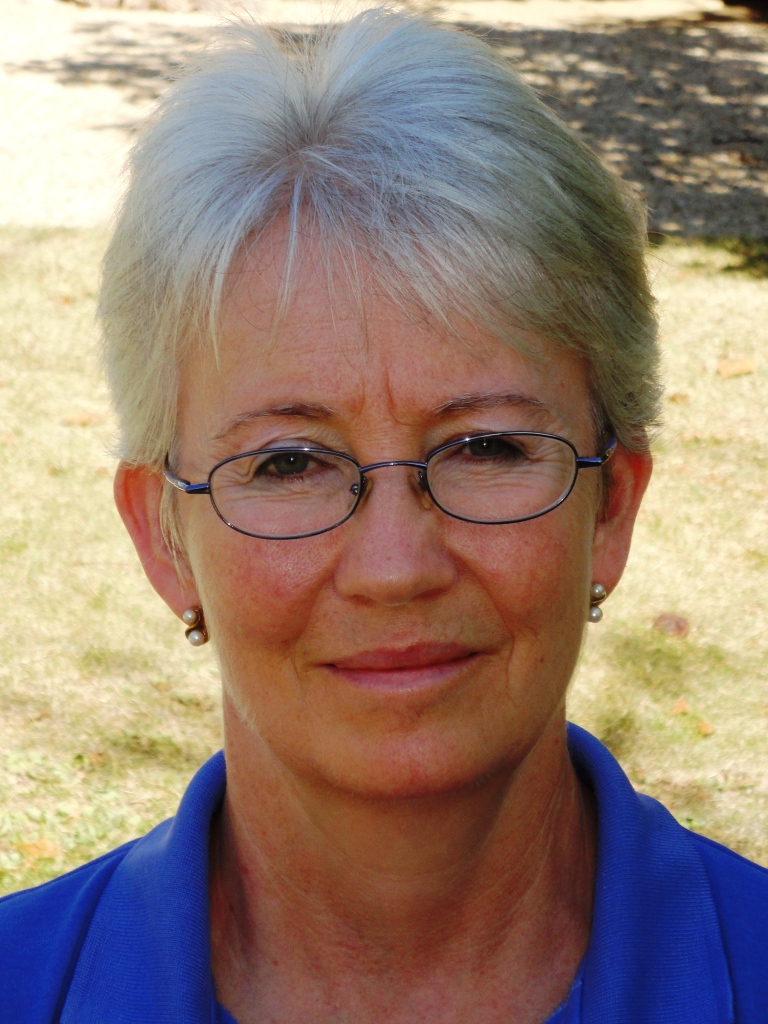
Vanessa Couchman

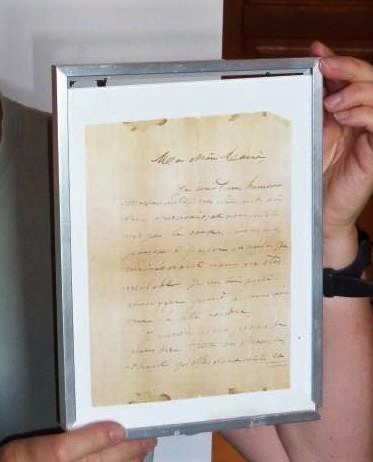
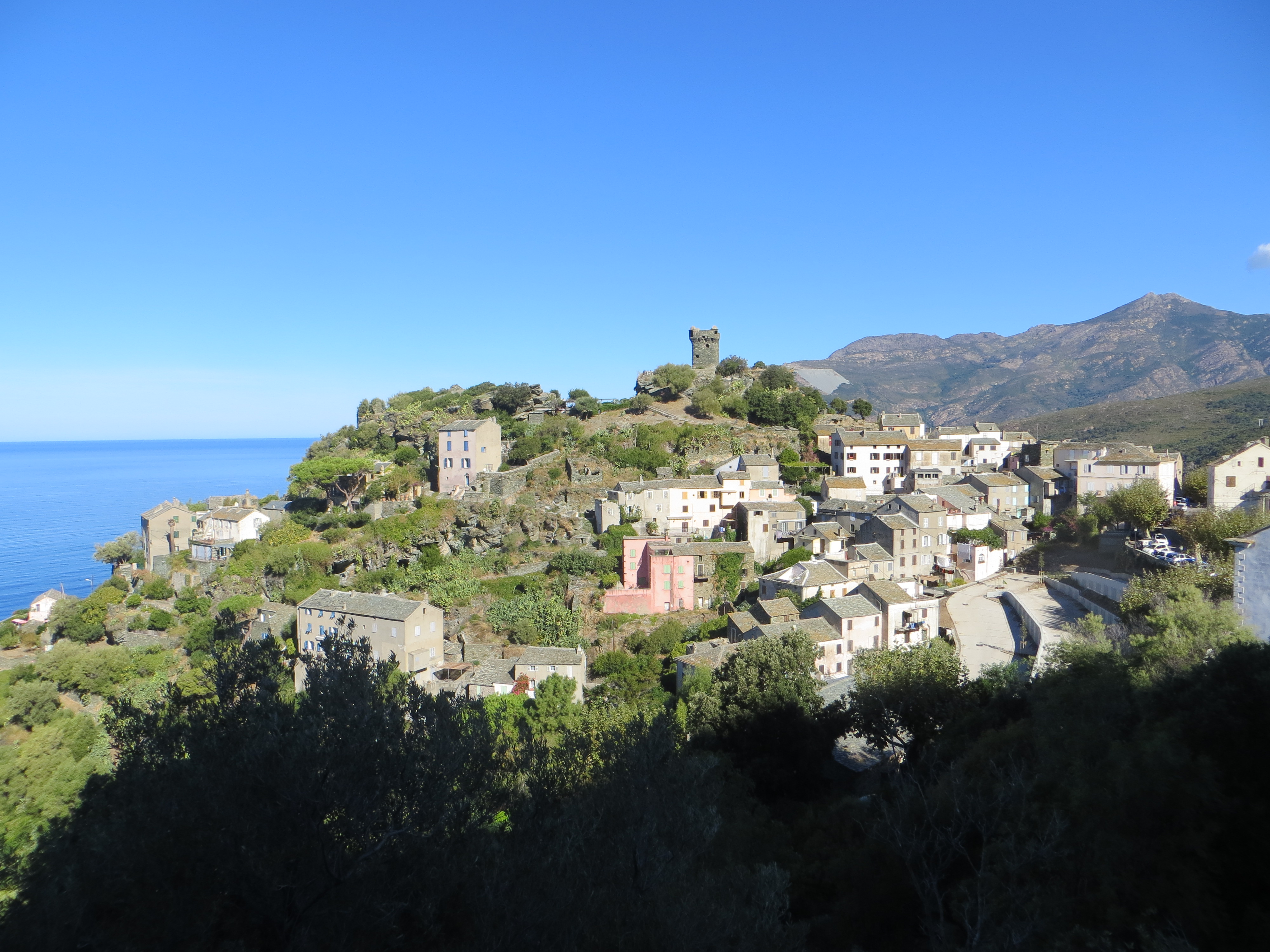
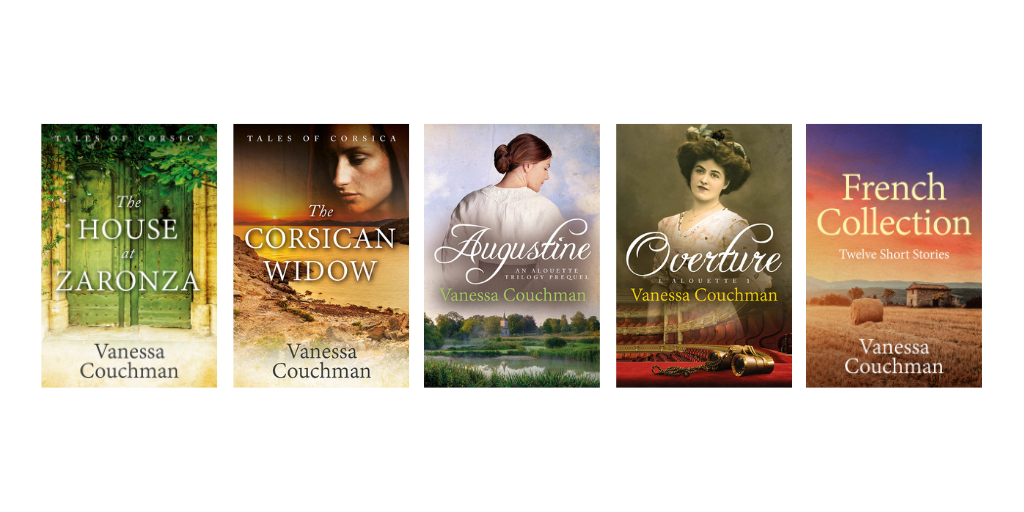
For example, I never use well-known historical figures as protagonists, although they might get a walk-on part. Why? First, I discovered the existence of the main characters in my Corsica novels, The House at Zaronza and The Corsican Widow, purely by chance. The first is recorded in letters hidden for over a century before coming to light. I used clues to her personality from those letters, but she is largely a made-up character. I found a brief reference to the second in an out-of-print history of Corsica, which supplied little detail. So she is a character built almost from scratch, too.

One of the letters that inspired The House at Zaronza
Nonza, the Corsican village that inspired Vanessa’s Corsica novels

Second, using completely, or mostly, fictional characters gives you carte blanche to develop the character without the constraints of knowledge about a documented historical figure. You still have to create a believable personality, e.g. how would this person behave in certain circumstances? Is their personality consistent with their upbringing/culture/society?    

Do I put myself into my characters? Not deliberately, but it’s inevitable that I share certain traits with some of my protagonists. Also, my stories might include topics I know about. My protagonist in Overture, set in Belle Époque France, wants to become an opera singer. I’ve never had ambitions in that line, but I do sing, and I am very fond of music. In fact, she is loosely based on a real-life opera singer who also came from modest origins and rose to the pinnacle of her profession.

It’s difficult to prevent people who know you from thinking that your characters are reflections of you and your opinions. I wrote The House at Zaronza in first person point of view (POV). Although I don’t believe the protagonist resembles me as a person, one reader said, “I couldn’t stop identifying her with you.” Nobody else has said that. Even so, I have written subsequent novels in close third person POV, partly as a reaction.

On another occasion, a couple I know read my short story anthology, French Collection. A few of the stories contain curse words, which are in character with the protagonists. The couple said, “We thought, ‘That doesn’t sound like Vanessa!’” They clearly don’t know me very well! Seriously, though, their reading of the book was influenced by knowing me personally.

Ultimately, as a writer you have to accept what comes with putting your work out there, while being aware of the potential downsides.

Bio

Vanessa Couchman has lived in Southwest France since 1997. A self-confessed ‘history nut’, she writes historical novels and short stories, frequently set in France or on the Mediterranean island of Corsica. Quirky true tales often find their way into her fiction, and she likes nothing more than pottering around ruined châteaux or exploring the lesser-known byways of France. Vanessa is a member of the author collective Ocelot Press.

Links to books

The House at Zaronza

The Corsican Widow

French Collection: Twelve Short Stories

Augustine (prequel to the Alouette trilogy)

Overture (Book 1 in the Alouette trilogy)

Amazon author page

Links to social media

Website    

Facebook

Twitter

Categories
Books That's Not Me

That’s Not Me: Joan Livingston

As promised, here is the very first post in the series: That’s Not Me!, which examines how much of our fiction is autobiographical and why some authors try to insist there’s no link between their fictional characters and themselves.

To start off the discussion, here’s Joan Livingston, author of thirteen published books, so far. Over to you, Joan.


That’s Not Me or Is It?

My motto in writing fiction is that I take what I know and have my way with it. That includes the setting for most of my books — the hilltowns of Western Massachusetts in the U.S. — and its characters. Thanks, Miriam, for this opportunity to explain.

Since I was a kid, I’ve always been a curious and attentive person who pays attention to what is happening around me, especially what others are doing. I can thank my mother for that. When Hank and I moved our family to the sticks of Western Massachusetts, I had an opportunity to immerse myself in rural life. That was enhanced when I became a reporter covering this part of the world for a local newspaper. I listened to the way people talked and observed what they did. These were great experiences that prepared me for writing fiction.

Now the ultimate question: are any of these characters based on people I know? In my latest book, Northern Comfort, I can honestly say no. Willi Miller and her boy are a charity case in a rural NE town. One snowy day, Cody’s sled slides into the path of Miles Potter’s truck. Until that tragic accident, they are separated by their families’ places in town. Cody’s death also has an impact on the father who abandoned him. Because of my experiences and observations, I believe I created authentic characters who deal with this situation.

I will admit there is a lot of me in the main character of my Isabel Long Mystery Series. Like me, Isabel was a former long-time journalist. She’s an older woman on the sassy side. But I didn’t pursue being a P.I. after losing a job as editor-in-chief. My husband also didn’t die. (When we visit the town of Worthington, where we lived 25 years, people will joke that Hank’s still alive.) My mother doesn’t live with me, and I have six adult kids, not three. I also don’t work part-time at the local watering hole — although I did that long ago when we were building our house and needed the extra cash — or have a love relationship with its owner.

Isabel’s mother was inspired by my own mother, Algerina, who is now 99. Yes, she’s a big reader, nosy, and a fan of gambling like Isabel’s mom. I created that character as a tribute to her. Isabel’s kids are based loosely on three of my kids. I will let them figure that out.

The rest of the characters? They were born inside my head and I’ve grown to love them, even the bad ones. It is humorous when people I know try to guess who my characters “really are.” Sorry, no, you’re wrong.

By the way, I am just about ready to send Missing the Deadline, no. seven in the series to my publisher, darkstroke books. That will be the 14th of my published books.

I still have one unpublished adult novel — The Swanson Shuffle. This one was inspired by my experiences living and working in a psychiatric half-way house. But it’s not autobiographical.

By the way, I once had an agent who wanted me to write a tell-all memoir about hilltown life. I tried a few chapters but he wanted more dirt. A lot more. I stopped. I couldn’t do that to the towns I so loved.

Has my fiction ever got me into trouble? Once, for the first book I self-published, Peace, Love and You Know What. Here’s the plot: Turn on, tune in, and then what? That’s the question facing Tim and Lenora. But first they’ll escape to a three-day graduation bash put on by Tim and his roommates at their funky, hippie pad. A few college friends thought I portrayed people we know unfavorably. Huh? This was definitely not a memoir, not even close. It was a case of taking what I know … oh, you know the rest by now.

Bio

Joan Livingston grew up near the ocean in Massachusetts, where her grandparents arrived from the Azores and Madeira islands. Her childhood was steeped in all things Portuguese — from saintly aspirations to festas down the street. (Don’t let her last name fool you.)

Her mother taught her to love reading with twice-weekly trips to the public library. Her teachers inspired her to write. She longed for straight hair and popularity but settled for being smart instead. She was the first of her family to graduate from college.

For a very long time, she was too busy raising six kids to write much. She started with poetry but found her way to prose when she began reporting on the hilltowns of Western Massachusetts for a daily newspaper. She covered meetings, disasters, and small town scandals. She profiled such people as the woman who kept a pet porcupine and the farmer who became Bill Clinton’s national security advisor.

She worked as a journalist for 35 years, including managing editor of the award-winning newspaper, The Taos News in New Mexico. Her editorials won state and national awards, and she’d like to think, brought positive change. More recently, she was editor-in-chief of three daily newspapers in Western Massachusetts, where she lives. But she has left journalism to concentrate on her own writing.

Links to books

Links to social media:

Categories
Books That's Not Me

Announcing a New Series

Friday is the day for a new and exciting series of posts I’m calling:

That’s Not Me!”

To start off the series, I’m delighted to host Joan Livingston, author of thirteen books so far, whose post will appear on this blog next Friday, 4th August.

Here are the ideas behind the series:

Why do some writers of fiction get upset at the suggestion that one of their characters might be autobiographical? Do we think that fiction ought to be pure fiction? That every character must be totally made up and not based on ourselves or anyone we know or have crossed paths with? Do we feel it’s cheating to insert a bit of real life into our stories?

And yet, we want readers to see themselves or others in our fiction. Because that will help them to empathise with the protagonists, and empathy will help to connect them to the story. And they’re more likely to see themselves if characters are based on real people.

Write what you know” is a tip often doled out to writers. What you know can be something you’ve researched well. But more often than not, it’s something you’ve experienced.

What’s wrong with writing about our own experiences? Why do some writers become defensive at the very suggestion?

I think all fiction contains a bit of the writer, whether intentionally or not. I don’t see a problem with that.

Of course, the experience or character that the author shares with their fictional story might be something or someone the author would prefer to keep private. If so, the author would be hard put to answer the question, “How much of xxx is autobiographical?” Even a refusal to answer it could lead to unwanted assumptions.

This is the basis for That’s Not Me, a series of guest posts from writers of fiction.

If you want to contribute a post for the series, please let me know via Contact me above or Twitter or Facebookafter reading the rest of this post.

What can be in a post

  • A personal account
  • A fictional story
  • A historical account
  • A relevant extract from your fiction

What can’t be in a post

  • Politics
  • Racism
  • Sexism
  • Intolerance