Categories
Books

2015 A to Z Challenge: U is for UNKNOWN

A-Z Challenge 2015Writing advice often includes this one:

Write what you know.

Not all writing instructors agree with that. Some even say it can be better to write what you don’t know. “Write what fascinates you,” they say.

Nevertheless, many authors do write what they know. It’s easier to describe places you’ve been to. It’s easier to get inside the head of a character who’s been through experiences that are similar to yours.

History, by its very nature, is unknown. You can’t rely on your experiences or on knowing a place, because they were different then.

Categories
Books

2015 A to Z Challenge: T is for TREES AND PLANTS

A-Z Challenge 2015Even trees and plants need to be researched. Some might not have existed then. Some might not have grown in locations where they are to be found now.

Jerusalem: blossoming tree
Categories
Books

2015 A to Z Challenge: S is for SCENES

A-Z Challenge 2015Readers need to see the scenes. You have to show these scenes without losing sight of the story.

It’s good to depict several different scenes, indoors and outdoors, to give a sense of that other world.

Categories
Books

2015 A to Z Challenge: R is for RELIGION

A-Z Challenge 2015This is where things get complicated (as is often the way with religion). You don’t just have to describe religious practices. You have to get into the characters’ heads and work out why beliefs make them act and talk as they do.

In this article, Amanda McCrina claims that the vast majority of historical fiction mostly ignores religious practices and the pervasiveness of religion in people’s lives, making them more modern in outlook than they really were. This makes life easier for the modern writer and also makes it easier for the modern reader to identify with the characters.

Categories
Books

2015 A to Z Challenge: Q is for QUESTION

A-Z Challenge 2015You want readers to know what life was like then. You want them to understand the character’s situation. But of course you don’t want to TELL them; you want to SHOW them.

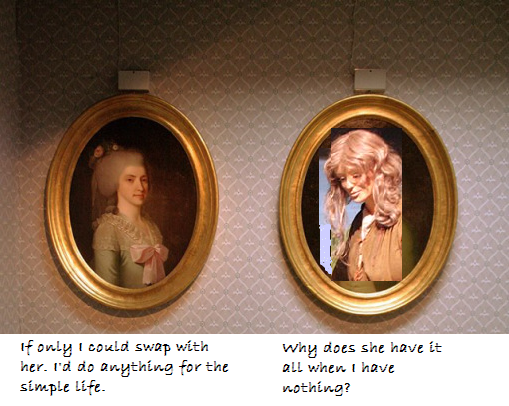
One way of doing this is to have the characters question their place in society.

Questioning

Categories
Books

2015 A to Z Challenge: P is for PERSON

A-Z Challenge 2015Should you write your story in the first person or third person?

As with any narrative, your decision must be based on the type of story you want to produce. Third person lets you (and the readers) see situations from different points of view. With first person, you concentrate on the viewpoint of just one character.

If you choose the first person, you need a credible reason why the character should tell their own story. You also need to be sure you’re able to be the ears, eyes, nose, heart and brain of a character whose experiences of life are necessarily very different from yours.

Being a Character

Categories
Books

2015 A to Z Challenge: O is for OVERWRITING

A-Z Challenge 2015I may have overwritten this point, but it seems to be one of the main facts about writing historical fiction. Information dumping is annoying, yet you need to set the scene and somehow make readers understand what life was like in those days.

So don’t include everything from your research notes, but do include enough for readers to imagine themselves there. Find the right balance.

Put Reader in Scene

Categories
Books

2015 A to Z Challenge: N is for NOTES

A-Z Challenge 2015As I’ve said before, sometimes, for the sake of the story, you have to deviate from known historical facts. When this happens, always include a historical note explaining it.

From Remarkable Creatures by Tracy Chevalier
Categories
Books

2015 A to Z Challenge: M is for MUSEUMS

A-Z Challenge 2015One of the best places to go to for some in-depth researching is a museum. You can find answers to your questions from the exhibits, on information boards, from computer screens, audio guides or human guides. Displays often show how ordinary people lived. Libraries contain books that provide specialised information and museum shops sell books and objects that can help you reconstruct the background to your novel.

Israel Museum: the Shrine of the Book, which houses the Dead Sea Scrolls
Jerusalem’s Israel Museum: the Shrine of the Book, which houses the Dead Sea Scrolls
Categories
Books

2015 A to Z Challenge: L is for LIST OF AUTHORS

I don’t want to compile a list of all authors who write/wrote historical fiction – just those I have read and those I feel I ought to read.

I haven’t actually read a lot of historical fiction.  These are the authors I remember having read:

  • Sue Barnard
  • Tracy Chevalier
  • Vanessa Couchman
  • Philippa Gregory
  • Carol Hedges
  • Gill James
  • Nancy Jardine
  • Pamela Melnikoff
  • David Rory O’Neill
  • D. B. Schaefer
  • Rosemary Sutcliff (It’s not her fault that her book put me off ancient history for decades!)

Which other authors should I read now? Any recommendations?