Author, editor, attempter of this thing called life. Social anxiety warrior. Re-Connections, a collection of short stories, published with Ocelot Press, 15/10/2025.
On our many trips abroad over the years, we have always been outsiders. Not so much in the UK, where most people don’t usually realise we’re not one of them, but most definitely in places like India, Ethiopia, Egypt and Japan, even when we dressed like the indigenous population.
India – Odisha – Bison Horn Maria village.
Dancing in Egypt
Ethiopia 2017: Wakonos Village.
We are Japanese, if you please.
In my childhood, I was an unwilling outsider. Like all children, I wanted to fit in but I never did.
However, my outsiderness was never as severe as Martin’s. He suffered in silence, learning behaviours that made life bearable as a child, but didn’t prepare him for being adult.
That all changed for Martin when he was sent to Japan to represent his company, not necessarily in a good way, although ultimately…
No, I won’t tell you the ending of Cultivating a Fuji, the new edition of which is out in one week: 19th January. You can pre-order it now from Amazon.
Nowadays, I’m happy to be an outsider. As an author, it’s helpful to get an outsider’s perspective. And I like being unique, rather than fitting some pattern. What a shame that children can’t see those benefits, or accept differences.
With the republication of my uplit novel, I’m posting an updated version of this post from 2019.
The marriage of uplit and Cultivating a Fuji.
What is UPLIT and why might it interest me?
If you look up uplit in a dictionary, you’re likely to find that either it doesn’t exist or it’s the past of the verb uplight: to illuminate from below. But google it and you’ll find uplit or up lit is a genre people are starting to talk about. And to read.
Possibly, there is a connection between those two meanings of uplit. It’s about lighting the world from below, from the ordinary people, rather than having to endure spotlights from above.
An uplit novel is one of kindness, compassion and empathy. But it doesn’t sugar-coat the world; it’s “about facing devastation, cruelty, hardship and loneliness and then saying: ‘But there is still this,’” says author Rachel Joyce. Uplit novels are books that embrace difference, idiosyncrasy and those who are either marginalised or overlooked by society.
Uplit is about broken people who become fixed. Three examples are:
Eleanor Oliphant is Completely Fine by Gail Honeyman
Three Things about Elsie by Joanna Cannon
A Man Called Ove by Fredrik Backman
Uplit gives us readers control. It makes us realise that we can change the world – not the politicians, the dictators or the superstars, but people like you and me. We can make the world a better place, each in our own small way, and the more of us who do it, the greater effect it will have.
Uplit helps us to develop empathy for marginalised groups: immigrants, LGBTQ people, people with disabilities or mental health problems. Sadly and weirdly, another group often labelled as marginalised is women. How can a group that consists of slightly more than half the population be marginalised? Yet, it is.
My novel, Cultivating a Fuji, to be republished through Ocelot Press on 19th January, focuses on a marginalised character who doesn’t have a voice, at least not a spoken one. He is not able to explain how or why or who he is. And most people naturally fail to understand and simply label him as weird. Fortunately, a few of those he meets attempt to delve deeper, to reach inside his fortified exterior, and they are the characters who give the novel its uplit flavour. He is the only person who can turn his life around, but he needs those kind, understanding characters.
An island in Switzerland.
“No man is an island entire of itself.” ~John Donne
If the novel helps to create more empathy in our fragmented world, I will be delighted. But most of all, Cultivating a Fuji is a good story. When I first wrote this post, I had to say that myself. Now I can quote from the reviews. Here are a few:
At the end of this post, there are bargains for you.
Most of what I know about Christmas comes from singing Christmas carols at school. The one I liked best (for the tune and the change of tune for the third verse) is called Three Kings from Persian Lands afar.
This carol was also useful when I studied music, because its first interval is a major sixth.
That was when I heard (and sang) about three kings who brought gifts to the “newborn king of the Jews”.
Now I hear that this took place on Twelfth Night, and that’s why Ocelot Press is holding a Twelfth Night Sale of ebooks.
Style and the Solitary is just one of those books, all of which can be found on Amazon – individually or by searching for Ocelot Press. Here are the others:
Saturday night folk dancing sessions in Jerusalem are run by Ofer Alfasi.
Ofer is very talented and diligent. He knows all the dances very well. He invests a lot of effort, demonstrating from the centre of the circle and watching to make sure we’ve learnt properly.
But he’s not good at blowing his own trumpet. He’s reticent about introducing the dances he choreographed. Fortunately, another Ofer, who also has a dance to his name, has been championing the first Ofer’s dances recently, and they’re really good.
I’m no better at blowing my own trumpet, but I need to say this, so please forgive me:
I recently reread my novel, Cultivating a Fuji, making very minor changes to it. And as I read it, I realised how good it is, and how much I’d love it to be read widely, firstly for enjoyment – the story mixes poignancy, humour, sadness and hope – and also to increase understanding in our crazy world.
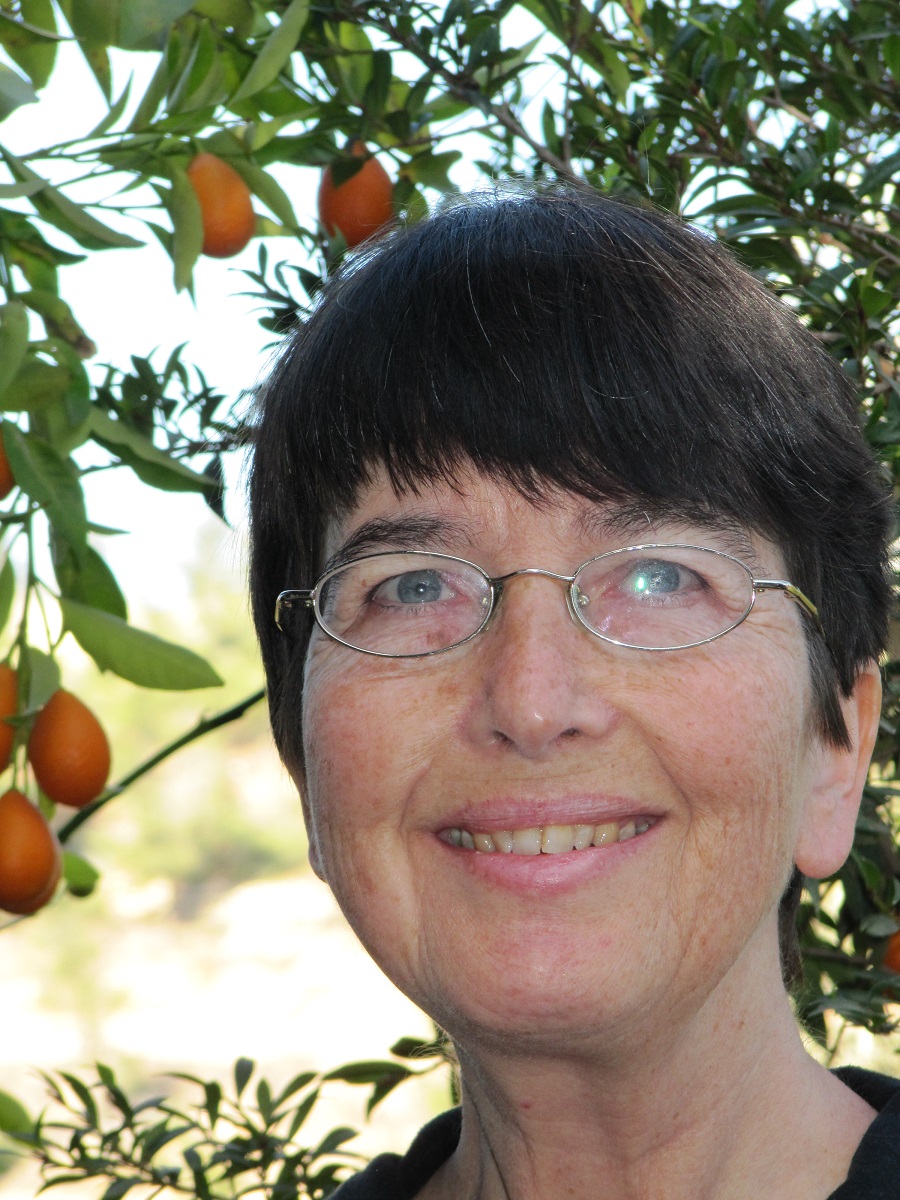
Apparently, this was my Facebook profile pic on this day in 2014.
To me, now, it looks as if I forgot to comb my fringe (bangs?). There are some better pics taken later that month.
Well, I’m not planning to change my profession to model of a certain age. But 1st January 2014 is significant because it’s the day I had my hair cut short, hoping for further changes that year. And they came, starting with a publishing deal with Crooked Cat for my romance novel (currently unavailable), Neither Here Nor There.
As I wrote to a friend on Facebook, that was the day when I shortened my hair and lengthened my expectations.
Do you have a significant first of January? Maybe yours is happening as I write. Do tell. And…
HAPPY NEW YEAR!
Watch out for my next post, which will be about an uplifting story.
To make up for my recent lack of attention to this blog, I’m posting thoughts about Chanukah for each day of the eight-day festival. Today, I’m talking about:
WOMEN
There are women associated with Chanukah. Their names are Hannah and Judith (Yehudit). That’s two women. Or maybe three. Or only one. I’ll explain.
Here’s a story about Hannah. It’s a story of sexual violation and hardly surprising, it seems to me, that it’s not told in kindergartens. But there is another story that’s told about Hannah.
Hannah witnessed all seven of her sons being tortured, one by one, and killed for refusing to bow down to an idol, or for refusing to eat pork – the story varies. Never did she beg any of them to comply with the commands in order to stay alive.
Is that the same Hannah or a different one? Then there’s Judith (Yehudit), who might also have been Hannah. She beheaded the Assyrian general, Holofernes.
Reading these stories makes me regard those ancient times as violent and dangerous. But are human beings really any better now?
We will continue to light candles and hope to bring light to a dark world.
Thank you for reading this series of posts. I wish you all a happy and healthy 2023. My plans for 2023 begin with republishing my uplit book, Cultivating a Fuji, through Ocelot Press. More about that soon.
To make up for my recent lack of attention to this blog, I’m posting thoughts about Chanukah for each day of the eight-day festival. Today, I’m talking about:
SONGS
Festivals are not only about eating. There’s also singing. Of the many songs associated with Chanukah, here are some that I particularly like.
I’ll start with the two songs recited every evening with the lighting of the candles, but with tunes I prefer to the ones normally heard. Well, I would have done, but I couldn’t find my favourite tune for Hanerot Halalu at all on YouTube. I had to listen to numerous versions of Ma’oz Tzur until I found the one I wanted:
Of all the other songs for Chanukah, this is the one I like the best, just because of the tune:
Here’s a folk dance that’s associated with Chanukah, although it’s really about lighting candles in general. You can see the “candles” near the beginning and at the end.
To make up for my recent lack of attention to this blog, I’m posting thoughts about Chanukah for each day of the eight-day festival. Today, I’m talking about:
GREETINGS
Salutations! On the day of this post, you’re either approaching the end of a holiday, or just starting one, or neither, but I expect most of my readers will be in the first two categories, probably the second.
How do I greet those? Well, I know most people say, “Merry Christmas,” but I’m a bit wary of that because I remember certain Christians are less keen on the word “merry” because of its association with alcohol which they don’t drink. So I tend to say, “Happy Christmas.”
Likewise, “Happy Chanukah” is fine and so is “Chag Sameach” which means “Happy Holiday” and fits all the festivals.
But on most years, Chanukah is over before Christmas begins, and people feel they need to wish me something in return to my greeting, so they wish me a happy holiday season or something of that nature. While that would work for Jews living in the diapora, who are caught up in the holiday atmosphere, it doesn’t really work in Israel where life continues as usual. A better answer would be, “Thank you.” Pretend I’m wishing you happy birthday.
This year, of course, there’s no problem. So, to most readers,
To make up for my recent lack of attention to this blog, I’m posting thoughts about Chanukah for each day of the eight-day festival. Today, I’m talking about:
SUFGANIYOT
They say that every Jewish festival can be summed up like this: They tried exterminate us; they failed; let’s eat. Chanukah follows the pattern.
Sufganiya (plural sufganiyot) is Hebrew for doughnut and shares its root with the word for sponge, due to its texture. Most are filled with jam. We prefer the ones with dulce de leche. Chocolate is also a popular filling. Some have exciting toppings.
Then there’s levivot (latkes) and other items from the various Jewish communities.
What all these foods have in common is that they’re fried in oil, linking them to the miracle, which I recounted on Day 2.
And yes, they’re all delicious and unhealthy. Fortunately, Chanukah lasts for only eight days!
To make up for my recent lack of attention to this blog, I’m posting thoughts about Chanukah for each day of the eight-day festival. Today, I’m talking about:
SEVIVON
Sevivon is Hebrew for spinning top. In Yiddish, it’s called a dreidel.
Don McLean wrote a song about it.
On the each of the four vertical sides of the spinning top cube is a single letter that stand for a word in a sentence:
נ – N
נס – Nes
miracle
ג – G
גדול – Gadol
big
ה – H
היה – Haya
was
פ – P
פה – Po
here
In other words: A big miracle happened here.
But that’s only in Israel. In other countries, the last letter is ש – Sh, standing for שם – Sham, meaning: there.
I’m not sure I’ve ever played with a sevivon, but there’s a tradition of playing with it while the candles are alight, usually trying to win chocolate money or low denomination coins.








 Miriam Drori, Author