Categories
Blogging

Taking Back My Blog

Disclaimer: this post is in no way political. (Well, that’s almost true.)

It’s time for a CHANGE. I’ve been feeling that for a while. It’s time to make that happen. Let me explain.

History of An’ de walls came tumblin’ down

The Point of the Blog

I began this blog over seven years ago when I was in a very different place. I wanted to write about writing and about social anxiety – especially social anxiety. It had been my ambition for some time to tell the world about this common but little-known disorder. I began anonymously, because I was afraid  of negative reactions. (In all seven years, I haven’t had any at all.)
ClosetGradually, as I became more confident, I added my first name, then my whole name. And with that came the other secret: I live in Israel – the place I felt everyone loves to hate. I don’t know whether that turned anyone off, but I still had readers after that revelation. And some readers even said they wanted to know more about what living in Israel is really like. So I added a category: Everyday Life in Israel, because I was scared to mention anything controversial.

Only occasionally – very occasionally – I felt I needed to write about something more serious. And I put it under Everyday Life in Israel, because that was all there was, even though the serious topic was far from ‘everyday.’

So, for me, as far as this blog goes, the walls did come tumbling down. In real life, well, that’s much harder, especially after nearly fifty years of SA.

Swerving Off the Path

Then, at the beginning of 2014, I received some wonderful news: my novel, Neither Here Nor There, was going to be published by Crooked Cat. I was thrilled… ecstatic. I’m still very grateful and happy that Crooked Cat accepted me and my novel.

Letters from Elsewhere
Farewell, for now

From that time, I became a member of a large and ever-growing community of writers. Many of those lovely writers hosted me on their blogs and I hosted them on mine. I started the series Letters from Elsewhere, in which characters sprang out of books to share their letters or to write directly to blog readers. It turned out to be popular among the writers.

During those two-and-a-half years, I hardly wrote about Israel or about social anxiety. I lost sight of the point of this blog and it became just another writer’s blog. Don’t get me wrong – there are many blogs that are solely about writing and are interesting, because their owners do it much better than I can. But I had a different purpose for starting this blog and it’s time to return to it – not as that frightened, anonymous individual who began it, but openly, as me: Miriam Drori, an author who lives in Jerusalem and who still lives with social anxiety, as do many others all over the world.

What’s New?

As well as social anxiety and Israel, I will talk about writing – my writing, starting with some very exciting news that hasn’t even made it onto this blog yet. I will also mention my fellow authors, at the end of each post, with links to their blogs and books.

With that decision in mind, I have changed some of the categories. That will be a problem for old posts, but it needed to be done.

There may still be guest posts; I’m hoping there will be. But guests will have to relate to Israel (or Jews) or social anxiety in their posts.

This decision isn’t set in stone. If you have any further ideas, do let me know and I’ll consider them.


Categories
Books Letters from Elsewhere

Letters from Elsewhere: Jacques Forêt

Letters from ElsewhereMy last visitor  in the series Letters from Elsewhere, at least for the time being, is also a first. He is the first character to return. He must have enjoyed it here, while all the others… no, let’s not go there!

Gendarme Jacques Forêt first appeared in October, when he shared excerpts from three letters he wrote to his father in Paris. Now he’s come to share three more excerpts from letters to his father.

1 Grande-rue
Messandrierre
February 2009

MessandrierreEntrancetothevillageHow’s maman?  Again, you didn’t say much in your last letter papa and I’m worried.  I realise how difficult it must be for you, but I just need to know that she’s all right.

Tell Francis that I send my best wishes for his new job.  It can’t be easy for him to be starting work again after such a long period of redundancy.  I’m sure Thérèse will be relieved.  When I was home at Christmas I thought she looked very tired and drawn.  And when you write back, papa, don’t forget to let me have all the news about those nephews of mine.

March 2009

…you’re right; the job’s not going so well.  Fournier is a difficult man to please and we don’t see police work in quite the same way.  I’m beginning to wonder whether leaving Paris for the rural gendarmerie was the right decision.  But then, I think about the easy pace of life down here, the more regular hours and I realise that perhaps it is not so bad after all.  And, of course I have what I could call my own ‘patch’.  The villagers have accepted me, I think and I seem to be the first person they come to these days, so that’s a good outcome.

April 2009

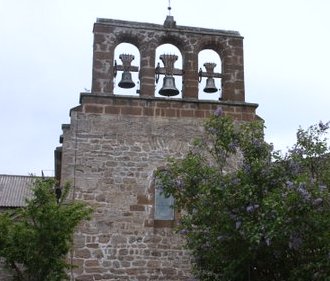
MessandrierreChurchBellTower…yes I’m travelling up to Paris on the 9th and I will be with you and maman for the whole of Easter.  I’m looking forward to it and I’d be happy to take the boys wherever they want to go.  It will be good to catch up with them and Thérèse as well.  Perhaps, whilst I’m there, you and I can take a look at the laptop that I brought you last year.  Keeping in touch would be so much easier, papa, if you would just use the computer.

You ask about Beth…well, there’s nothing much to say.  I haven’t heard from her recently.  I’ve thought about phoning her…but now I’m not so sure that she will want to hear from me.  If she comes back to Messandrierre, she comes back.  I’m no longer certain that she will.  At the moment I’m concentrating on my work…

Your only son,
Jacques

About Messandrierre

MessandrierreCoverArtSacrificing his job in investigation following a shooting in Paris, Jacques Forêt has only a matter of weeks to solve a series of mysterious disappearances as a rural gendarme. Will he find the perpetrators before his lover Beth becomes a victim?

But, as the number of missing rises, his difficult and hectoring boss puts obstacles in his way.  Steely and determined Jacques won’t give up and, when a new Investigating Magistrate is appointed, he becomes the go-to local policeman for all the work on the case.

About Angela Wren

Having completed a twenty-year career as a Project and Business Change Manager, Angela now works as an Actor and Director at Doncaster Little Theatre and has been writing, in a serious way, for about 5 years. Her work in project management has always involved drafting, so writing, in its various forms, has been a significant feature throughout her adult life.

She enjoys the challenge of plotting and planning different genres of work. Her short stories vary between contemporary romance, memoir, mystery and historical. She also writes comic flash-fiction and has drafted two one-act plays that have been recorded for local radio. The majority of her stories are set in France where she likes to spend as much time as possible each year.

***

Where is this blog going next? Watch out for the next post, which will appear on this very blog as soon as I’ve worked out the answer to that question.


Categories
Uncategorized

About the attack in Nice, France

The day after the attack, I saw tweets blaming Jews for it. I saw tweets blaming Israel for it. After voicing my response to no one but myself,

No, Mr Israel-hater. The fact that Israel hasn’t had an attack on that scale is not an indication that Israel caused the Nice attack. Firstly, Israel has more attacks than you know about because the so-called impartial media chooses not to mention them. And secondly, Israel has better security in place than France. The terrorists would love to damage Israel in that way.

I tried to ignore those.

I saw Theresa May, the brand new UK Prime Minister said she was “shocked and concerned” about the attack. Someone suggested “concerned” was too woolly a word and that others would think even “horrified” was not strong enough. I agreed with that and also wondered about the word “shocked.” It carries with it a sense of surprise and, unfortunately, I don’t feel at all surprised. France has suffered a number of horrific, devastating attacks and there’s no reason why these attacks won’t continue. Nothing has changed that might facilitate an end to the trend.

But I do feel extremely sorry that this has happened yet again. I feel sorry for the families of the dead, for the injured and for all peaceful citizens of France and of the world.

IsraelStandsWithFrance

Terrorism is an enormous problem everywhere. There are ways of trying to curb it. Doing nothing isn’t one of them.

Categories
Books Letters from Elsewhere

Letters from Elsewhere: Fra’ Roberto

Letters from Elsewhere

I’m delighted to welcome Fra’ Roberto to the blog today. He comes from the pages of The Ghostly Father by Sue Barnard and is sharing an excerpt from his diary. Take it away, Fra’.

FRA’ ROBERTO’S DIARY

Today we welcomed two new postulants to the friary. 

As always, I instructed Fra’ Amadeo that I wanted to meet them in person before I learned anything about their backgrounds.  I prefer to form my initial opinions of people purely on their own merits, and this is much easier if my mind is not cluttered by any preconceptions.

The new postulants are called Gianni and Sebastiano.  From their appearance, I divined that they are both around twenty years of age.  Gianni is short and slight, and despite his cheerful demeanour, he looked (to my mind at least) as though he bore the signs of a deprived and impoverished past.  Sebastiano, by contrast, is tall, solid in frame, and appeared well-nourished and well-cared-for, yet I discerned in him traces of an indefinable sadness.  These differences aside, both of them looked nervous and bewildered as they stood before me in their postulants’ robes.  But perhaps this is only to be expected; they stand on the threshold of a whole new mode of life, completely different from whatever they might have previously known.

One reason for such nervousness became evident during our brief conversation.  It transpired that Sebastiano had his own preconceptions about life in holy orders.  He was familiar with the Rule of Saint Benedict and the principles of poverty, chastity and obedience, but like so many postulants before him, he appeared to hold the belief that this would entail long periods of discomfort and self-denial. 

It continues to trouble me that those outside the cloister should have this unfavourable (and incorrect) perception of monastic life.  Sebastiano appeared genuinely surprised when I explained that we in the Order of Saint Francis do not condone unnecessary fasting, sleep deprivation or self-chastisement.  As our founder has decreed, our purpose is to serve – and none of these practices are conducive to full and proper service to God or to our fellow men. 

I sense that both of these young men, but especially Sebastiano, have come to us under difficult, perchance even troubled, circumstances.  Tomorrow I shall ask Fra’ Amadeo to tell me what he knows of their stories.  In the meantime, I shall say an extra prayer for each of them at Completorium.  May the Lord Almighty grant them a quiet night.  Amen.

I’ve read your story, Fra’. It’s so much more satisfying than Shakespeare’s version. I’ll never understand why the Bard thought to change it as he did…

About The Ghostly Father

tgf2bfront

Romeo & Juliet – was this what really happened?

When Juliet Roberts is asked to make sense of an ancient Italian manuscript, she little suspects that she will find herself propelled into the midst of one of the greatest love stories of all time. But this is only the beginning. As more hidden secrets come to light, Juliet discovers that the tragic tale of her famous namesake might have had a very different outcome…

A favourite classic story with a major new twist.

About Sue Barnard


Sue Barnard was born in North Wales but has spent most of her life in and around Manchester. After graduating from Durham University, where she studied French and Italian, Sue got married then had a variety of office jobs before becoming a full-time parent. If she had her way, the phrase “non-working mother” would be banned from the English language.

Since then she has had a series of part-time jobs, including some work as a freelance copywriter. In parallel with this she took several courses in Creative Writing. Her writing achievements include winning the Writing Magazine New Subscribers Poetry Competition for 2013. She is also very interested in Family History. Her own background is stranger than fiction; she’d write a book about it if she thought anybody would believe her.

Sue BarnardSue has a mind which is sufficiently warped as to be capable of compiling questions for BBC Radio 4’s fiendishly difficult Round Britain Quiz. This once caused one of her sons to describe her as “professionally weird.” The label has stuck.

Sue joined the editorial team of Crooked Cat Publishing in 2013. Her first novel, The Ghostly Father (a new take on the traditional story of Romeo & Juliet) was officially released on St Valentine’s Day 2014.  This was followed in July 2014 by her second novel, a romantic mystery entitled Nice Girls Don’t.  Her third novel, The Unkindest Cut of All (a murder mystery set in a theatre), was released in June 2015.

You can find Sue on Facebook, Twitter (@SusanB2011), or follow her blog here.


Categories
Books Letters from Elsewhere

Letters from Elsewhere: Marc

Letters from Elsewhere

I’m delighted to be joined today by Maximus Decimus Meridius, a.k.a. Marc, the lead character in Catriona King’s Craig Crime Series. He’s here to tell you who he is and what he does.

Hello.

My name is Maximus Decimus Meridius, commander of the Armies of the North, General of the Felix Legions…and if you’ve ever watched the movie Gladiator then you’ll know the rest. That’s not really my name, obviously; it’s Marc Craig. But I am Roman, on my mother’s side, and we are both fighting a war, in my case a war against crime.

The other half of my blood is Irish, from the north, but borders are irrelevant to me when I’m hunting for a murderer, and the only blood I’m interested in is the blood left at a crime scene, and the details of its DNA.

I’m a murder detective, a Superintendent now, a promotion I only accepted because I won my argument to stay on the street. That’s where the killers are. Not just in the alleyways or rough estates, but in the luxury offices and government buildings, the hospitals, farms, shops and universities. Murder is all around us, not from The Troubles now, because Northern Ireland finally has a hard won peace, but since the conflict ended ‘normal’ murders have risen, their motives the same as everywhere else in the world: sex, money and revenge. Without that triad I wouldn’t have a job, and I love hunting killers, but not as much as I hate the pain and mourning that they create.

The only way I get through it is to mainline coffee and by having the support of a brilliant team, most of whom have a sense of humour that if it ever started out as normal has definitely become warped through the years. They cope with my foibles and obsession when we’re on a job, and in return I try not to take my moods out on them, although I’m not always sure that I succeed.

Well, that’s it really. I have to go now because I have to case to solve: a hacker who infiltrated a lift’s operating system, plummeting it to earth and killing the two people on board.

Thanks for listening. Perhaps you’ll join me on a case or two?

See you then.BookCover5x8_BW_290_pathedJT2

Goodbye.

Marc.

About The Craig Crime Series

The Craig Crime Series is a police procedural series comprised of thirteen novels, with number fourteen coming in late autumn.

The novels in the Craig Crime Series are

  •  A Limited Justice
  • The Grass Tattoo
  • The Visitor
  • The Waiting Room
  • The Broken Shore
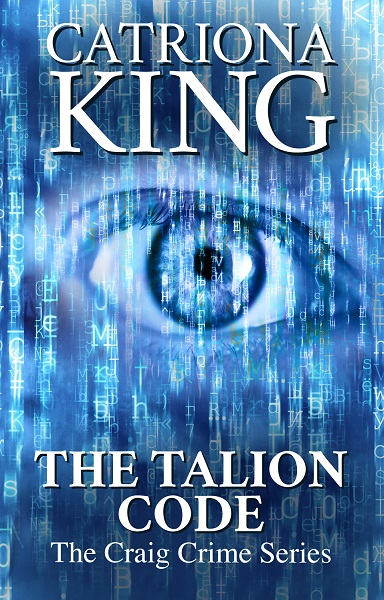
  • The Slowest CutTheTalionCode
  • The Coercion Key
  • The Careless Word
  • The History Suite
  • The Sixth Estate
  • The Sect
  • The Keeper
  • The Talion Code

About Catriona King

Catriona King is a medical doctor and trained as a police Forensic Medical Examiner in London, where she worked for some years. She has worked with the police on many occasions. She returned to live in Belfast in 2006. She has written since childhood and has been published in many formats: non-fiction, journalistic and fiction. She has also been a radio presenter.

ME_INBLACKJACKET (2).

.

Find Catriona’s books on Amazon US and Amazon UK.

Find Catriona on Twitter and Facebook.

.

.

.

.

Important Notice

Most Crooked Cat books are currently on sale for a short time. Find out more at the Facebook event or just toddle off to Crooked Cat’s page on Amazon.CrookedCatSummerSale2016

Categories
Holidays

Russia and its People

033C
Moscow

Despite the title of this post, I wouldn’t presume to pass judgement on this vast country or its 143.5 million people. We spent just a week there and stayed only in the two largest cities. All I can do is to share my experience of a very enjoyable week. In doing so, I have to make generalisations based on my very limited experience. But I’m aware that’s what I’m doing, so I hope that makes it “all right.”

Both cities are perfect for tourists and have plenty to see. They are also full of enormous parks – something I miss in my little country. We saw some of the famous sites.

106CPeterhofPalace
Peterhof Palace

The next three paragraphs were originally published on Tim Taylor’s blog.

As a child, I heard a lot about Russia. My brother visited and then studied there. My aunt and uncle visited. I heard about stern officials, supermarkets only for foreigners while Russians queued for meagre supplies, Jews in a synagogue too scared to talk to foreigners.

Russia is very different now. The two cities we visited, Moscow and St Petersburg, look like thriving European cities. Moscow’s Jewish Museum is modern and prominent; interesting, too.

A couple of things I saw fit with my impressions from the many Russians I’ve met here in Israel. One is that they smoke a lot. The other is that sometimes they have a strange way of thinking; things that are obvious to them are not for anyone else. In what other capital city do you exit the metro and spend half an hour looking for the train to the second biggest city in the country? No, this wasn’t a language problem because OH knows how to read Russian. There simply wasn’t a sign.

147CHermitageMuseum
Hermitage Museum

I have another observation about something – or rather some people – who I found lacking. In Israel, I’m used to seeing people of colour on the streets. There are Jews from Ethiopia. There are also Jews whose families are from Iraq, Iran, Yemen, etc. There are non-Jews from Africa who generally come for a limited time to make money. I’m also used to seeing people who are identifiable as Muslims.

I saw about one Muslim and two non-white people during my visit. I don’t think that shows there aren’t other populations in Russia, but only that they don’t live in the two largest cities.

One day, I would like to return to Russia and visit other places. Maybe I’ll even find out where my grandparents came from.

Categories
Uncategorized

Forty Years Ago

Remembering 4th July, 1976

The summer of 1976 was a special one for me. For starters, it was my last summer before I left England for a year-long programme in Israel with the potential to turn into a permanent move. I planned a party for friends and work colleagues. I was excited to be doing something new, in a new land, and looking forward to being close to the boyfriend who in time became my husband.

It was unusually hot in England  that summer. The heat wave was to last for about three months, although we didn’t know that at the beginning of July. In some areas, people would suffer from water shortages, though not in London, where I lived. I remember joining work colleagues for a day trip to Oxford. I remember relaxing on a punt and trailing my hand in the water.

The media was full of a special anniversary. Three-and-a-half thousand miles away, and further, across the Atlantic Ocean, something enormous was being planned in an enormous country I’d never visited – a country connected to us by language but one that seemed very foreign in many ways. The United States of America was about to celebrate two hundred years of independence.

Despite my distance from that place, in all senses, I would have been interested in the run-up to the special day. I would have been happy for those people over the ocean, but for one thing.

One unfolding event in another part of the world dampened my enthusiasm for everything else and kept my eyes glued to the television screen. In a disused part of the airport at Entebbe, Uganda, a little over a hundred people were being held hostage by four hijackers with the full support of the leader of that country, Colonel Idi Amin Dada. Apart from the French crew members who had elected to remain there rather than desert the hostages, those people were Jews or Israelis, following a selection process reminiscent of other such processes that took place not so many decades previously, and resulting in all the other passengers of the hijacked plane being released.

4July

On the morning of Sunday, 4th July, I woke up in time to turn on my transistor radio for the eight o’clock news, and was overjoyed to hear the first item. Israel had launched a raid on the old airport building at Entebbe and rescued the hostages. I raced downstairs to tell my father, who always got up early but never turned on the radio before my mother got up.

Throughout the day, we listened and watched as details became clearer. We also watched the Independence Day celebrations in that far off country. Suddenly they matched the way we felt: euphoric.

The following day, work colleagues congratulated me as if I’d personally planned the whole rescue operation. Times were different then.

***

On October 25th, I’ll be celebrating another fortieth anniversary – of my move to Israel. There might be prizes.

Before that, probably later this month, I plan to announce a change in direction for this blog. Keep watching this space.

Categories
Books Letters from Elsewhere

Letters from Elsewhere: Sam Longmore

Letters from Elsewhere

My visitor today is Sam Longmore, son of the main protagonist in The Calgary Chessman series by Yvonne Marjot. He’s going to have a lot more to say for himself in the next volume of the Calgary Chessman series (The Ashentilly Letters, forthcoming from Crooked Cat).

March 28

Montrose University

Dear Mum,

What do you mean, what does pollen have to do with archaeology? According to Prof. Heyes palynology is the most important and useful scientific tool available to archaeologists and climate scientists today. To be honest, he’s a nice old bloke and he really knows his stuff. He’s almost managed to convince me he’s right.

Palynology is the study of pollen grains, and it works like this: You take a core sample or two from your site of interest. That’s a cylindrical plug of soil about 2cm across and as deep as you can possibly get it to go. In a nice bit of old swamp you can get three or four metres of core.

Soil builds up slowly over time, and the different layers correspond to changes in the local conditions at the time that the soil was laid down. So you can get a pretty quick look at the development of the site by seeing if there are changes in the colour and texture of the soil layers. E.g. a layer of sand might indicate that the sea had covered your site for a while, or series of stony layers could mean that a river or glacier once flowed over the area.

Then you take samples of all the different layers and make them into microscope slides. (Remember to add the proper stain, as I will never ever forget to do again!) You take a look at your slides under the microscope and, hey presto, instant information.

If your slide has a lot of grass pollen, that could mean that there was a prairie-type landscape, although grass types mixed with certain herbs might mean a swamp. Birch pollen is cute. It’s a rounded triangle with a hole at each corner, and every time I see one it makes me think of an ocarina. Seeing lots of that indicates a seral stage, where trees and shrubs are beginning to colonise an open landscape. Hazel pollen comes later in the succession; it’s triangular with dimples, a bit like tiny prawn crackers. And if you see pollen that looks like a scrotum, that’s Scots pine, which tells you there was a proper forest near the site you’ve sampled.

What’s interesting is that pollen has given us evidence for a worsening of the climate at the end of the Neolithic. The spread of uncultivable land and the change in the distribution of cereal crops coincided with changes in human behaviour: more building of fortified structures, more warfare, and eventually the emergence of the Bronze Age, which was all about the new metal weaponry and the opportunity it gave for a few individuals to gain authority over large numbers of people.

That’s your pocket lecture for today. I promised to tell you a funny thing that happened. Well, it wasn’t funny at first. In fact, Niall and I had a little tiff. At least, I shouldn’t say tiff. I called it that to Niall’s face and he was really upset, because actually it was quite serious for a while.

You know my friend Pete, the one I play darts with? Well, we’ve been playing a lot. He’s the one who got me into rowing, too. A few weekends ago Niall turned up to see me, but I’d forgotten he was coming and Pete and I had gone to a darts match in town. We had a few drinks and then we rolled home in the early hours of the morning and there was Niall waiting for me. I felt really bad because I should have remembered it was his weekend, but Pete just laughed and told him not to be such a boring old fart, we couldn’t help it if he’d forgotten what it was to be young.

Anyway, I did say sorry. Niall was really angry though. He told me Pete fancies me, and he wasn’t so sure that I didn’t fancy him back. I told him not to be an idiot and he told me I was so innocent I couldn’t see what was under my nose and I accused him of being jealous. Well, I won’t tell you the rest. You can imagine, I’m sure.

We made up in the end, and we’ve been all right since, but I still had to worry about what I was going to do about Pete. Because he’s my friend. There isn’t anything else in it, but I can kind of see where Niall was coming from. After all, he doesn’t know what I’m getting up to the other twelve days of the fortnight, and he just has to trust me. I told him that I have to trust him too, but he says that’s different. Just because he’s been around a bit and has found the man he truly loves, doesn’t mean that I’m ready to settle down. So he’s afraid of losing me, but he’s also scared that if he holds on too tight he’ll lose me anyway.

Well, in the middle of all that going on Dr Rigby gets a new post-graduate student. At least, he really came to work with Prof Heyes, but Tim’s his official mentor since the prof is due to retire next year. Guess who it is: Rick Mason that we met on the Lismore dig. I bumped into him down at the Student Union, and Pete was with me so we invited him to come to darts with us the next Friday, and guess what? Now Pete and Rick are going out.

It’s great. It’s like I’m some sort of lucky charm for people, because I sorted out a fight between Becky and her boyfriend the other day and now they’ve got engaged. Then the next weekend Niall turns up and there’s Rick and Pete all over each other, snogging for Scotland. Honestly, could they at least get a room? So Niall and me are okay again.

Other than that it’s pretty boring here in student land. How’s the old homestead down under? Please tell me there’s a hunky man living next door and you’re having a wild fling? Or was I right all along about Ewan, and now you’re pining for him madly? I know – you’re my Mum and you’re never going to tell me. Are Nanna and Granddad okay? Your last letter was a bit scary – I hope the news is good. But anyway, let me know you’re all right. Miss you.

Lots of love

Your Best Beloved

Sam

About The Calgary Chessman Trilogy

 The Calgary Chessman

YMarjot TCC TBL picsDiscovery is Only the Beginning

On a windswept beach on the Isle of Mull, Cas Longmore is walking away from loneliness when she unearths a mystery in the sand. To Cas, torn between Scotland and her New Zealand home, the object seems as odd and out-of-place as herself.

Intrigued, she begins to search for its origins, thinking it will bring a brief respite from isolation. Instead, the Calgary chess piece opens the door to friendships and new hope. Her son, meanwhile, brings home his own revelation to shake her world.

The Book of Lismore

The Past is a Lost Book

While visiting the beautiful Hebridean island of Lismore, Cas and Sam stumble upon a new chapter of the island’s past. Once again, they are confronted by the ghosts of the distant past, and ancient tragedy combines with present danger as each is faced with a fresh challenge.

Archaeology provides a strong bond between Cas and her favourite men, but the mystery they uncover proves easier to solve than the ongoing conflicts in her personal life, and love seems as fragile and elusive as ever.

About Yvonne Marjot

YMarjot profile 1Yvonne Marjot was born in England, grew up in New Zealand, and now lives on the Isle of Mull in western Scotland. She has a Masters in Botany from Victoria University of Wellington, and a keen interest in the interface between the natural and human worlds. She has always made up stories and poems, and once won a case of port in a poetry competition (New Zealand Listener, May 1996). In 2012 she won the Britwriters Award for poetry, and her first volume of poetry, The Knitted Curiosity Cabinet, was published by Indigo Dreams Publishing.

Her archaeological romances The Calgary Chessman and The Book of Lismore are published by Crooked Cat Publishing.

She has worked in schools, libraries and university labs, has been a pre-school crèche worker and a farm labourer, cleaned penthouse apartments and worked as amanuensis to an eminent Botanist. She currently has a day job (in the local school) and teenage children, and would continue to write even if no-one read her work, because it’s the only thing that keeps her sane. In her spare time she climbs hills, looks for rare moths and promises herself to do more in the garden.

You can follow her work via the Facebook page and group The Calgary Chessman, @Alayanabeth on Twitter, or on the WordPress blog The Knitted Curiosity Cabinet.

Categories
Books Letters from Elsewhere

Letters from Elsewhere: Charles Omari Ondiek

Letters from Elsewhere

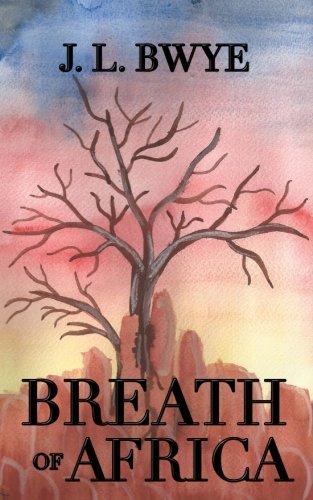
Today’s guest speaks to me from Africa and is brought by Jane Bwye.

SPEAKING FOR MYSELF

Thank you for having me, Miriam, and letting me come alive from the pages of Breath of Africa.


You ask me to speak for myself? Where shall I start…

My birth name was Charles Omari Ondiek and I was born in a remote village called Amayoni (which means birds) in a beautiful pocket of tropical forest in the western region of Kenya.

But I’ve used different names in the course of my tumultuous life. At Oxford, I was known as Charles (yes, as a student more mature than most, I graduated in Politics, Philosophy and Economics from that venerable university in the early 1960’s).

But when I returned home and started a career in journalism I had to cover my tracks for fear of being discovered by Mwangi, a Mau Mau oath-giver who’d placed a curse on my family. So I called myself Ondiek, a name which is shared by very many people. I still shudder to think of that curse, and the fear which consumed me. Mwangi caught up with me eventually, and I was left for dead. That is where the book left me, gasping to catch up with my only son, whose mother had already succumbed to the potent curse.

My son, half black, half white, was intensely angry because I changed my name again, and disappeared.

Oh – what a tangle of events and emotions we separately went through. And now in the evening of my days, I am Charles again, looking back and wondering what might have been – could have been, if…

But it’s no use looking back, however much we are tied to our grass roots. That’s why you should also read Grass Shoots, the working title of my creator’s next book.

Kenya, my country, continues to stumble along through the impediments of violence, politics and corruption. Is it making progress? What you think depends on who you are and what you mean by progress…

Thank you, Charles. I have read your story in Breath of Africa and was moved by it.

About Breath of Africa

51nyeeudxzlDedicated to the people of Kenya, BREATH OF AFRICA is a novel by Jane Bwye, retired businesswoman and intermittent freelance journalist who lived over half a century in Africa.

After the 2013 elections and the Westgate siege, Kenya moves on in hope, epitomised in the book, which means different things to different people; it can be read as a love story, a psychological thriller, or as an exploration into the interactions of people of different races. Superstition and Christian faith clash. And the stunning beauty of the country is a major character in itself.

Caroline is a privileged woman from the highlands, and Charles Ondiek, a farm labourer with dreams of Oxford. A drama of psychological terror is fuelled by Mau Mau oath administrator, Mwangi, but against the backdrop of Kenya’s beautiful but hostile desert, the curse is finally broken.

About Jane Bwye

janeJane has been a businesswoman and intermittent freelance journalist for fifty years, mainly in Kenya.
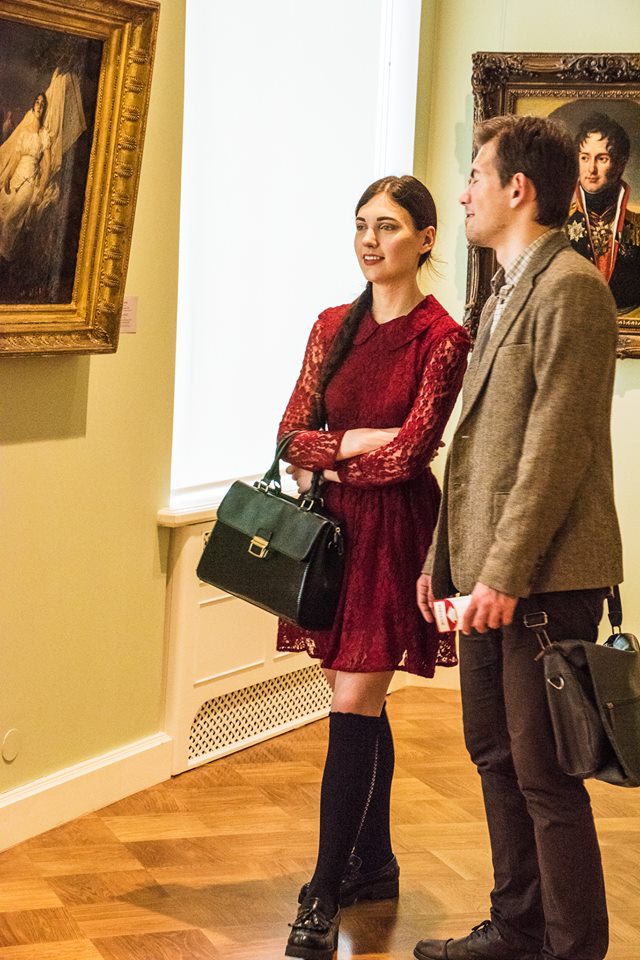
Six children and seven grandkids are scattered over three continents. She developed a taste for travel, and in 2001 “walked” round the world, buying a bird book in every country she visited. She has written numerous magazine articles and short stories, two newspaper columns and several newsletters. She co-ordinated a cookbook, “Museum Mixtures” in aid of the Kenya Museum Society in 1989, and has written a History in commemoration of the fiftieth anniversary of her local church, St. Wilfrid’s. Breath of Africa is her first novel, published in 2013. I Lift Up My Eyes, published in 2014, is a novella set in East Sussex.

Jane has managed her own Guest House and Riding School, and worked as a freelance Secretary. While home-studying for a degree, she started a consultancy business, providing human resource and computer advice, locum services for small businesses, and doing Organisation Reviews and Project Management for leading Management Consultancies in Kenya.

After graduation in 1995, she became Head of Computer Studies/IT at Hillcrest Secondary School, Nairobi for five years.

From 2002 Jane has operated her own consultancy in Eastbourne, UK, mentoring small business start-ups as an Associate of EDEAL.

Categories
Books Rhymes

Olga and Sasha

Just a bit of fun. Or is it?

StPetersburgHermitageGeneralStaffBuilding
St Petersburg: Hermitage General Staff Building (photo by David Drori)

From her window seat,
Using arms and feet
And an energy burst,
She gets out first.
Olga and Sasha
Belong in Russia.

First she is, through
The passport queue.
Then she waits for her case
Despite winning the race.
Olga and Sasha
Belong in Russia.

He stands with a pout.
The two hurry out.
No time for a joke.
They both need a smoke.
Olga and Sasha
Belong in Russia.

In the evening okroshka
With beef and vatrushka
Then out to Tchaikovsky,
Chekov or Ostrovsky.
Olga and Sasha
Belong in Russia.