Categories
Holidays

Ethiopia Tour: Transport

This is one of several posts about my recent trip to Ethiopia. The others, so far, are here and here.

Planes

Naturally, we flew from Tel-Aviv to Addis Ababa. In just four hours – less than the time it takes to fly to London – we landed in another world. This shouldn’t have surprised me. I’ve crossed borders to Egypt and Jordan, where differences are also obvious. But Ethiopia is more different; and more friendly.

There were also some internal flights. Security is tight. If you don’t like taking your shoes off, imagine having to do it twice before being allowed on a plane. We got to see some tiny airports. In Arba Minch Airport, the second security check was done by hand, reminding me of the not-so-good old days. A woman rummaged in my rucksack and brought out

freshones

“What’s this?” she asked. “It’s for wiping hands,” I replied, miming the action in case she was still in some doubt. She tried to open it by unscrewing the top – which isn’t how it works – but soon gave up. Some of the Chinese had walkie-talkies, which were taken away from them, hopefully to be returned after the flight.

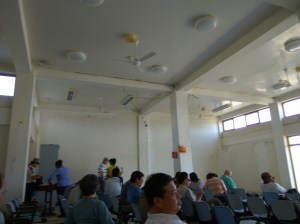
Then we sat in the airport lounge.

094arbaminchairport

On the left, you can see them rummaging. In the centre, a light hanging from the ceiling is tied to a column. Good thing the hall is “Under mentenance.”

All the flights were as comfortable as flights can be and seemed safe. The views were interesting and varied. This is an aerial photo,  although you wouldn’t know. It was taken before landing at Arba Minch.

32873824415_ac6daf684f_b
Photo by David Drori

Minibus

On good roads, we travelled mostly by minibus. The advantage was that the guide could tell us things on the way.

Jeep

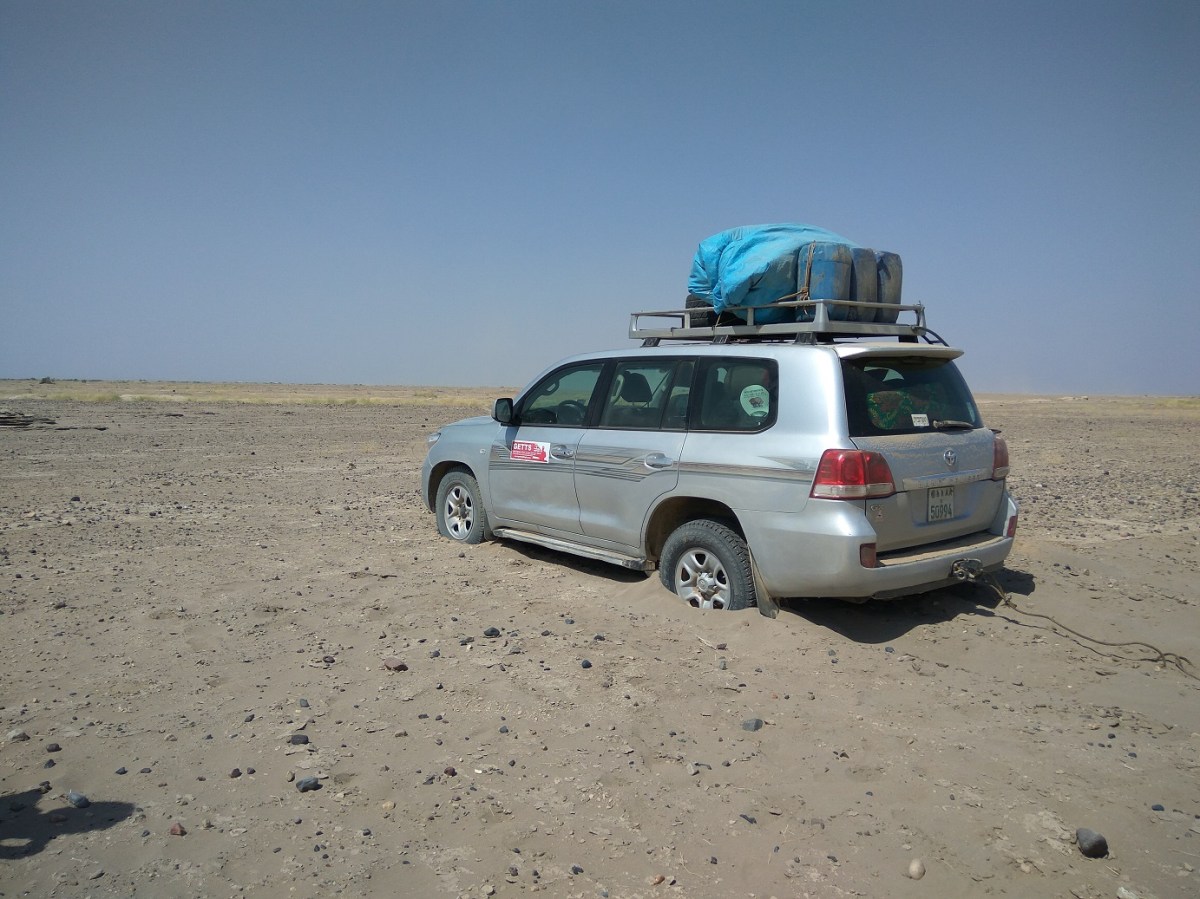
In the desert and other unpaved roads, we were separated into jeeps. They were nice and modern and the rides were as comfortable as they could be in the circumstances. Only once did a jeep get stuck in the sand.

008dannakildesertstuck

Light Railway

Addis Ababa has a light railway system. David (hubby), who is keen on trains, told the guide how he wished he could travel on one of the trains to get a feel for it. “Don’t wish too hard,” the guide replied. “Trains come about once every thirty minutes and they’re extremely crowded.”

Added on 15 March 2017. How did I forget?…

Boats

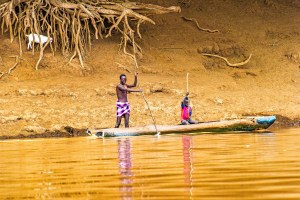
We were taken on two very different boat rides. The first was to cross the Omo River to reach Wakonos Village, which is arguably in Kenya. They gave us a choice of boats and we chose to travel like the natives in one of these:

Crossing to Wakonos village
Photo by David Drori

It wasn’t comfortable stepping in mud to reach the boat, squeezing in, knees raised, but we made it to the other side and our bottoms soon dried in the sun.

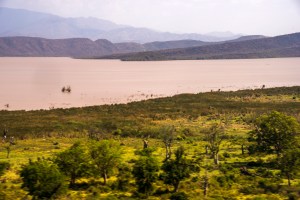
The other boat, from which we viewed crocodiles and hippopotamuses on Lake Chamo, was more comfortable.

084LakeChamo

Categories
Books

Winner!

Last Thursday, my friend and fabulous author, Sue Barnard, launched her new book, Never on Saturday, published by Crooked Cat. She held a launch party and I was delighted to be given a slot in it.

nos2bfront2bcover

During the slot, I announced a competition to win a signed copy of Neither Here Nor There. Contestants had to write a short piece that had some connection with Jerusalem.

Now I can announce the winner, who is…

Ailsa Abraham

Here is her entry:

JERUSALEM

Oh please don’t sing Jerusalem
While puffing out your chest
You don’t care about that place
Cos England is the best.

You make me sick when singing of
Our “green and pleasant land”
Not caring for a second
Of a city in the sand.

While you are belting out the song
The folks out there are dying
But if you shed a little tear,
It’s for patriotism you’re crying

No it was not “builded” here
Your grammar causes guilt
It was in the Middle East
Jerusalem was built.

So think when singing, or abstain
Please, my friend, you choose
But think, if you are singing
Of Arabs and of Jews.

 Isn’t that lovely? Thank you, Ailsa!

Categories
Holidays

Anecdotes from Ethiopia

I didn’t take many photos on our recent trip to Ethiopia. I generally left that task to my husband, who takes much better photos. That left me more time for taking notes. He needs to organise his photos and I don’t want to write about the trip in detail before that.

In the meantime, here are a few anecdotes:

Fast what?

In Bahir Dar (or Bahar Dar) Airport, we saw an interesting advertisement with several mistakes. One of them, in particular, caught our collective eye.

048bahar-darairportfastwifeconnection

Stuck…

…in the sand in the Dannakil Desert.

008dannakildesertstuck

Surprise

Modern amidst ancient in Lalibela.

025lalibelaatm


Lemon

There was an enormous run on lemons wherever we went. Lemon with tea, with soda water, with cola, with fish. The “…with lemon, please” always pronounced the o as an o, which is not what we native speakers do. Israelis tend to copy each other. (Perhaps that’s why some of us like folk dancing.) On a previous trip, it was ginger.

029benabebascottishrestaurantlemonplease

Honey

In one village, we saw honey that was produced on the spot. The local guide dipped his (unwashed) finger into the pot and offered it around the group, for anyone who wanted to lick it. No one did.

Rhythm an’ me

I thought this was a cute slogan. I didn’t realise I’d be in the photo, too!

083konsakantalodgeslogan


Categories
Holidays Music

The Black Country

Surprise! I’m back and ready to reveal all… within reason.

I’ve just returned from a wonderful and intensive tour of Ethiopia, which means: the black people. It’s an amazing country, full of archaeology and history, volcanoes and lava, camels, donkeys and birds of many sorts, religion and tribes, music, dancing, paintings and much more. Although we were busy every single day of the nineteen, I’m sure there’s plenty we didn’t see. In fact, there were two things we expected to see and didn’t. More about that later.

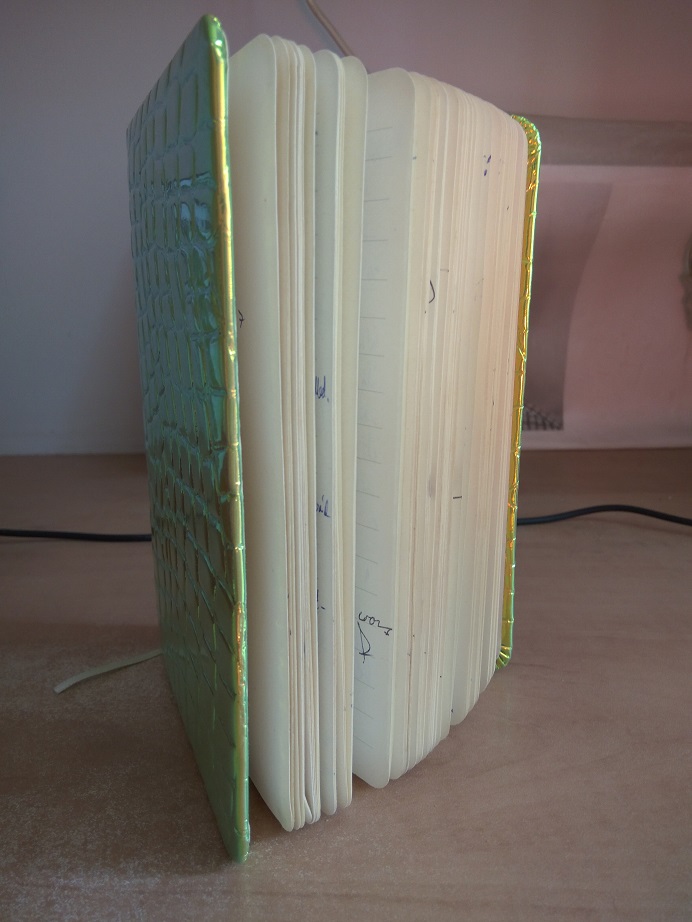
notes1

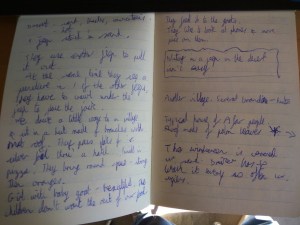
This is the notebook (given to me by my friend, Marallyn) in which I recorded activities, impressions, etc. Some of my scribblings are legible, I think. Some of them can probably only be deciphered by me. They were written while bouncing around in a jeep in the Dannakil Desert.

notes3

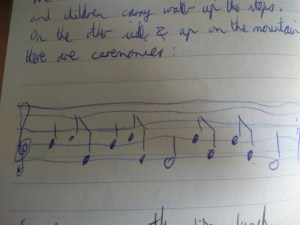
There’s even some music.

notes4

I plan to find a way of using it all – after writing everything else I have planned. In the meantime, when we’ve sorted out the photos, I’ll post some of them here.

What didn’t we see? The lava at Erta Ale as shown on YouTube. That’s because there was an eruption on the day we visited. (The previous eruption, we were told, was in 2005, although Wikipedia says 2009.) We climbed all the way up, but weren’t allowed to get near enough to see bubbling lava, although we watched the eruption from afar. We also weren’t allowed to sleep at the top, as planned, and had to walk down again the same night. We were lucky, though, because groups arriving after us weren’t allowed up there at all.

We also didn’t see a regular ceremony that includes bull jumping (that doesn’t harm animals, we were told) and dancing. The ceremony didn’t take place that week.

But the trip was amazing and I’ll definitely write more about it. Stay tuned…

Categories
Blogging

Double Encounter

Have you noticed how often this can happen? Something that just came up, either for the first time or after a long break, suddenly comes up again. There must be a term for this effect, but I don’t know what it is. Can anyone enlighten me? And is it really what it seems or is it just that these things happen all the time but only occasionally are we surprised by them?

We watched the film: Brief Encounter. It’s dated and in black and white, but we enjoyed it. Afterwards, we discussed the things that have changed since those days – money (units and amounts), steam trains, attitudes and the way the characters spoke. Did they really speak like that in those days? The answer, gleaned from other old recordings we’ve heard (as well as our memories), was a resounding Yes! We even remembered the term for such speech: received pronunciation.

briefencounter

The very next day, I saw that term again in this post by Jean Davison. The post, by the way, was written four years ago, but Jean has been thinking about its content recently, and I agree with its message.

Then I listened to The News Quiz on BBC Radio 4. The latest episode contains jokes about long delays on the UK’s Southern Rail. The panel speculated about how films might be different if Southern Rail were involved. Round the World in Eighty Days could be a race between someone going all the way round the world and someone traveling from Brighton to London. The Railway Children would be The Railway Middle-Aged People. And Brief Encounter? Well, they’d give up trying to get back to their families and stay together. If I hadn’t watched the film, I wouldn’t have understood that joke.

***

I’m about to do something for the first time. Probably the last time, too. And because of that, this blog will be quiet for a while. Bye for now!

Categories
Everyday life Extraordinary events Israel

Reflecting Reality

Social media, especially Facebook, I’ve found, has enormous potential to distort reality. It probably contributes to our surprise at the way recent votes have gone. Our friends on Facebook tend to be those who have similar views to our own. If we discover views we disagree with, we tend to unfriend their propagators rather than engaging them in discussion or just ignoring offending posts.

The result becomes very one-sided. My friends were almost totally anti-Brexit and anti-Trump. Yet both Brexit and Trump came to pass, surprising many, including me.

Now, in my little country, an issue has come up in which the views of my friends do reflect reality, although I don’t understand why. Israelis are split over this and so are my friends. I won’t unfriend those I disagree with. I want to try and understand. And sometimes they post views I do agree with.

Contrary to the complicated issues connected with this country, this one seems very straightforward to me. A soldier was found guilty of killing a terrorist after the terrorist was restrained and no longer a threat. For all ethical reasons, religious ones included, it should be clear that he committed a crime and must be punished. This article explains why.

What do some of my Facebook friends (and friends of friends) say against the verdict? Mostly that they, as mothers, have told their sons that their safety comes first and they shouldn’t hesitate to shoot if they find themselves in danger. They – the mothers – would rather visit their sons in jail than in the graveyard. Absolutely – I understand that, but that wasn’t the case here.

It would be awful if this led to violence, which has been threatened.

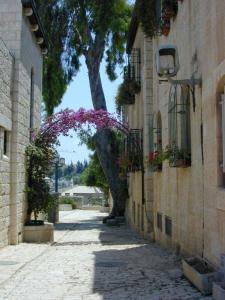
Yemin Moshe - view along Malki Street
A lane in Yemin Moshe

So to another, much pleasanter, article. It shows the Jerusalem I know and love. I’ve never seen the one most people imagine.

Categories
Books

The Great Big… Ahem


Guitar Heroes Flyer

.

.

Well, why not? We’re only half way through Chanukah. Relax in your favourite armchair with coffee, sufganiya (doughnut) and a Crooked Cat book, downloaded for only 99 somethings.

Mine are called Neither Here Nor There and The Women Friends: Selina. Just saying.

Categories
Reviews

Two Reviews

I’ve chosen two reviews – one for each book – to highlight here. Both are detailed and well-thought-out. Sometimes their authors understand the characters in different ways from me. That’s fine. When interpretations differ, that’s a sign of a book that gives readers plenty to think about.

Neither Here Nor There

Neither Here Nor ThereThis book had such meaning for me- it was, in simple terms, about feeling confined in a lifestyle you no longer agree with: that is no longer right for you. That’s Esty’s story, she doesn’t belong, and feels like an alien- an imposter- so, she decides to leave the haredi lifestyle (the lifestyle of an Orthodox Jew) and moves on. Of course, as expected, there are a number of hurdles she has to first get over: her family doesn’t seem very accepting, her community disapproves and then there’s Mark.

She likes Mark and, believes he may be good for her. But, will she fit into his secular lifestyle? She can’t hold his hand without flinching, she finds it wrong whenever they sit too close. But, funnily enough, it can’t be more right. She’s moving on, independently. But will she be able to keep going?

I liked this story, mostly because I could relate: I don’t always feel as though I’m free to take up certain things- because of my religion, though I’d say it was more to do with culture. And I sometimes battle with my thoughts, when I’m rebelling against what my culture’s principles dictate. It is difficult to leave behind, or ignore, your upbringing- it’s your community. Not only do you face isolation, but confusion- you hardly know what goes on behind the other side of the fence. How the other half live, and the author of this book acknowledges that.

I just had a slight issue with the main character, she was making a big life choice and it seemed weird that she didn’t know what she was getting herself into- then again, she was a young nineteen year old. But I felt that seemed to imply she was too naive to know any better. Then there was how she automatically fell for Mark, describing him to have been handsome and the connection between them. It was too fast, and seemed improper, a stark contrast, from her actual attitude towards men- as is revealed later when she is hesitant towards Mark’s touch. Though, aside from this- the book was a delightful, engaging, read.

This book reminded me of a poem I once read titled, ‘Presents from my Aunts in Pakistan’ by Moniza Alvi. Both this book, and this poem, represent the feelings of disillusionment, confusion of one’s identity and isolation, the idea of being an ‘in-betweener’, neither here nor there.

The Women Friends: Selina

CoverFrontThis book is perfect for fans of historical fiction, with LGBTQ characters as well as an honest depiction of the “just before” Hitler claimed Austria during WW2. It’s an important read for those reasons, as well. We can all too easily forget that it did seemingly happen “overnight” because these were emotions and opinions and feelings that had been brewing in the citizens minds well before Hitler came to power, before he stepped foot into Austria. He came to power because people were already agreeing with him about everything, including the final solution.

We start off with Selina Brunner who has decided to move from the countryside to Vienna in hopes of escaping the destitute conditions world war one left much of the European countryside suffering from. She has experienced sexual assault in her past, and this is immediately brought up as one of the reasons why she was so eager to move; she needed to put her past permanently behind her. She struggles with this at first and it is not until she meets Janika, a Jewish muse of Gustav Klimts, that she is able to put action to her feelings and she falls in love with Janika. Their love is not to be, and after Janika marries a man, Selina is forced to meet other people. We see Selina meet a national socialist woman, but while they live together for a time and she does introduce her to her parents, they do not fall in love nor do they stay together.

In the end, Selina makes a choice between staying utterly true to herself and how she identifies, or marrying a Roma man to help him escape.

The entire book, while simple in some areas that begged for deeper character exploration, is one that I would say is important to read, especially right now with the way politics seem to be turning. It is a lie to say that things aren’t already bad; that’s how things like the Shoah happen. Things that were already bad, were purposely ignored until they had no choice but to come to a head in a way so horrible, there are no words to express. The author does a wonderful job of showing that it wasn’t just Hitler that caused the Shoah to happen, but the people as well. And it was also people like Selina Brunner who helped others during this dark time so that it wasn’t their last; while this story is fictitious, the heart of it rings true from page to page.

Categories
Everyday life

My Christmas

What is Christmas for me, a Jew who lives in Israel and hails from the UK? What was it?

Up to age 11, I didn’t take a lot of notice of it. There were trees with lights behind lots of windows. Radio and TV were full of it. That was about all.

At age 11, I found myself suddenly immersed in a tradition I didn’t recognise. I soon learned the tunes of the carols we had to sing every day. I sent cards to friends because everyone did and my goal was always to fit in. And then there was that art lesson….

“Today, you can draw Christmas pictures.” The teacher (I think she was called Mrs Durell) seemed to think this would be fun for us. My heart sank. Fit in, said a voice from inside. “For the Jewish children, you can draw something from the festival you have at this time if you want, but I’m told there isn’t much to draw.” A general murmur of agreement arose. I kept quiet, although I knew this wasn’t true. We had drawn pictures of Chanuka at my old school. That’s how I learned to draw a cube.

chanukadrawings

Fit in, said the voice. But I don’t know what or how to draw for Christmas. Fit in. I looked over a girl’s shoulder and copied her tree.

At university, I remember singing carols, including one about beautiful feet.

Edit: I’ve been corrected by someone who remembers much more than I. I think I was confusing our “College Carol” with the aria from Handel’s Messiah. Here’s the right one. The only connection with feet is in the words stand forth on the floor, at which we would stamp our feet.

At work, there were drinks. There were always drinks. And the following conversation in the bar with one of the men:

“What are you doing for Christmas?”

“I’m going to a conference in Oxford.”

“That’s an unusual thing to do for Christmas. Most people spend it with their families.”

“Oh, we don’t celebrate Christmas. We’re Jewish.” It had taken three months for them to find out.

Then I moved to Israel and Christmas was reduced to watching the evening service from Bethlehem on TV. That’s really all I saw of it.

Nowadays, with social media, Christmas has become much more visible to me – at least the commercial aspect of it has. Also, due to Internet connection, I am able to listen to the BBC. The other day, on Women’s Hour, there was a discussion about stories behind children’s nativity plays. Within those stories, at least two girls had been told they couldn’t be Mary because they were Jewish and didn’t have blond hair. In the podcast, after the live programme, there was mention of the fact that Mary was Jewish and also that, since she lived in the Middle East, she probably didn’t have blond hair.

I am bemused by the assumption that, while I might not take any part in the religious aspects of Christmas, I will celebrate in some way because everyone does. No. Here, work and everything else carries on as usual, even on Christmas day. This year, though, will be slightly different due to the fact that it coincides exactly with the minor festival of Chanuka. As always, schools will be open on the first day of Chanuka, which is also Christmas Day this year (and also Sunday – the first day of the week here) and they close for the rest of the festival. Work continues as usual.

By the way, as I’ve mentioned in previous years, there are about fifty ways of writing Chanuka in Latin letters, but only one in Hebrew:

חנוכה

And here’s a comedy sketch I enjoyed. Comedian Elon Gold explains why Jews are better off without Christmas Trees. https://www.facebook.com/StandWithUs/videos/10154184787887689/

Whatever festival you celebrate at this time, I hope it’s happy and enjoyable and all you wish for.

Categories
Israel Reviews

Connecting Dots

I try to write reviews for the books I read. As an author, I know how important reviews are. I don’t usually post them on this blog. I only do that for special books, and the book I just finished reading is special. It’s also very brave, as not everyone would want to reveal such details. I found it fascinating and disturbing. I identified with it and totally disagreed with it. How can I have such disconnected thoughts, and how do I connect them? My review is below.

connectingthedotsofadisconnectedlife

This book is one I would not normally have read. The true story of a woman who goes though many traumas in her life, moves from America to Israel and back and forth, and through it all never loses faith in Jesus? That last part would have put me off. Not my thing. No.

But I read it. I read it because I know the author. I met her when we were both technical writers. I knew her as someone incredibly gifted in verbal communication. I didn’t read her technical documents, but I knew she’d won prizes for them. And I plucked up the courage to email her at a time when I was only starting to realise the advantages of electronic communication. There was also a face-to-face conversation. She was extremely kind and understanding. And that’s when she shocked me by telling me about her faith in Jesus. Where had that come from? I couldn’t make it out.

dvoraelishevaNow that I’ve read her memoir, I understand. I don’t agree, but I understand. I suppose that was my main reason for wanting to read it.

Yet, there’s so much more in this book, including plenty I can agree with and even empathise with. There are the difficulties over her name, accepting the associations a particular form of the name brings up. There are the games that the mind plays, or rather that we play with our minds: “I had cordoned off my memories, my feelings, my emotions, and sometimes even my actions.”

But then I read, “If I had space to tell you the stories behind these accomplishments, you’d see that these, too, were all divinely orchestrated from above.” And my reaction was: no, I wouldn’t. As with the stories you did have space to tell, I’d see that things turned out surprisingly well. But God can’t be proved. In my mind, you might be right and you might not. For me, it doesn’t matter which.

I also had a more disturbing reaction to this book, not so much in what was written as in what was not written. Because space clearly was not the only reason to hold things back. I’m sure, as in most memoirs, facts were hidden in order to protect other people. And I felt there was another reason. The author describes a trip to China. For her, a very important part of the trip involved telling people about Jesus. Her message was that belief in the Buddha is bad and they should instead believe in Jesus. I understand her reasoning. Someone who has such a strong belief also believes that she can help others by encouraging them to share her belief.

I find that worrying. Firstly, who’s to say that one belief is better than another? And secondly, while no mention of missionary activity in Israel was made, if it happened on a short trip to China where language barriers made it difficult, surely it must happen in Israel, where there are no such barriers and the sojourn is permanent.

And so, I have a big problem awarding stars to this book. On what level am I judging it? As far as the writing goes, it is excellent, in both vocabulary and content. I am overawed at the way the book jumps forwards and backwards in time, and yet all the pieces hold together so well. I’m also disturbed by the content. For me, it doesn’t provide proof of what can’t be proved; it hints of something almost sinister. But I will go with my first impression and the fact that I read the second half in one day.