That’s right. Jennifer is back on That’s Not Me!, so that you can get more of her humour and words of wisdom.
This time she’s talking about another of her books.
That’s Not Me! examines how much of our fiction is autobiographical and why some authors try to insist there’s no link between their fictional characters and themselves. If you want to take part, have a look here and get in touch. You don’t have to be a writer. Readers also have views!
Over to you, Jen.
Well, if it was ridiculous to claim there was none of me in Kate, from The Last Plantagenet? (you can visit that blog here), it’ll be even more stupid to make such a statement about Lexie, in Twelve Dates ‘Till Christmas! Although apart from one scene, this time, it really wasn’t intentional.
Without giving the game away, Callum and Lexie are those friends who happily go along to each other’s formal events as a ‘plus one’ when required. And not just personal events, but the occasional corporate function too. It’s for one of these evenings where Callum springs it on Lexie that he’s entered them into a “Mr and Mrs” quiz. To say Lexie is unimpressed is an understatement…
Having never played the game myself, I took to the internet to find some good questions, and set about writing the scene. When it came to Lexie, I figured, why not add a sprinkling of ‘me’ in there? After all, ‘write what you know’ again, right? And although the questions give a good insight into Lexie, they aren’t anything too plot-essential; it’s about demonstrating how well Callum and Lexie know each other, after all, not necessarily about the answers themselves. So, when it came to Lexie having won a Young Environmentalist of the Year Award (and still treasuring the plaque she got for it), or wanting to meet Sir David Attenborough, well, that’s all me. Plain and simple. Even Callum’s responses have an element of me in them – I’d love to visit Australia, but the arachnophobe in me keeps me anxious…
Other than that bit of the story though, I didn’t think I’d taken that much of myself this time around. Perhaps a love of a fun social life, and hanging out with friends on a regular basis. Alright, maybe being taken on a date to the Natural History Museum’s ice-rink would be incredibly romantic (or at least it would be if I could skate, which I cannot). And fine, there’s certainly something in the comment that Lexie owns mostly lively prints rather than wearing the calm neutrals of her friend’s preference.
In my defence (if I need any), Twelve Dates was my first foray into completely contemporary fiction, having spent the majority of my writing life either in the 1400/1500s, or slightly cheating and writing about characters who were from that era, even if they were contemporary ghosts in my stories. Is it any real wonder then, that I reached out to what I know best, i.e. me? Lexie has a number of characteristics / lifestyle aspects that I don’t have (see above, re NHM), so there’s clearly an element of wishful thinking in the mix too. But is there any real harm in that?
When it comes to writing about real people, there’s always a risk. If somebody who considers you a good friend sees themselves in your antagonist, there’s potential to damage the friendship there. Even if they recognise some of their traits in your leading lady, or romantic hero, who’s to say they’ll be happy with the situation? Well, the one person whose reaction you know with 100% certainty is your own, isn’t it? (Or at least, you’d hope so – if not, you’ve really only got yourself to blame…). It makes some sense then, to look to your own traits, experiences and motivations, where they’re applicable. For me, that might not sit so well when writing about women packed off to arranged marriages in the 1400s, but for a twenties/thirties (alright, late-thirties!) professional woman, navigating modern personal and professional dramas? I have pretty good first-hand knowledge of how that works. And I might as well use it.
I might think twice if I ever write a toxic, manipulative witch though – can’t go being too obvious with giving my personality away!
Blurb
Callum and Lexie are perfect for each other – at least, that’s what everyone tells them. But they’re just good friends, aren’t they? And neither wants to ruin the solid friendship that’s treated them so well since university.
But when an old school friend of Callum’s asks Lexie for a date, and passions overflow on a work night out, could it be the trigger to show each of them what they have been missing out on all this time?
With twelve weeks until Christmas, that’s a lot of opportunity for romance – and for misunderstandings…
Jennifer has been stalking dead monarchs since she was a child. It started with Mary, Queen of Scots, and now also includes Richard III. At least now it results in a story!
She won North Tyneside Libraries’ Story Tyne short story competition in 2014 (no dead monarchs, but still not a cheerful read), and has been filling notebooks and hard-drives ever since. Her Kindred Spirits series, following the ‘lives’ of some very interesting ghostly communities, is published by Darkstroke, and her historical / contemporary romances by Ocelot Press.
I’m delighted to host another author in the series That’s Not Me!
It’s Sue Barnard! Sue and I have been friends for a long time – ever since Sally Quilford brought us together in a romance workshop – romance writing, that is. But I digress. What about Sue’s fabulous stories? Are they based on real life?
THAT’S NOT ME
I’m often asked “Do you base your characters on real people?” My answer is always the same: “I wouldn’t dare. I’d have no friends left.” But I can’t deny that some of my characters have quite a bit in common with me.
Having said that, my books have elicited polar opposite reactions, ranging from “As I was reading that, I could hear you saying it” to “Where on earth did that come from?”
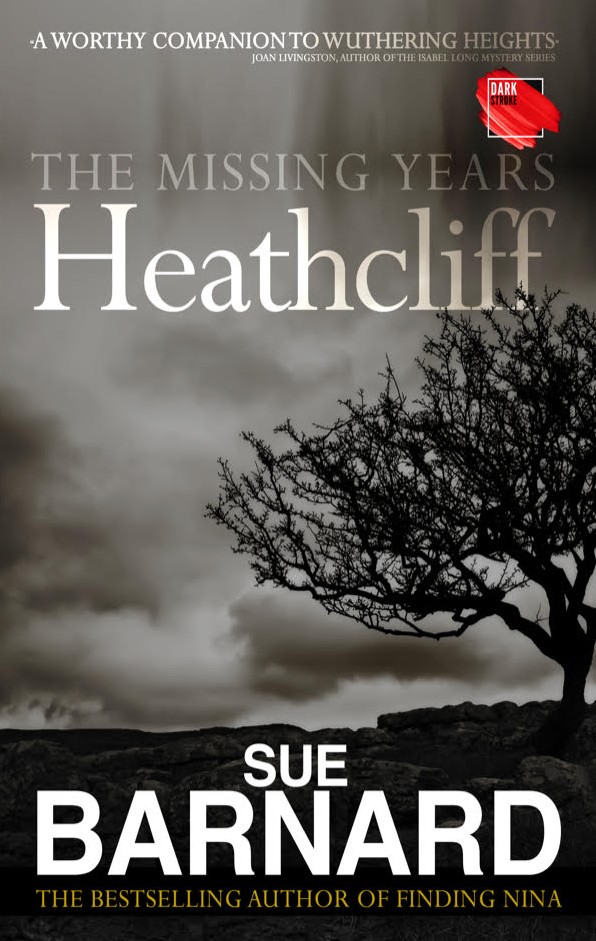
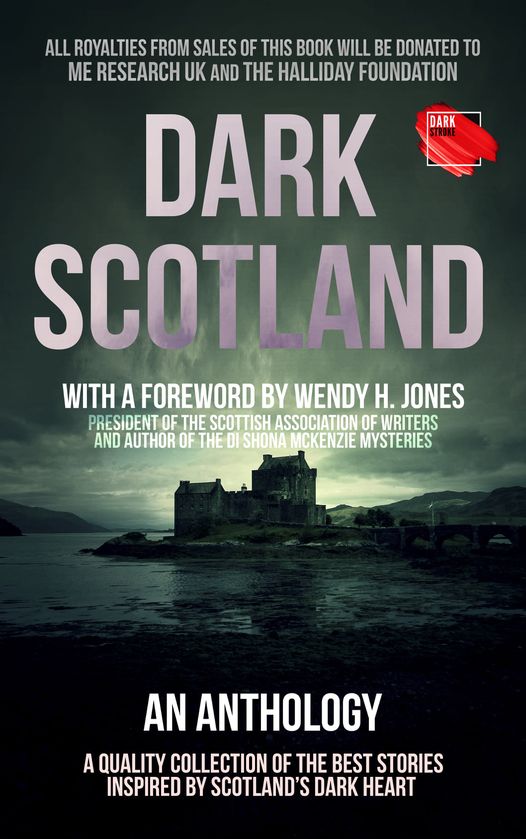
The latter has usually been in response to either or both of my novels which are based on existing works of literature: The Ghostly Father (Romeo & Juliet) and Heathcliff: The Missing Years (Wuthering Heights). In those cases I’ve had to get inside the minds of, respectively, a sixteenth-century Italian monk and an eighteenth-century anti-hero of unknown provenance. Neither of those left very much room for my own voice – but I didn’t find this to be a problem. For a large part of the time I felt as though the characters were in the room with me, looking over my shoulder and telling me what to write. This was certainly the case with my short story Doomed Youth – a fictionalised account of the meeting in 1917 between the war poets Wilfred Owen and Siegfried Sassoon – which can be found in the Darkstroke charity anthology Dark Scotland.
But there’s plenty of me to be found in the heroines of my other novels. Sarah in The Unkindest Cut of All is frequently the mouthpiece for some of my own views, whilst Emily in Nice Girls Don’t and Stella in its companion story Finding Nina both share quite a bit of my own experiences as an adoptee.
Some scenes in those books are based on real-life episodes from my own family history. These include the Somerset air raid tragedy, and the discovery that one character’s grandparents had celebrated their Golden Wedding a year early (anyone who can count up to nine should be able to understand why). And my memories of working in an independent bookshop gave rise to the following scene in Nice Girls Don’t:
“We had a man come in [to the library] and ask us to find a book which he’d seen somewhere a few months ago. He couldn’t remember the title or the author, and he only had a vague idea what the book was about. The only thing he could remember for certain about it was that the printing on the pages was blue.”
Some elements are definitely not based on fact – most notably Alice’s backstory. For the benefit of anyone who remembers my late adoptive mother (who died when I was nineteen), I must stress that the fictional character’s secret shady past is completely invented. That part of the story was derived from extensive research into the unforgiving attitudes towards illegitimacy in the years during and after World War Two. I am particularly grateful to the true-life tales portrayed in Sue Elliott’s moving and fascinating memoir Love Child (Vermilion Press, 2005), which I can highly recommend to anyone who wants to find out more about this grim and little-known side of British history.
Perhaps the story which is closest of all to the truth is the tale of the photograph, which is definitely stranger than any work of fiction. A factual account of this can be found here on my blog, whilst an adaptation forms part of the plot of Finding Nina. There are some things which simply cannot be made up…
BIO
Sue Barnard is a British novelist, editor and award-winning poet whose family background is far stranger than any work of fiction. She would write a book about it if she thought anybody would believe her.
Sue was born in North Wales some time during the last millennium. She speaks French like a Belgian, German like a schoolgirl, and Italian and Portuguese like an Englishwoman abroad. Her mind is so warped that she has appeared on BBC TV’s Only Connect quiz show, and she has also compiled questions for BBC Radio 4’s fiendishly difficult Round Britain Quiz. This once caused one of her sons to describe her as “professionally weird”. The label has stuck.
Sue now lives in Cheshire, UK, with her extremely patient husband and a large collection of unfinished scribblings.
…Nancy Jardine, multi-published author of novels set throughout the centuries, from Roman times to the present day, and fellow Ocelot Press member.
That’s Not Me! examines how much of our fiction is autobiographical and why some authors try to insist there’s no link between their fictional characters and themselves.
That’s Not Me!
Well actually, this one was…
I wrote a short story, some years ago, that was definitely about me as a child of around five years old. The incident might have been embellished just a tad since my memory of that time is disgustingly poor, though the gist of the story is definitely authentic. During the 1950s, in my birth city of Glasgow, Scotland, collections of foil milk bottle tops were made which raised funds for a charity for the blind. The story was about how my grampa, by then approaching 85, collected those foil tops for me to take to school. Similarly, on my own blog, there are a couple of short stories which are fictionalised tales about me in my primary classroom. Again, these are heavily embroidered to liven the events. Strangely enough, some of my best friends from that late 1950s era don’t remember the situations at all, or not quite as I remember them. Fickle memory makes for enhanced tales!
This definitely isn’t…
My Celtic Fervour Historical Series is set in a very distant culture of almost two thousand years ago during the Roman Iron Age in Britannia, so you will definitely not find me in any of those characters, or a reflection of any personal experiences I’ve lived through.
However, perhaps this novel does qualify? Just a little bit…
Topaz Eyes, my contemporary mystery/ thriller, is set mainly in fabulous European cities, with a few stops in the United States of America. Although there is nothing of me in any of the characters, there are definitely links to experiences I’ve lived through.
The plot of Topaz Eyes is essentially a treasure-hunt mystery, where third-generation cousins are brought together under mysterious circumstances to solve the disappearance of a collection of valuable emerald jewellery. The emeralds were once Mughal-Emperor owned but were scattered amongst family members around 1910. These ‘cousins’ have never met each other prior to the outset of the story. Some of them prove to be nice to each other though others are decidedly not, and there are those who have deadly intent. Strangely, there’s a cuckoo in the nest because Keira Drummond from Edinburgh is asked to join the hunt even though she’s not a family member.
Is this something that happened in my own family? Absolutely not. This part of the plot is wholly fiction but when I decided to widen the mystery globally, I used my own life experiences when I chose all but one of the locations used in the novel.
Spoiler Alert!!!
I lived in Holland from 1979 to 1981 and during that time I gave birth to two daughters. My children acquired a Dutch Oma and Opa (grandma and grampa) who were no relation to me at all but who became great friends of the family, and who visited us regularly when my husband and I returned to Scotland.
My elder daughter was a languages student who spent her final year of studies at the University of Heidelberg, a fantastic city which I re-visited while she was there. This is where I chose to begin Topaz Eyes.
And…apart from using those life experiences, Topaz Eyes is completely fictional!
p.s. During the writing of the novel, I thoroughly researched emerald jewellery – which I, regretfully, still do not own. Though, when I think about it, I once-upon-a-time owned a beautiful gold ring set with a stunning semi-precious stone. And…I extended my knowledge of a certain branch of art, but to give a spoiler on that research here would be way out of order!
Bio
An ex-primary teacher who published local history non-fiction projects, Nancy Jardine spends her retirement writing historical and contemporary fiction. All historical time periods appeal immensely but so far Roman Britain has been the focus of her published historical fiction. Victorian Scotland is the setting of her current writing-in-progress, an era which allows her to over-indulge in research, which she adores.
A frantic search for priceless jewels. Greed beyond reason. Shadowy characters, hired gunmen and treacherous villains abound.
A weird invitation to Germany involves Keira Drummond in an international hunt for a collection of extraordinary jewellery, originally owned by a Mughal Emperor. The last known owner was a Dutch family in 1910, but who can Keira rely on, since distrust is rampant among the living relatives that she meets?
Teun Zeger hasn’t met any of his third-cousins before his equally cryptic invitation to Heidelberg, and isn’t sure he’ll ever like them. Keira, is an altogether different matter, and she’s not his relative!
Who is the deadliest cousin, determined enough to hire thugs to tail Keira and Teun when they pair up to unearth the jewellery? And who has the ultimate mystery item that’s even more precious than the Mughal jewels?
Greed, suspicion and murder are balanced by growing family loyalty, trust and love.
Today, it’s my pleasure to introduce my third victim guest author in the series That’s Not Me!
It’s Jennifer C. Wilson, fellow member of Ocelot Press and author of several historical novels. Will she deny the obvious?
It would be pointless to pretend for even a second that there’s no hint of me in Kate, the leading character in The Last Plantagenet? In the second paragraph, I describe her ideal Saturday, and anyone who’s ever met me will absolutely recognise me in that description – hanging out at a castle, watching knights joust, eating and drinking medieval food – that’s heaven for me. Even more than that, and without giving the game away, some of the final scenes were written whilst I was in Leicester, having been lucky enough to ‘win’ a place at Compline for Richard III in the public ballot (I had only entered to be able to say I was part of the process).
Being in Leicester that weekend in March 2015 was an incredible experience; how many writers can say they’ve attended part of the funeral service for their leading man? Not that many surely, and even fewer amongst writers of historical fiction! Sitting in the hotel bar after Compline, I was scribbling intently in my notebook, desperate to capture every second of the day.
I’ve always been fascinated by history, and having devoured the fiction and non-fiction titles around the Tudors in Hexham library, decided that since I had no interest in going ‘forward’ in time, I’d try going ‘backward’ – that’s when I discovered Richard III. I think, like so many people, I’ve always been drawn to the underdog (another thing we learn early on about Kate!), and with Macbeth being another of my favourite monarchs, I felt an immediate sympathy to another king who had been lost in many ways to a fictional version of himself (written by the same man as Macbeth, nonetheless: Shakespeare has a lot to answer for!).
Years later, when I was trying to actually finish a new project for the first time in years, the idea of a timeslip novel came to mind. When I thought about who I would most like to go back in time and meet, the first answer which came to mind was, of course, Richard III. Given that I never thought I’d publish the story, I didn’t even try and hide myself particularly well in Kate’s character! After all, as the introduction to this blog series says, “write what you know” is the most common advice given to writers; since it was mostly done as a challenge to myself, that seemed the most obvious approach.
Now, obviously (sadly), I haven’t personally travelled back to 1485 (or at least, not that I remember…), but what I have done is visit many, many castles and other historical venues, and developed a healthy (honest) obsession with a certain King Richard. Based on those facts, the character of Kate wasn’t hard to conjure up, nor was working out how she (OK, how I) would react in particular situations, such as suddenly finding herself in the middle of a late-medieval kitchen, then face-to-face with her historical hero. So yes, there’s an element of wish-fulfilment in there, but then, another often-repeated piece of writing advice is that “if you don’t enjoy what you’re writing, how will your readers?” I certainly enjoyed writing The Last Plantagenet?, and there’s no offence taken whatsoever when somebody points out the similarities between me and Kate. I just hope others have as much fun when reading it!
Blurb
The fireplace hadn’t looked like a time-portal.
Nottingham, 2011
All Kate had wanted was a fun, relaxing day out, watching the knights jousting at Nottingham Castle. What she got was something quite different.
Nottingham, 1485
Storm clouds are gathering around the court of Richard III.
Transported from one to the other in a heartbeat, how will Kate handle life at the Ricardian court? And more than that, how will she cope when she catches the eye of the king himself?
Find out in this highly recommended story, set just prior to the decisive Battle of Bosworth.
Jennifer has been stalking dead monarchs since she was a child. It started with Mary, Queen of Scots, and now also includes Richard III. At least now it results in a story!
She won North Tyneside Libraries’ Story Tyne short story competition in 2014 (no dead monarchs, but still not a cheerful read), and has been filling notebooks and hard-drives ever since. Her Kindred Spirits series, following the ‘lives’ of some very interesting ghostly communities, is published by Darkstroke, and her historical romances by Ocelot Press.
It’s Friday, which means it’s time for the next post in the series That’s Not Me!, which examines how much of our fiction is autobiographical and why some authors try to insist there’s no link between their fictional characters and themselves.
Today’s post comes from Vanessa Couchman, writer of historical fiction and a fellow member of Ocelot Press. She brings up issues I hadn’t even thought of…
Now You See Me, Now You Don’t!
Thank you, Miriam, for inviting me to write about this thought-provoking topic.
I write historical fiction, in which the protagonist is usually a woman with barriers to overcome. The characters are often loosely based on real people who lived at the time. Since I don’t write contemporary fiction, people are less likely to see themselves or me in my novels. However, there are still some pitfalls to avoid.
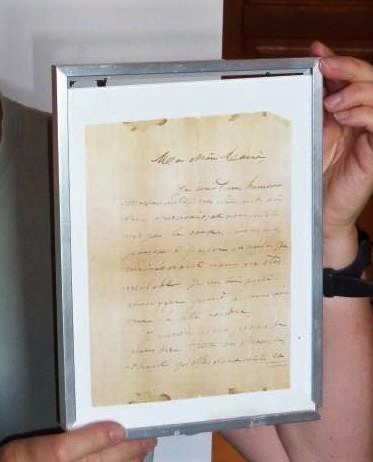
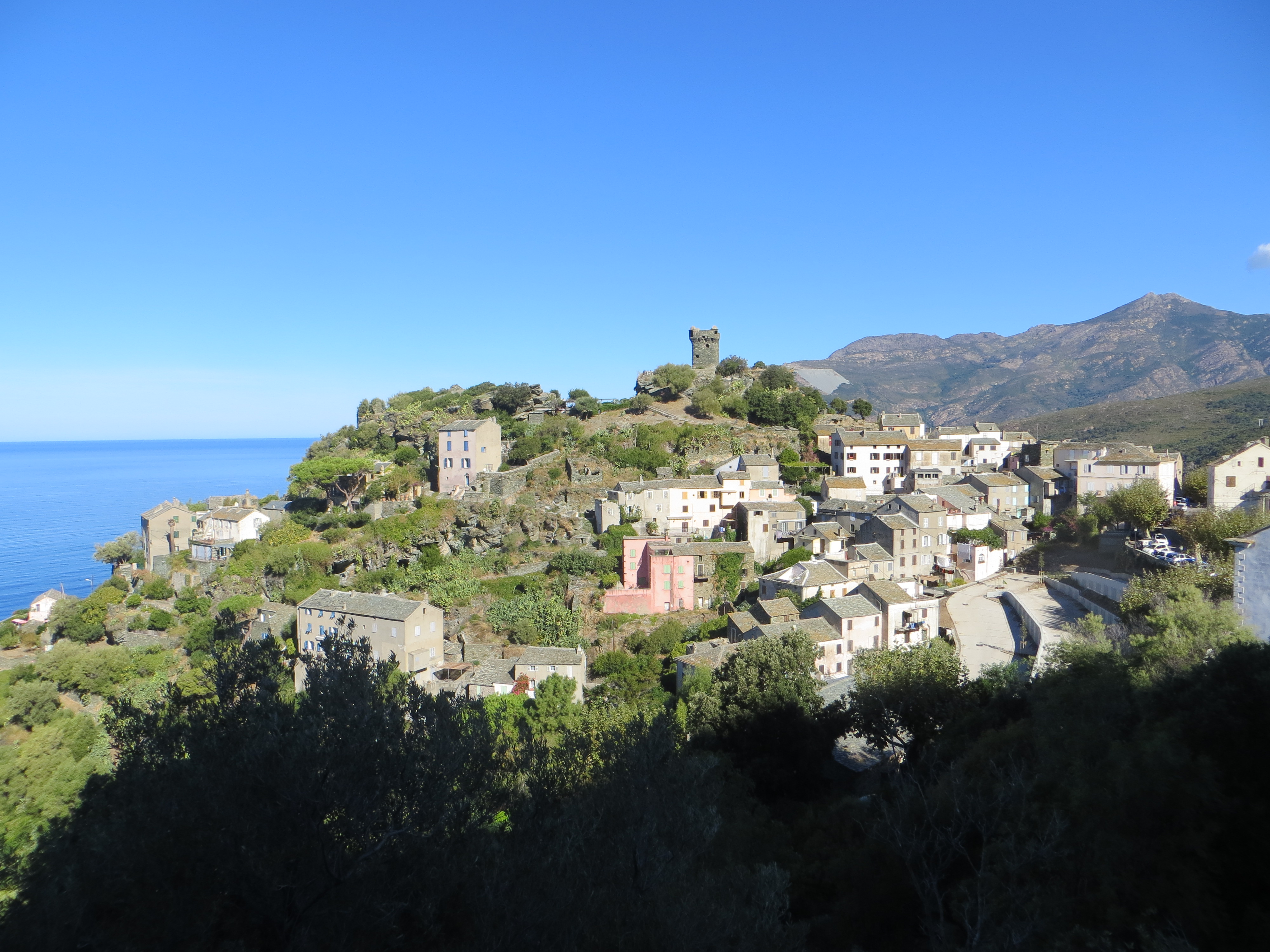
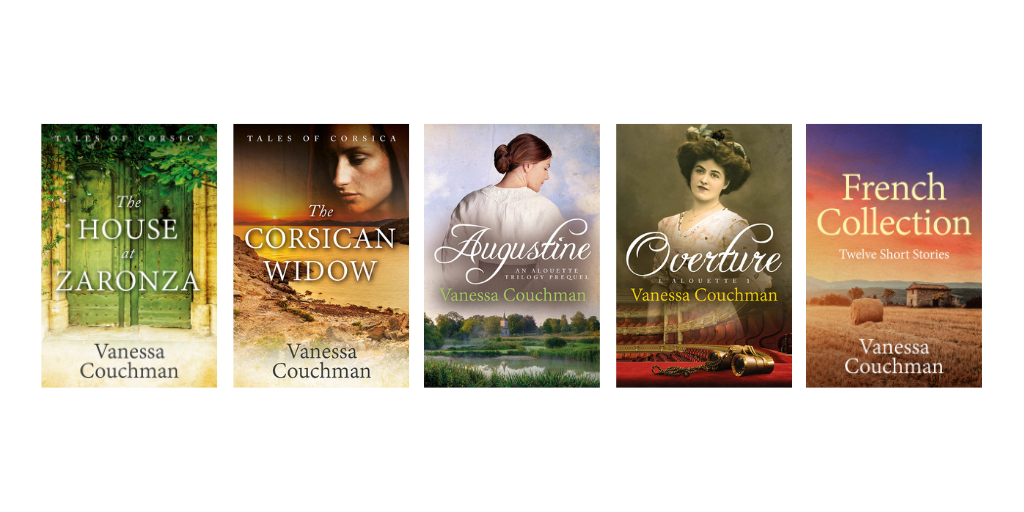
For example, I never use well-known historical figures as protagonists, although they might get a walk-on part. Why? First, I discovered the existence of the main characters in my Corsica novels, The House at Zaronza and The Corsican Widow, purely by chance. The first is recorded in letters hidden for over a century before coming to light. I used clues to her personality from those letters, but she is largely a made-up character. I found a brief reference to the second in an out-of-print history of Corsica, which supplied little detail. So she is a character built almost from scratch, too.
One of the letters that inspired The House at Zaronza
Nonza, the Corsican village that inspired Vanessa’s Corsica novels
Second, using completely, or mostly, fictional characters gives you carte blanche to develop the character without the constraints of knowledge about a documented historical figure. You still have to create a believable personality, e.g. how would this person behave in certain circumstances? Is their personality consistent with their upbringing/culture/society?
Do I put myself into my characters? Not deliberately, but it’s inevitable that I share certain traits with some of my protagonists. Also, my stories might include topics I know about. My protagonist in Overture, set in Belle Époque France, wants to become an opera singer. I’ve never had ambitions in that line, but I do sing, and I am very fond of music. In fact, she is loosely based on a real-life opera singer who also came from modest origins and rose to the pinnacle of her profession.
It’s difficult to prevent people who know you from thinking that your characters are reflections of you and your opinions. I wrote The House at Zaronza in first person point of view (POV). Although I don’t believe the protagonist resembles me as a person, one reader said, “I couldn’t stop identifying her with you.” Nobody else has said that. Even so, I have written subsequent novels in close third person POV, partly as a reaction.
On another occasion, a couple I know read my short story anthology, French Collection. A few of the stories contain curse words, which are in character with the protagonists. The couple said, “We thought, ‘That doesn’t sound like Vanessa!’” They clearly don’t know me very well! Seriously, though, their reading of the book was influenced by knowing me personally.
Ultimately, as a writer you have to accept what comes with putting your work out there, while being aware of the potential downsides.
Bio
Vanessa Couchman has lived in Southwest France since 1997. A self-confessed ‘history nut’, she writes historical novels and short stories, frequently set in France or on the Mediterranean island of Corsica. Quirky true tales often find their way into her fiction, and she likes nothing more than pottering around ruined châteaux or exploring the lesser-known byways of France. Vanessa is a member of the author collective Ocelot Press.
In June 2019, I posted excerpts from some of the reviews for the first edition of Cultivating a Fuji. They are copied below. If you haven’t read the novel yet, I hope you enjoy the experience as much as these reviewers did. (Apologies, the table doesn’t work well on a mobile phone.)
The new edition is out today with Ocelot Press. You can find it here. The paperback is on its way.
This is a very moving story. There are many other characters and the author does an amazing job of developing them all. It is an intriguing and thought-provoking story, a very different read with a dramatic twist at the end that had me rethinking assumptions I’d made when reading the earlier part of the book.
————————– [I] found it to be a moving description of social anxiety and just how traumatic a simple meeting can be for sufferers….yes there’s humour, but I found this to be a sad, poignant and thought provoking tale.
————————– This is a book that is guaranteed to stay with you long after you read it, it is a book that really makes you think with a few surprises along the way.
————————– Drori tells a story that can only come from a place of empathy and recognition. It says: “I know you. I see you. I hear you. I understand you.”
————————– Cultivating a Fuji is a very touching story about how hard it can be to fit in the crowd. Martin’s character is well-developed and even the minor personalities have their own past and problems in this wonderful story.
————————– What a beautiful book! This is a novel I will reflect on time and time again. This isn’t a ‘preachy’ read; rather it is one of understanding and compassion, and it has brought another excellent author into my world. Extremely enjoyable, providing much food for thought and, in my humble opinion, no less than five stars will do it justice!
————————– These scenes were deeply uncomfortable for me, as someone who experienced bullying, so I’d be mindful of how you feel, but it’s written sensitively and in a beautifully validating way. The thing I appreciated most about this novel was the way the author constructed a novel elevating social anxiety as a real, difficult thing. She either experiences the illness herself or has done her work. Where the Curious Incident with The Dog in the Night-time is a beautiful novel explaining autism, this, for me, is the work to explain social anxiety.
————————– Even when I wasn’t reading the book I found I was thinking about it and counting down to when I could pick it up again. This is an extremely important book for helping people gain an understanding of social anxiety, and just how deeply it can affect the entire lives of sufferers.
————————– Author Miriam Drori has written a compelling, heart-warming and thought-provoking UpLit exploration of loneliness and social anxiety. It was impossible not to be gripped by Martin’s journey, which begins with a business trip to Japan. And, then there’s a whammy of an ending that’ll leave you gasping…
————————– This is Martin’s story but there are multiple POVs to show not everyone thinks badly or only want to ridicule him. People want to help… they just don’t know how. Cultivating a Fuji is a good read lovers of contemporary and literary fiction will enjoy, and the twisty conclusion will linger long after the story’s end.
————————– Not everyone is without sympathy for Martin either but sometimes, as the book shows, people willing to help him (such as his boss, John) don’t know the best way to go about it or may inadvertently choose the wrong way. There were some great scenes full of humour… I really enjoyed the second part of the book in which we learn of Martin’s life following his return from Japan. Cultivating a Fuji does a great job of highlighting the experiences of those with social anxiety disorder and the challenges they face using the medium of fiction.
————————– I think the resilience Martin inadvertently learned from his school years, sets him on the path he takes, and propels the story forward into a new chapter in his life. There are plenty of moments of contrition in this book, and the feel is generally cathartic. I did find certain aspects troubling, as I think we are meant to.
————————– Miriam Drori has sensitively exposed the reality of living with social anxiety and the impact it has on all involved while creating a character I love in an uplifting, memorable novel.
————————– Miriam Drori, the author, is a marvellous storyteller, especially in her ability to create real and relatable characters. You will be charmed by the story of Martin and all the people he meets. In this book, even the minor walk-on characters are fully developed with fascinating back stories.
————————– It’s such a beautiful and thought provoking story. The first half of this book completely and utterly broke my heart then tenderly pieced it back together, filling it with so much joy. This is really an uplifting novel.
————————– I thought the choice to tell the story from both Martin’s perspective and the perspective of those around him added depth to the emotional landscape. The author seems to understand the challenges faced by those of us with social anxiety as well as the troubles that exist for others who try to interact with us.
————————– This is a very cleverly constructed novel and beautifully written. There’s no preaching or wallowing. The author presents the issue of social anxiety and gives us a view from both sides: from those who experience it and those who feel that it’s OK to put others down and induce such misery. There’s hope and despair, love and disappointment, achievement and failure, happiness and missed opportunities in this richly textured book that’s rewarding and poignantly enjoyable to read.
Excerpts from reviews of Cultivating a Fuji by Miriam Drori.
With the republication of my uplit novel, I’m posting an updated version of this post from 2019.
The marriage of uplit and Cultivating a Fuji.
What is UPLIT and why might it interest me?
If you look up uplit in a dictionary, you’re likely to find that either it doesn’t exist or it’s the past of the verb uplight: to illuminate from below. But google it and you’ll find uplit or up lit is a genre people are starting to talk about. And to read.
Possibly, there is a connection between those two meanings of uplit. It’s about lighting the world from below, from the ordinary people, rather than having to endure spotlights from above.
An uplit novel is one of kindness, compassion and empathy. But it doesn’t sugar-coat the world; it’s “about facing devastation, cruelty, hardship and loneliness and then saying: ‘But there is still this,’” says author Rachel Joyce. Uplit novels are books that embrace difference, idiosyncrasy and those who are either marginalised or overlooked by society.
Uplit is about broken people who become fixed. Three examples are:
Eleanor Oliphant is Completely Fine by Gail Honeyman
Three Things about Elsie by Joanna Cannon
A Man Called Ove by Fredrik Backman
Uplit gives us readers control. It makes us realise that we can change the world – not the politicians, the dictators or the superstars, but people like you and me. We can make the world a better place, each in our own small way, and the more of us who do it, the greater effect it will have.
Uplit helps us to develop empathy for marginalised groups: immigrants, LGBTQ people, people with disabilities or mental health problems. Sadly and weirdly, another group often labelled as marginalised is women. How can a group that consists of slightly more than half the population be marginalised? Yet, it is.
My novel, Cultivating a Fuji, to be republished through Ocelot Press on 19th January, focuses on a marginalised character who doesn’t have a voice, at least not a spoken one. He is not able to explain how or why or who he is. And most people naturally fail to understand and simply label him as weird. Fortunately, a few of those he meets attempt to delve deeper, to reach inside his fortified exterior, and they are the characters who give the novel its uplit flavour. He is the only person who can turn his life around, but he needs those kind, understanding characters.
An island in Switzerland.
“No man is an island entire of itself.” ~John Donne
If the novel helps to create more empathy in our fragmented world, I will be delighted. But most of all, Cultivating a Fuji is a good story. When I first wrote this post, I had to say that myself. Now I can quote from the reviews. Here are a few:
At the end of this post, there are bargains for you.
Most of what I know about Christmas comes from singing Christmas carols at school. The one I liked best (for the tune and the change of tune for the third verse) is called Three Kings from Persian Lands afar.
This carol was also useful when I studied music, because its first interval is a major sixth.
That was when I heard (and sang) about three kings who brought gifts to the “newborn king of the Jews”.
Now I hear that this took place on Twelfth Night, and that’s why Ocelot Press is holding a Twelfth Night Sale of ebooks.
Style and the Solitary is just one of those books, all of which can be found on Amazon – individually or by searching for Ocelot Press. Here are the others:
To make up for my recent lack of attention to this blog, I’m posting thoughts about Chanukah for each day of the eight-day festival. Today, I’m talking about:
WOMEN
There are women associated with Chanukah. Their names are Hannah and Judith (Yehudit). That’s two women. Or maybe three. Or only one. I’ll explain.
Here’s a story about Hannah. It’s a story of sexual violation and hardly surprising, it seems to me, that it’s not told in kindergartens. But there is another story that’s told about Hannah.
Hannah witnessed all seven of her sons being tortured, one by one, and killed for refusing to bow down to an idol, or for refusing to eat pork – the story varies. Never did she beg any of them to comply with the commands in order to stay alive.
Is that the same Hannah or a different one? Then there’s Judith (Yehudit), who might also have been Hannah. She beheaded the Assyrian general, Holofernes.
Reading these stories makes me regard those ancient times as violent and dangerous. But are human beings really any better now?
We will continue to light candles and hope to bring light to a dark world.
Thank you for reading this series of posts. I wish you all a happy and healthy 2023. My plans for 2023 begin with republishing my uplit book, Cultivating a Fuji, through Ocelot Press. More about that soon.









 Miriam Drori, Author