
I’m delighted to host another author in the series That’s Not Me!

It’s Sue Barnard! Sue and I have been friends for a long time – ever since Sally Quilford brought us together in a romance workshop – romance writing, that is. But I digress. What about Sue’s fabulous stories? Are they based on real life?
THAT’S NOT ME
I’m often asked “Do you base your characters on real people?” My answer is always the same: “I wouldn’t dare. I’d have no friends left.” But I can’t deny that some of my characters have quite a bit in common with me.

Having said that, my books have elicited polar opposite reactions, ranging from “As I was reading that, I could hear you saying it” to “Where on earth did that come from?”
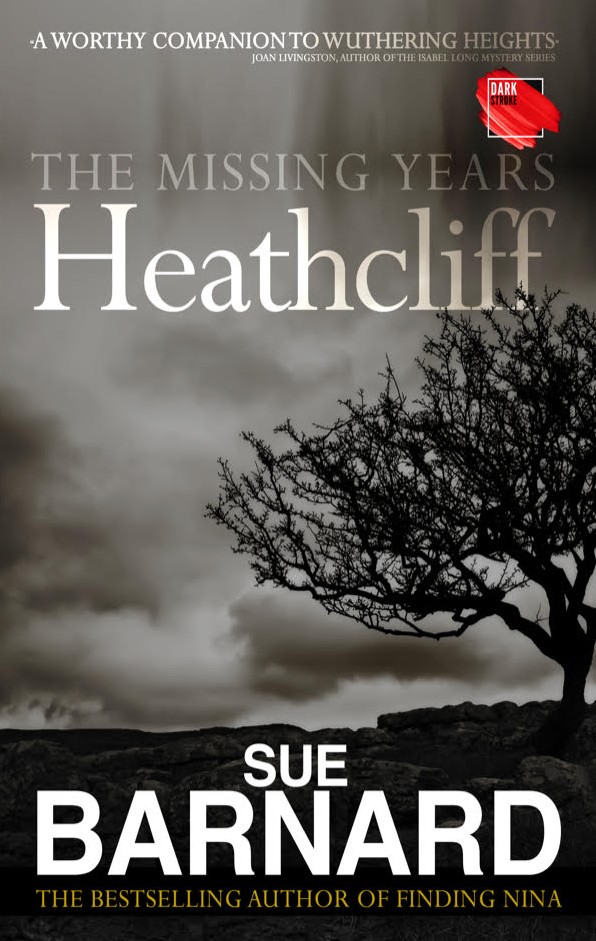
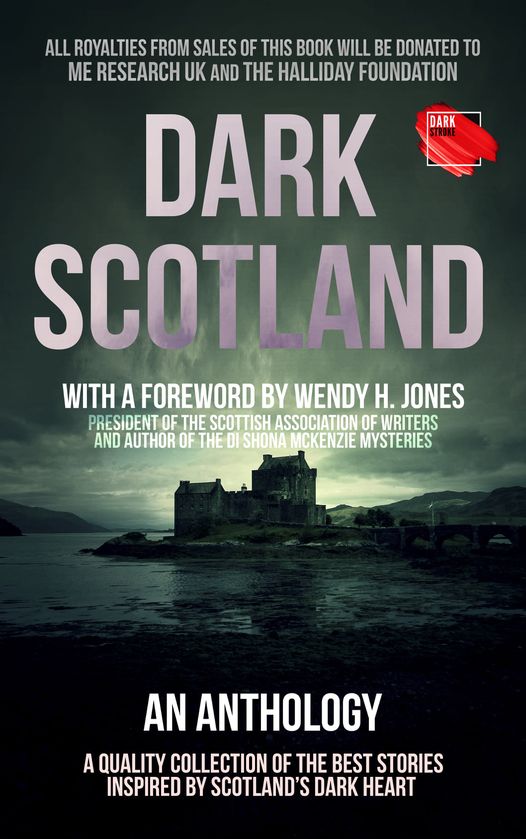
The latter has usually been in response to either or both of my novels which are based on existing works of literature: The Ghostly Father (Romeo & Juliet) and Heathcliff: The Missing Years (Wuthering Heights). In those cases I’ve had to get inside the minds of, respectively, a sixteenth-century Italian monk and an eighteenth-century anti-hero of unknown provenance. Neither of those left very much room for my own voice – but I didn’t find this to be a problem. For a large part of the time I felt as though the characters were in the room with me, looking over my shoulder and telling me what to write. This was certainly the case with my short story Doomed Youth – a fictionalised account of the meeting in 1917 between the war poets Wilfred Owen and Siegfried Sassoon – which can be found in the Darkstroke charity anthology Dark Scotland.
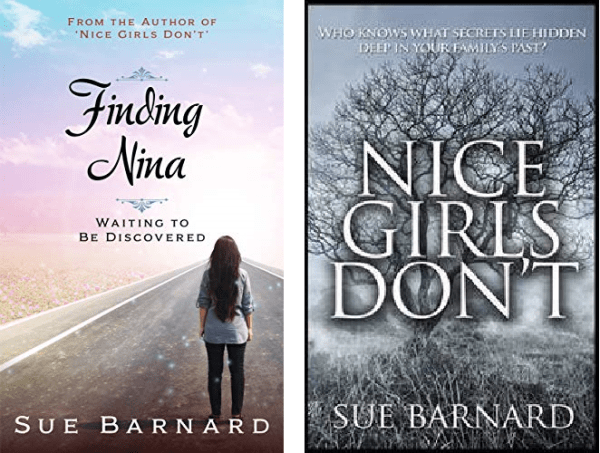
But there’s plenty of me to be found in the heroines of my other novels. Sarah in The Unkindest Cut of All is frequently the mouthpiece for some of my own views, whilst Emily in Nice Girls Don’t and Stella in its companion story Finding Nina both share quite a bit of my own experiences as an adoptee.
Some scenes in those books are based on real-life episodes from my own family history. These include the Somerset air raid tragedy, and the discovery that one character’s grandparents had celebrated their Golden Wedding a year early (anyone who can count up to nine should be able to understand why). And my memories of working in an independent bookshop gave rise to the following scene in Nice Girls Don’t:
“We had a man come in [to the library] and ask us to find a book which he’d seen somewhere a few months ago. He couldn’t remember the title or the author, and he only had a vague idea what the book was about. The only thing he could remember for certain about it was that the printing on the pages was blue.”
Some elements are definitely not based on fact – most notably Alice’s backstory. For the benefit of anyone who remembers my late adoptive mother (who died when I was nineteen), I must stress that the fictional character’s secret shady past is completely invented. That part of the story was derived from extensive research into the unforgiving attitudes towards illegitimacy in the years during and after World War Two. I am particularly grateful to the true-life tales portrayed in Sue Elliott’s moving and fascinating memoir Love Child (Vermilion Press, 2005), which I can highly recommend to anyone who wants to find out more about this grim and little-known side of British history.

Perhaps the story which is closest of all to the truth is the tale of the photograph, which is definitely stranger than any work of fiction. A factual account of this can be found here on my blog, whilst an adaptation forms part of the plot of Finding Nina. There are some things which simply cannot be made up…
BIO
Sue Barnard is a British novelist, editor and award-winning poet whose family background is far stranger than any work of fiction. She would write a book about it if she thought anybody would believe her.
Sue was born in North Wales some time during the last millennium. She speaks French like a Belgian, German like a schoolgirl, and Italian and Portuguese like an Englishwoman abroad. Her mind is so warped that she has appeared on BBC TV’s Only Connect quiz show, and she has also compiled questions for BBC Radio 4’s fiendishly difficult Round Britain Quiz. This once caused one of her sons to describe her as “professionally weird”. The label has stuck.
Sue now lives in Cheshire, UK, with her extremely patient husband and a large collection of unfinished scribblings.
Her books are published byDarkstroke and Ocelot Press
Blog Facebook Twitter Instagram Amazon Goodreads RNA
NOVELS: The Ghostly Father The Unkindest Cut of All Heathcliff: The Missing Years Never on Saturday (also available in French as Jamais le Samedi) Nice Girls Don’t Finding Nina
ANTHOLOGIES: Dark London Dark Scotland Dark Paris Dark Venice (All royalties from the sales of these anthologies are donated to local charities)
AUDIOBOOKS: The Ghostly Father
Why not join in?
If you want to take part in this series, as a writer or as a reader, you can find out more under That’s Not Me!.


 Sue was born in North Wales some time during the last millennium. She speaks French like a Belgian, German like a schoolgirl, and Italian and Portuguese like an Englishwoman abroad. Her mind is so warped that she has appeared on BBC TV’s Only Connect quiz show, and she has also compiled questions for BBC Radio 4’s fiendishly difficult Round Britain Quiz. This once caused one of her sons to describe her as “professionally weird”. The label has stuck.
 I had to make sure that the events of the two books coincided. The action of Nice Girls Don’t takes place over just a few months (from April to July 1982), but Finding Nina covers a much longer timespan – from 1943 to 2004. I had to write out a timeline of events covering the entire period, and work from that.
 Sue Barnard is a British novelist, editor and award-winning poet who was born in North Wales some time during the last millennium. She speaks French like a Belgian, German like a schoolgirl, and Italian and Portuguese like an Englishwoman abroad. She now lives in Cheshire, UK, with her extremely patient husband and a large collection of unfinished scribblings.
 Miriam Drori, Author