
It’s time for another guest post in the series, That’s Not Me!
That’s Not Me! examines how much of our fiction is autobiographical and why some authors try to insist there’s no link between their fictional characters and themselves.
Mary Grand and I first linked up online because of the similarity of our debut novels. Her book, Free to be Tegan, tells the story of a girl who grew up in a cult and then left it, showing the difficulties she faces on the outside. My novel, Neither Here Nor There, is about a girl who leaves the closed haredi community she grew up in. It’s not available now, but will hopefully be back one day in a new guise.
My knowledge of haredi life is only through observations from the outside, although a lot of the religious practices are familiar to me. How much did Mary know about living in and leaving a cult? And how similar are her main characters to her?
Thank you so much Miriam for inviting me on to chat about the fascinating and surprisingly controversial idea of whether or not any of the characters in my novels may contain ‘a bit of me.’

Now, I know writers who say that their characters appear to them fully formed, and, like strangers they met at a party, they slowly come to know and understand them as they write. The character was not inspired by themselves or anyone they know.
All I can say is that it’s not anything that has ever happened to me, and if I was to wait for my characters to just appear, I’d be waiting for a long time. When I start writing a new novel, I often begin with a setting, or a crisis. The main character in all my novels is always a woman, and I may start with a characteristic of myself, for example, my age, or a phobia I possess, to start building the character in my novel. Slowly a character will evolve, and she will become her own person. However, there will be something of me still there, maybe she will have a fear I understand, she may be my age, she may have been hurt in a way I can relate to. They are not a carbon copy of me, they become a person in their own right. However, I started with a feeling, a passion I understood, it helped me get under the skin of the person I am creating.
The first novel I wrote was called Free to Be Tegan, about a young girl trying to survive after being cast out of the cult where she’d grown up. Tegan leaves the cult to live with Welsh relations she has never met before, people who have no understanding of the cult.

The point of reference for me was the fear that had been instilled in Tegan during her time in the cult. I was brought up in a strict religious sect and have had to unpack some of the damage done by the teachings I received as a very young child. I understood the psychological problems this background may give Tegan, the hyper vigilance and panic attacks that may result. However, Tegan was not me, this was not an autobiography. The situation she went to was completely fictional, as were the people she met, the romance, the mystery and secrets she became embroiled in. I was able to write authentically about her inner life, which for me was a very important part of the story. Understanding this helped me imagine how she might cope with the situations she faced, but it was important that I wrote how Tegan not I would have reacted.
On a slightly lighter note, I am embarking on a murder mystery series where the central character is Susan Flynn. The parts of Susan that come from me are her age – she’s in her early sixties, her love of music, being a mother and her joy at living on the Isle of Wight. I have also given her my feeling that older women like myself are sometimes denied a past, and so she reminds her family and friends of the passions of her youth, her hurts and her achievements. She was at Greenham Common Peace Camp, fostered children and cared about a range of causes. Although I never did some of these things, the principal of reminding people she had an active and vibrant past was important to me. Again, her present situation is very different to mine. Susan is recently divorced and for the first time in forty years she is living alone. She is however fiercely independent and, in many ways, going back to her roots. She finds again her need to fight for justice, which in turn leads her to solving crime, in particular, murder.
I would say that starting with familiar elements to someone’s characters helps me understand them, keeps me grounded if you like. It is only a starting point though – a springboard from which I fly off into the unknown.
My Bio
I live on the Isle of Wight with my family. Before coming to the Island, I worked as a teacher of Deaf children in Hastings and Croydon. I grew up in Wales and speak a smattering of Welsh, my first few novels are set in Wales.

I began my writing career self-publishing three novels, Free to Be Tegan, Hidden Chapters, and Behind the Smile, alongside two anthologies of short stories, Catching the Light and Making Changes. I am now very excited to be working with Boldwood Books and to date have had four novels published with them – The House Party, The Island, Good Neighbours and Death at Castle Cove, and these are all murder mysteries set on the Isle of Wight.
All my books are available in eBook and paperback, are on Amazon, and available to order from libraries and bookshops.


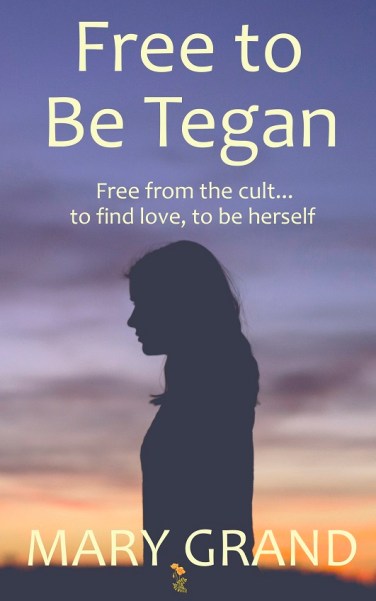 ‘You are dead to us.’
 Mary Grand was born in Cardiff and has retained a deep love for her Welsh roots. She worked as a nursery teacher in London and later taught deaf children in Croydon and Hastings. She now lives with her husband on the beautiful Isle of Wight, where she walks her cocker spaniel Pepper and writes. She has two grown up children.
 Miriam Drori, Author