I can think of several options that I’d better not repeat here. But the event that brought about this post is that I was thrown off Facebook, with no reason given or any route to appeal the decision.
I have been on Facebook since 2009, if not earlier. (I have no way of knowing any more.) All my history, memories, friendships, groups, photos have vanished in one fell swoop. That’s a huge part of my life.
But, you know, it’s not the end of the world. I can think of many things that could have happened to me that are much worse than this. I could have:
suffered an accident and been rendered unable to walk or dance
suffered a robbery
suffered a loss* (That happened six months ago; I certainly wouldn’t want a repeat.)
suffered many other events I don’t want to dwell on
The worst thing I can think of at the moment is that I could have been kidnapped by terrorists and held for over five months (so far), suffering hunger, torture, rape and more.
One happier piece of news is that I’m moving from Jerusalem to Tel Aviv. I’ll have to change the tagline of this blog. I will post more about this after the move.
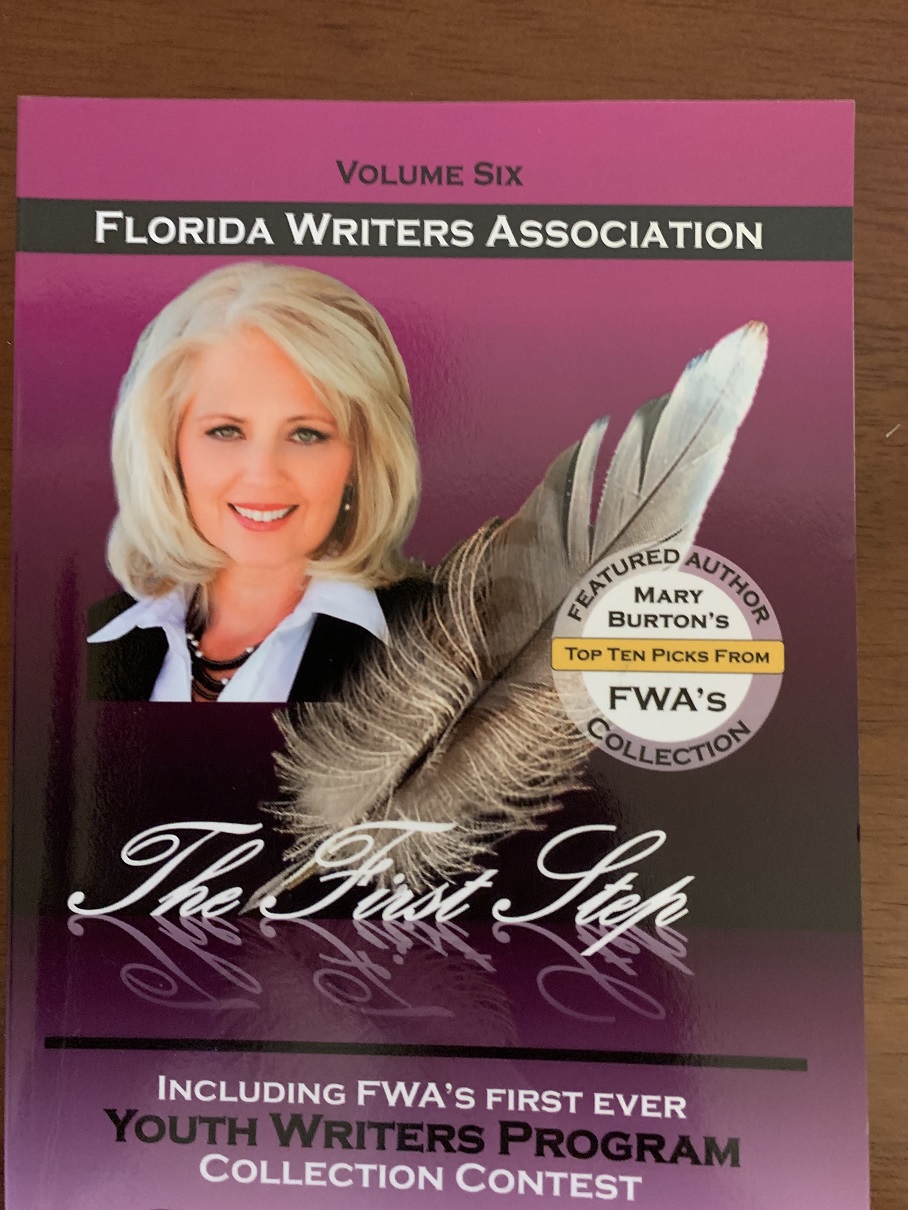
* On the subject of loss, I have an essay in this new anthology of poems, stories and essays:
The author Joan Livingston called my contibution a “Great piece of writing!”
I’ve given this post a different title, but in a way it’s part of That’s Not Me! Yes, I think it can include the banner.
In a recent guest post, Ritu Bhathal wrote about the problem of not identifying with the protagonists of the stories she read. That was what led her to write her own stories about British Asian characters.
I found myself identifying with what she had to say. The stories I’ve read have not often included Jewish characters, and almost never British Jews.
“Does that matter?” you might ask. I’m sure it does, especially for a child, growing up and trying to make sense of her world.
The characters in the novels I read as a child never struggled to fit in due to being Jewish. They never worried if they were saying the “correct” thing, whether to non-Jews or to other Jews. They never had to forgo an activity because it didn’t chime with their religion. They seemed to live such uncomplicated lives.
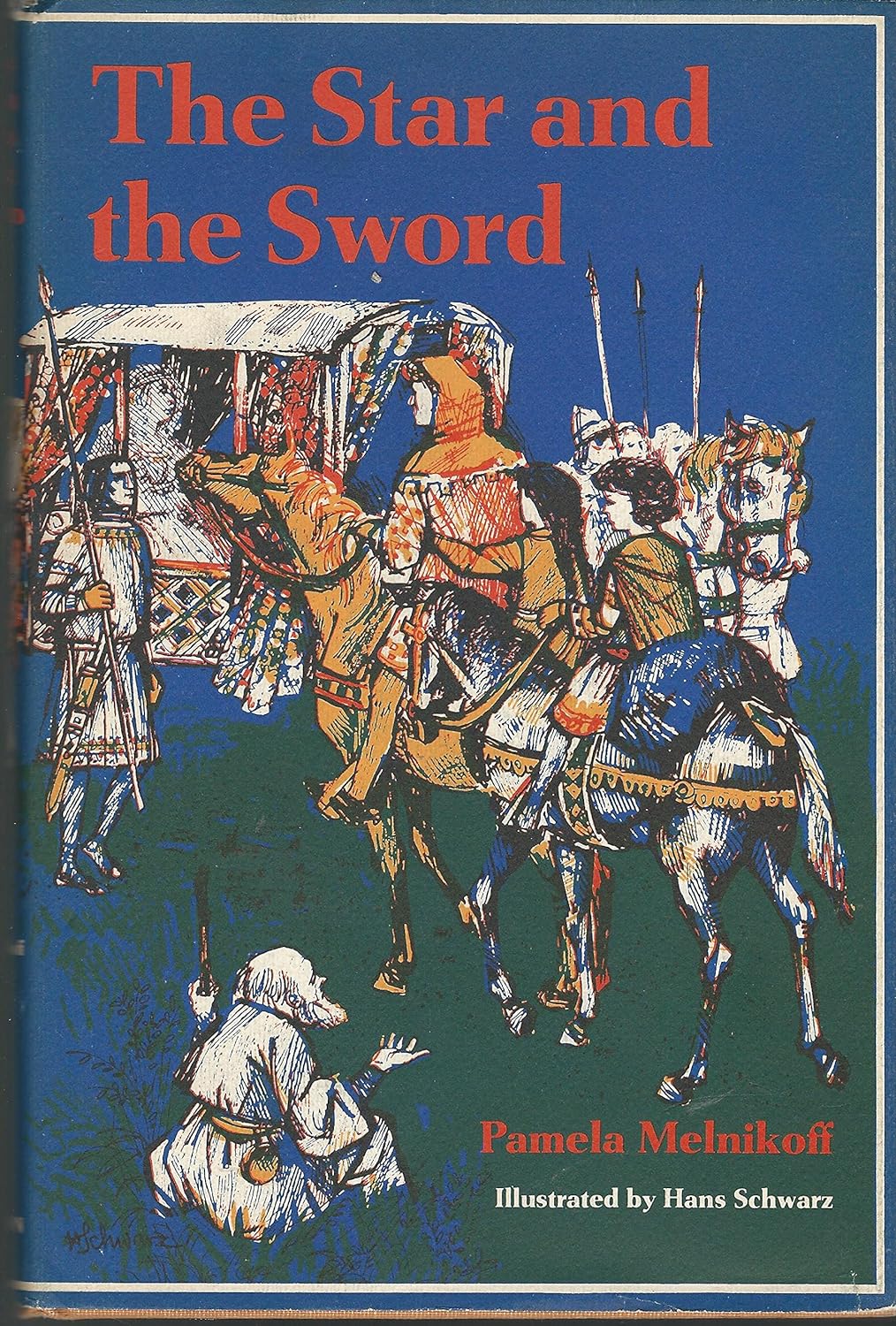
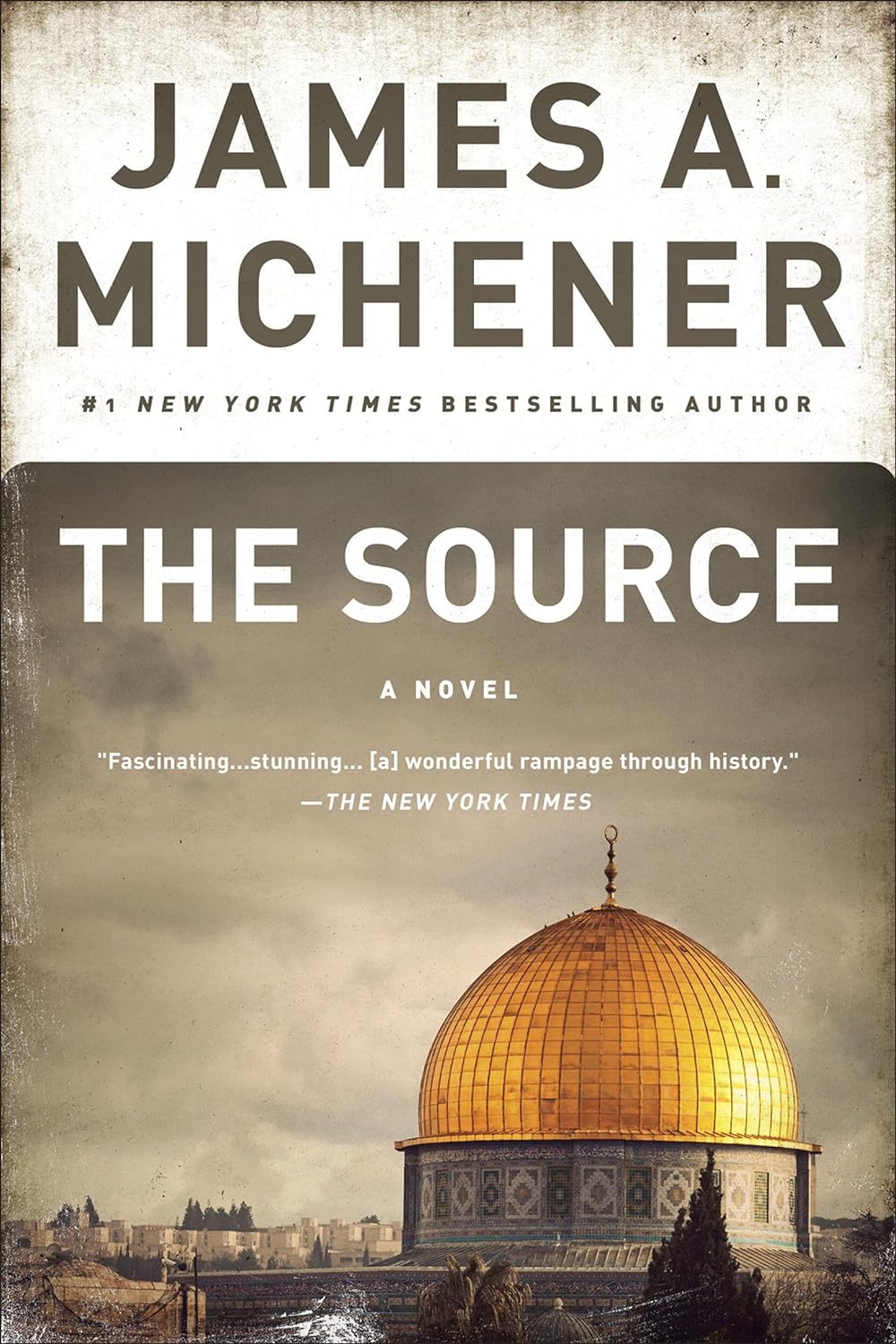
When I did read a book about Jews, I devoured it, even when it was set in the twelfth century (The Star and the Sword by Pamela Melnikoff). Even when it was a thousand pages long, like The Source by James A. Michener. Even when the Jews mostly weren’t British, as in Exodus by Leon Uris, as well as The Source.
In my case, the lack of Jewish characters in fiction didn’t cause me to start writing them. It took me several decades to even attempt to write my own stories. No. In my case, the rare books with Jewish characters, especially Exodus, influenced my decision to live in Israel. Because before and after the twelfth century and up to five years before I was born, Jews had nowhere to go where they felt protected. And now, we had our own country and I wanted to be part of it.
I have to say that, considering what’s going on in the world now and the way Jews are being treated, I’m gladder than ever that I made the decision to move. Israel is the only place where I’m never afraid to say who I am. It’s also the only place where I feel the authorities have my back. I know mistakes were made recently that enabled an enormous massacre to take place, but I don’t think that will happen again.
In contrast, the absence of a different group of characters from novels did influence my decision to write. I saw no characters with social anxiety, no characters who struggled to join in a conversation or to put themselves into the limelight, and there are still very few such fictional characters. I wondered if that was because they’re hard to write. If a character doesn’t say much, they could be considered uninteresting and therefore a bad template for a protagonist. But I decided to have a go, anyway, and I believe I succeeded. Even if a character doesn’t talk a lot, they can have an interesting variety of thoughts, and the people around them can have plenty to say. My uplit novel, Cultivating a Fuji, has two characters who have developed social anxiety. My Jerusalem Murder Mystery series (book 2 to come soon) has one.
It turns out it’s possible to write a character with social anxiety, and I expect the reason why authors don’t do it, despite the very large number of people who live with the condition, is that the topic doesn’t interest them. I would argue that it should interest them, because even if they don’t have first-hand experience of it, they probably know someone who does.
How about you? Did/do you see yourself in books? Do you think it’s important to see yourself in books? Have you written stories with characters like you?
Today, in the series That’s Not Me!, we have an author who is yet to publish a book but will be publishing one soon. She brings us a brilliant short story followed by an explanation. Any more that I could say would only detract from the reading experience. What I will say is that I’m sure her debut novel, when it comes out, will be exceptional.
That’s Not Me!examines how much of our fiction is autobiographical and why some authors try to insist there’s no link between their fictional characters and themselves. If you want to take part, have a look here and get in touch. You don’t have to be a writer. Readers also have views!
Wheels of Circumstance
By Claudia Chianese
Mama and I press our bodies flat against the frigid ground and pray the wheels do not stop. A gloved finger to her lips tells me what I intuitively know: we are in danger, and a disturbance may reveal our presence.
The day is crisp; the strong sun’s reflection on clean snow hinders our vision. I am a fawn watching a doe’s movement frozen by headlights, mirroring the behavior. Mama’s fudge colored eyes wide and alert do not move while her lashes flitter.
The wheels stop not by choice, but by circumstance. They rotate in the mud clockwise many times. When the engine shifts gear, the wheels twirl counterclockwise so fast, the steel spokes blur together. The vehicle, encumbered in mud, stalls and several soldiers jump out. I tremble, and see only soldiers’ feet in heavy boots with metal toes from where I am lying. I close my eyes at the thought of a soldier lifting his leg to kick me.
The engine restarts and the uniformed men study the wheels as they spin again. The puddle gets deeper, a chocolate cesspool, and goop splashes, dirtying my face. I watch two soldiers shift metal guns slung on their backs, and ready themselves to shove the vehicle from behind as a driver yells in a foreign language that reeks of anger. The noise muffles the sounds I do not make.
The soldiers rock the truck, making the ditch bigger, and the wheels more trapped. The engine cuts out leaving a quiet sound. The driver jumps out of the cab enraged, a semiautomatic gun raised above his head, and shoots into the air and around the tires.
Mama rolls her body on mine, secures my mouth shut with her hand to muffle any sound, and listens to an approaching noise, another vehicle.
The soldiers, who were pushing the pick-up yell, punch the driver and point to a deflated tire, as the second truck comes to a halt.
With chains and shovels, the angry team of men release the truck from the muck, and afterwards shove and slap each other in good cheer at the success of their efforts.
I start to cry when they drive off.
It is November 4, 1956 and what started as a birthday lunch at the University with Papa is the Hungarian Revolution.
In the morning, we sleep late and dress leisurely for the special day. I wear my favorite navy blue taffeta dress. Mama insists I wear leggings with my green winter coat adorned by gold buttons and a velvet collar, a matching headscarf tied under my chin. The leggings have inside zippers.
Mamma wears a camel wrap coat and a fake fur hat.
My birthday gift is a white rabbit muff with a cord I loop around my neck making certain it is not lost. I skip to the 9:45AM train to Budapest and nestle my hands inside my birthday gift, occasionally, fluffing the rabbit fur on the ride.
We arrive an hour later, and when we step down from the train, the crowd is noisy and the station disorganized. People run in different directions and change course unexpectedly. Papa is at the exit gate not at the University. He whispers in Mama’s ear after their kiss and her eyes droop in disgust. Papa grabs me in a birthday hug that lifts me off the ground and smiles his million-dollar smile.
There is a “change in plan” goes the conversation between tickles to my chin and behind my ears. Mama and I are to take the train to Austria; Aunt Marion will greet us for a Birthday Holiday. Papa will come on the weekend. Mama’s eyes continually question his prediction. I am happy with the promise.
We get back on the train. Papa hands us a bag lunch and an envelope with Aunt Marion’s address and spending money. We wave from the window not knowing it is for the last time.
Mama reads a newspaper on the train, turning the pages quickly and with tears in her eyes. “Who is Aunt Marion? Do I know Aunt Marion?” I ask of her.
“Aunt Marion is Papa’s relative, really a cousin. I have not met her either. It will be nice . . . I think. Yes, Trudy it will be nice. Now close your eyes and rest, we have a busy day.”
Near the Austria-Hungary border, the train stops, empties, and people are rude and loud.
“Is everyone on holiday, Mama?”
“Well, it seems…” and Mama holds my hand with intensity. “Let me ask for directions,” she says and approaches the conductor now standing on the platform. I cannot hear but watch heads nodding and shaking. Mama continues walking tentatively and then with determination.
“I am going to call Aunt Marion and see if she knows another way.”
Mama deposits several coins in a pay phone, and engages in a speedy conversation.
Smiling Mama says, “Sure enough, Trudy, we can follow the road and cut through the pasture. It will be fun and faster, maybe we’ll see a deer.”
Our walk is interrupted by the sound of Soviet tanks, trucks, and gunfire. Mama pulls us down behind tall grass brushed with snow. We listen, hidden until the sounds of people screaming and crying disappear.
Mama explains. “Mean people are invading our country and we must leave, for now. Papa will talk with them. It will be fine. We will cut through the meadow, and cross the border to meet Aunt Marion. She told me the way.”
That was before circumstance and the mud. Now Mama’s eyes close and there is blood on her coat. The fake fur hat sits crooked on her head surrounded by brunette hair curled for my celebration and I grow up fast within these seconds.
“Trudy, run ahead and tell Aunt Marion I stopped to rest.” Her soft words linger as she hands me the envelope and struggles to say, “She will help us. Run like the wind and do not look back.”
I kneel beside Mama. “Let me stay Mama, you need help, let me stay.” My words hang small and meaningless in the air.
Mama opens her eyes, “Gertrude Zimmerman, stop your silliness, listen to your Mama, go find Aunt Marion. Run… I’ll see you in. . . .
I finish her sentence, “Heaven.”
The sounds of wheels stay connected to the loss of Mama, her love buried in my memories.
That’s Not Me
In 1966, during college orientation, we were instructed to look to our left, then to our right, and told one of us would not graduate. The glaring statistic stimulated conversation.
Vera, on my right, was from Long Island, and had an unfamiliar accent. She escaped from Hungary as a child and remembered running across the border grasping her mother’s hand.
I was watching Betty Boop cartoons while she was chased by Russians. Her experience stayed with me and is incorporated in my fiction story, Wheels of Circumstance, published in Florida Writers Association Collection, Volume Four. Vera only said she’d fled the country, the rest of the story is fiction, or maybe not.
. . . Just saying, I never saw her again.
BIO
Claudia started writing when she and her husband retired and moved to Florida from New Jersey, in 2008. They have been married for fifty-two years, have one daughter and two adult grandchildren.
Three of her short stories, Acerbic, Wheels of Circumstance, and First Step Back have been previously published in Florida Writer Association’s anthology collections.
Claudia graduated with a BS in Education from SUNY at Oneonta in 1970 and has a MS in Education from the City University of New York Herbert H. Lehman College.
Her work experience includes:
Adjunct Professor at Sussex CCC in Newton New Jersey 2002-2006
Here’s an author who is new to me. What she has to say is fascinating. Also, the spark for her writing is something I can relate to.
That’s Not Me!examines how much of our fiction is autobiographical and why some authors try to insist there’s no link between their fictional characters and themselves. If you want to take part, have a look here and get in touch. You don’t have to be a writer. Readers also have views!
That’s Not Me!
When I started out writing short stories, the ones that garnered the most positive responses were ones that centred around my cultural heritage.
For clarity, I am a British-born Indian, Sikh to be precise, born to Kenyan-born Indian parents. Quite a colourful mish mash there to keep my inspiration wells filled with all sorts of ideas.
I have always been an avid reader, and one thing I found was that there was a gaping hole in the book world. Sure, there are plenty of lauded Indian writers, but there were very few books I could read where I related to the characters.
As a Brit, there were plenty of contemporary choices to relate to. As an Indian, I could find umpteen books set in the Motherland.
But there was a gap.
Very few characters looked like me. There were a handful of authors (if that) dealing with British Asians as the protagonists of their stories.
And so, I embarked upon a mission to write a story about someone who looked a little like me.
Not literally, of course.
I mean a book with a British Indian family at the heart, dealing with the crossover issues I lived with all my life; not being fully Western, and not all that Eastern, either.
It took a while to write. But I poured everything into that first book, Marriage Unarranged, and when I first announced I was self-publishing it, I was met with so much encouragement from my blogging community, the social media following I had gathered, and friends and family close to me.
What I hadn’t expected was the volume of questions I got, from people I knew, as well as other readers, about whether this story was my story.
Well, yes, it is my story, in that I made it up and wrote it. But it isn’t my story if you know what I mean.
This was when it hit home that because there weren’t as many authors in my genre, from my background, it almost felt as if readers out there thought we only had our own stories to tell.
Sure, there were a lot of books out there that were partially autobiographical, sometimes with tragic backgrounds, but we, as POC writers, also have imaginations and people who looked like us could also have romances and first world problems, as they say, that could form the basis of stories.
My main character, Aashi was a young woman, of a similar age to me, born in Birmingham, where I grew up. Those were the similarities. And that’s where they ended.
Life is your biggest source of inspiration, or so I believe, and there may have been certain real-life interactions that ignited a spark of an idea for scenes in the story, or quite possibly the shadow of a person would be built upon to create a minor character, but the whys and the wherefores were all made up.
It was fiction, after all. The amount of time I had to field questions about whether this was based on my life was unreal.
My second book, Straight As A Jalebi, was a lot easier to defend, though I should never have had to, in the first place, as the main character, Sunny, is a gay guy. I am not male, and not gay!
But I have to say, the third book, In God’s Hands, which I am writing, might be tougher to explain away, since the main theme is infertility through the eyes of a British Asian couple, and I have been down that road.
Maybe that is why it is the hardest story I have had to write, as I recall my own experiences, but try to ensure they are not what I am basing my plot around. Because this isn’t my story, it’s Kiran’s. This is where I have dug deep to use my feelings and reached out to others in similar situations to do my research, to give a rounded, realistic account of her fertility journey that doesn’t mirror mine.
But, just to reiterate, characters and stories I write? That’s Not Me!
Author Bio
Ritu Bhathal was born in Birmingham in the mid-1970s to migrant parents, hailing from Kenya but with Indian origin. This colourful background has been a constant source of inspiration to her.
From childhood, Ritu always enjoyed reading. This love of books is credited to her mother. The joy of reading spurred her on to become creative in her writing, from fiction to poetry. Winning little writing competitions at school and locally encouraged her to continue writing.
As a wife, mother, daughter, sister, and teacher, she has drawn on inspiration from many avenues to create the poems and stories that she writes.
A qualified teacher, having studied at Kingston University, she now deals with classes of children and managing a team of staff as a side-line to her writing!
She also writes a blog, www.butismileanyway.com, a mixture of life and creativity, thoughts and opinions, which was awarded first place in the Best Overall Blog category at the 2017 Annual Bloggers Bash Awards, and Best Book Blog in 2019.
Ritu has two novels, Marriage Unarranged and Straight As A Jalebi, published by Spellbound Books, and a third in the series, In God’s Hands, coming out soon.
Ritu is happily married and living in Kent, with her Hubby Dearest, and two teenaged children, not forgetting the fur baby Sonu Singh.
There have been eleven fascinating and enlightening posts so far in the series That’s Not Me! What can they teach us?
That’s Not Me!examines how much of our fiction is autobiographical and why some authors try to insist there’s no link between their fictional characters and themselves. If you want to take part, have a look here and get in touch. You don’t have to be a writer. Readers also have views!
Joan Livingston says, “My motto in writing fiction is that I take what I know and have my way with it.” Nowhere is that more apparent than in her Isabel Long Mystery Series, which I know well through having edited it – so much so that I sometimes have a hard time remembering that Joan doesn’t actually investigate long-unsolved crimes!
Vanessa Couchman doesn’t deliberately put herself into her characters, but says, “it’s inevitable that I share certain traits with some of my protagonists.”
Jennifer C. Wilson says, “It would be pointless to pretend for even a second that there’s no hint of me in Kate, the leading character in The Last Plantagenet?”
Val Penny hasn’t based a character on herself, but she did unconsciously create a main character who turned out to have a lot in common with one of her uncles.
Mary Grand often uses characteristics of herself as a starting point, but then develops the character so that she becomes her own person.
Angela Wren’s characters are completely made up. She uses her experience as an actor to create them. But she does occasionally use overheard or experienced parts of conversations in her fiction.
Nancy Jardine doesn’t use personal experiences for her historical fiction, but did embellish some remembered events for a contemporary novel.
Tim Taylor discusses the use of real life in poetry, including his own.
Sue Barnard has used her own experiences in her more contemporary novels, as well as letting a character express some of her own views.
Jennifer C. Wilson (yes, she and her delightful humour returned for another guest post) describes how another character unintentionally ended up being very similar to herself.
Miriam Drori (yes, that’s me) used several of her traits for a character, and admits that she not only used a story remembered from childhood, but even kept the real name of a teacher who behaved badly.
What can we learn from these posts?
Overwhelmingly, they say that authors use parts of themselves and their experiences when writing fiction, although they generally embellish or tweak the real stories to fit their fictional novels (or poems).
What do you think? You’re welcome to comment or, better still, to join in the discussion with a guest post, starting off here.
Please note: I wrote this post before a large band of terrorists infiltrated our country and commited heinous war crimes. I’m not sure I’d be able to write such a post in my current mood.
Today’s guest in the series That’s Not Me! is not a guest at all. It’s me, Miriam Drori, author, editor, blogger and much more. What do I have to say on the topic?
That’s Not Me! examines how much of our fiction is autobiographical and why some authors try to insist there’s no link between their fictional characters and themselves. If you want to take part, have a look here and get in touch. You don’t have to be a writer. Readers also have views!
An Admission
Of all the characters I’ve written so far, the one who’s closest to me is Martin in Cultivating a Fuji. This is how I described the connection in About the Author on Amazon:
Miriam Drori was born and brought up in London at about the same time as Martin. Like Martin, she studied Maths and went on to work as a computer programmer. Like Martin, she was bullied at school and, as a result, social anxiety paid a visit and refused to leave.
There, the similarities end. Miriam also studied Music. She emigrated, married and had three children. Her career path veered onto technical writing and then took a sharp turn, landing in the field of creative writing. Now, she enjoys reading, hiking, dancing, touring and public speaking. And writing, of course.
Although most of the current and past events in the story are completely imagined, some are taken from my life. I am now going to admit, for the first time, that I did something out of spite, because, in a way, I’m still angry about the way I was treated all those years ago. What was the spiteful thing I did?
I used someone’s real name.
And while that person, if she’s still alive, will probably never know what I did, it was not very nice of me. Here’s the excerpt:
February 1962
Miss Spector surveyed the classroom. All the children were writing except for Martin. She walked over to him and in a loud voice said, “Martin, why aren’t you writing?”
Martin looked up at her. “Because I don’t know what I want to be when I grow up.”
“There must be something you’d like to be. A doctor? An astronaut? A teacher?”
Someone said, “Martin wants to be a dustman,” and everyone laughed, including Miss Spector. Everyone except for Martin.
Martin looked down at the empty page of his exercise book.
“Well, think about it, Martin, and write your composition at home. I want to see it tomorrow.”
The next day, Miss Spector made Martin read out his composition to the class. It went:
I want to be an engineer, because an engineer works with machines and not with people. With people, you never know what they’re going to do, but machines do exactly what you tell them to do. Every time you press a button, the machine always does the same thing.
“Martin,” said Miss Spector. “How do you know about engineers?”
“My daddy told me about engineers yesterday. We talked about lots of different jobs I could do, and I chose that one.”
Someone said, “Martin said that because he doesn’t like us.”
Someone else said, “Yeah, because he’s funny and we laugh at him.”
The children laughed. Miss Spector laughed. Only Martin didn’t laugh.
I tweaked that story to better fit Martin but the essence of it is the same and Miss Spector was the teacher’s name. She was only eighteen at the time, so can be forgiven for not knowing better, but I still blame her for taking the side of the popular kids against me, and for not understanding the effect such treatment could have on a vulnerable eight-year-old.
I don’t have to put a bio, blurb or links here, because you can find those by clicking on the headings up at the top .
Next week, I intend to post a summary of all the posts so far. Remember to let me know if you want to take part in this series.
That’s right. Jennifer is back on That’s Not Me!, so that you can get more of her humour and words of wisdom.
This time she’s talking about another of her books.
That’s Not Me! examines how much of our fiction is autobiographical and why some authors try to insist there’s no link between their fictional characters and themselves. If you want to take part, have a look here and get in touch. You don’t have to be a writer. Readers also have views!
Over to you, Jen.
Well, if it was ridiculous to claim there was none of me in Kate, from The Last Plantagenet? (you can visit that blog here), it’ll be even more stupid to make such a statement about Lexie, in Twelve Dates ‘Till Christmas! Although apart from one scene, this time, it really wasn’t intentional.
Without giving the game away, Callum and Lexie are those friends who happily go along to each other’s formal events as a ‘plus one’ when required. And not just personal events, but the occasional corporate function too. It’s for one of these evenings where Callum springs it on Lexie that he’s entered them into a “Mr and Mrs” quiz. To say Lexie is unimpressed is an understatement…
Having never played the game myself, I took to the internet to find some good questions, and set about writing the scene. When it came to Lexie, I figured, why not add a sprinkling of ‘me’ in there? After all, ‘write what you know’ again, right? And although the questions give a good insight into Lexie, they aren’t anything too plot-essential; it’s about demonstrating how well Callum and Lexie know each other, after all, not necessarily about the answers themselves. So, when it came to Lexie having won a Young Environmentalist of the Year Award (and still treasuring the plaque she got for it), or wanting to meet Sir David Attenborough, well, that’s all me. Plain and simple. Even Callum’s responses have an element of me in them – I’d love to visit Australia, but the arachnophobe in me keeps me anxious…
Other than that bit of the story though, I didn’t think I’d taken that much of myself this time around. Perhaps a love of a fun social life, and hanging out with friends on a regular basis. Alright, maybe being taken on a date to the Natural History Museum’s ice-rink would be incredibly romantic (or at least it would be if I could skate, which I cannot). And fine, there’s certainly something in the comment that Lexie owns mostly lively prints rather than wearing the calm neutrals of her friend’s preference.
In my defence (if I need any), Twelve Dates was my first foray into completely contemporary fiction, having spent the majority of my writing life either in the 1400/1500s, or slightly cheating and writing about characters who were from that era, even if they were contemporary ghosts in my stories. Is it any real wonder then, that I reached out to what I know best, i.e. me? Lexie has a number of characteristics / lifestyle aspects that I don’t have (see above, re NHM), so there’s clearly an element of wishful thinking in the mix too. But is there any real harm in that?
When it comes to writing about real people, there’s always a risk. If somebody who considers you a good friend sees themselves in your antagonist, there’s potential to damage the friendship there. Even if they recognise some of their traits in your leading lady, or romantic hero, who’s to say they’ll be happy with the situation? Well, the one person whose reaction you know with 100% certainty is your own, isn’t it? (Or at least, you’d hope so – if not, you’ve really only got yourself to blame…). It makes some sense then, to look to your own traits, experiences and motivations, where they’re applicable. For me, that might not sit so well when writing about women packed off to arranged marriages in the 1400s, but for a twenties/thirties (alright, late-thirties!) professional woman, navigating modern personal and professional dramas? I have pretty good first-hand knowledge of how that works. And I might as well use it.
I might think twice if I ever write a toxic, manipulative witch though – can’t go being too obvious with giving my personality away!
Blurb
Callum and Lexie are perfect for each other – at least, that’s what everyone tells them. But they’re just good friends, aren’t they? And neither wants to ruin the solid friendship that’s treated them so well since university.
But when an old school friend of Callum’s asks Lexie for a date, and passions overflow on a work night out, could it be the trigger to show each of them what they have been missing out on all this time?
With twelve weeks until Christmas, that’s a lot of opportunity for romance – and for misunderstandings…
Jennifer has been stalking dead monarchs since she was a child. It started with Mary, Queen of Scots, and now also includes Richard III. At least now it results in a story!
She won North Tyneside Libraries’ Story Tyne short story competition in 2014 (no dead monarchs, but still not a cheerful read), and has been filling notebooks and hard-drives ever since. Her Kindred Spirits series, following the ‘lives’ of some very interesting ghostly communities, is published by Darkstroke, and her historical / contemporary romances by Ocelot Press.
I’m delighted to host another author in the series That’s Not Me!
It’s Sue Barnard! Sue and I have been friends for a long time – ever since Sally Quilford brought us together in a romance workshop – romance writing, that is. But I digress. What about Sue’s fabulous stories? Are they based on real life?
THAT’S NOT ME
I’m often asked “Do you base your characters on real people?” My answer is always the same: “I wouldn’t dare. I’d have no friends left.” But I can’t deny that some of my characters have quite a bit in common with me.
Having said that, my books have elicited polar opposite reactions, ranging from “As I was reading that, I could hear you saying it” to “Where on earth did that come from?”
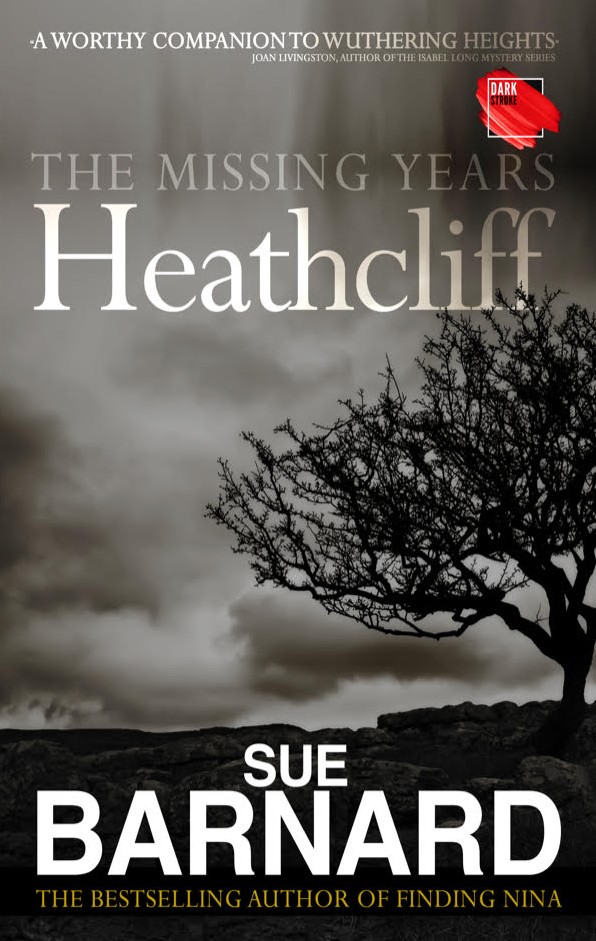
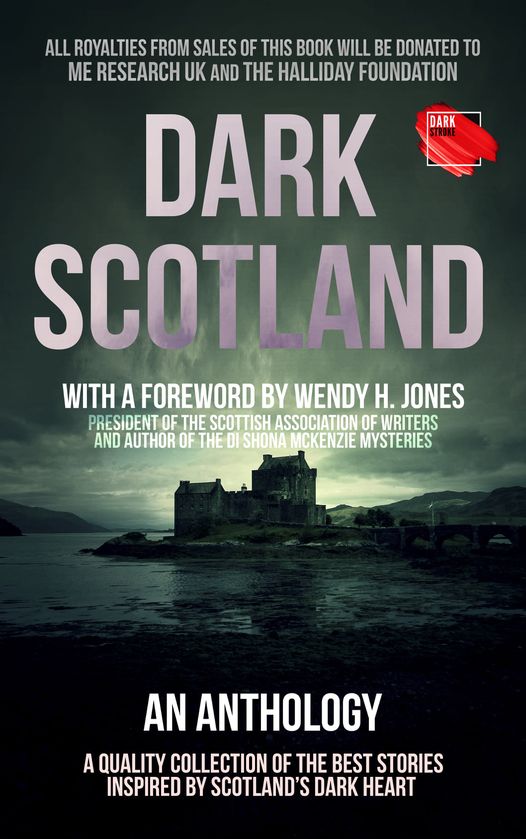
The latter has usually been in response to either or both of my novels which are based on existing works of literature: The Ghostly Father (Romeo & Juliet) and Heathcliff: The Missing Years (Wuthering Heights). In those cases I’ve had to get inside the minds of, respectively, a sixteenth-century Italian monk and an eighteenth-century anti-hero of unknown provenance. Neither of those left very much room for my own voice – but I didn’t find this to be a problem. For a large part of the time I felt as though the characters were in the room with me, looking over my shoulder and telling me what to write. This was certainly the case with my short story Doomed Youth – a fictionalised account of the meeting in 1917 between the war poets Wilfred Owen and Siegfried Sassoon – which can be found in the Darkstroke charity anthology Dark Scotland.
But there’s plenty of me to be found in the heroines of my other novels. Sarah in The Unkindest Cut of All is frequently the mouthpiece for some of my own views, whilst Emily in Nice Girls Don’t and Stella in its companion story Finding Nina both share quite a bit of my own experiences as an adoptee.
Some scenes in those books are based on real-life episodes from my own family history. These include the Somerset air raid tragedy, and the discovery that one character’s grandparents had celebrated their Golden Wedding a year early (anyone who can count up to nine should be able to understand why). And my memories of working in an independent bookshop gave rise to the following scene in Nice Girls Don’t:
“We had a man come in [to the library] and ask us to find a book which he’d seen somewhere a few months ago. He couldn’t remember the title or the author, and he only had a vague idea what the book was about. The only thing he could remember for certain about it was that the printing on the pages was blue.”
Some elements are definitely not based on fact – most notably Alice’s backstory. For the benefit of anyone who remembers my late adoptive mother (who died when I was nineteen), I must stress that the fictional character’s secret shady past is completely invented. That part of the story was derived from extensive research into the unforgiving attitudes towards illegitimacy in the years during and after World War Two. I am particularly grateful to the true-life tales portrayed in Sue Elliott’s moving and fascinating memoir Love Child (Vermilion Press, 2005), which I can highly recommend to anyone who wants to find out more about this grim and little-known side of British history.
Perhaps the story which is closest of all to the truth is the tale of the photograph, which is definitely stranger than any work of fiction. A factual account of this can be found here on my blog, whilst an adaptation forms part of the plot of Finding Nina. There are some things which simply cannot be made up…
BIO
Sue Barnard is a British novelist, editor and award-winning poet whose family background is far stranger than any work of fiction. She would write a book about it if she thought anybody would believe her.
Sue was born in North Wales some time during the last millennium. She speaks French like a Belgian, German like a schoolgirl, and Italian and Portuguese like an Englishwoman abroad. Her mind is so warped that she has appeared on BBC TV’s Only Connect quiz show, and she has also compiled questions for BBC Radio 4’s fiendishly difficult Round Britain Quiz. This once caused one of her sons to describe her as “professionally weird”. The label has stuck.
Sue now lives in Cheshire, UK, with her extremely patient husband and a large collection of unfinished scribblings.
It’s time for a change. This week’s episode of That’s Not Me! comes from friend, author and poet, Tim Taylor.
That’s Not Me! examines how much of our fiction is autobiographical and why some authors try to insist there’s no link between their fictional characters and themselves.
Having said that, Tim is going to focus not on his fictional stories but on his poetry. Poetry can be purely fictional, but that’s quite rare. Right, Tim?
Thank you very much for inviting me to participate in this very interesting blog series, Miriam. Though I do write fiction, today I’m going to talk primarily about poetry.
I think it’s true of most poets that they make full use of their own experience in their work. I certainly do this myself – when life presents you with something worthy of a poem, why would you not make the most of it? It is perhaps easier for poets, as opposed to fiction writers, to put themselves into their work, because a poem can be openly autobiographical in a way fiction cannot.
I know some poets whose work is almost exclusively inspired by their own experience – either by what happens to them personally, or by their reactions to things they encounter. However – while it’s had its moments – I must admit that I’ve never felt that my life is sufficiently intereresting to be the sole source of inspiration for my poetic output.
I think it helps here to be a fiction writer as well. Except for that minority whose novels are thinly-disguised autobiographies, fiction writers must rely heavily on imagination to create characters and situations. I often do this in poetry too. I’ve written many poems about purely imaginary people and situations, and I would say that my best poems include some of these, as well as ones written from life. Even here, though, poetry (and fiction) still draw upon personal experience in a more indirect way: imagination moulds new things out of the mixing bowl of memories we acquire throughout our lives.
A good thing about poetry is that it doesn’t have to be either one thing or the other. We can write poems directly inspired by our own lives, but improve them by omitting, adding or altering details – ‘never let the truth get in the way of a good poem’ is a maxim I often use! Conversely, we can use real experiences and real things to add colour to an otherwise invented poem.
I’ll end with an example. The scene described in the following poem is entirely fictional. Yet the poem does, of course, articulate thoughts of mine about the power of objects as reservoirs of memory. And the cowrie shell is real – I did indeed acquire it on a childhood holiday in the late 60s.
So is this me? You decide.
The Cowrie Shell

“Just chuck ’em in the skip,” she said
as if each object in that box
were not once part of me:
attached by long sinews of stories,
fed by flimsy arteries
through which a child’s heart
once pumped them full of meaning.

The box took them when life moved on.
Now lifeless, so I thought
but peeling back the cardboard
I could sense the gasps for air.
Each object in its turn cried out;
the child in me woke up
and would not let them go.

Among the marbles and the model cars
I found a cowrie shell: smooth, mottled,
exuding still the faintest smell of salt.
“You remember me,” it said
– that holiday in 1969”. I felt
a flickering of what seemed like recall.
I dug deep for that memory,
found it rotted by the years.
I steeled myself, obeyed
the pitiless reminder:
“you cannot keep them all.”

Not quite big enough to be an ornament,
if fitted better in a smaller hand.
I put it down: out fell a single grain of sand.
From LifeTimes (Maytree Press 2022). Signed copies are also available from the author: tim.e.taylor@talk21.com.
Tim Taylor has published two poetry collections, Sea Without a Shore, and LifeTimes, both with Maytree Press, and two novels. His poems have won, or been shortlisted in, a number of competitions and appeared in magazines such as Acumen, Orbis and Pennine Platform and various anthologies. Tim lives in Yorkshire, UK, and teaches Ethics part-time at Leeds University. He enjoys playing the guitar and walking up hills (not usually at the same time).










 Miriam Drori, Author