How fictional is the world inhabited by Nathalie, Asaf and friends (and foes)?

On Day 2 of the blog tour for Loyalty and the Learner, I’m pondering this question. Here’s why:
Before I go any further, you can find links to all the tour posts so far in this post.
Yesterday, GB Williams posted this when writing about my book:
…I also know little of life in Israel, other than what we see on the news, which I have tried to forget as the real world is a different one to the world this story inhabits. That’s what fiction is for, taking us away from the real world.
I actually wrote this novel more than a year ago, its publication having been delayed for several reasons. But even before the seventh of October 2023, and going back long before independence in 1948, Israel has been plagued by conflict and wars, by enemies who will agree to nothing less than its complete destruction. It has always known terrorist attacks of various sorts.
By the way, despite all that, I believe Israeli cities are among the safest in the world, especially for women.
Not one of my novels set in Israel – Neither Here Nor There (not currently available), Style and the Solitary and Loyalty and the Learner – mention wars or attacks, other than Asaf saying of Israel’s problems in Loyalty and the Learner, “One of those is the security situation.”

Why?
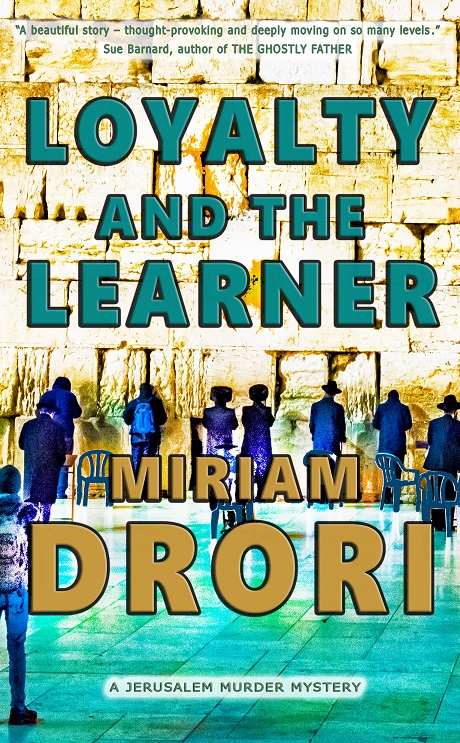
There are plenty of novels set in Israel that highlight the security situation and explain it much better than I ever could. I wanted to portray ordinary life here, to show the beautiful and the not so beautiful but without the wars. Does that make the world of my novels fictional?
I don’t think so. The reality is that Israelis live in two parallel worlds simultaneously. We work in offices or building sites or fields. We go shopping in markets and supermarkets and smaller shops. We exercise in the gym or by walking, runnning, cycling, dancing. We love to spend time with our families.

The other world is more frightening. We hear about it on the news and hope it won’t come any closer to us, but of course it does, even if it’s only when we run for shelter. No, it’s never only that, because we all know people who’ve been affected much more, who’ve lost family members and had their worlds changed forever in a single moment.
In normal times, but not during the past year, it’s possible to spend whole days, maybe even a week or two, without thinking about wars or attacks. Unless, of course, you’re in the army, or have a child in the army, or find yourself under attack…
Really, it’s often possible to forget you’re in the Middle East for a while. And so, I suggest the world of my novels is not as fictional as you might think.
Loyalty and the Learner is published through Ocelot Press and can be purchased via Amazon and other online stores.

 Miriam Drori, Author
3 replies on “The “Fictional” World of Loyalty and the Learner”
Having just read your book, It was nice to read this article and get your view on Israel as you wrote about it. I think its refreshing to see the more normal life of Jerusalem rather than just the warring stuff from the news.
LikeLiked by 1 person
Thank you, Mason. Even during the past year, we’ve managed to get on with our daily lives – those who can, although the war is constantly in our thoughts.
LikeLike
That’s amazing. I’m pleased you can enjoy your life there. That’s how it should be. My review is all ready for Saturday, I hope it helps you sell some books.
LikeLiked by 1 person